
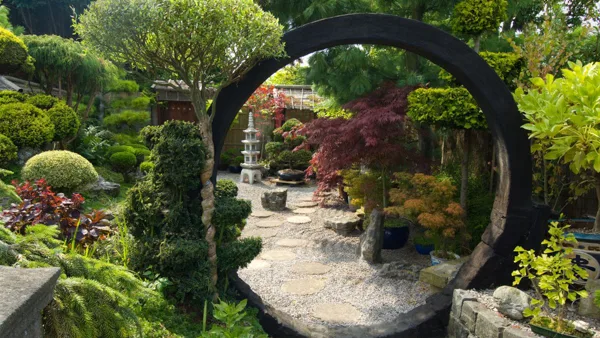
How to Create a Charming Japanese Garden at Home: A Step-by-Step Journey
After my visit to Japan, I was deeply moved by the parks and gardens in Kyoto. There was something in them that is hard to explain if you haven’t seen it with your own eyes — the quiet, the balance, the way stone, water, plants, and empty space all seemed to breathe together. Nothing was loud, and yet everything spoke. I came back home with the feeling that I wanted to recreate at least a little of that beauty and calm in my own space. And that is how this idea for a Japanese garden at home was born.
🎧 AUDIO VERSION
This article is also available as a calm audio version — just press play and listen.
Hello, fellow gardeners! Today I’m going to share the secrets of creating a charming Japanese-style garden without needing to fly to the Land of the Rising Sun. With a little creativity, patience, and by following these steps, you’ll soon be enjoying your own zen oasis. Step into the magic of the Japanese garden and get ready for a truly inspiring adventure.
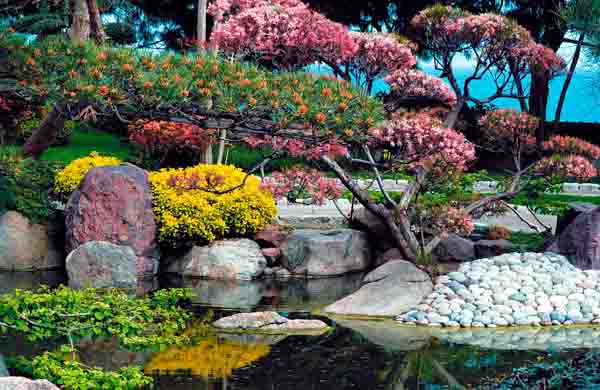
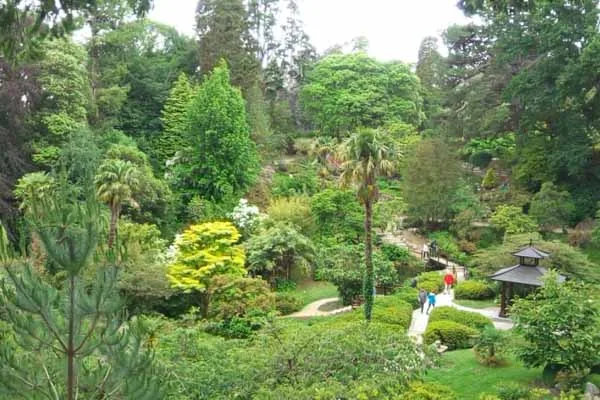
Key Elements of a Japanese Garden
- Harmony with nature – Japanese gardens are designed to blend seamlessly with the natural landscape, reflecting the deep connection between people and nature.
- Asymmetry and balance – Unlike symmetrical Western gardens, Japanese gardens embrace natural asymmetry while still achieving a strong sense of balance and harmony.
- Symbolism – Every element in a Japanese garden carries symbolic meaning. Stones may represent mountains, sand may symbolize water, and plants stand for vitality and growth.
- Simplicity and minimalism – Japanese gardens are free of clutter, focusing on a few key elements and leaving empty space for reflection.
- Privacy and tranquility – These gardens are designed as peaceful retreats from the outside world, places for quiet contemplation and reconnecting with nature.
A Brief History of Japanese Gardens
Japanese gardens have a rich history dating back more than 1,000 years. Early gardens were strongly influenced by Chinese landscape design and Buddhist principles, with an emphasis on lakes, islands, and symbolic features. During the Heian period (794–1185), a distinct Japanese style began to develop, introducing asymmetrical compositions, the use of local plants, and tea pavilions.
During the Muromachi period (1336–1573), Zen Buddhism had a profound influence on garden design, giving rise to minimalist rock gardens (karesansui) intended for meditation. Later periods brought new styles as well, such as the more elaborate Edo-period gardens (1603–1868), with their sculpted hills, man-made ponds, and carefully pruned trees. Today, Japanese gardens are admired around the world not only for their beauty, but also for the principles they embody — harmony, respect for nature, and quiet contemplation.
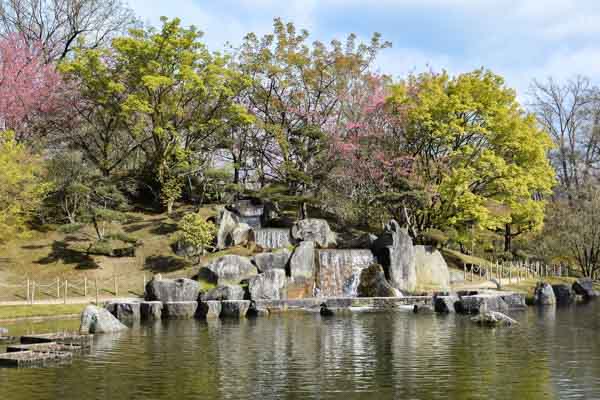
Beautiful Japanese Gardens in Europe
- Japanese Garden in Hasselt, Belgium – This magnificent garden is known for its authentic pavilions, gates, bridges, and water features imported directly from Japan.
- Japanese Garden in Toulouse, France – Located in the heart of the Compans Caffarelli gardens, this charming space offers winding paths, cascading waterfalls, and traditional tea houses.
- Japanese Garden in Monaco – Overlooking the Mediterranean Sea, this lush garden features waterfalls, streams, islands, and an impressive plant collection.
- Kamienne Japanese Garden, Poland – The largest Japanese garden in Europe, this striking park includes tea pavilions, a bonsai garden, and even a reproduction of a Buddhist temple.
- Kyū Shiba Rikyu Japanese Garden in Dublin, Ireland – A place of serenity and beauty, this authentic Japanese garden includes stone lanterns, a tea house, and picturesque views.
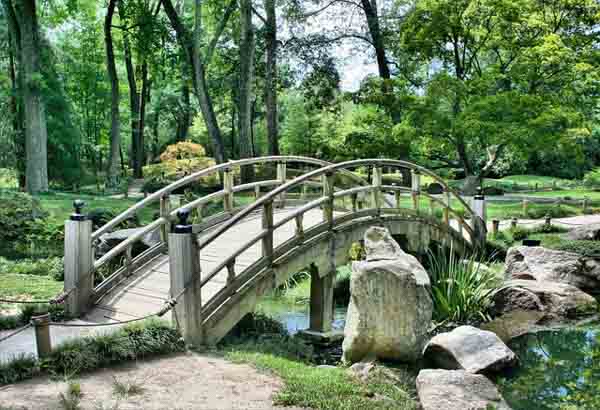
Choose the Right Location
First, find the ideal corner in your yard for your Japanese garden. Look for a place with good sunlight, but also a little shade for plants that prefer cooler conditions. And keep the size in mind — even a small space can be transformed into a charming Japanese garden.
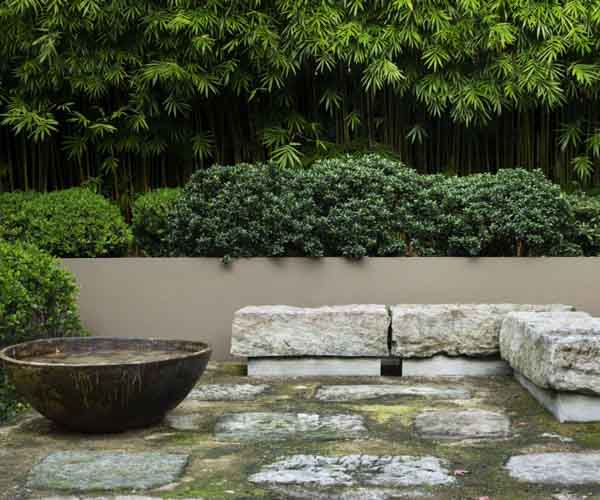
Plan the Design
Now that you have your spot, it’s time to let your imagination loose. Think about the key elements of a Japanese garden — stone paths, water features, little bridges, lanterns, and of course, a carefully chosen selection of plants. Sketch your ideas on paper or use garden design software to visualize your masterpiece.
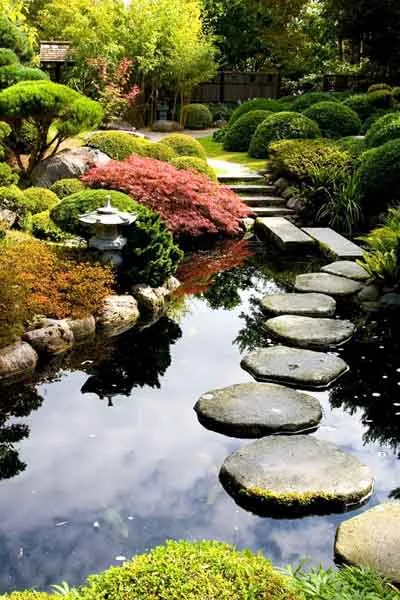
Create a Sense of Calm with Plants
Choosing the right plants will bring that authentic Japanese garden atmosphere into your space. Here are some must-have species:
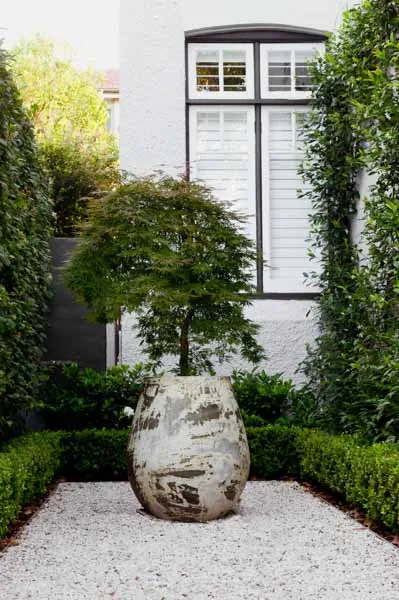
- Japanese Maple (Acer palmatum) – These graceful trees, with their delicate, lace-like leaves, add beauty and texture to the garden. Choose a variety with deep red foliage for a striking contrast.
- Moss – Soft carpets of moss are iconic in Japanese gardens. Plant different species such as pincushion moss (Leucobryum glaucum) or star moss (Atrichum undulatum) for a lush green effect.
- Azalea (Rhododendron) – Choose azaleas in rich colors and plant them around a pond or stream for a lush and cheerful atmosphere.
- Bamboo – Nothing says “Japanese garden” more clearly than the graceful movement of bamboo stems in the wind. Plant taller bamboo for screening or shorter varieties for accents. (Tip: grow bamboo in containers to keep it from spreading.)
- Iris (Iris ensata) – These look wonderful near water features and bring a soft touch of purple-pink charm.
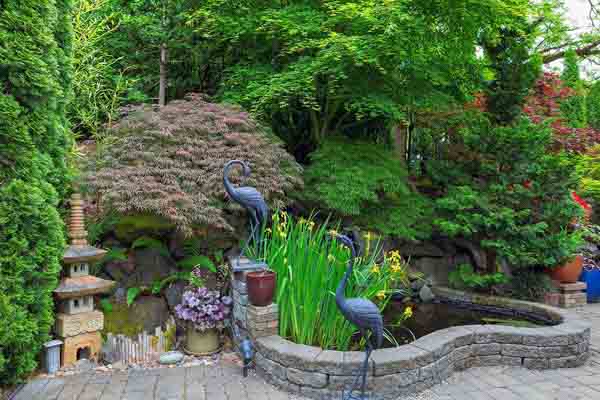
Add Architectural Elements
Now it’s time to move gently from plants to the structure of your garden:
- Stone paths – Lay narrow, winding stone paths to create a sense of journey through the garden. Use flat, natural stones and set them into moss or gravel for an authentic look.
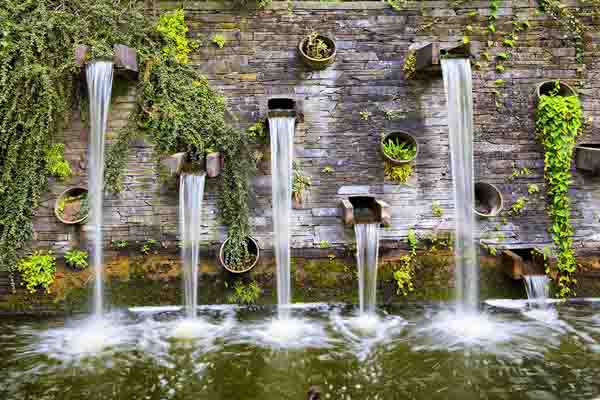
- Water features – Add a bamboo water spout (shishi-odoshi), a small koi pond, or a gently murmuring stream. Water brings peace and harmony to every Japanese garden.
- Stone lantern – Place a traditional stone lantern (ishidoro) beside a path or near a water feature for a soft, magical glow at night.
- Bridges – An elegantly curved bridge over a pond or stream adds a charming touch and symbolizes the path of life. Choose wood or bamboo for a natural look.
- Tea pavilion – If space allows, build a small tea pavilion. It’s the perfect place to sit with a cup of green tea and admire what you’ve created.
Add the Final Touches
The final details will turn your garden into a true jewel:
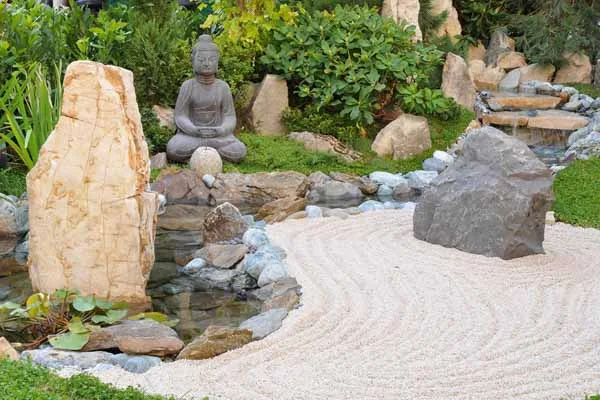
- Stones – Arrange interestingly shaped rocks and boulders among the plants. A trio of tall upright stones is known as “Buddha and two disciples.”
- Japanese art – Hang a rice-paper lantern (shoji), string up origami cranes, or place stone statues for an authentic Asian touch.
- Sand garden – Create a small sand garden (karenzan-shiki) with fine sand or gravel, raked into lines around stones. Wonderful for meditation.
- Bonsai – With their miniature beauty, bonsai trees bring a strong zen feeling. Grow them in traditional shallow containers.
- Resting place – Add a bench or bamboo mat in a quiet spot where you can sit, rest, and contemplate your zen paradise.
Remember that Japanese gardening is an art refined over centuries, so don’t feel discouraged if your garden doesn’t look perfect the first time. With patience, care, and an appreciation for the beauty of every stage, you’ll soon be enjoying the serene splendor of your own little Japan. Where else could you find such peace and harmony without ever leaving your backyard?
Enjoy the journey and plant the seeds of peace in your own life. And who knows — maybe one day you’ll feel inspired to visit a real garden in Japan. But until then, enjoy the quiet beauty of your home Japanese garden, dear friends. Happy gardening, and zen-zen!