
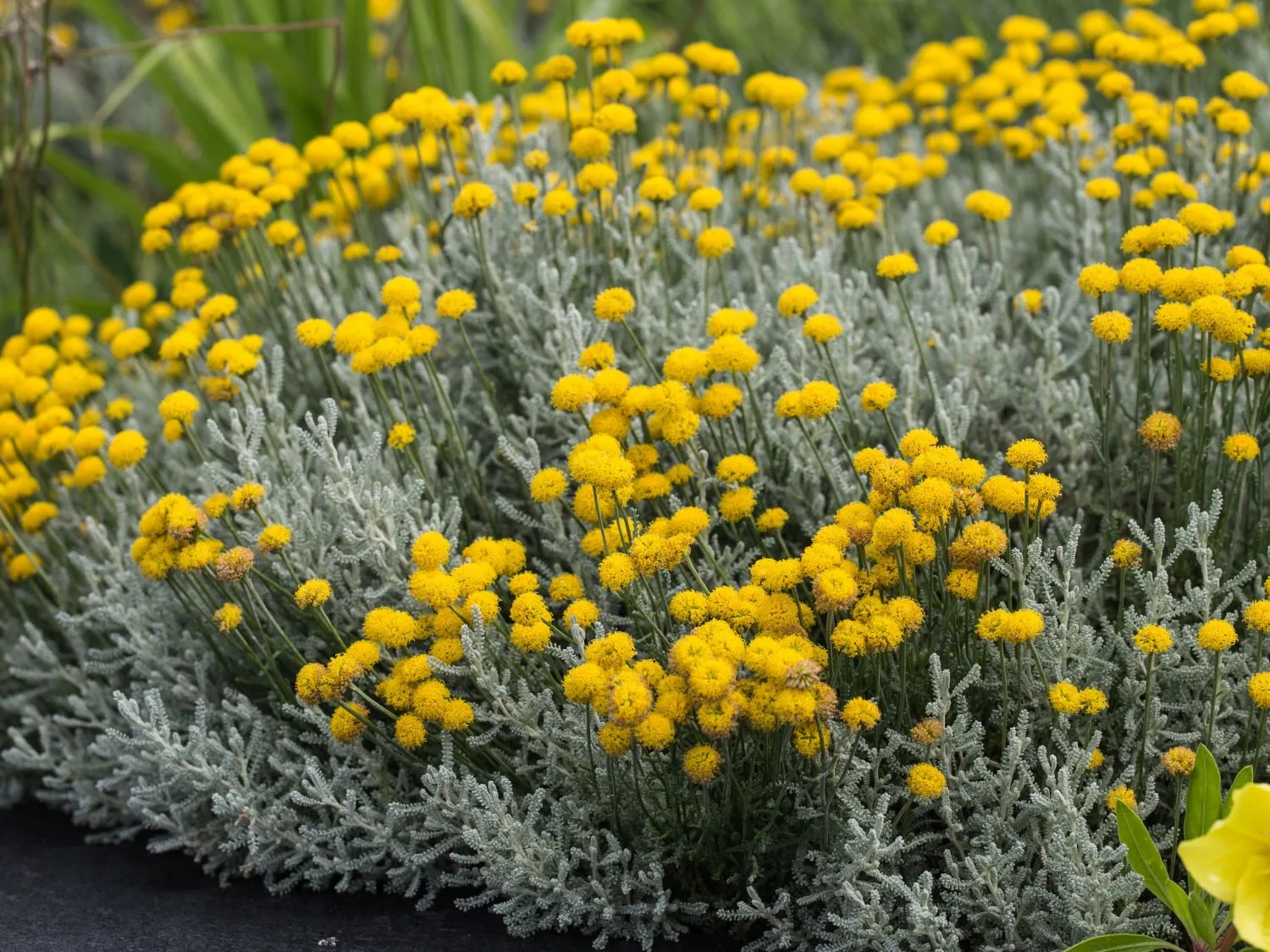
Santolina is a low evergreen or semi-evergreen shrub with silvery aromatic leaves and yellow summer flowers. It is a wonderful choice for sunny, dry and well-drained places where we want an orderly look without heavy maintenance.
Among plants for sun, heat and easier maintenance, santolina stands alongside lavender, perovskia, yucca, buddleia and ornamental grasses. But its role is lower and more structural. It does not create a large cloud like perovskia, it is not tall like buddleia, and it is not architecturally sharp like yucca. Santolina works as a fine silvery edge, a small shrub for form and a calm base in the dry border.
This is a plant that can look very refined if it is in the right place. It looks especially good along paths, in gravel gardens, in low borders, around terraces, in Mediterranean compositions and in modern gardens where the silvery foliage brings light and contrast.
What Is Santolina?
Santolina (Santolina) is a low aromatic subshrub with fine grey-silver or greenish leaves. The most common is Santolina chamaecyparissus, known as grey santolina or cotton lavender, although it is not true lavender.
In summer, santolina flowers with small yellow spherical blooms held above the foliage. The flowers are charming, but the plant’s main ornamental value is in its leaves, form and color. Even when it is not flowering, santolina looks neat and bright.
Santolina is a plant for people who like the garden to look orderly, but not sterile — silvery, aromatic and slightly Mediterranean.
Why Santolina Is Valuable in Garden Design
Its greatest strength is the silvery foliage. In the garden, silver-leaved plants are very important because they soften strong colors, bring light and create a transition between green, stone, gravel and flowering plants.
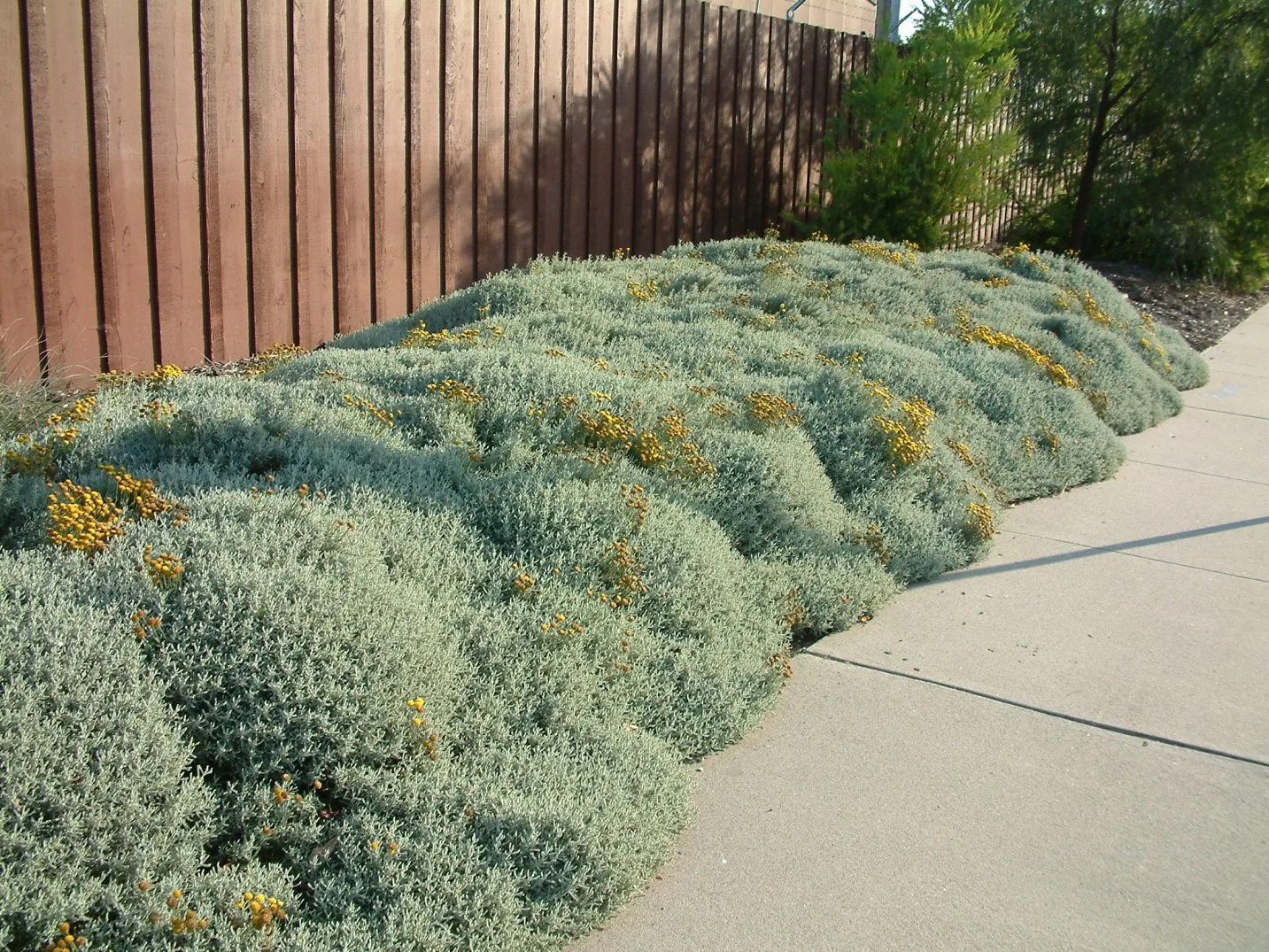
Santolina is especially useful as a low border. It can be used along paths, around beds, in the foreground or as repetition in a dry composition. When pruned correctly, it forms tight, low cushions that look very clean.
It is also a good choice for places where we do not want tall plants. For example, in front of lavender, perovskia, roses, yucca or ornamental grasses, santolina can create a low silvery layer that completes the composition.
Where to Plant Santolina
Santolina loves full sun. In a sunny place, the leaves are more silvery, the plant is more compact and the fragrance is stronger. In partial shade it can grow, but it often becomes looser, softer and less decorative.
The most suitable places are southern and western exposures, dry beds, places along paths, raised areas, gravel gardens, stone borders, terraces and Mediterranean-style compositions.
Santolina is not a plant for damp, shady corners. If we place it where the soil stays wet in winter, the risk of rot and frost damage increases. It prefers dry “feet”, plenty of air and good circulation around the clump.
Practical tip: if the place is good for lavender, perovskia and thyme, it is usually good for santolina too. If it is good for hostas and ferns, it is almost certainly not the right place for it.
What Soil Does Santolina Like?
Santolina prefers poor to moderately fertile, light and well-drained soil. It does not need rich garden soil and does not like heavy clay that holds water.
In overly rich and moist soil, the plant can produce soft, loose growth and lose its compact form. In winter, such conditions are even more risky, because wet soil and cold are a bad combination for many Mediterranean plants.
If the soil is heavy, it is good to improve it with fine gravel, sand, a little compost and materials that make the structure more airy. A raised bed or gravel mulch can help a lot.
This post contains affiliate links. As an Amazon Associate, I earn from qualifying purchases at no extra cost to you.
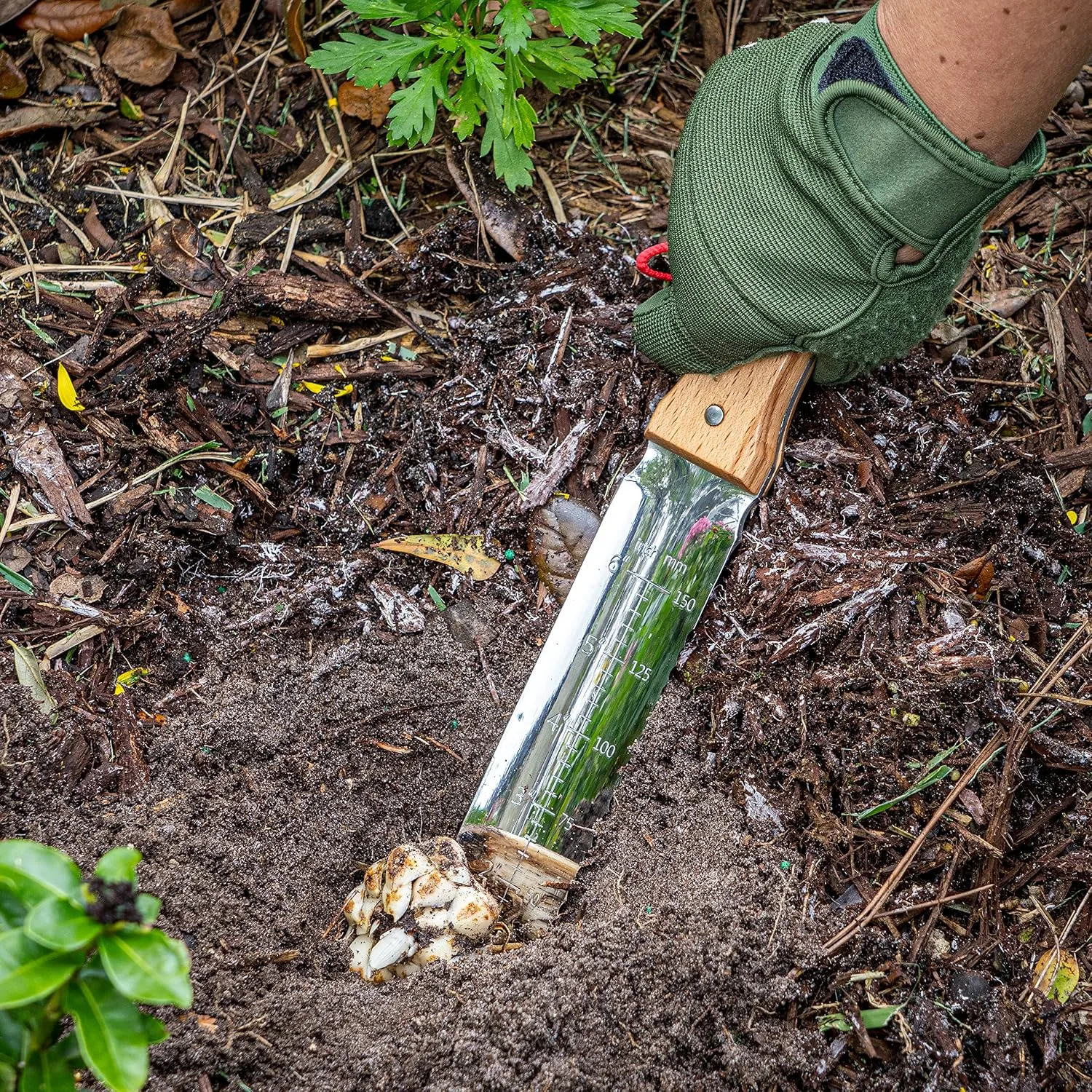
Santolina often ends up in gravel beds, narrow borders and other places where a full-size spade is more tool than you really need. A narrow hand blade is useful for making planting pockets and working organic matter or grit into a small area.
The Nisaku hori hori combines a digging blade with depth markings, making it useful for detailed planting work and occasional weeding. Once santolina is established, I would avoid unnecessary deep disturbance around the root system.
Popular Types of Santolina
Santolina chamaecyparissus is the best-known grey santolina. It has fine silvery-grey leaves and yellow summer flowers. This is the classic choice for Mediterranean borders, dry beds and compositions with lavender.
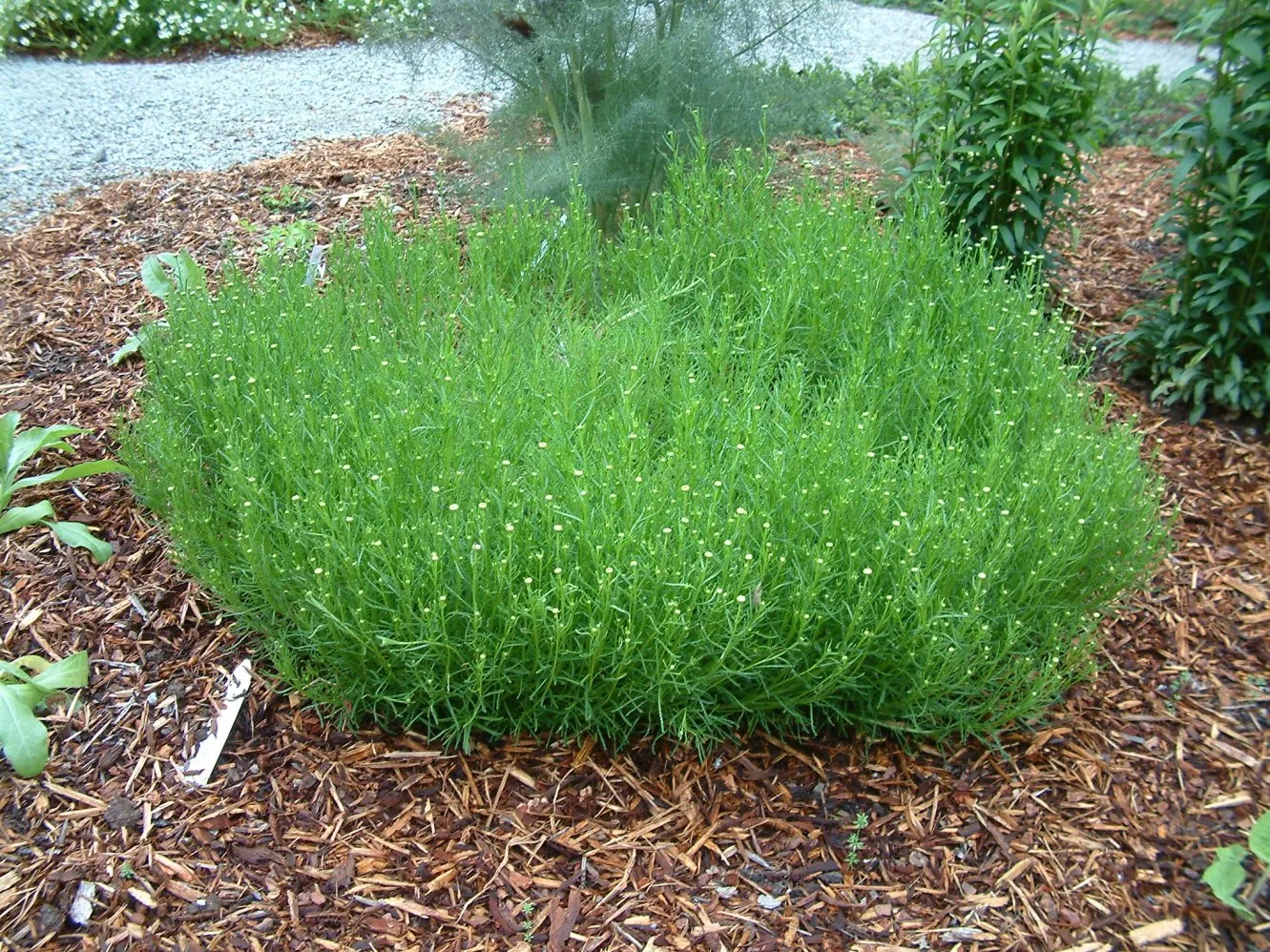
Santolina rosmarinifolia has greener leaves that slightly resemble rosemary. It looks softer and can be used in more natural compositions.
There are also compact forms that are especially suitable for low borders and small gardens. When buying, it is worth checking the real height and width, because different forms can behave differently in the garden.
| Type | What It Looks Like | Where It Works Best |
|---|---|---|
| Santolina chamaecyparissus | Fine silvery-grey leaves, yellow spherical flowers | Dry beds, borders, gravel, lavender, Mediterranean style |
| Santolina rosmarinifolia | Greener leaves, softer natural appearance | Natural compositions, herb beds, dry sunny places |
| Compact forms | Lower and tighter growth | Low borders, small gardens, foreground planting |
Watering and Feeding
After planting, santolina should be watered until it roots well. After that, watering should be reduced. Established plants tolerate dry periods well and do not like constantly wet soil.
If it is part of an automatic irrigation system that keeps the bed moist every day, santolina may begin to suffer. It is better placed in a zone with less frequent watering, together with other drought-tolerant plants.
Feeding should be minimal. Santolina is not a plant for heavy fertilizing. In rich soil and with too much nitrogen, it can become soft, loose and less resilient. It is better for it to grow tightly and more slowly than lushly and then fall apart.
How to Prune Santolina
Pruning is very important for santolina to look good. If it is not pruned, the small shrub can become woody, open in the middle and look old and uneven.
It is usually pruned after flowering, removing the faded flower stems and lightly shaping the green mass. Light spring shaping can also be done if there are damaged parts.
It is important not to cut too deeply into old wood, because santolina does not always recover well from completely bare, woody parts. The best approach is regular, moderate pruning — not many years without pruning followed by a radical operation.
Can Santolina Be Grown in a Container?
Yes, santolina can be grown in a container if the pot is placed in a sunny spot and has excellent drainage. This is a good option for terraces, entrances, courtyards and small spaces.
The container should have drainage holes, and the substrate should be light and free-draining. It is not good for santolina to sit in a decorative container without drainage, because the roots easily suffer from retained water.
In a container, it can be combined with lavender, thyme, rosemary, low grasses or sedums. It looks especially good in drier, Mediterranean-style compositions.
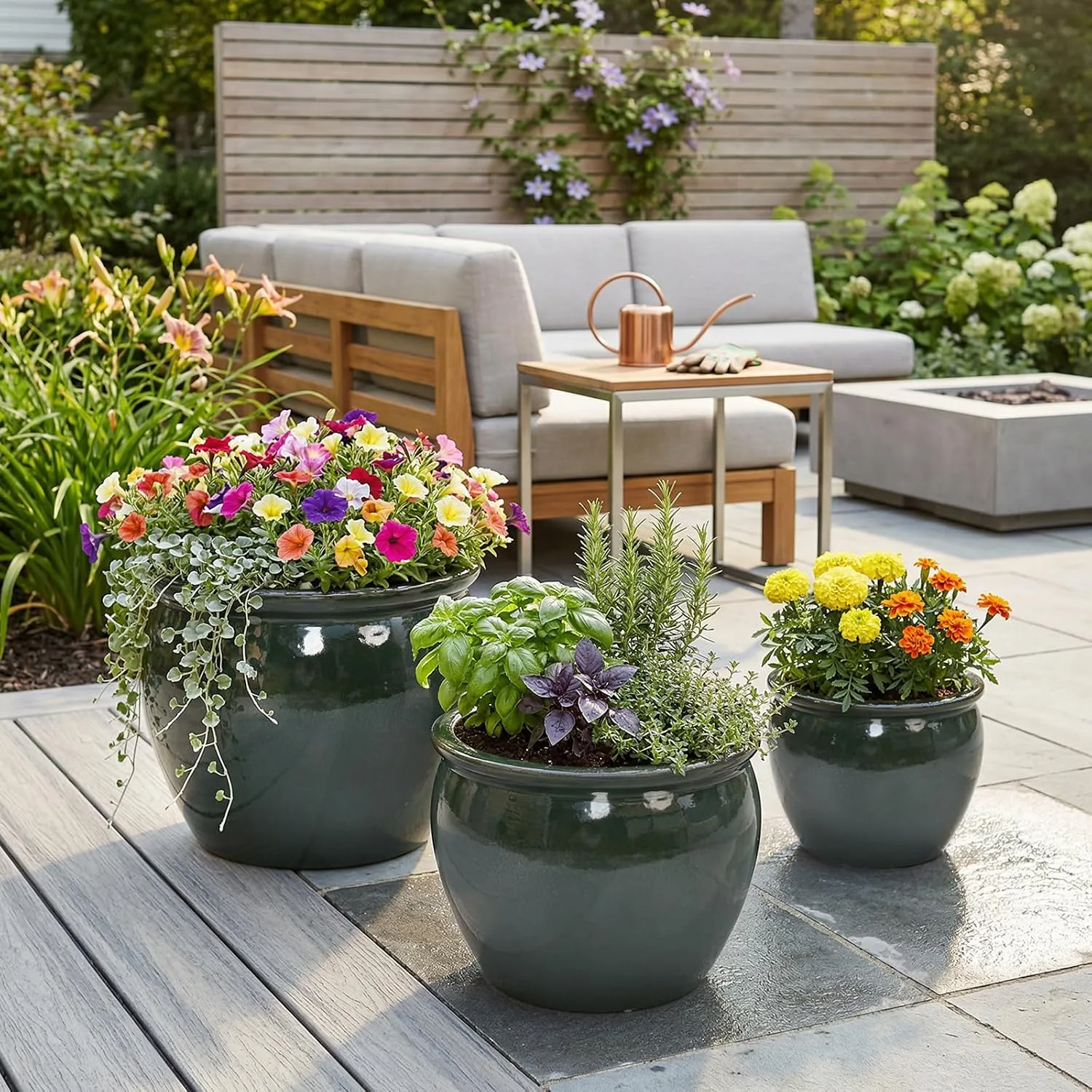
Santolina works particularly well in simple container compositions with other sun-loving Mediterranean plants. Its silver foliage also looks very good against deep blue and green glazed pottery.
This set of three graduated ceramic pots can be used to repeat the same planting style in different sizes. For santolina, I would make drainage the priority: the container must allow excess water to escape freely and the substrate should stay light rather than wet.
Why Santolina Falls Apart or Dies
The most common reason is overly wet soil. Santolina does not like waterlogging, especially in winter. If the place is heavy, shady and wet, the plant may rot or become weak.
The second reason is lack of pruning. Without regular trimming, the small shrub becomes woody and gradually loses its good shape. The third reason is overly rich soil and too much fertilizer, which lead to soft growth.
Sometimes santolina looks poor simply because it is in a place that does not match its character. It is not a plant for a moist romantic border. It is a plant for a dry, sunny and airy place.
What to Combine Santolina With
Santolina combines beautifully with lavender, perovskia, yucca, ornamental grasses, salvia, thyme, rosemary, sedums, catmint, barberry, roses and low drought-tolerant perennials.
Its silver color looks very good next to purple, blue, white, yellow and dark red. With lavender, it creates a classic Mediterranean combination. With perovskia, it looks more airy and modern. Next to yucca, it softens the firm architectural silhouette.
In modern gardens, santolina can be used with gravel, stone, concrete and clean lines. In more natural gardens, it is better repeated in small groups rather than placed as a single random shrub.
Is Santolina Worth Growing?
Yes, if you have a sunny, dry and well-drained place.
Santolina is very useful for low borders, dry beds, gravel compositions and Mediterranean corners. It gives silvery foliage, fragrance, an orderly form and a good effect through much of the year.
This is a plant for gardens that need light, structure and less unnecessary fuss.