
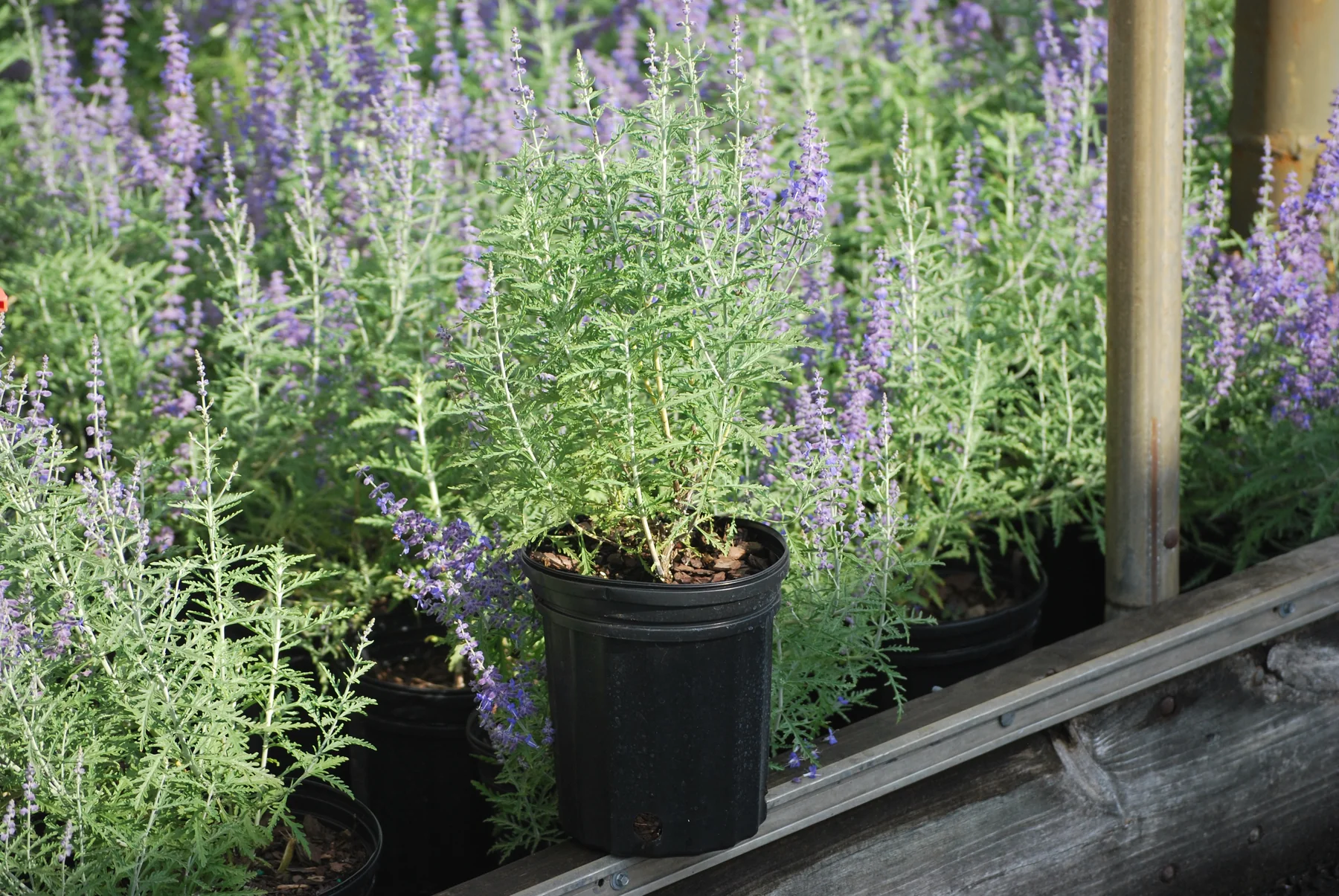
Perovskia is one of the most beautiful plants for sunny, dry and modern gardens. It has silvery stems, fine foliage and blue-purple flowering that looks like a light cloud above the border.
Among plants for sun, heat and easier maintenance, perovskia stands very close to lavender, santolina, ornamental grasses and yucca. But it has a different character. Lavender is more compact and aromatic, yucca is architectural and firm, while perovskia is airy, light and almost transparent.
This makes it a wonderful choice for places where we want color, but not heaviness. Perovskia can soften a dry bed, bring movement next to stone and gravel, connect lavender with ornamental grasses or create a blue-purple background for roses, echinacea and other summer plants.
What Is Perovskia?
Perovskia, also known as Russian sage, is a perennial subshrub-like plant with aromatic grey-green leaves and long flowering stems. It is most often found as Perovskia atriplicifolia, although in some classifications it also appears as Salvia yangii.
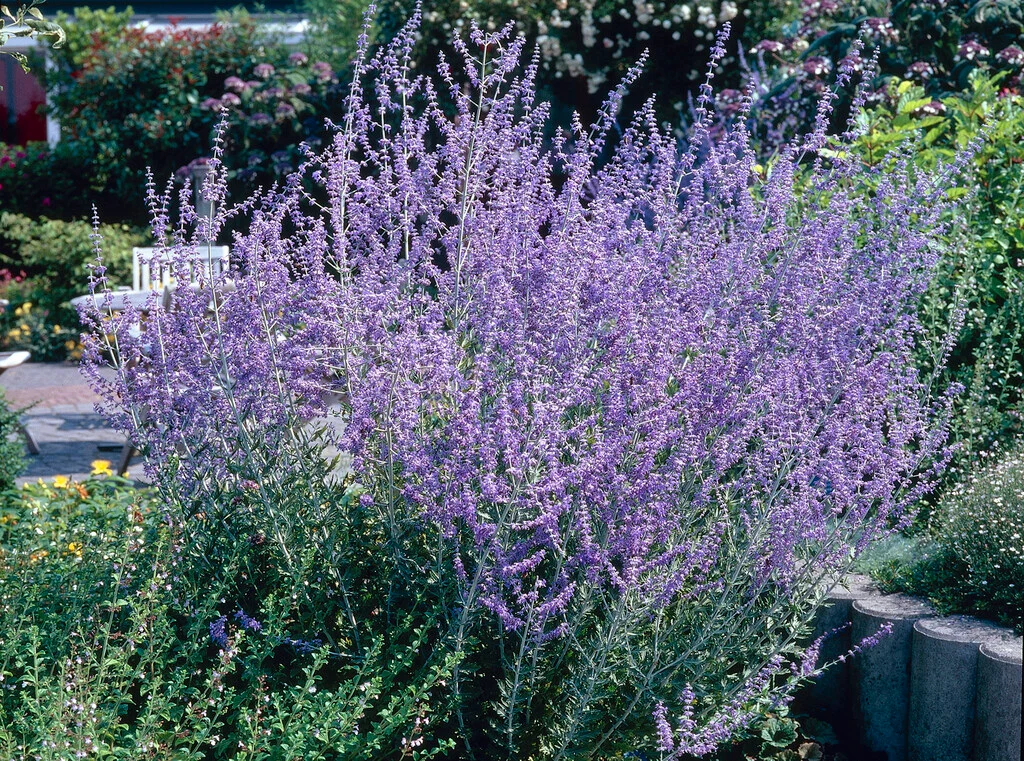
It flowers in summer and often continues for a long time, especially if the plant is in the right place. The flowers are small, but numerous, creating a light blue-purple veil. From a distance, perovskia looks like a soft cloud rather than a dense flowering shrub.
Perovskia is a plant for gardens that need air. It does not fill the space heavily — it makes it lighter.
Why Perovskia Is Valuable in Garden Design
Its greatest quality is the combination of resilience and lightness. Many drought-tolerant plants have a hard, coarse or prickly silhouette. Perovskia is the opposite — it is drought tolerant, but looks delicate.
Its silvery stems and leaves make it very good for modern and Mediterranean-style compositions. The blue-purple flowering looks beautiful next to yellow, white, pink and silvery plants. In combination with ornamental grasses, perovskia creates movement and softness without looking chaotic.
It is especially useful in beds that look too dense. If you have many shrubs and heavy leaf masses, perovskia can bring transparency. If you have a dry, stony area, it can make it livelier and softer.
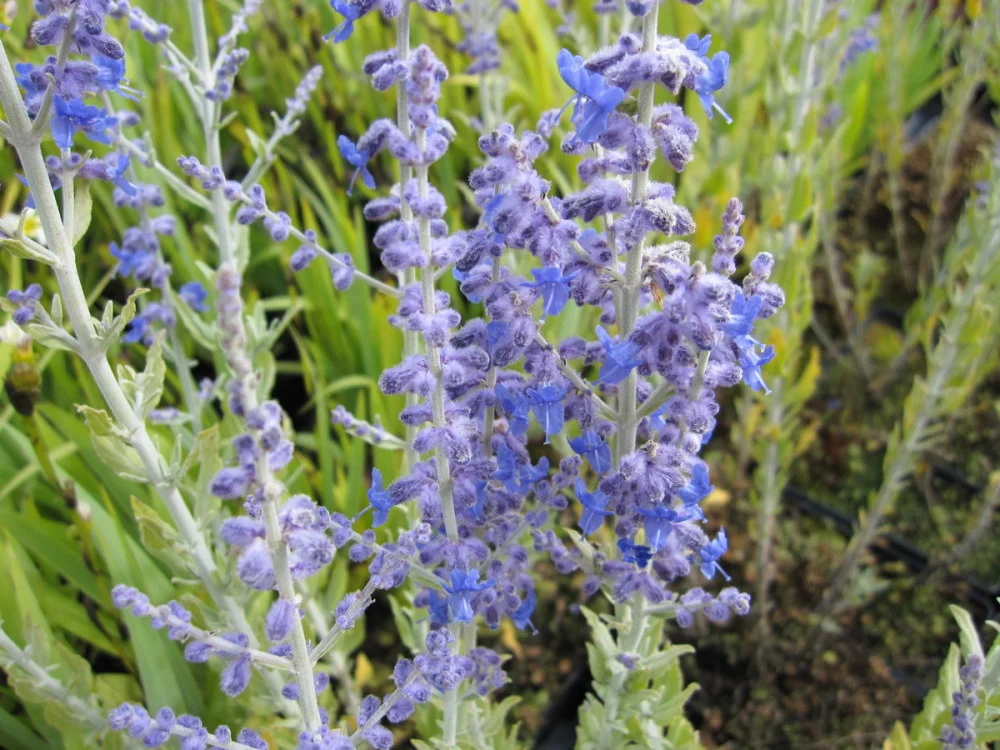
Where to Plant Perovskia
Perovskia loves full sun. To stay healthy, compact and full of flowers, it needs a lot of light. In partial shade, the stems may stretch, the plant may fall open and flowering may become weaker.
The most suitable places are southern and western exposures, dry beds, areas with gravel or stone, raised sections, modern gardens, gardens around a terrace and compositions with other drought-tolerant plants.
Perovskia does not like heavy, wet and cold soils. If the place holds water in winter, the plant may suffer. It is much better in drier, free-draining soil where the roots do not sit in water.
Practical tip: if lavender feels good in a certain spot, perovskia will very likely feel good there too. Both love sun, air and good drainage.
What Soil Does Perovskia Like?
Perovskia prefers poor to moderately fertile, well-drained soil. It is not a plant for a heavy, moist and heavily fertilized border. In overly rich soil, it can produce growth that is too lush, soft and unstable, falling open and losing its good shape.
If the soil is clayey, it is good to improve it with fine gravel, sand, a moderate amount of compost and materials that make it more airy. A raised bed is also suitable, especially if the place holds water in winter.
Perovskia is a good choice for gardens where we do not want constant watering. Once established, it tolerates dry periods much better than many classic ornamental plants.
Popular Perovskia Cultivars
Perovskia atriplicifolia is the classic form, which can reach greater height and create an airy blue-purple background in the border. It is suitable for larger spaces and mixed borders.
'Blue Spire' is a popular cultivar with strong flowering and a good effect in groups. It is suitable for the middle and back of sunny borders.
'Little Spire' is a more compact cultivar, suitable for smaller gardens, the front or middle of borders and more orderly compositions. It is a good choice if you like perovskia but do not have space for a large, free-growing clump.
'Denim 'n Lace' is a more compact modern cultivar with an intense blue-purple effect and good form. It is suitable for contemporary gardens, containers and more structured beds.
| Cultivar | What It Looks Like | Where It Works Best |
|---|---|---|
| Perovskia atriplicifolia | Taller, airy, with blue-purple flowering | Large sunny borders, dry compositions, background planting |
| 'Blue Spire' | Strong flowering, good blue-purple effect | Groups, middle and back of borders, gardens with grasses |
| 'Little Spire' | More compact cultivar with an orderly form | Small gardens, middle of borders, lower compositions |
| 'Denim 'n Lace' | Compact, modern cultivar with intense color | Contemporary borders, containers, terraces, gravel gardens |
Watering and Feeding
After planting, perovskia should be watered until it roots well. After that, its need for water decreases significantly. Established plants tolerate dry periods well, especially if they are in suitable, well-drained soil.
Overwatering can be a problem. If the soil stays constantly moist, the plant becomes weaker and may rot in winter. Perovskia prefers a drier regime, similar to lavender and santolina.
Feeding should be moderate. In rich soil and with too much fertilizer, perovskia can produce tall, soft and unstable growth. It is better for it to grow a little tighter than to turn into a collapsing shrub.
This post contains affiliate links. As an Amazon Associate, I earn from qualifying purchases at no extra cost to you.

Perovskia needs regular moisture while it is establishing, but it does not want the entire bed kept constantly wet. A watering wand makes it easier to direct water to the base of newly planted clumps without automatically soaking everything around them.
This RESTMO wand has several spray patterns and thumb-flow control, which is useful when switching between newly planted perennials, containers and more established drought-tolerant areas. Once perovskia is rooted well, watering can usually become less frequent.
How to Prune Perovskia
Perovskia is pruned in late winter or early spring, before active new growth begins. Usually, the old stems are cut low to encourage fresh growth from the base.
It is not good to cut it too early in autumn, because the old stems can provide some winter protection and keep structure in the border. In addition, the dry stems often look good in the winter garden, especially in combination with ornamental grasses.
If the plant falls open during the season, the reason is often insufficient sun, overly rich soil or lack of proper spring pruning. Supports rarely solve the problem as well as the right position.
Can Perovskia Be Grown in a Container?
Yes, especially compact cultivars such as 'Little Spire' and 'Denim 'n Lace'. In a container, perovskia can be a beautiful accent on a sunny terrace, around a pool or in a courtyard.
The container should be large enough, stable and have very good drainage. The substrate should be light and free-draining. In summer, container-grown plants are watered more often than those in the ground, but they should not stay constantly wet.
In a container, perovskia looks very good with ornamental grasses, low sedums, santolina or lavender. This is a good way to bring a drought-tolerant, modern effect even into a small space.
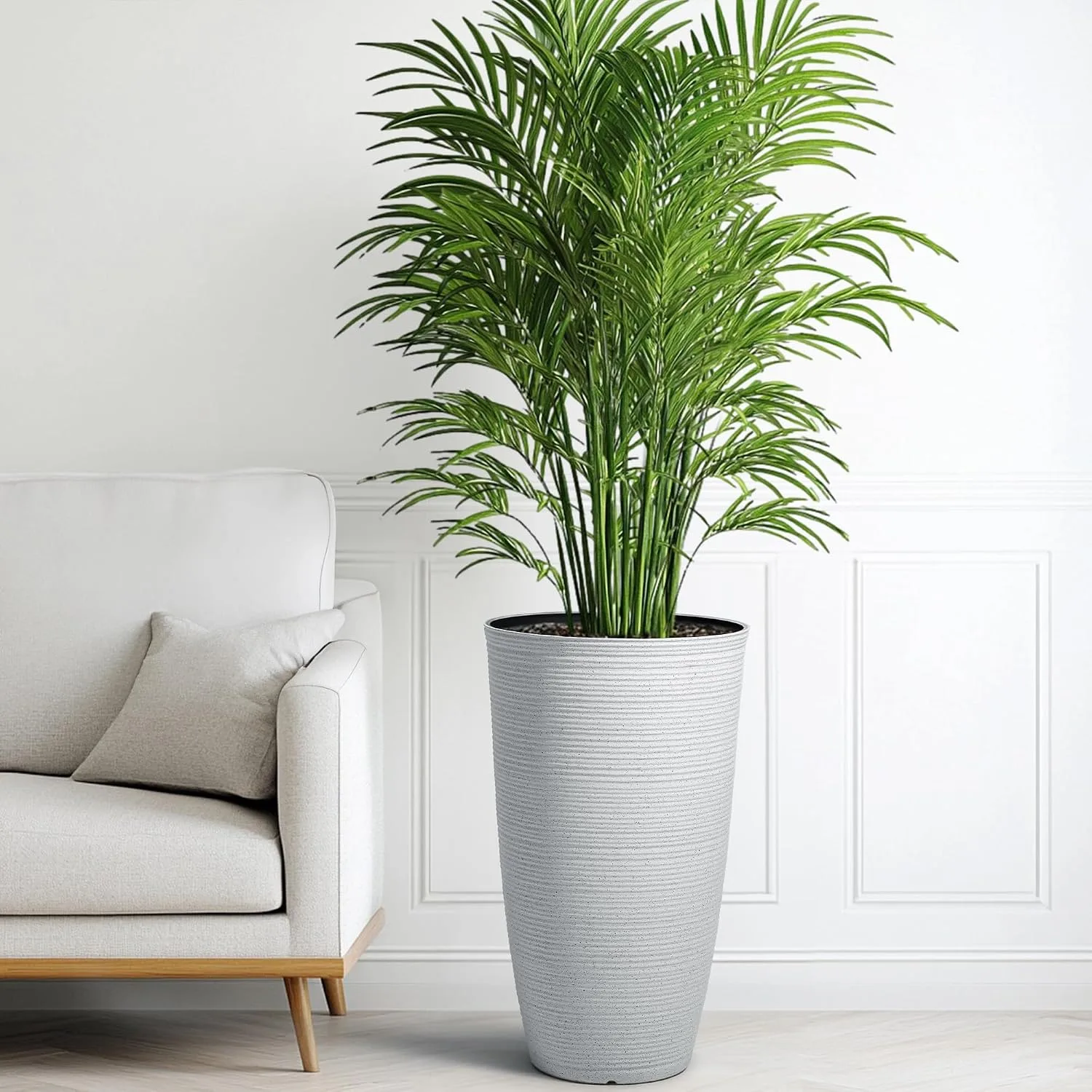
Compact perovskia cultivars work particularly well in tall, architectural containers because the airy stems contrast with a simple, clean pot shape rather than competing with it.
These 23.5-inch tapered planters can suit terraces, courtyards and contemporary garden areas. For perovskia, I would make sure drainage is excellent and avoid filling a tall container with a heavy, moisture-retentive soil mix.
The Most Common Mistakes
The first mistake is planting it in shade. Perovskia needs sun to stay tight and floriferous. The second is overly rich or wet soil, which leads to soft growth and winter problems.
The third mistake is lack of pruning. If old stems are not pruned in spring, the plant can look scattered and untidy. The fourth is choosing a tall cultivar for a small bed, where there is not enough space for its natural silhouette to develop.
What to Combine Perovskia With
Perovskia combines beautifully with plants for sun, heat and good drainage. Good partners include lavender, santolina, ornamental grasses, yucca, echinacea, rudbeckia, salvia, catmint, roses, sedums, barberry and buddleia.
Its blue-purple color looks very good next to yellow, white, pink and silvery plants. Next to roses, it creates a freer and more romantic effect. Next to grasses and gravel, it looks more modern and drought-tolerant. Next to yucca, it softens the firm architectural form.
It looks best in groups or repetition. One perovskia can be beautiful, but several plants repeated through the border create that airy blue-purple rhythm that makes the composition feel complete.
Is Perovskia Worth Growing?
Yes, if you have a sunny, dry and well-drained place.
Perovskia is an extremely useful plant for modern and more natural gardens. It brings blue-purple flowering, silvery foliage, lightness and heat tolerance.
This is a plant for gardens that need not only color, but also air, movement and a softer summer silhouette.