
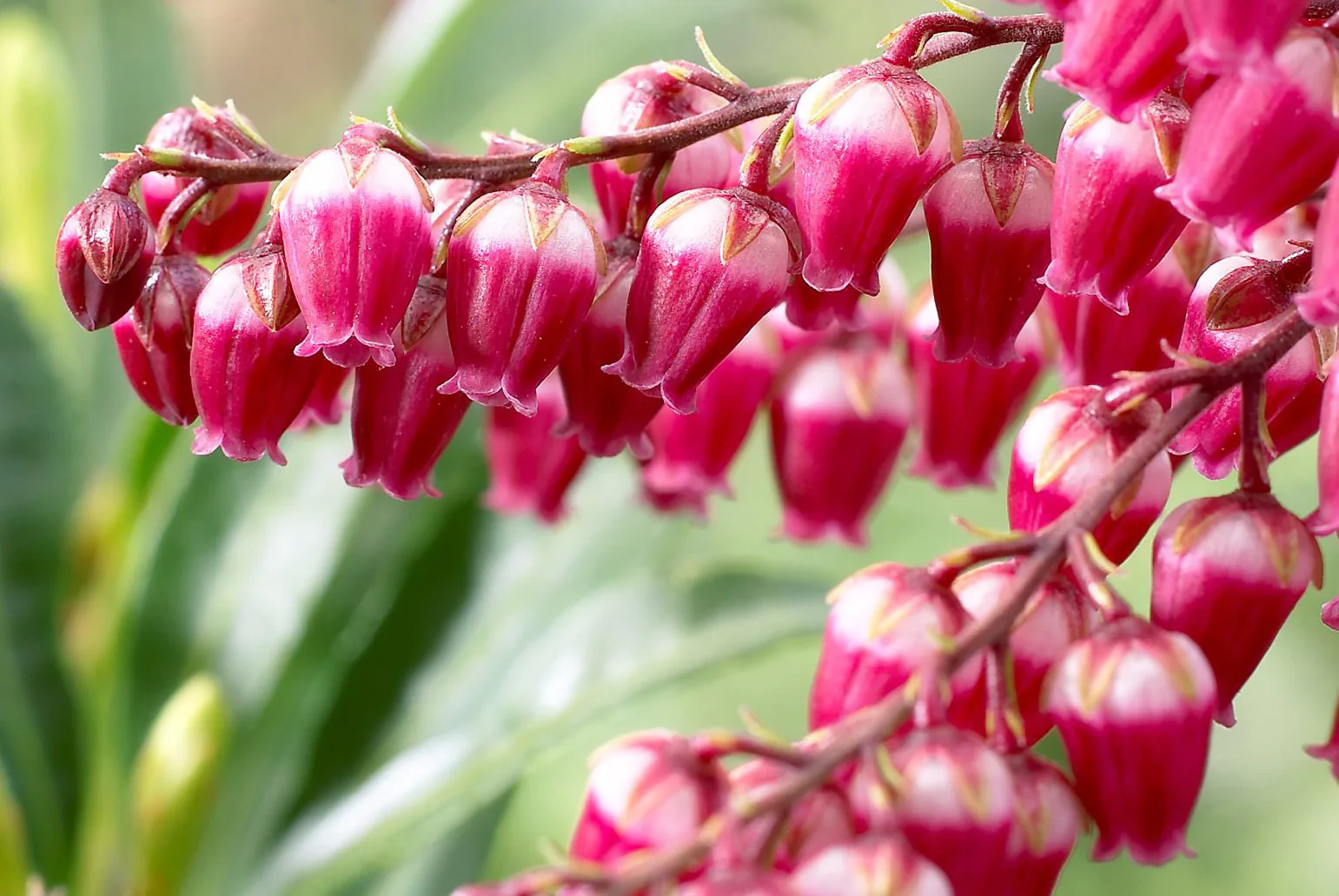
Pieris is an evergreen ornamental shrub that often remains in the shadow of rhododendrons and azaleas. In fact, it is one of the most beautiful plants for partial shade, acidic soil and more refined garden compositions.
In the “Designer Accents in the Garden” series, pieris has a special role. It is not a large tree like magnolia, not dramatic like ornamental plum and not as popular as hydrangea. But it has one quality that makes it very valuable — it looks good in more than one season.
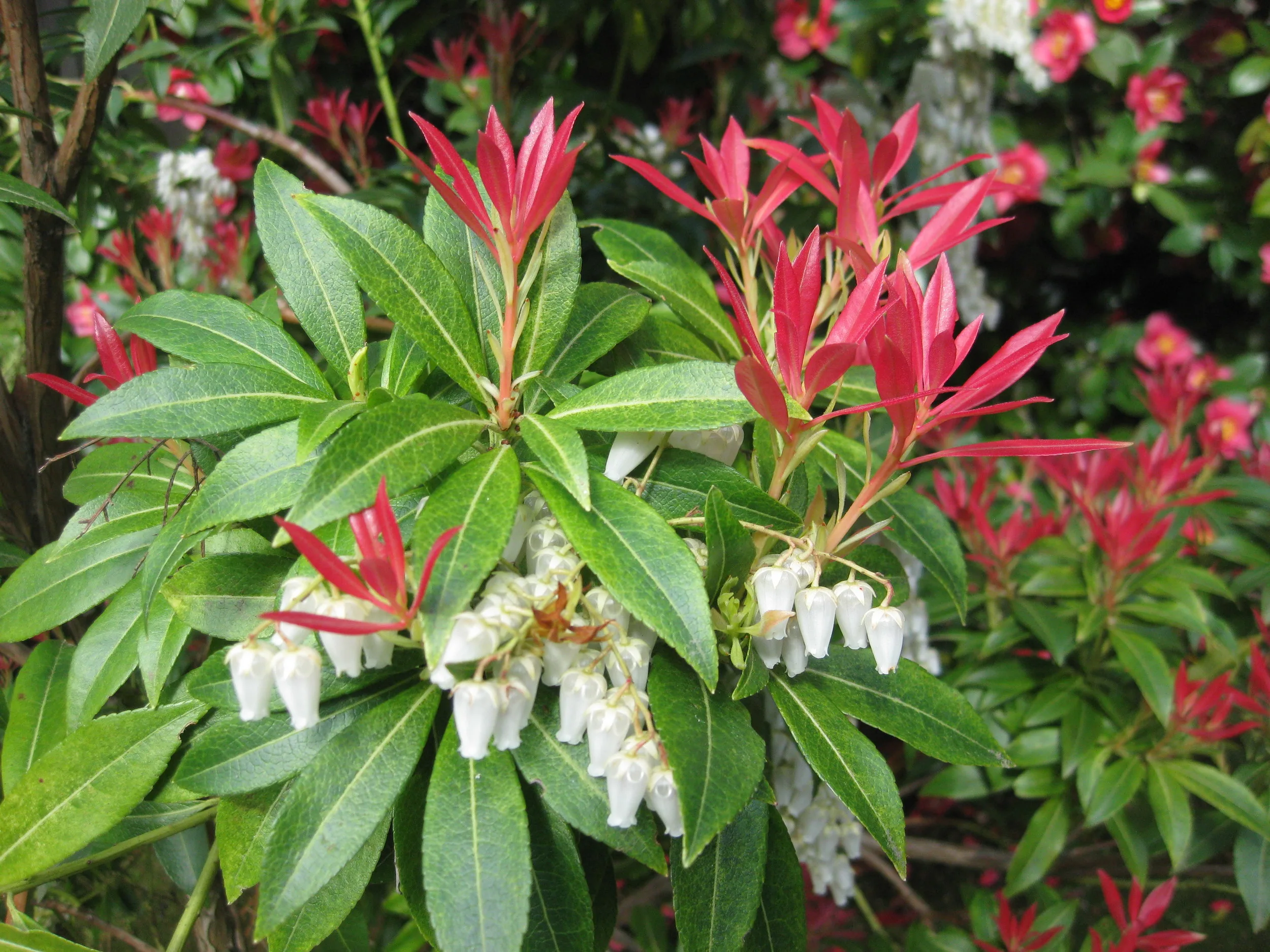
In spring, pieris can bloom with delicate, hanging white or pink flower clusters. Then comes the new growth — often red, copper, pink or bronze. During the rest of the year, it stays evergreen and orderly. This makes it a wonderful choice for shaded and partially shaded corners where we want color, but not only for two weeks.
What Is Pieris?
Pieris (Pieris japonica) is an evergreen shrub with requirements similar to rhododendrons and azaleas. It likes acidic, organic-rich, loose and well-drained soil. It is not a plant for chalky or heavy soils, nor for a place where water sits around the roots.
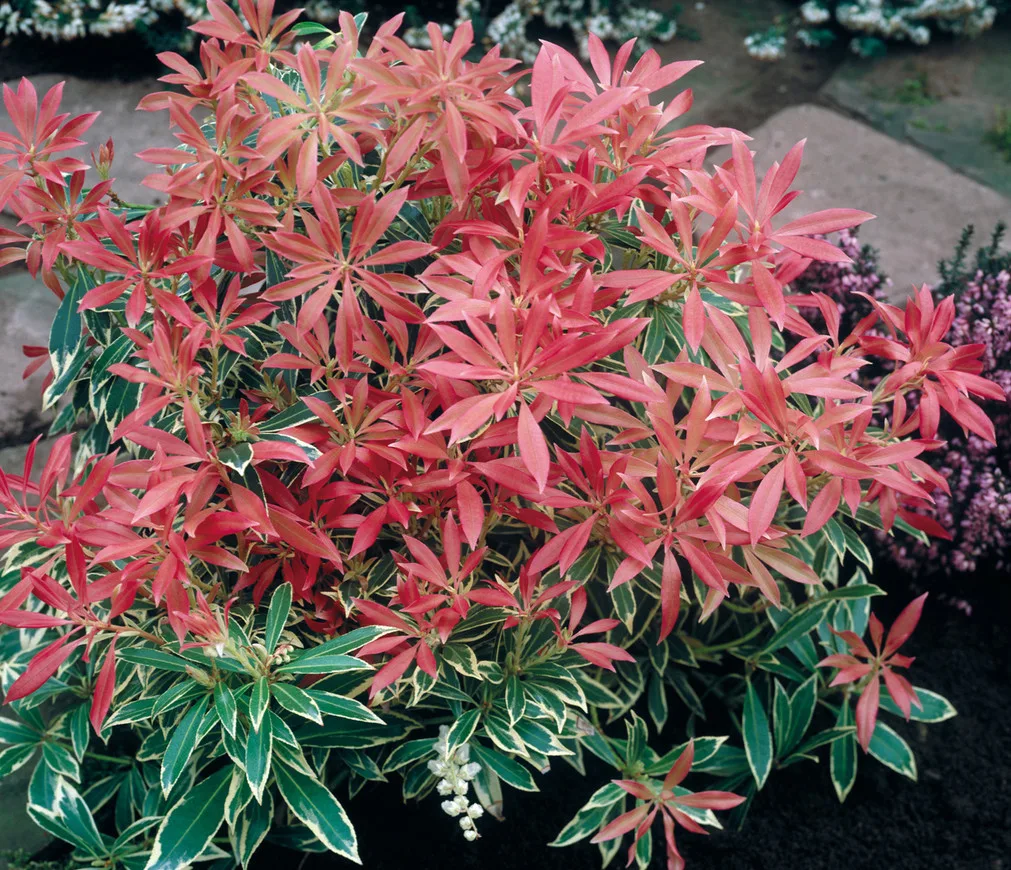
Its leaves are leathery, glossy and decorative all year round. The most striking moment is the new growth, which in many cultivars appears in red, copper or pink tones. This colorful stage is often just as beautiful as the flowering itself.
Pieris is a shrub for gardens where detail matters — it does not shout, but in the right place it is hard to miss.
Where to Plant Pieris
Pieris feels best in partial shade. The ideal place is one with morning sun and afternoon shade, or bright, dappled shade under taller trees. Strong midday and afternoon sun can scorch the young leaves, especially in hot regions.
In Southern Bulgaria, it is best to avoid open southern positions with heat and dry wind. Eastern and northeastern exposures, courtyards, protected corners around a terrace or places near Japanese maple, rhododendron, azalea and hydrangea are more suitable.
Pieris looks especially good in calmer compositions — not in the middle of a lawn, but as part of a well-arranged shaded corner. It can be a background for lower plants or an accent in a group of acid-loving shrubs.
What Soil Does Pieris Like?
Here, pieris is very clear. It is an acid-loving plant. It grows best in soil that is acidic to slightly acidic, rich in organic matter, airy and well drained.
If the soil is chalky or strongly alkaline, pieris may begin to suffer. The leaves turn yellow, growth weakens and the plant looks strained, even if we water and fertilize it. This is often not a lack of care, but the wrong soil.
Important: do not add lime, wood ash or alkaline soil improvers around pieris. These are useful materials for other plants, but with acid-loving shrubs they can create problems.
When planting, you can use a substrate for rhododendrons, azaleas and other acid-loving plants. Acidic peat, leaf mould, composted conifer litter and organic matter that improves soil structure also work well.
Popular Pieris Cultivars
The most common garden cultivars are forms of Pieris japonica. The differences between them are mainly in the color of the new growth, height, compactness and flower color.
Pieris japonica 'Forest Flame' is one of the most popular cultivars. The young leaves emerge bright red, then pass through pink and cream before turning green. This is a cultivar with a very strong spring effect.
'Mountain Fire' is also valued for its red new growth. It is suitable as an accent in a partially shaded bed or in front of darker evergreen foliage.
'Little Heath' is a more compact cultivar, often with variegated leaves. It is good for small gardens, foreground planting and containers.
'Valley Valentine' has pink-red flowers and is an interesting choice if we want something different from the classic white clusters.
| Cultivar | What It Looks Like | Where It Works Best |
|---|---|---|
| 'Forest Flame' | Bright red new growth, strong seasonal change | Partial shade, acidic soil, accent in a bed |
| 'Mountain Fire' | Red young leaves and evergreen structure | Near rhododendrons, azaleas, hydrangeas, Japanese maple |
| 'Little Heath' | Compact, often with variegated leaves | Small gardens, containers, foreground planting |
| 'Valley Valentine' | Pink-red flowers, a more unusual bloom | As a colorful accent in a partially shaded composition |
Watering and Mulching
Pieris likes even moisture, but does not tolerate waterlogging. Its roots are relatively shallow and sensitive, so the soil should be moist but airy. This is the same logic that applies to rhododendrons and azaleas.
During the first years after planting, watering is especially important. If the plant dries out often, the new growth may suffer and the overall appearance of the shrub may decline. In hot periods, it is better to water more deeply rather than superficially every day.
Mulching is very useful. Pine bark, conifer litter, leaf mould or wood chips help preserve moisture, keep the soil cooler and gradually improve the upper layer.
This post contains affiliate links. As an Amazon Associate, I earn from qualifying purchases at no extra cost to you.
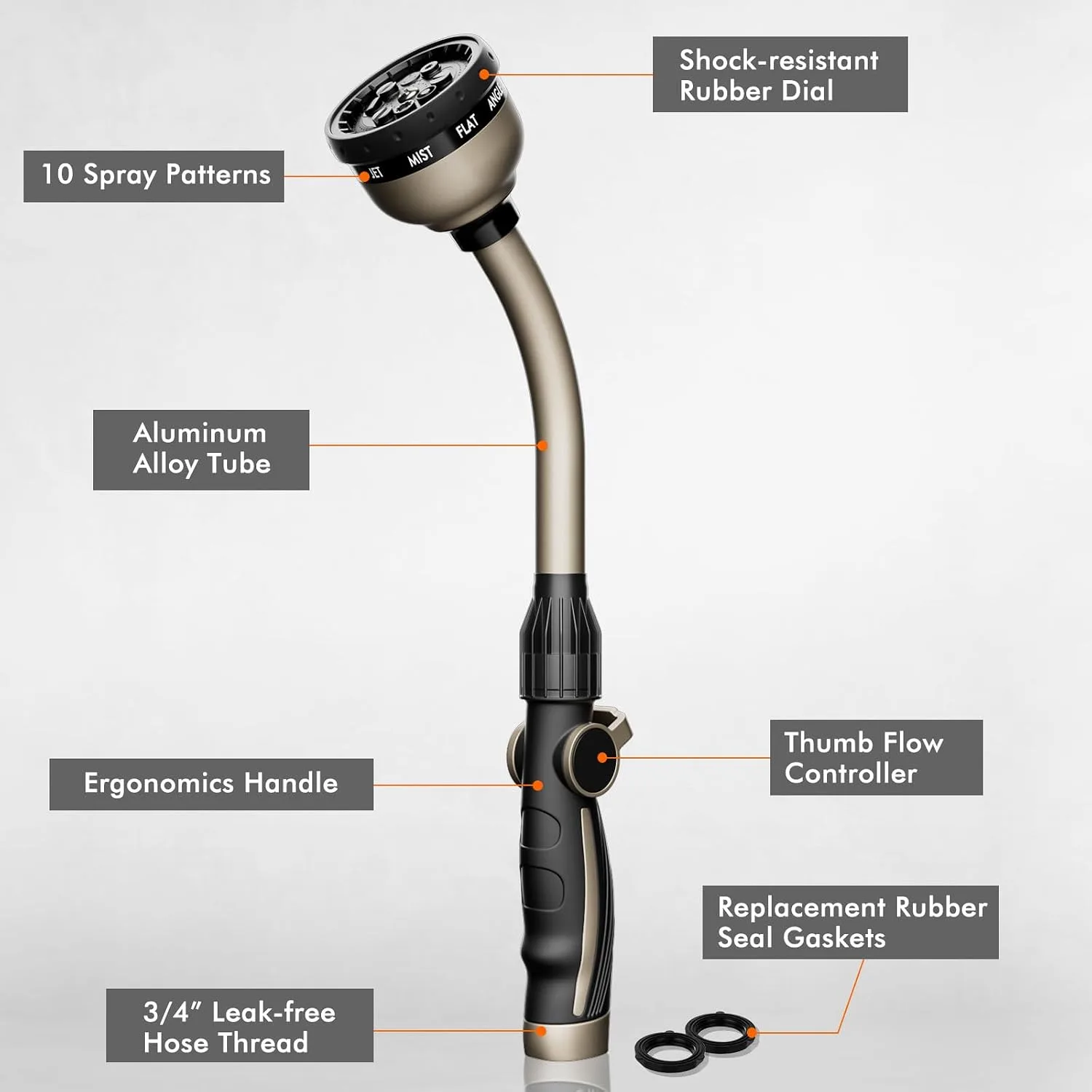
Pieris prefers steady moisture rather than repeated cycles of drying out and soaking. A watering wand makes it easier to direct water around the root zone without blasting the surface of the soil or disturbing mulch around the shrub.
This RESTMO wand has multiple spray patterns and thumb-flow control, so the stream can be adjusted for shrubs, containers and more delicate planting areas. I would still water according to the soil itself rather than by a fixed schedule.
Feeding
Pieris does not like aggressive fertilizing. It is best to use a fertilizer for rhododendrons, azaleas or acid-loving plants, and to apply it moderately. Excessive feeding can lead to soft growth that suffers more easily from cold, heat or drought.
If the leaves turn yellow, do not rush to add any random fertilizer. First think about the soil pH. With acid-loving plants, the problem is often not a lack of nutrients, but the fact that the plant cannot absorb them because the soil is unsuitable.
Pruning Pieris
Pieris does not need heavy pruning. Its natural form is usually compact and orderly. Most often, only dry, broken or damaged branches are removed.
If light shaping is needed, it is best done after flowering. This way we do not remove the flower buds and give the plant time to restore its shape. With compact cultivars, pruning is often almost unnecessary.
Faded flower clusters can be removed if they are visible and easy to reach. This keeps the shrub cleaner, but it does not need to become a major operation.
Can Pieris Be Grown in a Container?
Yes, especially compact cultivars. A container can even be an advantage if the garden soil is chalky or heavy, because it is easier to provide a suitable acidic substrate in a pot.
The container should be large enough, with good drainage and a quality substrate for acid-loving plants. In summer, pieris in a container should be watered regularly, but should not sit in water. In winter, it is good to keep the pot in a protected place, especially away from cold wind.
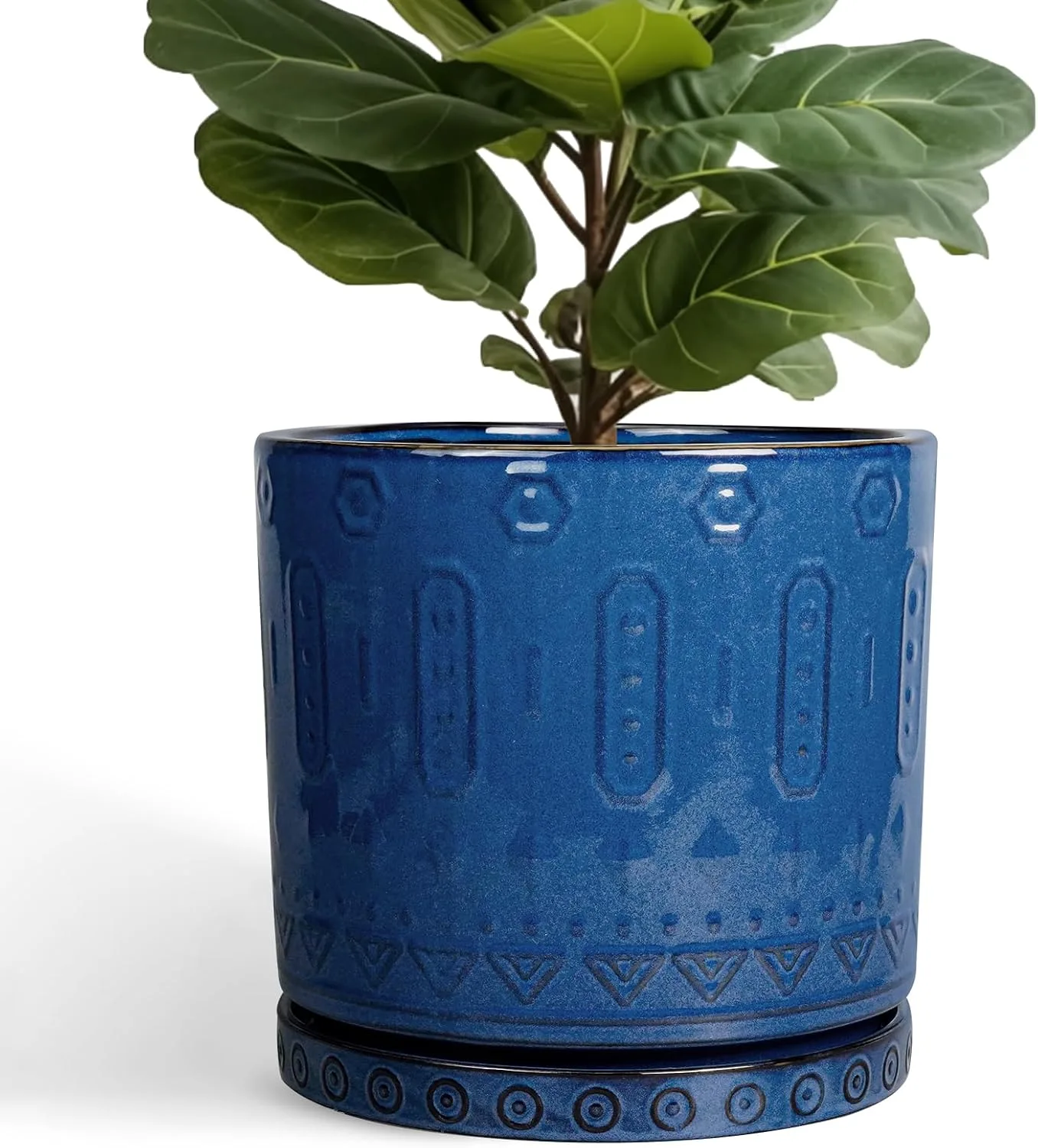
A container is often the simplest solution when the native garden soil is too alkaline for pieris. It allows you to control the substrate much more easily and can work particularly well with compact cultivars such as 'Little Heath'.
This 12-inch glazed ceramic planter includes drainage and a saucer. For pieris, I would still make sure that excess water can escape freely and choose the final pot size according to the actual root ball and mature size of the cultivar.
The Most Common Mistakes
The first mistake is planting it in unsuitable soil. If the soil is chalky, pieris will struggle to look good without serious preparation. The second is a place with too much strong sun and dry wind. The young leaves can scorch, and the plant may look stressed.
The third mistake is waterlogging. Pieris likes moisture, but does not like its roots standing in water. The fourth is overfeeding with unsuitable fertilizers. With pieris, less but correct is better than much but wrong.
What to Combine Pieris With
Pieris combines beautifully with other plants for acidic soil and partial shade. Good partners are rhododendrons, azaleas, hydrangeas, skimmia, hostas, ferns, Japanese maple, hellebores and low evergreen shrubs.
In a composition, it can play the role of an intermediate shrub — not as large as rhododendron, but more structural than perennials. The red new growth looks especially good next to dark green leaves, stone, a shaded path or the fine greenery of ferns.
If you are creating a Japanese or woodland corner, pieris is very suitable. It has a calm form, evergreen foliage and seasonal change, without looking too bright or intrusive.
Is Pieris Worth Growing?
Yes, if you have partial shade and can provide acidic, loose and well-drained soil.
Pieris is beautiful not only when it flowers. It gives evergreen structure, colorful new growth and a very good effect in shaded and partially shaded compositions.
This is a plant for people who like finer garden details and want the garden to look interesting in more than one season.