
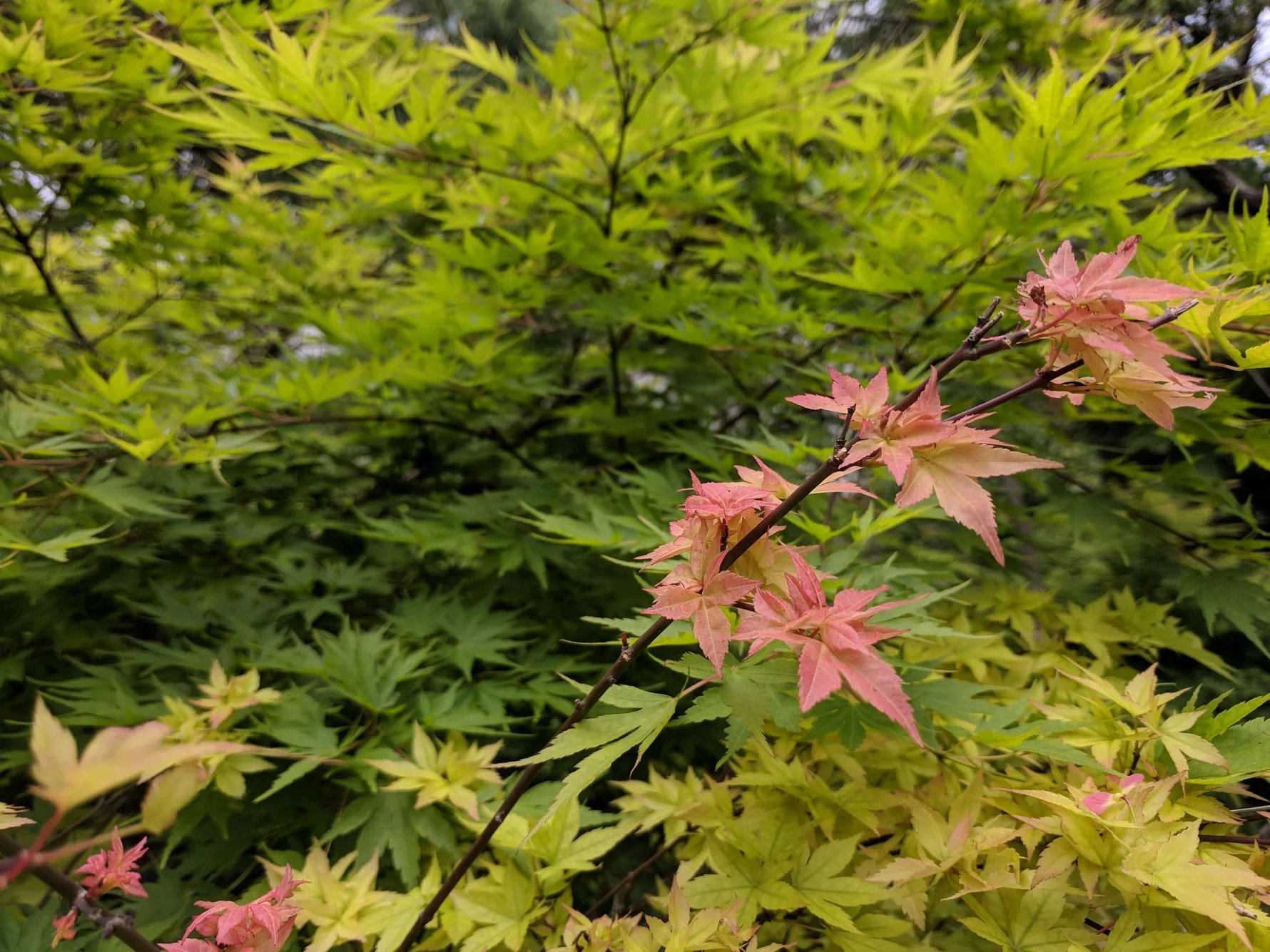
Japanese maple (Acer palmatum) is one of the most beautiful ornamental trees for the garden. It is not a plant for quick effect, hedging or filling an empty space. It is chosen when we are looking for form, seasonal change and a more refined composition.
In the “Designer Accents in the Garden” series, we look at plants that do not simply “green” a space, but create character. Nandina, ornamental plum, magnolia, ornamental grasses — each has its own role. But if we had to name one tree that brings together structure, seasonality, elegance and quietness, it would probably be the Japanese maple.
It works equally well in modern gardens, Japanese gardens, courtyards, shady corners, compositions near water and representative entrance areas. But there is one condition — we must choose the right place for it. With acer, the location is half the care.
Why Japanese Maple Is So Valuable
The reason is not only in the beautiful leaves. Many plants have beautiful leaves, but few manage to be so expressive throughout the year.
Japanese maple has a fine, airy crown. The leaves are detailed, often deeply cut, and the branches form a beautiful silhouette even in winter. Spring brings fresh growth, summer brings calm greenery or a dark red accent, autumn brings dramatic change, and winter reveals the shape of the tree itself.
Japanese maple is not a plant that shouts in the garden. It is a plant that makes you come closer.
This is exactly why it is so valuable in garden design. It attracts attention, but does not overpower everything around it. It is not aggressive, not massive, and it does not close the space. Rather, it organizes it.
The Most Popular Types and Cultivars of Japanese Maple
When we say “Japanese maple”, we most often mean Acer palmatum. This is the classic species from which many ornamental cultivars originate. It is suitable for both small gardens and larger landscapes, as long as it is not planted in a harsh, hot and windy place.
Acer palmatum 'Bloodgood' is one of the best-known red-leaved cultivars. Its leaves remain dark red for much of the season and look very good next to lighter plants, grasses, stone or a pale façade.
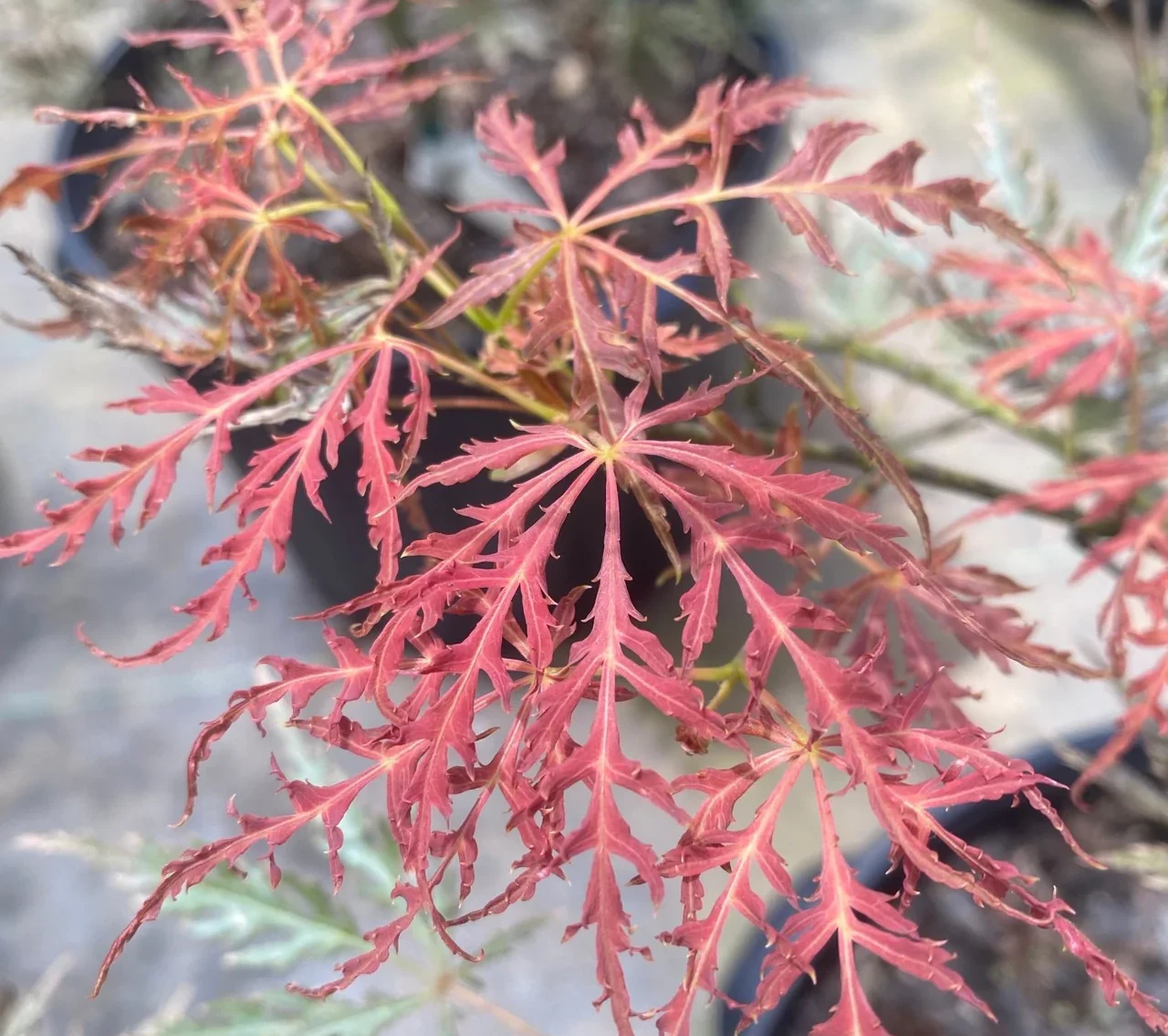
Acer palmatum 'Dissectum' has finely cut leaves and often a weeping form. This is the cultivar we most often imagine near water, beside stones, in a Japanese garden or in a composition with ferns and hostas.
Acer palmatum 'Sango-kaku', known as coral bark maple, is especially interesting in winter. Its branches turn bright red to coral, and the tree remains decorative even without leaves.
Acer palmatum 'Orange Dream' is a cultivar with yellow-orange spring growth. It is very beautiful, but also more sensitive to strong sun. For this one, it is best to choose a protected place with soft light.
Other beautiful species are also found, such as Acer japonicum and Acer shirasawanum. They often have larger leaves and impressive autumn color, but are not always easy to find in nurseries.
| Cultivar / Species | What It Looks Like | Where It Looks Best |
|---|---|---|
| Acer palmatum | Classic form, fine crown, seasonal change | Small and medium gardens, partial shade, protected places |
| 'Bloodgood' | Dark red leaves through much of the season | As an accent next to light plants, grasses or stone |
| 'Dissectum' | Finely cut leaves, often with a weeping form | Near water, in Japanese gardens, next to ferns and hostas |
| 'Sango-kaku' | Coral-red branches in winter | Where it can be seen during the winter months as well |
Where to Plant Japanese Maple
The most common mistake is planting it in full southern sun. Especially in Southern Bulgaria, this can quickly lead to leaf scorch, browning along the edges and general weakening of the plant.
Japanese maples prefer morning sun and afternoon shade. They like protected spaces, higher air humidity and a place without strong, dry winds. An eastern or northeastern exposure is usually much more suitable than an open southern position.
Good places for planting include courtyards, corners around terraces, places near water features, partial shade under taller trees or more protected parts of the garden. If you have a small garden, Japanese maple can be the main accent around which an entire composition is built.
This post contains affiliate links. As an Amazon Associate, I earn from qualifying purchases at no extra cost to you.
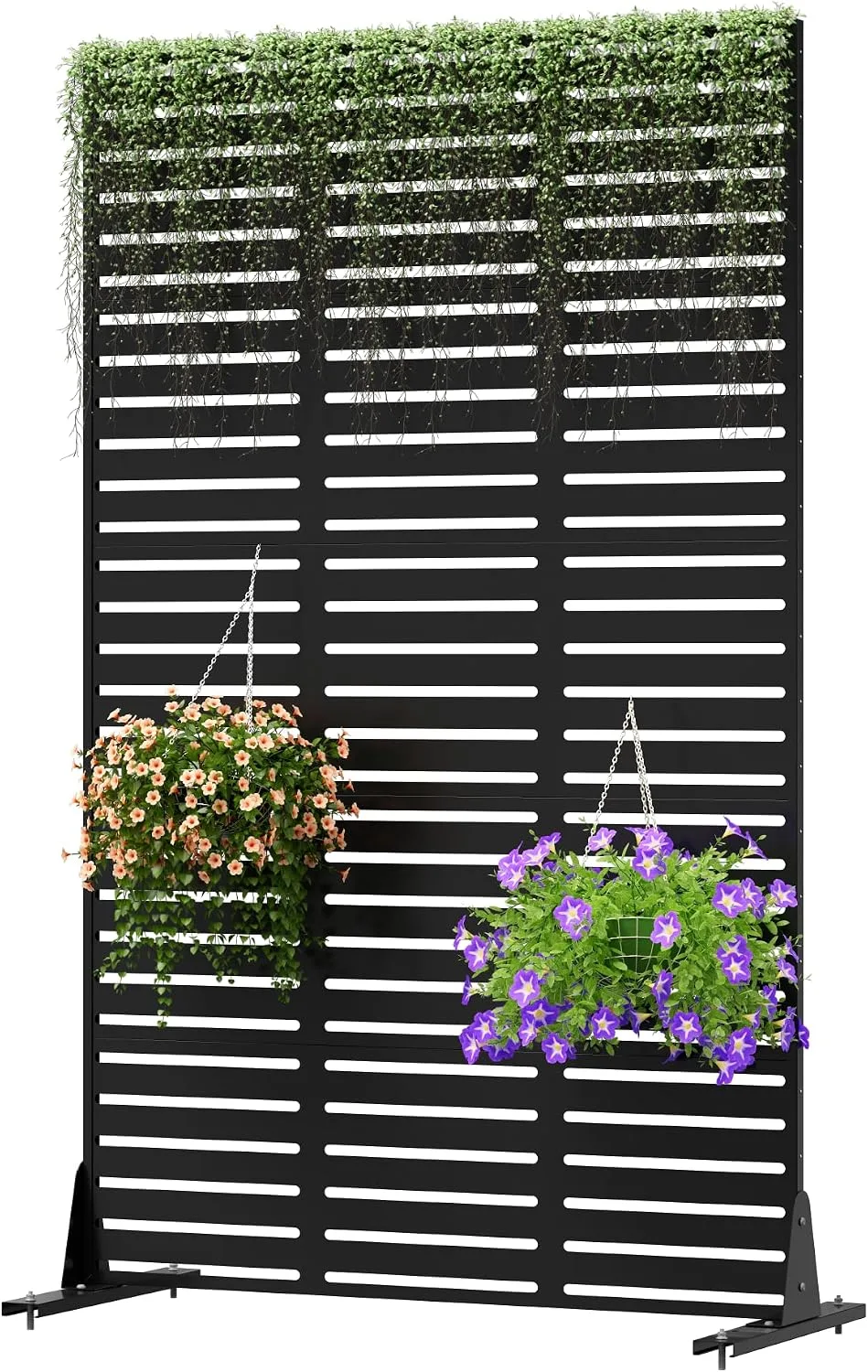
Japanese maple usually looks best in a quiet, defined corner rather than standing exposed in the middle of an open garden. On a terrace or courtyard, a freestanding screen can help create a more enclosed visual setting around the planting.
This Cofar metal screen is freestanding and can also be used as a backdrop for hanging or climbing plants. I would treat it as a landscape and privacy element, not as a substitute for a proper structural windbreak where strong winds are a real problem.
What Soil Does Japanese Maple Like?
If we had to describe the ideal soil in one word, it would be: woodland. Loose, rich in organic matter, moderately moist, well drained and alive.
Japanese maple does not like heavy, compacted, waterlogged soil. If the site is clayey, it is good to add compost, leaf mould, well-rotted manure and a lighter structure when planting, so the roots can breathe.
There is no need to overdo fertilizing. This is not a plant that wants to be “pumped up” with nitrogen. Compost, mulch and moderate spring feeding work better. Heavy fertilizing in summer can lead to soft growth that is more easily damaged by heat, cold or wind.
Watering and Mulching
The first two to three years after planting are the most important. Japanese maple does not tolerate either prolonged drought or constantly wet soil very well. A balance is needed — regular moisture, but without waterlogging.
Mulching is almost essential. Bark, wood chips, leaf mould or compost help preserve moisture and keep the temperature around the roots lower in summer. This is especially important in hot regions where the soil heats up quickly.
Practical tip: do not pile mulch directly against the trunk. Leave a little free space around the base so moisture does not collect and cause a risk of rot.
Pruning and Shaping
Unlike photinia, leylandii or other hedge plants, Japanese maple is not pruned to become “tight”. It is pruned minimally, so its natural architecture can be seen.
Remove dry, diseased and crossing branches, branches growing inward, and shoots from the base. It is best to work carefully and gradually. With acer, one bad pruning cut remains visible for a long time.
The goal is not to impose a shape, but to reveal the one the tree already has. This is the big difference between shaping and forcing.
Can Japanese Maple Be Grown in a Container?
Yes, and many cultivars are wonderful in containers. This makes them suitable for terraces, courtyards, urban gardens and small spaces where there is no room for a large tree.
It is important for the container to be large enough, with good drainage and enough weight to remain stable in the wind. In summer, the pot should not overheat, because the roots are more vulnerable than those of a plant in the ground.
When grown in a container, watering should be more regular, but again without water standing in the pot. If you want acer in a container, choose a more compact cultivar and a place with light afternoon shade.
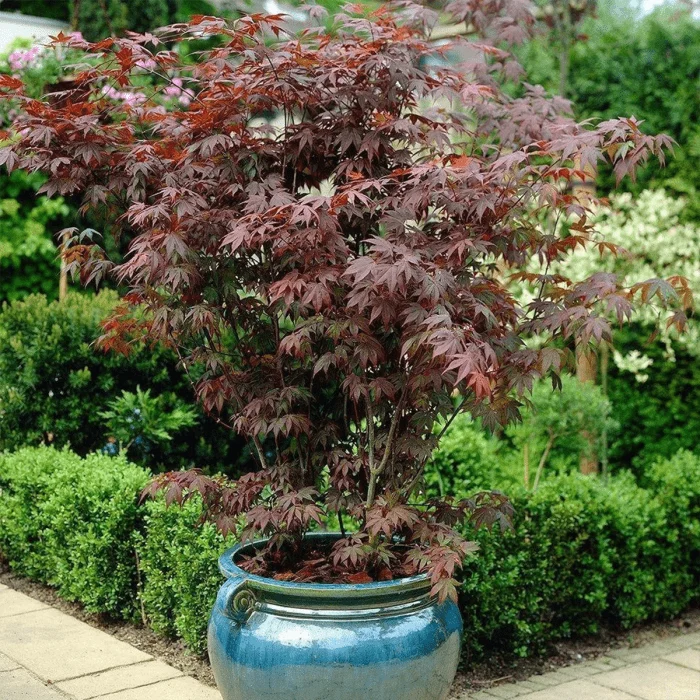
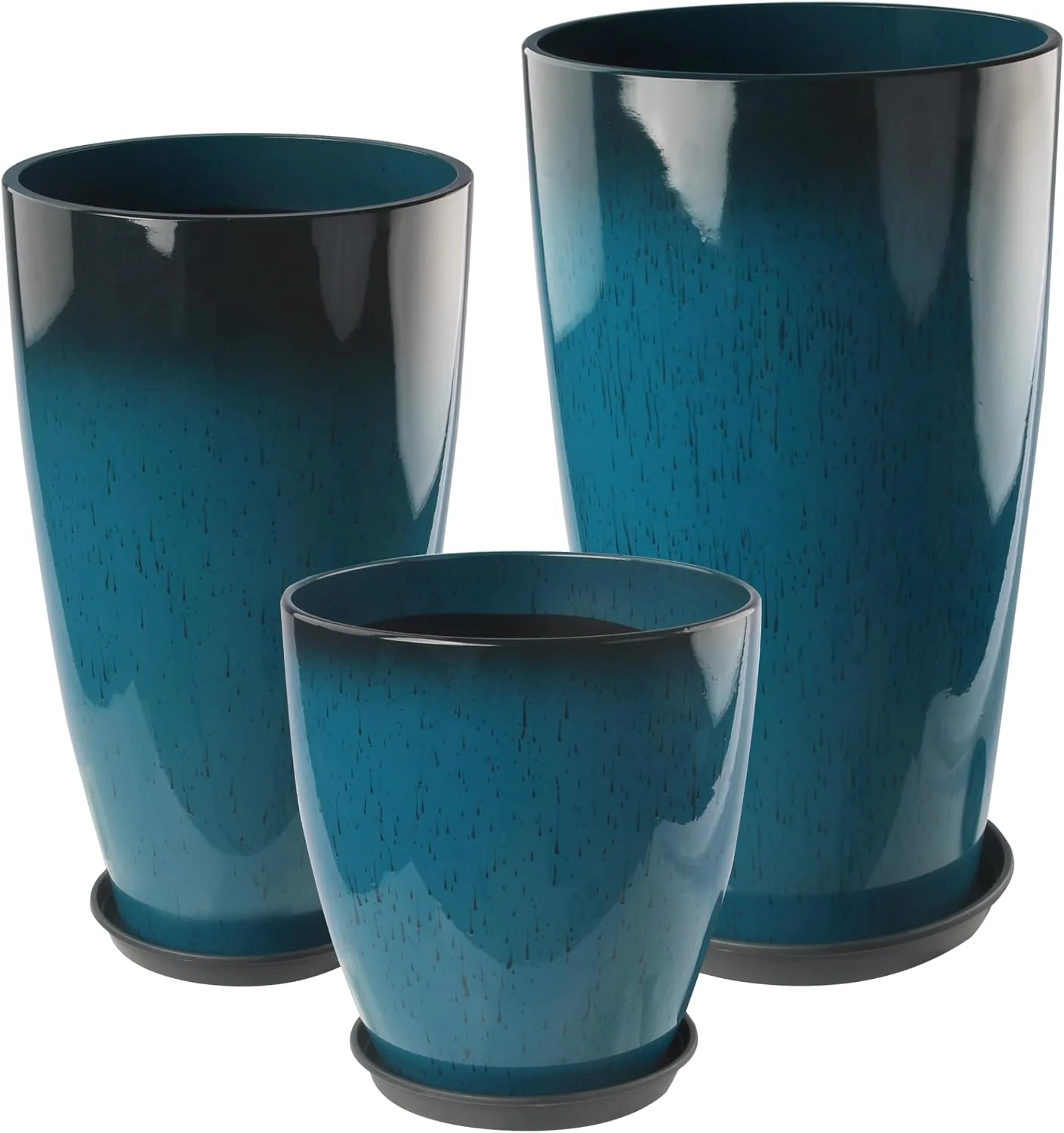
Japanese maple can look especially good in a substantial container, where the pot becomes part of the composition rather than simply something that holds the roots.
These tall blue planters come in graduated sizes and can work well for architectural container planting. For a Japanese maple, I would choose the size according to the actual root ball and cultivar, make sure drainage is excellent and avoid allowing the container to become excessively hot in strong summer sun.
The Most Common Mistakes with Japanese Maple
The first mistake is planting it in full sun. The second is exposure to dry wind. The third is poor drainage. The fourth is excessive pruning.
When the leaves turn brown along the edges, the cause is often not disease, but a combination of heat, wind, dry air and insufficient moisture. This is why location is so important. Japanese maple can be relatively easy if planted correctly, and quite demanding if we simply put it wherever there was space left.
What to Combine Japanese Maple With
Some of the best partners are azaleas, rhododendrons, ferns, hostas, hakonechloa, bamboo, ornamental grasses, low evergreen shrubs and stone.
From the “Designer Accents in the Garden” series, especially good combinations include nandina for year-round color and texture, ornamental plum for contrast between dark and light foliage, magnolia for a strong spring accent and ornamental grasses for movement and a more natural look.
In a Japanese garden, acer has a particularly strong presence. It brings seasonality, balance, calm and respect for time. This is why we see it so often in temple gardens, parks and traditional courtyards in Kyoto, Tokyo and Osaka.
Is Japanese Maple Worth Growing?
Yes, if you are ready to give it the right place.
Japanese maple is not the most trouble-free plant in the garden, but under suitable conditions it is one of the most beautiful ornamental trees for a small or medium garden. It brings form, color, seasonality and a feeling of a complete composition.
If you are looking not just for greenery, but for a more refined accent in the garden, Japanese maple is definitely worth growing.