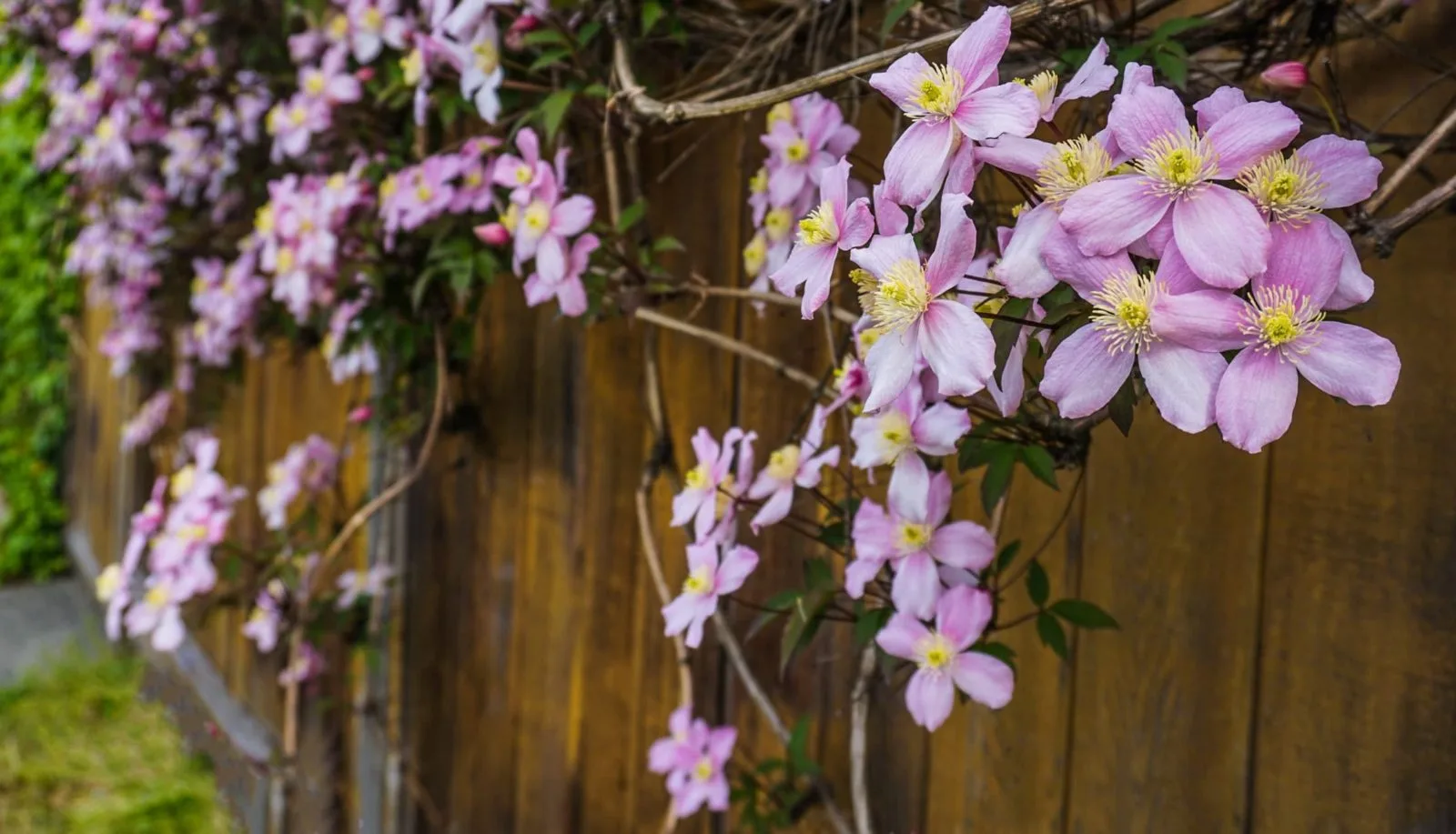
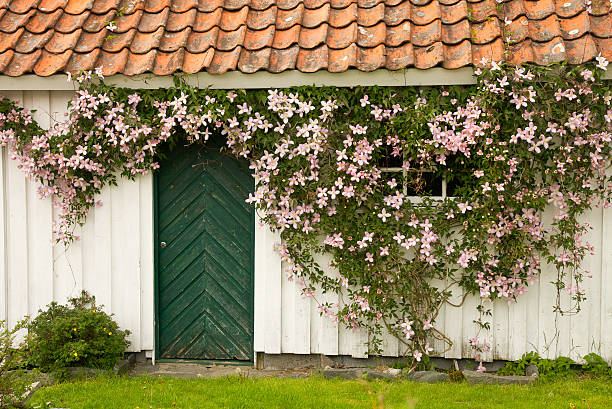
Clematis is one of those plants that can completely transform a corner of the garden in a single season. It can cover an arch, fence or pergola, weave its way through a climbing rose, or turn a large container on the terrace into a wall of flowers.
Despite its rather dramatic appearance, clematis is not especially difficult to grow. The part that usually causes the most confusion is pruning.
If we remember three things - enough light, a cool and evenly moist root zone, and the correct pruning group - half the work is already done.
Where to Plant Clematis
Most clematis flower best in a bright position. At the same time, the root zone prefers to remain relatively cool and evenly moist.
The old rule “head in the sun, feet in the shade” is actually quite useful. The base can be shaded with low-growing perennials or mulch, without piling material tightly around the crown of the plant.
In very hot gardens, some light afternoon shade can also be an advantage.
Do Not Plant It Tight Against a Wall
The area immediately beside a solid wall or fence is often surprisingly dry because very little rain reaches the soil there.
I leave a reasonable distance so the roots can receive water, then guide the shoots toward the support.
When planting beside a wall, think about the roots first and where you want the plant to climb second. The stems can be redirected later. The root zone is much harder to move after a few years.
Soil and Watering
Good soil for clematis should be fertile, loose and well drained, while still being able to retain enough moisture.
In heavy soil, I improve the structure and drainage first. In very sandy soil, I add organic matter so the water does not disappear immediately after watering.
Clematis dislikes both permanently wet roots and complete drying out.
How I Water Clematis
Especially during the first few seasons after planting, I keep an eye on soil moisture. I prefer deeper watering around the roots rather than wetting only the surface every day.
The same rule applies here that I use throughout the garden: I look at the soil and the weather, not the calendar.
Growing Clematis in a Pot
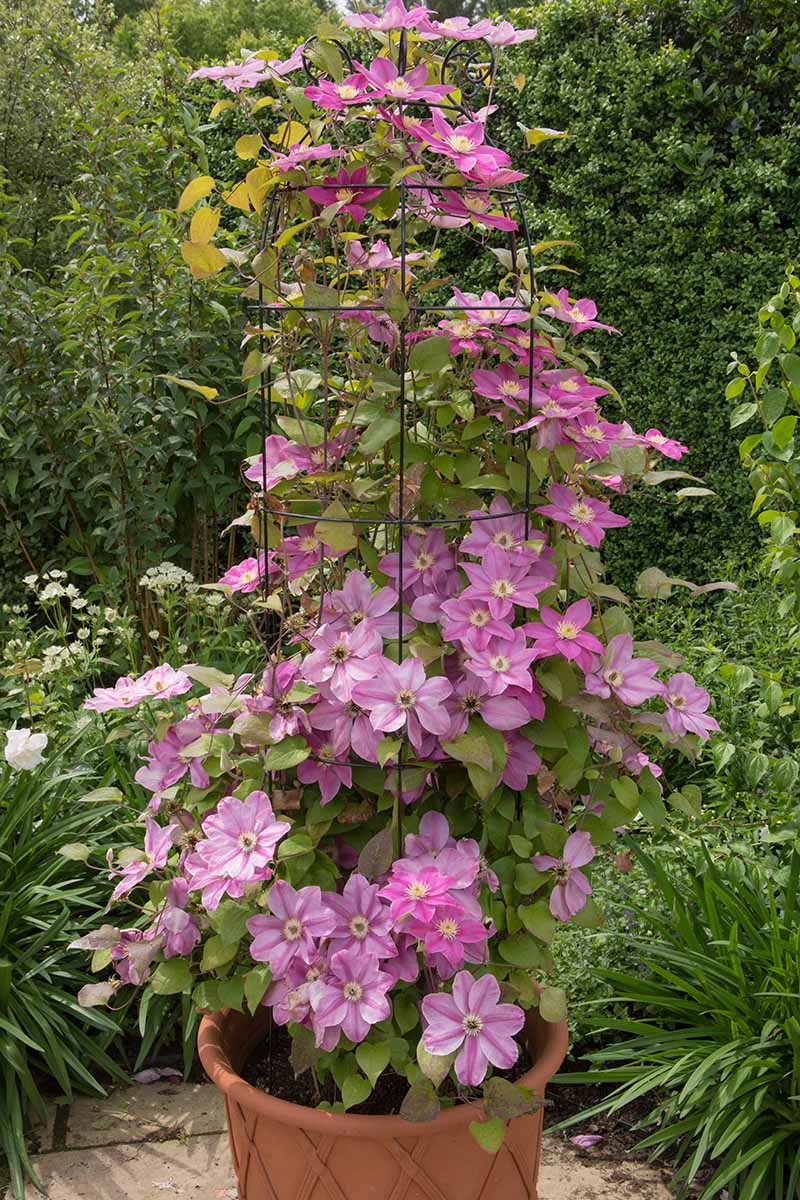
Clematis can grow beautifully in a container, provided the pot is large enough, has good drainage and is paired with a stable support.
The larger the plant becomes above ground, the more important the volume of soil becomes. It helps both with moisture retention and with keeping the temperature around the roots more stable.
For a container, I would choose a more compact cultivar rather than a plant whose natural ambition is to reach the second floor.
What Kind of Support Does Clematis Need?
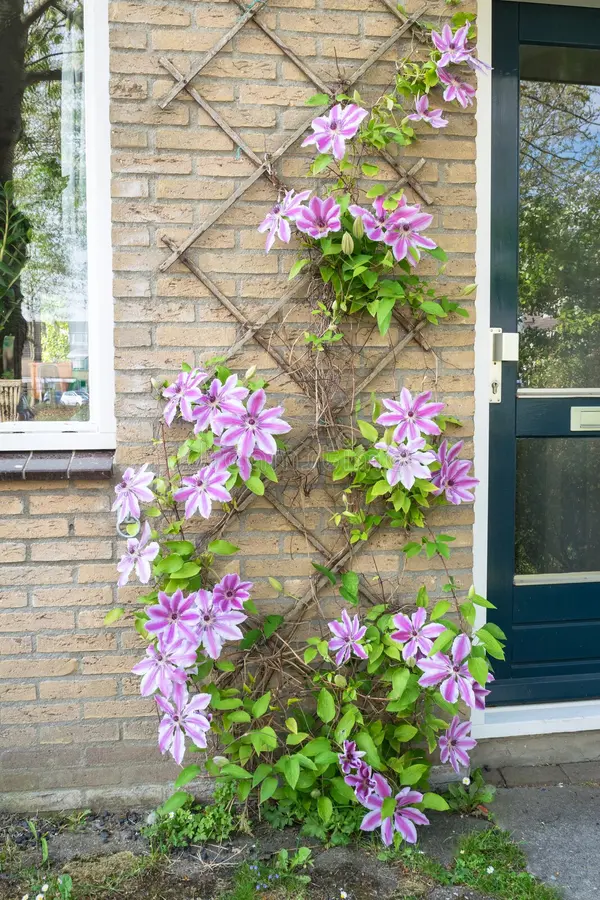
Clematis does not cling directly to a smooth wall. It climbs by wrapping its leaf stalks around relatively thin supports.
Wire, trellis, arches, pergolas and other structures with narrow elements are all suitable.
When the plant is young, I help the shoots find the right direction and spread them across the support instead of allowing everything to climb in one narrow green column.
Clematis and Roses - One of My Favorite Combinations
A climbing rose provides a strong structure and large flowers, while clematis works its way between the branches and adds another color and a completely different form.
I especially like combinations where their flowering periods overlap only partly, rather than completely. This keeps the same structure interesting for longer.
Before planting clematis into a climbing rose, check which pruning group it belongs to. After a few years, the two plants may become so intertwined that knowing this in advance will save you quite a bit of detective work with the pruning shears.
The Three Clematis Pruning Groups
This is the part that looks complicated until you understand the logic behind it.
The pruning group depends mainly on when the particular clematis flowers and on which growth it produces its blooms.
Group 1 - Early-Flowering Clematis
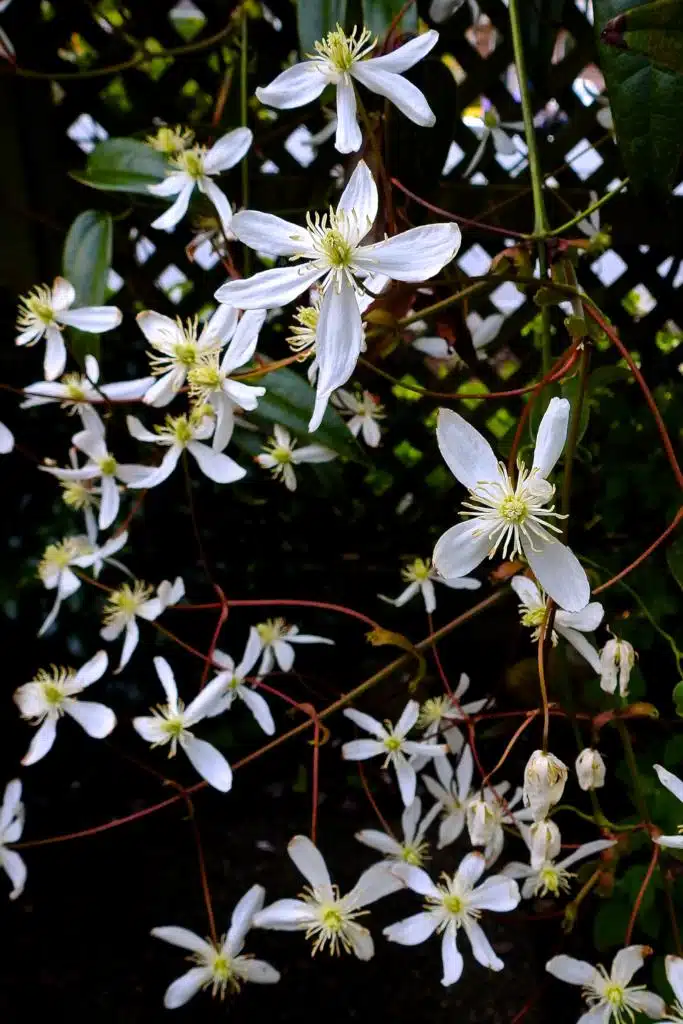
This group includes many early-flowering forms of Clematis montana, C. alpina and C. macropetala.
They produce their flowers on stems formed during the previous season, so I do not give them a hard spring pruning.
If the plant needs shaping or reducing in size, I prune it after flowering. Cutting it back hard immediately before flowering would simply remove a large part of the coming display.
Group 2 - Beautiful, but a Little More Demanding
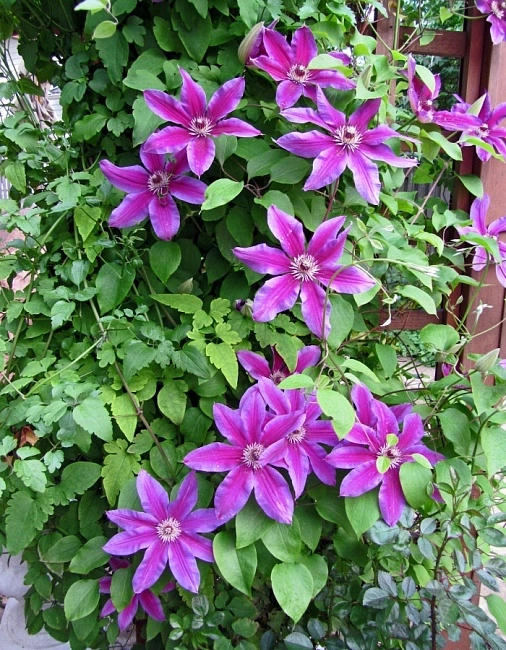
This group includes many large-flowered hybrid clematis that bloom in May and June on short shoots produced from last year's growth. They may then flower again on new growth later in the season.
I remove dead and damaged stems first. On the remaining stems, I work down from the top until I find the first strong pair of healthy buds, then cut just above them.
After the first flush of flowers, the plant can be lightly shaped. This is definitely not the group where I would use the approach of “cut everything down to 30 cm.”
Group 3 - The Easiest for Beginners
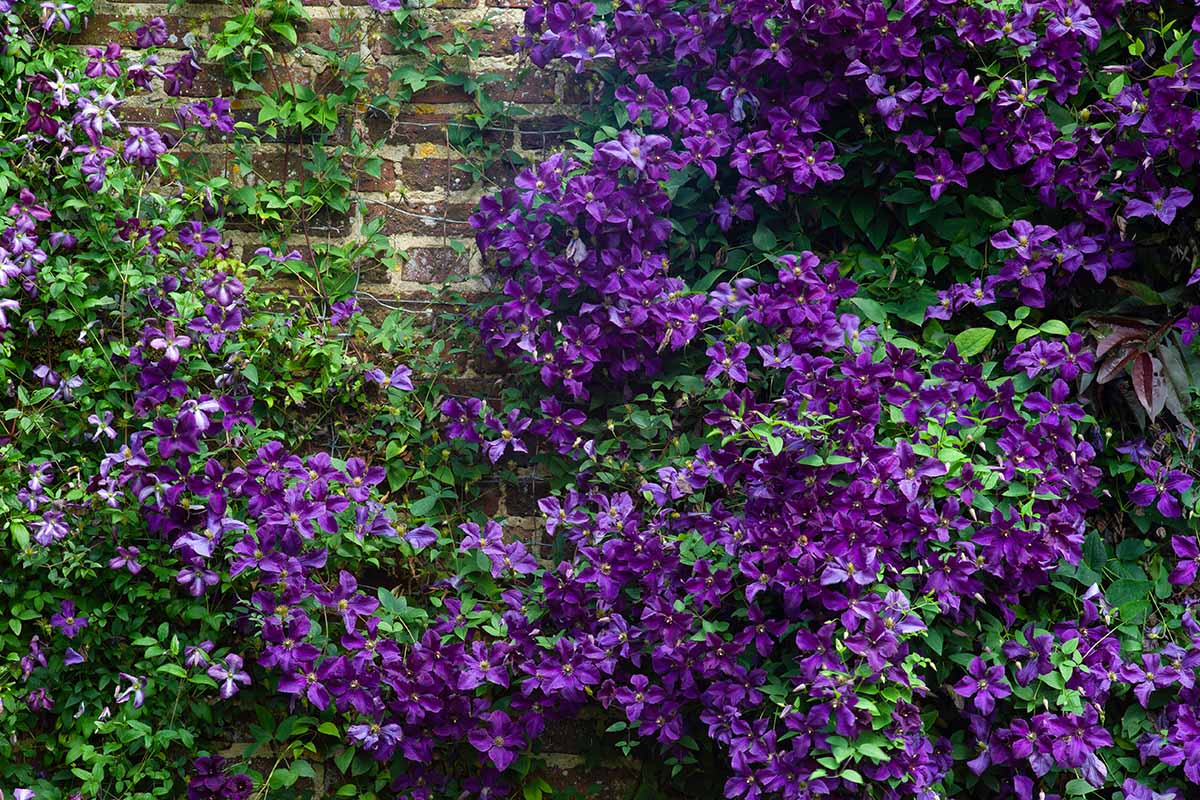
These clematis flower in summer on new growth produced during the same year. Many cultivars from the viticella and jackmanii groups belong here.
In late winter or early spring, the old stems are cut back hard to healthy buds low above the ground.
The plant then builds a fresh framework of stems and flowers on that new growth.
If clematis pruning makes you nervous, Group 3 is an excellent place to start.
Should You Prune a Newly Planted Clematis?
If a newly planted clematis has only one or two weak stems growing from the base, cutting it back more strongly during its first spring can encourage branching lower down and help create a fuller plant.
Yes, this may mean sacrificing some of the first flowers.
I would rather have a strong, well-branched plant for the coming years than three flowers sitting on one long bare stem during the first season.
Feeding Clematis
Clematis produces a substantial amount of foliage and flowers, so moderate feeding can be useful when the soil is poor.
I do not follow a rigid rule such as “fertilize every two weeks” regardless of the conditions. In the garden, I start with good soil and organic matter.
If necessary, a balanced fertilizer can be used during active growth, following the manufacturer's recommended dosage.
Nutrients are depleted more quickly in containers, so regular feeding becomes more important for potted clematis.
Why Is My Clematis Not Flowering?
Before adding more fertilizer, I would check three simpler things first.
- Light. Deep shade can reduce flowering.
- Pruning. With Groups 1 and 2, pruning at the wrong time can literally remove the coming flowers.
- The root zone. The soil should remain moderately moist but well drained.
Sometimes the problem is not that the plant needs more of something. Sometimes we have simply been a little too enthusiastic with the pruning shears.
Pests and Diseases
Clematis can be affected by aphids, slugs and other pests, particularly on young, tender growth.
Individual shoots may also occasionally wilt suddenly.
I do not treat a healthy plant preventively. I remove visibly affected growth, keep the area around the base reasonably clean and respond to the specific problem.
What About Clematis in Winter?
There is no single winter-care rule that applies to every clematis.
Many popular deciduous garden cultivars are sufficiently cold hardy and do not require complicated protection every winter.
What matters more is knowing the particular cultivar and its level of cold hardiness.
With container-grown clematis, the roots are much more exposed to temperature fluctuations than those of a plant growing directly in the ground.
Which Clematis Would I Choose for a Beginner?
If pruning is the part that worries you, I would start with a Group 3 cultivar.
Each spring, the old growth is cut back hard and the plant essentially begins again. There is no detective work about which stem grew last year, where the flower buds are, or whether you are accidentally cutting away the coming display.
And if you already have a climbing rose with some free space on the same structure, I would add a clematis as well.
There is something particularly satisfying about reaching the point where you can no longer immediately tell where the rose ends and the clematis begins.