
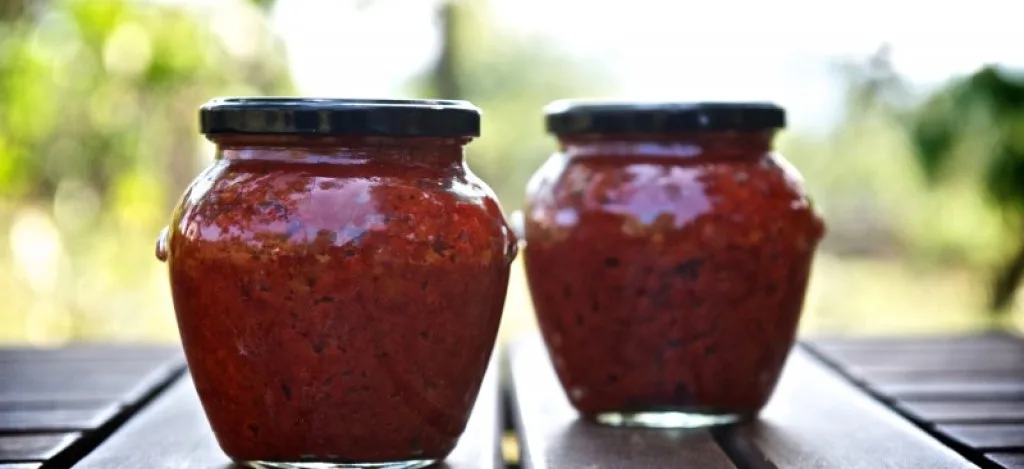
Homemade Ljutenitsa in a Small Batch: Roasted Flavor Without the Big Boil
Ljutenitsa is one of those words that immediately opens a whole family archive: roasted peppers, tomatoes, eggplants, a huge pan, stirring, jars, towels, lids, and someone saying, “It needs just a little more.”
Except that “just a little more” sometimes means three hours. And not every end of summer has room for a cauldron, a yard, helpers, and a dramatic quantity of peppers.
That is why this article is about homemade ljutenitsa in a small batch — not as a compromise, but as a more reasonable way to get real roasted flavor without turning the kitchen into a production facility. A few small jars that will be eaten with pleasure are better than twenty jars everyone moves around respectfully, but nobody opens.
Why Make a Small Batch
There is something very Bulgarian about starting with “just a little ljutenitsa” and ending with five hours of work, eight pots, and the feeling that we have discovered a small canning factory.
A small batch is more honest. You buy or harvest good vegetables, roast them, grind them, thicken them, and make an amount you will actually use. It does not require family mobilization. It does not require clearing the entire weekend. Most importantly, it lets you experiment with flavor without risking 40 pounds of produce.
We are not talking here about ljutenitsa for the whole winter and half the family tree. We are talking about a few small jars with concentrated roasted flavor — for bread, cheese, eggs, meat, potatoes, or just a spoonful “only to check.”
What Makes Good Ljutenitsa
Good ljutenitsa is not just “peppers and tomatoes.” It is balance. Roasted flavor, sweetness from the peppers, acidity from the tomatoes, body from the eggplant, a little fat, salt, and spices that do not try to conquer everything.
Roasted Flavor
The peppers and eggplant need that slightly smoky, sweet flavor that simply cannot come from boiling alone.
Good Thickness
Ljutenitsa should not run like sauce, but it should not sit like dry paste either. It needs time to thicken.
Balance
Salt, a little sweetness, acidity, oil, and spices. If one of them shouts too loudly, the ljutenitsa starts arguing with itself.
Which Ingredients to Choose
Ljutenitsa does not fix flavorless vegetables. It concentrates what is already there. If the peppers are watery and flat, and the tomatoes are pale and sharp, the result will be completely honest — and not very exciting.
- Peppers: meaty red peppers, fully ripe, sweet, and aromatic.
- Tomatoes: ripe, dense tomatoes, not too watery.
- Eggplant: gives softness and body, but should not dominate.
- Carrot: optional — adds sweetness and a softer taste.
- Oil: gives roundness, but should not turn the ljutenitsa into an oily paste.
- Spices: salt, a little sugar, black pepper, cumin, or parsley — depending on taste.
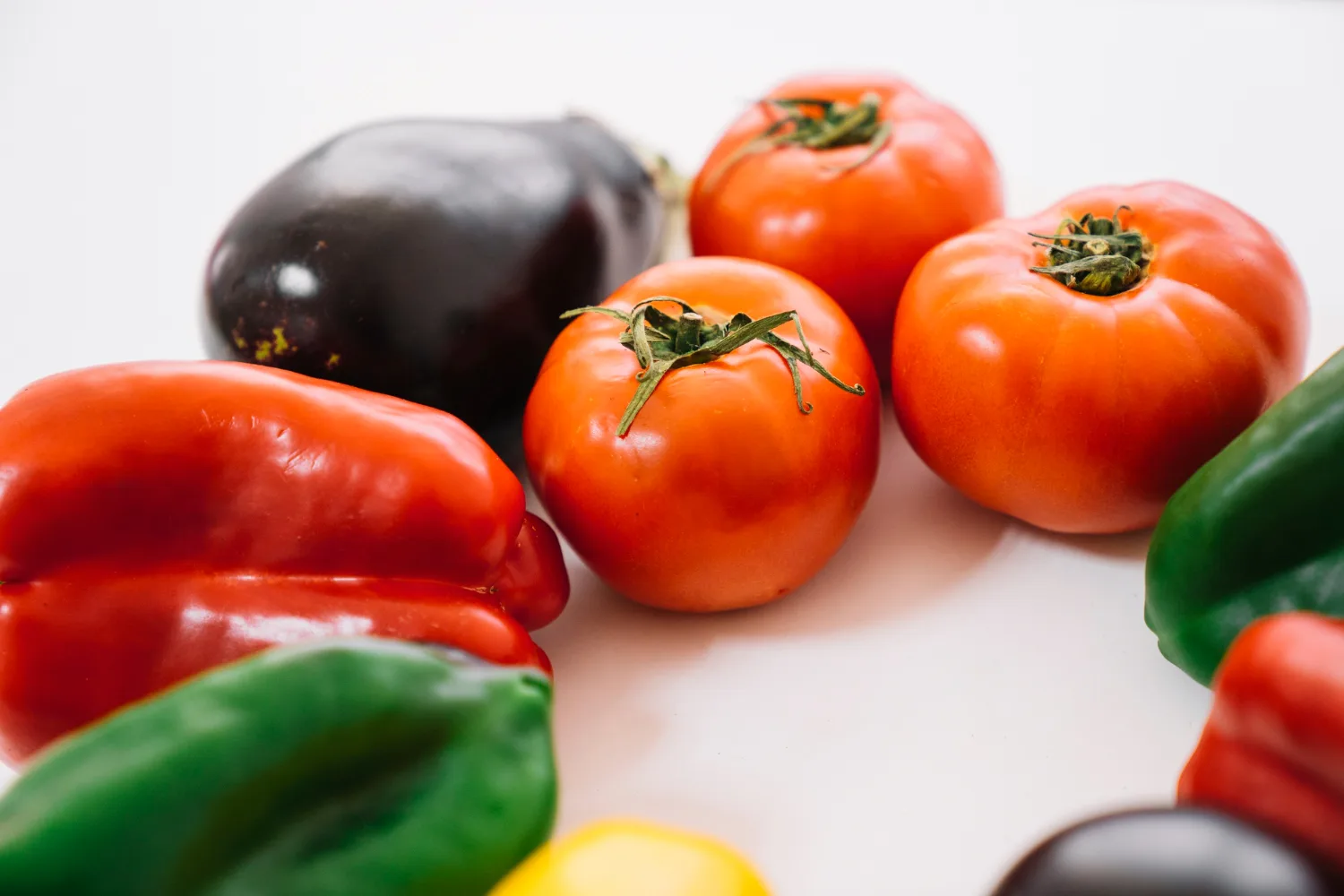
Roasting: Where the Flavor Happens
Roasting is the heart of ljutenitsa. This is exactly where peppers stop being just vegetables and start smelling like the end of summer. You can roast them in the oven, under the broiler, on a grill, over embers, or in a dedicated pepper roaster if you happen to live in a country where that makes perfect sense.
For oven roasting, a sturdy rimmed baking sheet is enough for small batches of peppers, eggplant, and tomatoes. It is not romantic, but it works.
Broiler or Oven
Practical if you want to roast peppers, eggplant, and tomatoes in a more organized way, without moving everything around too much.
Grill
Gives good flavor and a little smokiness. Useful if you are already cooking outside or want a more Mediterranean character.
Embers
The best flavor, but also the most organization. For a small batch, we do not necessarily have to go that far.
Pepper Roaster
A Balkan classic. Very practical where it is common, slightly mysterious where it is not. Either way, the idea is the same: strong direct heat and good roasted flavor.
Should We Peel the Peppers
Yes. If you want smooth, pleasant ljutenitsa, peeling makes sense. After roasting, place the peppers in a covered bowl or bag for a short time so they steam, then peel them more easily.
This is the annoying part nobody loves very much, but everyone notices later. Pepper skins in ljutenitsa are not a disaster, but they do spoil the texture. And a small batch has at least one advantage: you will not be peeling peppers until your personality changes.
Thickening: Pan, Pot, or Multicooker
After roasting comes thickening. This is the moment when ljutenitsa becomes ljutenitsa, not just ground vegetables with ambition.
You can use a wide pot, a deep skillet, or an appliance that gives steady cooking. The important thing is to let moisture evaporate and to stir often enough so the mixture does not burn.
For small batches, an electric multicooker can help with simmering and reducing if you do not want to stand over the stove the whole time. It does not cancel stirring and observation, but it can make the process calmer.
Smooth or Chunkier Texture
This is a matter of personal taste. Some people want ljutenitsa smooth, almost creamy. Others like to feel the pepper, the eggplant, some structure, and a little character.
Smooth
Well blended, creamy, good for toast, children, and people who do not want surprises in the texture.
Medium
The most balanced version — smooth enough, but still with a feeling of roasted vegetables.
Chunky
More rustic, more visible, closer to a spread. Wonderful with bread, cheese, and meat.
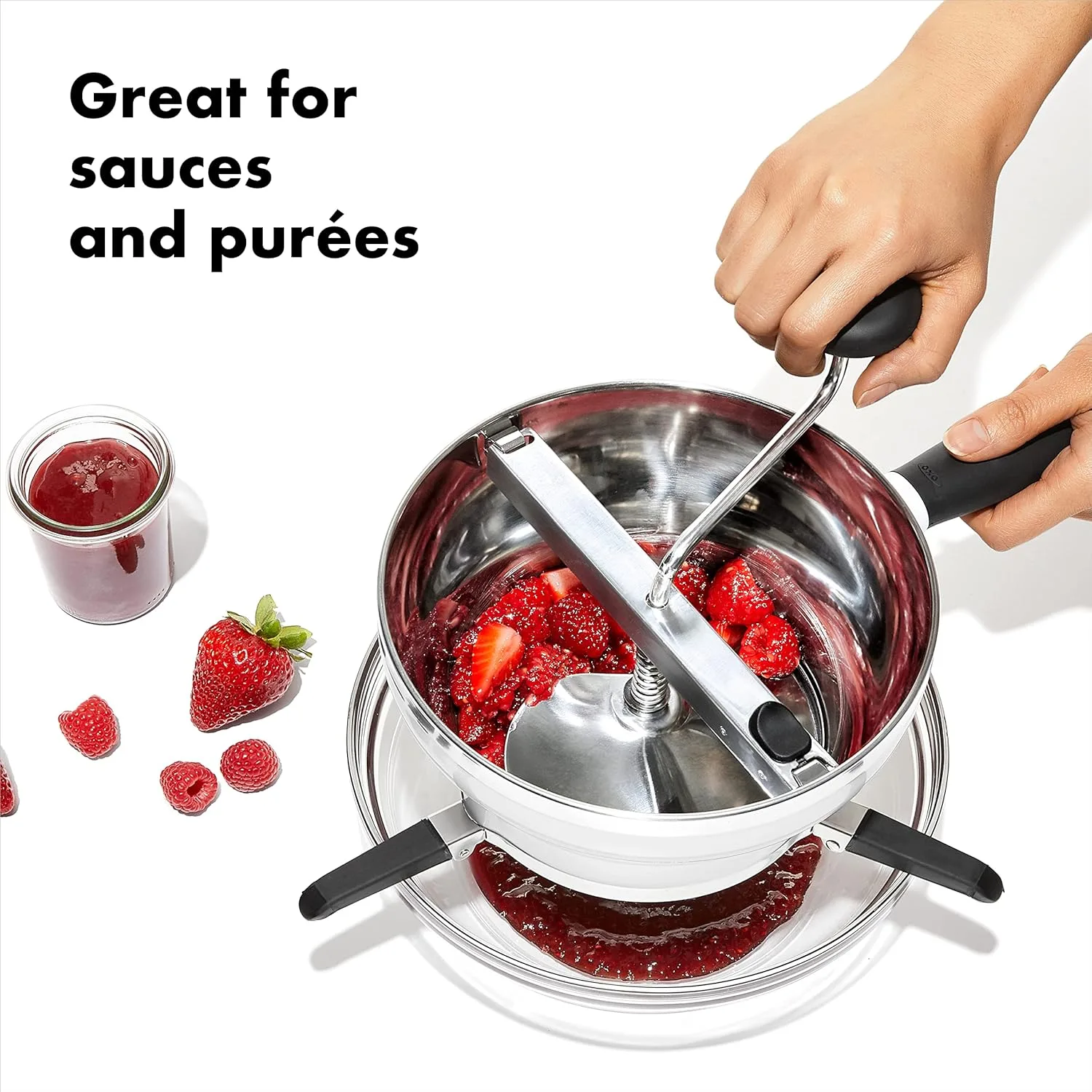
For ljutenitsa, I would use a food mill when I want texture without skins
A food mill is useful when you want a sauce or spread that is smoother, but not completely blender-flat. It helps process roasted vegetables into a more even texture while keeping the result closer to homemade food than baby purée.
For ljutenitsa, that matters. We want roasted peppers, tomatoes, and eggplant to become one spread, but not lose all their character in the process.
About Safe Storage
Here we need to be clear. Ljutenitsa is a mixture of tomatoes, peppers, eggplant, sometimes carrot, onion, oil, and spices. This is not the same thing as jam or a very acidic pickle. It is not a good idea to invent proportions “to taste” and then expect the jars to sit peacefully on the shelf for months.
If you want ljutenitsa for long-term storage outside the refrigerator, use a tested canning recipe and follow the exact processing time, acidity, and method. Do not randomly increase the amount of peppers, eggplant, carrot, or oil. Do not reduce the acid if the recipe requires it.
For freer homemade versions, like this small batch, the most reasonable approach is: some for the refrigerator and quick use, some for the freezer. This way the flavor stays good, and every spoonful of ljutenitsa does not have to become a microbiology question.
Small portions freeze well in freezer-safe food containers, especially if you know you will use the ljutenitsa in sauces, sandwiches, or quick dinners later.
Important: if you make ljutenitsa with more oil, garlic, onion, or changed proportions, do not automatically treat it as shelf-stable. Refrigerator or freezer storage is more reasonable when the recipe has not been tested for canning.
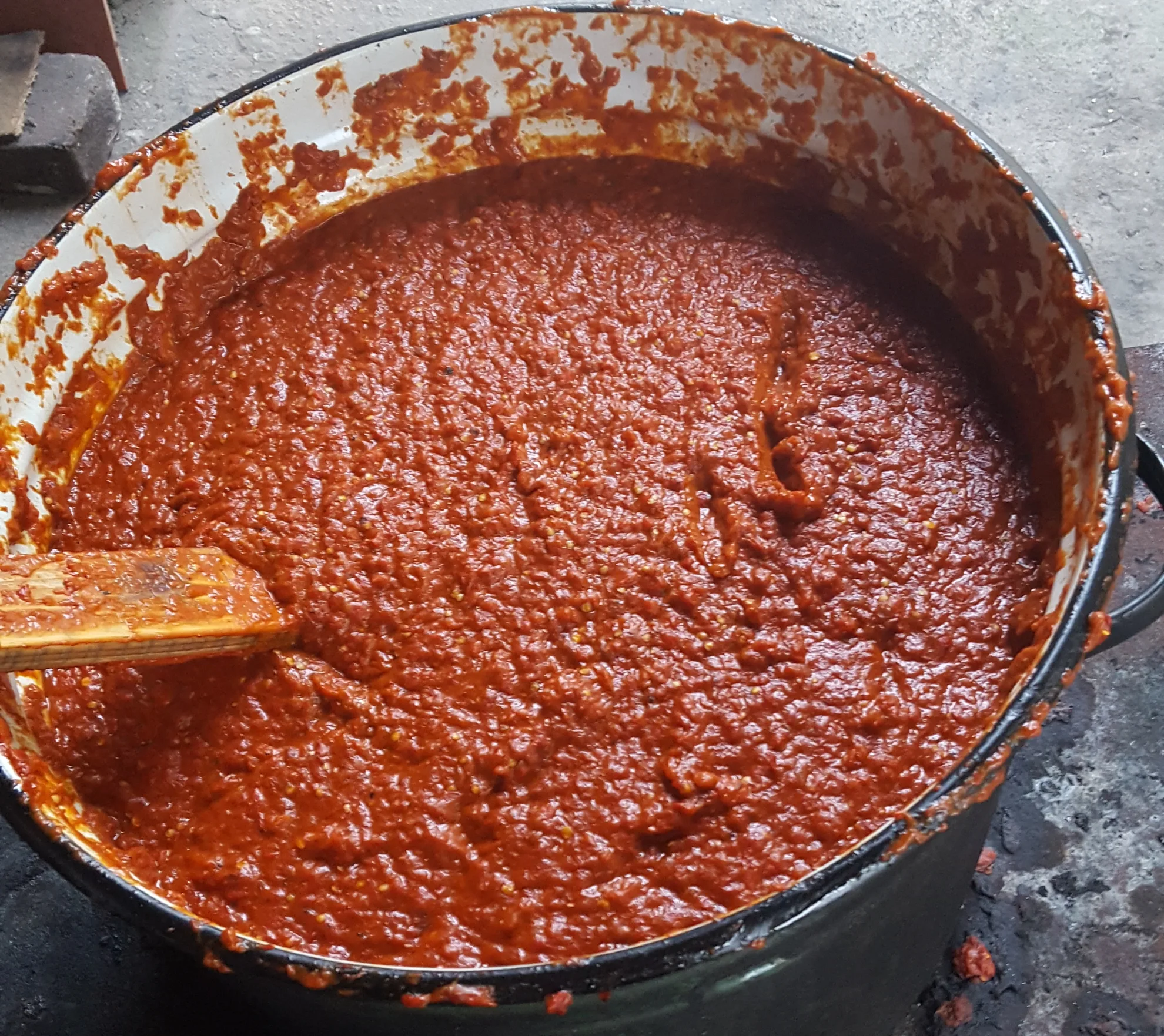
How to Use Homemade Ljutenitsa
Ljutenitsa is much more than toast. Although, honestly, toast is already a perfectly valid argument.
Classic
- on bread;
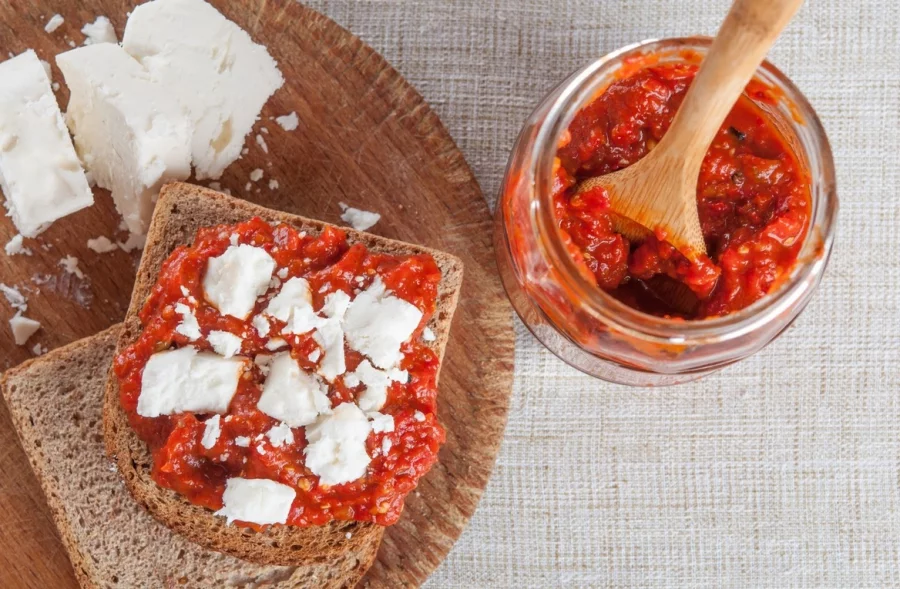
- with white cheese or feta;
- with boiled eggs;
- with meatballs;
- with roasted potatoes.
As a Spread
- with bread and olive oil;
- with roasted vegetables;
- on a cheese board;
- with olives;
- as a dip.
In Meals
- in pasta sauce;
- with rice;
- in a sandwich;
- with meat;
- in a quick dinner.
Common Mistakes
Ljutenitsa is not difficult, but it is very good at showing where we rushed.
Mini Recipe: Homemade Ljutenitsa in a Small Batch
For 3–4 small jars and a calm kitchen
Ingredients
- 1.5 kg / about 3.3 lb red peppers;
- 700 g / about 1.5 lb tomatoes;
- 1 medium eggplant;
- 1 carrot, optional;
- 3–4 tablespoons neutral oil;
- 1 teaspoon salt, or to taste;
- 1 teaspoon sugar, optional;
- black pepper;
- cumin, optional.
Method
- Roast the peppers and eggplant, then let them steam briefly and peel them.
- Peel the tomatoes or grate them if you want a smoother texture.
- Boil or steam the carrot if using.
- Grind, mill, or blend the vegetables depending on the texture you want.
- Place the mixture in a wide pot or deep skillet.
- Cook over medium heat, stirring often, until the ljutenitsa thickens.
- Add the oil, salt, sugar, and spices.
- Taste and adjust carefully.
- Divide into clean small jars.
- Store in the refrigerator for quick use or freeze in small portions. For pantry storage, use a tested canning recipe.
When It Is Worth Making
It makes sense when you have good peppers, good tomatoes, and a craving for roasted flavor you cannot get from a random jar. It makes sense when you want a small amount with your own character — spicier, smoother, chunkier, with more eggplant or almost no carrot.
It does not make sense if you are doing it only out of guilt, because “this is what one should do.” Ljutenitsa should bring joy, not the feeling of taking an exam in family memory.
A small batch is a good compromise between tradition and real life. You roast, thicken, fill a few small jars, and let the taste of summer continue without announcing mobilization.
This post may contain affiliate links. As an Amazon Associate, I earn from qualifying purchases.
