
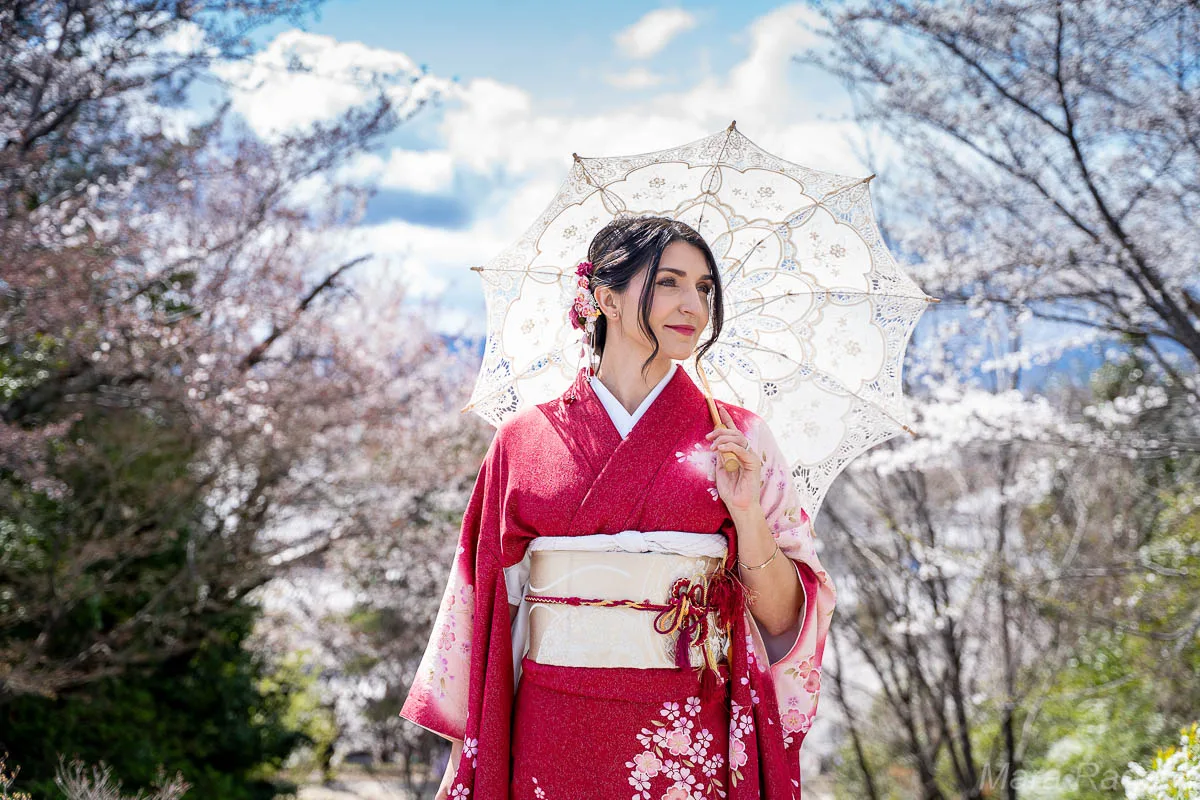
Kyoto is one of those places you do not want to leave. It reveals itself slowly, layer by layer, like an interesting book you keep reading because you do not want it to end.
Crowded with tourists and viral Instagram spots, it can hardly be described as a place for meditation and finding yourself. You quickly give up on the obligatory sightseeing list because you start looking for your own paths through Kyoto.
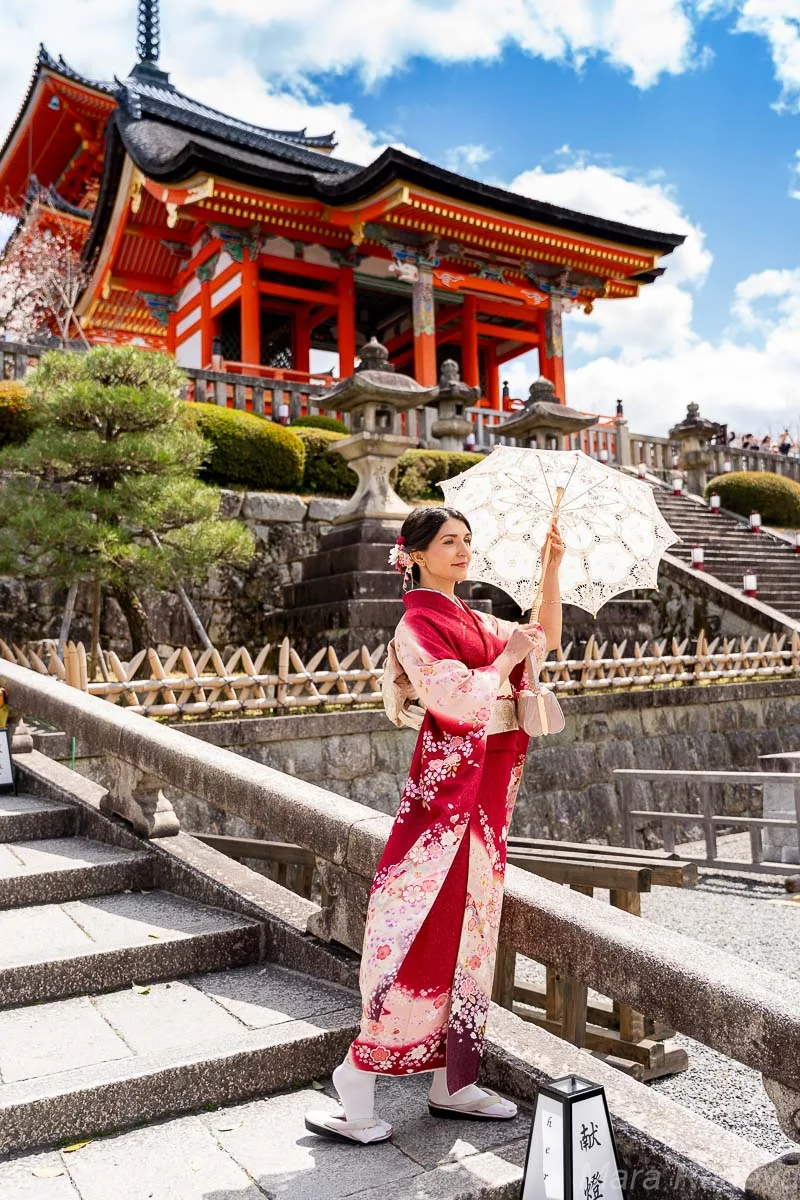
Spending a day in a kimono turned out to be a wonderful way to experience the city exactly like that - without rushing and without trying to tick another list of must-see places.
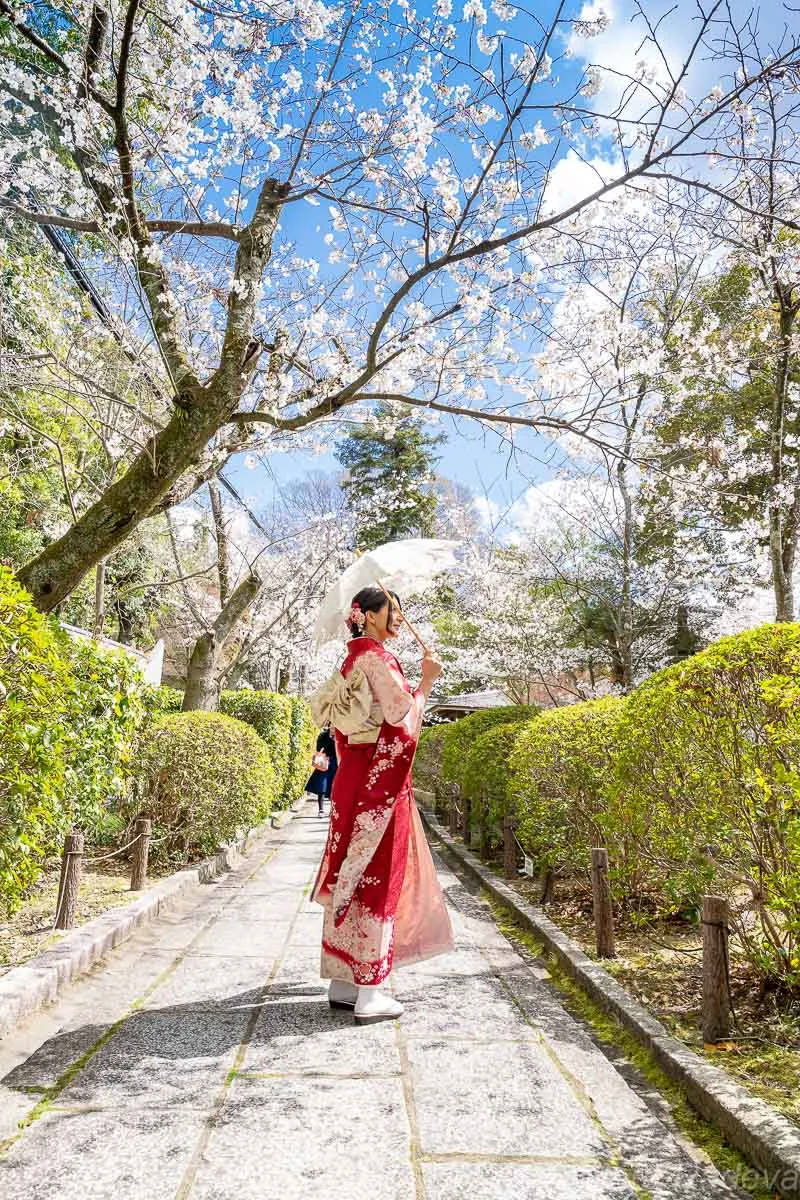
The idea was simple. Rent a kimono for Inna, walk through Kyoto's old neighborhoods and take a few beautiful photos. Except that I am a photographer, and “a few photos” is a rather relative concept for me.
After several days of photographing streets, parks, gardens and temples, the chance to have a beautiful model in front of my camera genuinely made me happy. Kyoto is a dream natural backdrop - almost every corner becomes a new scene and rarely disappoints.
I did not need to invent a setting or create an atmosphere. Kyoto had already done all of that.
Getting Ready Is Part of the Experience
Renting a kimono in Kyoto is extremely popular, so it is a good idea to book in advance, especially in spring during cherry blossom season and again in autumn.
The experience begins before you even leave the rental shop - choosing the kimono, obi, small bag, accessories and hairstyle.
I had not realized how much work goes into the finished look. A kimono is not something you simply put on and walk out in. Everything is arranged carefully, layer by layer, adjusted, tightened and shaped with that distinctive Japanese precision, here transformed into a very well-organized business.
Finally come the hairstyle, ornaments and traditional sandals.
My own dilemma about whether I should wear a kimono too was resolved very quickly when I imagined spending the day in wooden sandals while walking back and forth, searching for the right angle, crouching, changing perspective and chasing the next frame.
Mmm, no. Once I switch into photography mode, comfortable shoes and beautiful photographs are my choice.
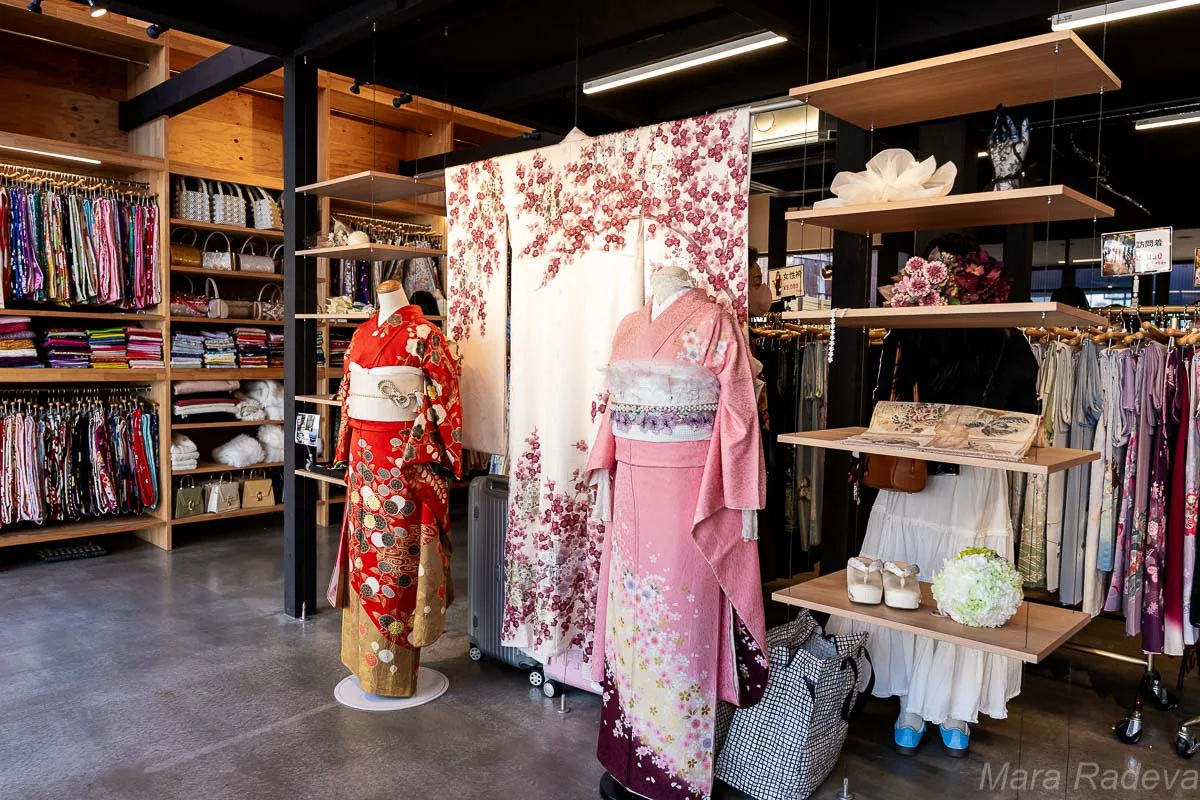
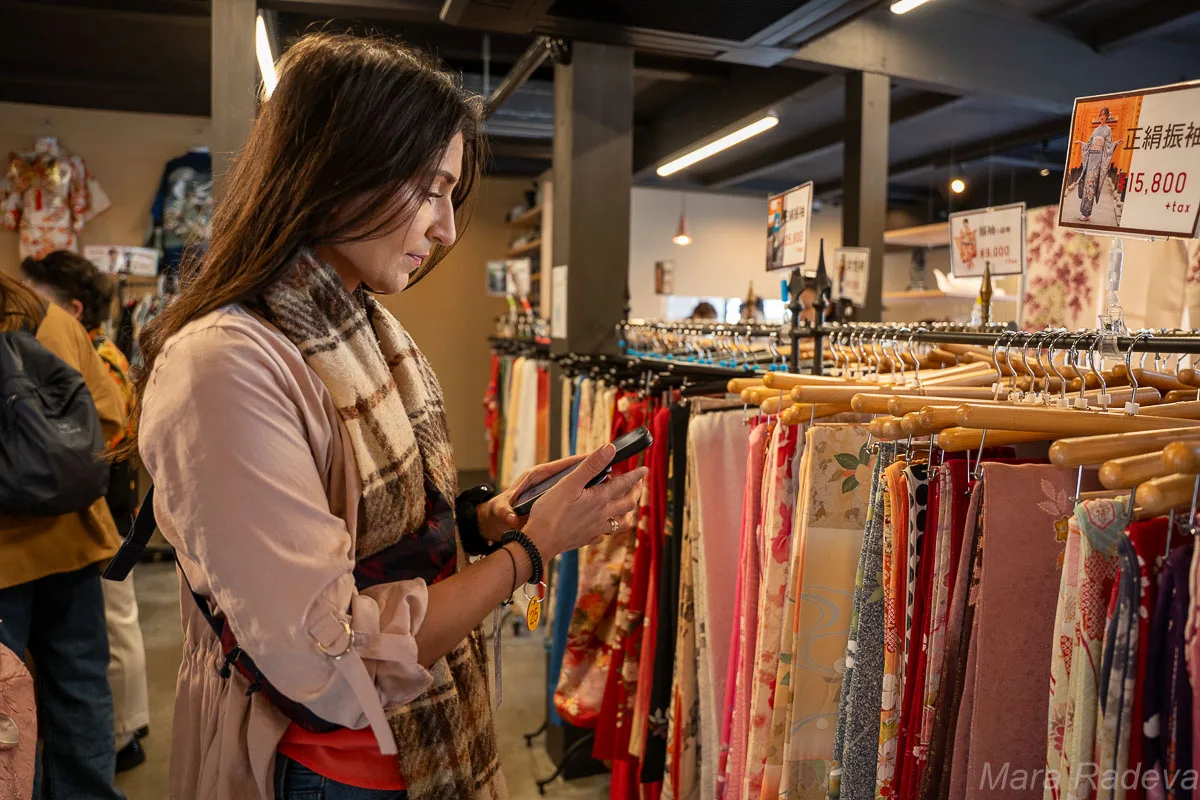
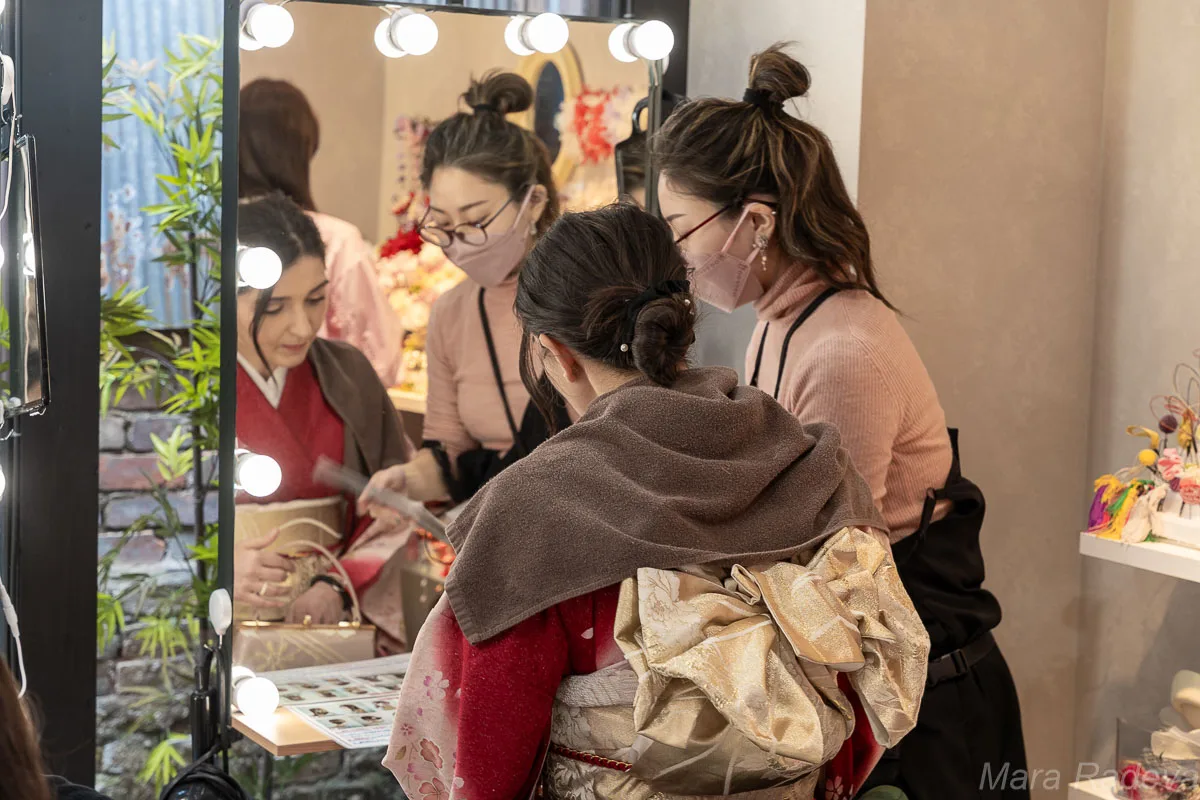
We were in Kyoto in April, and the day turned out to be sunny but cold. I kept looking at Inna and worrying that she might freeze, while she assured me that there were so many layers underneath the kimono that cold was definitely not the biggest problem.
That reassured me, and I could calmly return to the question that mattered much more to me - where the next photograph would be.
Why So Many People Choose to Spend a Day in a Kimono
Everywhere in Kyoto, we kept meeting people dressed this way. There were Japanese visitors, international tourists, couples, groups of friends and entire families.
Some were doing professional photo sessions, while others were simply walking around and spending the day dressed in kimono.
For Japanese people, kimono has a deep connection with tradition and remains part of festivals, ceremonies and special occasions.
For travelers, the experience offers a chance to come a little closer to a beautiful tradition and to see the city from a different perspective for a few hours.
I think that is exactly why so many people love it. A kimono changes the way you move, makes you slow down and turns an ordinary walk into a cheerful and slightly special day.
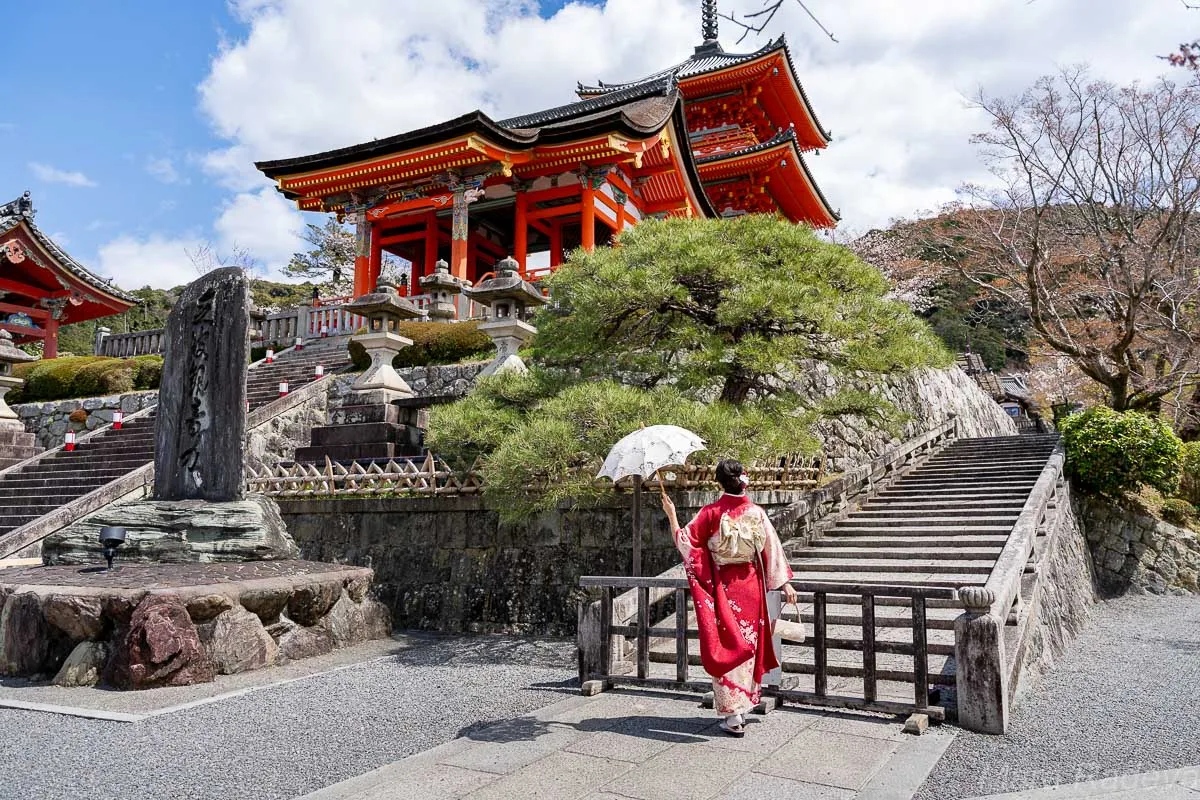
The Best Part Was That Beautiful Places Were So Close
The place where we rented the kimono turned out to be extremely convenient for our day. Some of Kyoto's most photogenic areas are nearby, so we did not have to spend hours in transport.
We simply stepped outside and started taking photographs.
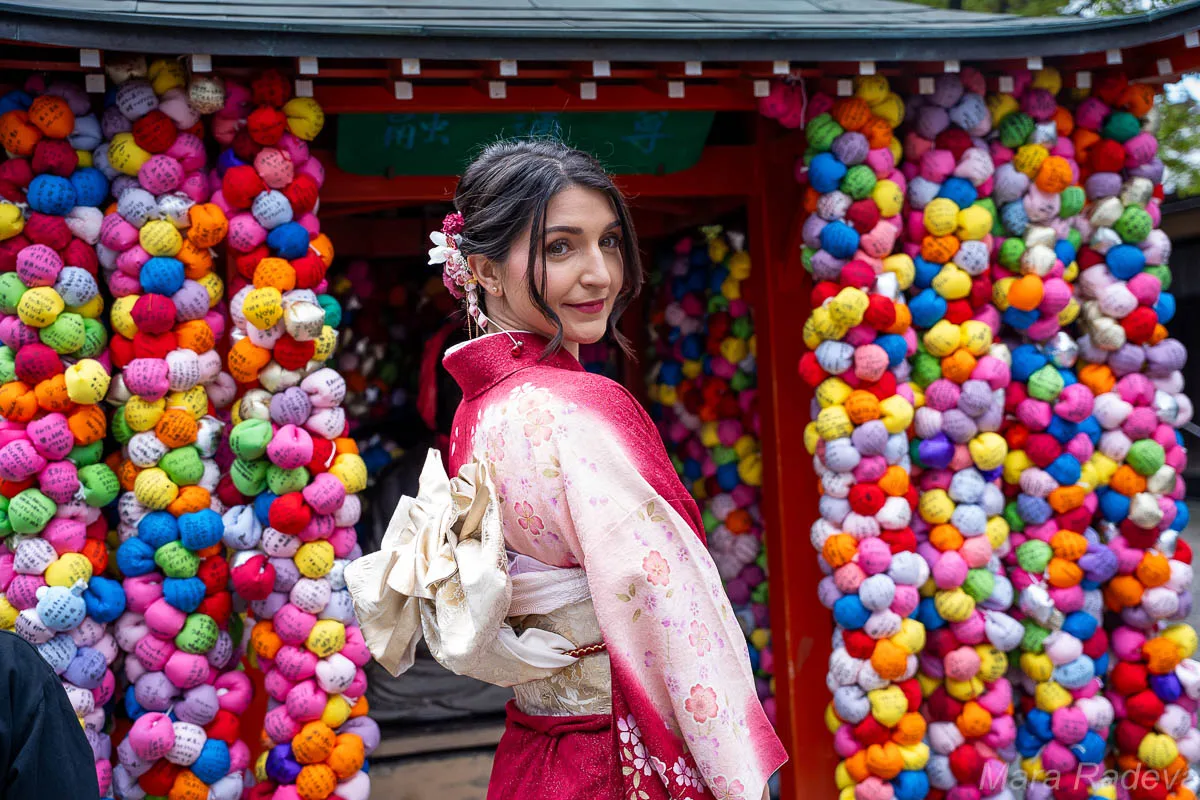
The old streets of Higashiyama, traditional wooden houses, small temples, gardens and the area around Yasaka Pagoda kept offering one new backdrop after another.
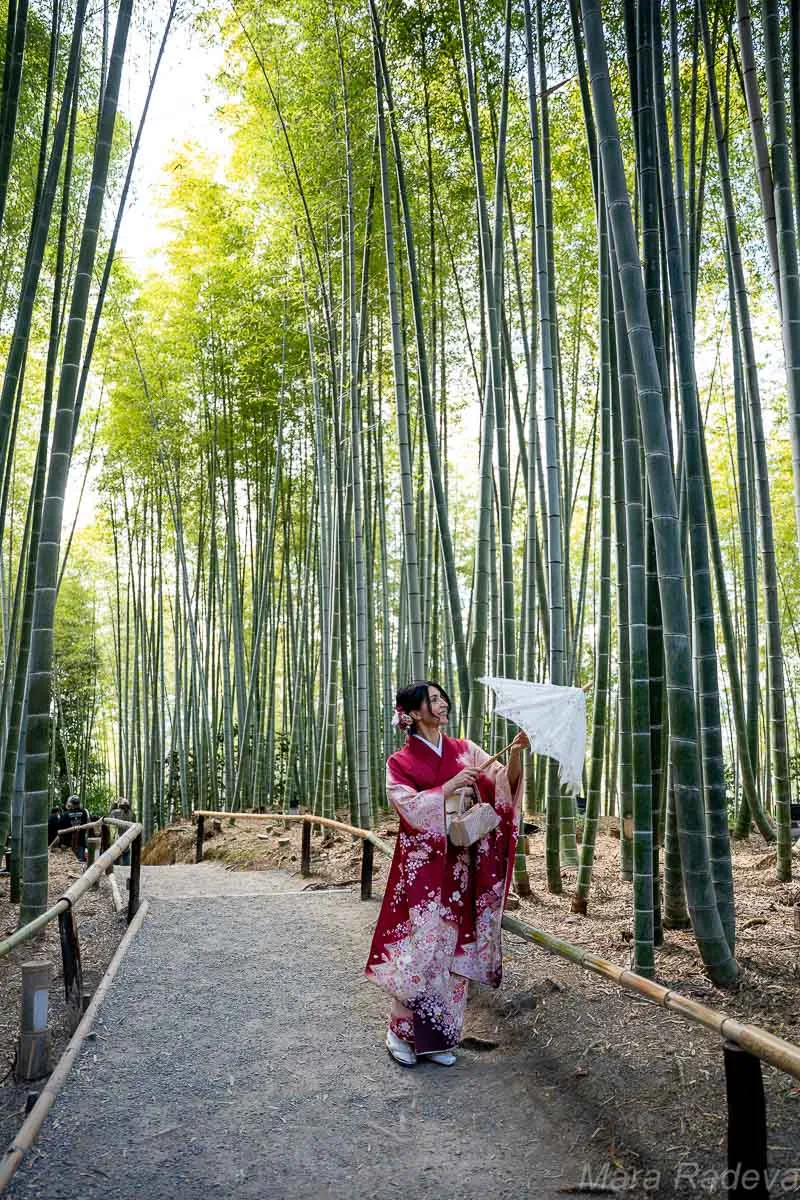
Just when I thought we had surely taken enough photos, another street appeared around the next corner, another gate, or another place where the light fell beautifully.
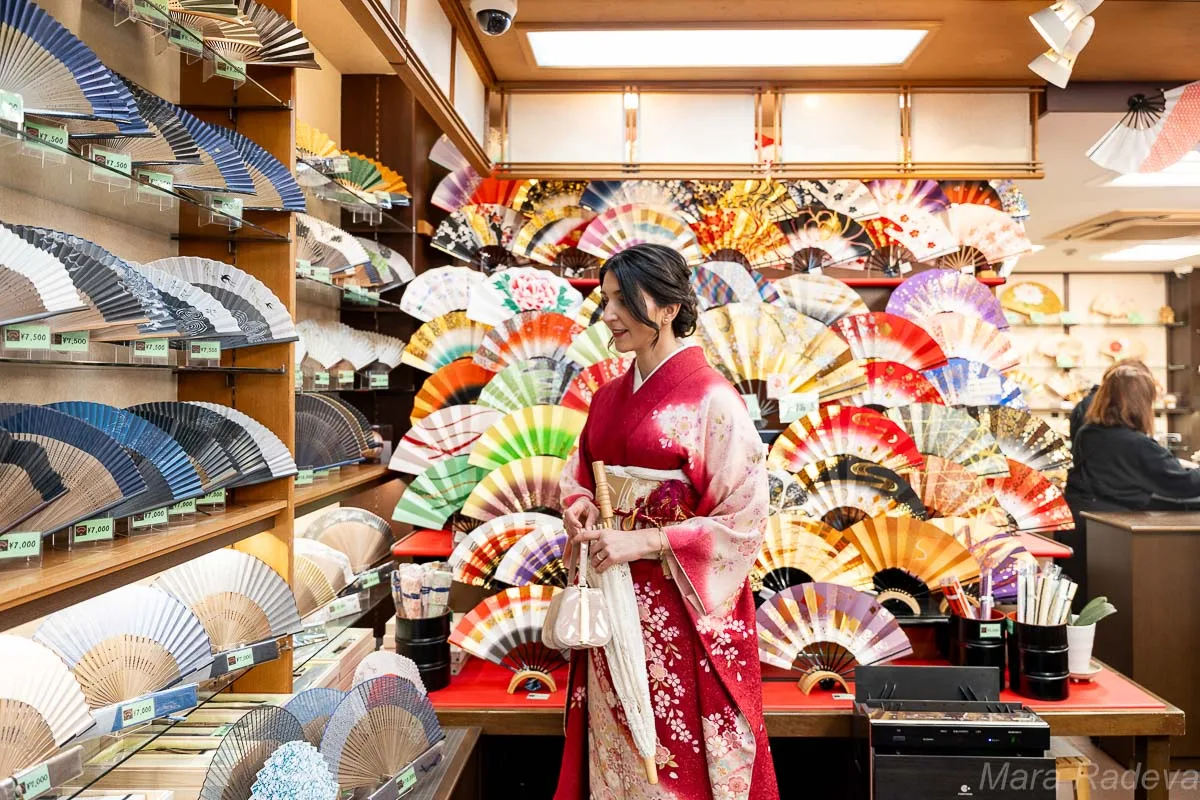
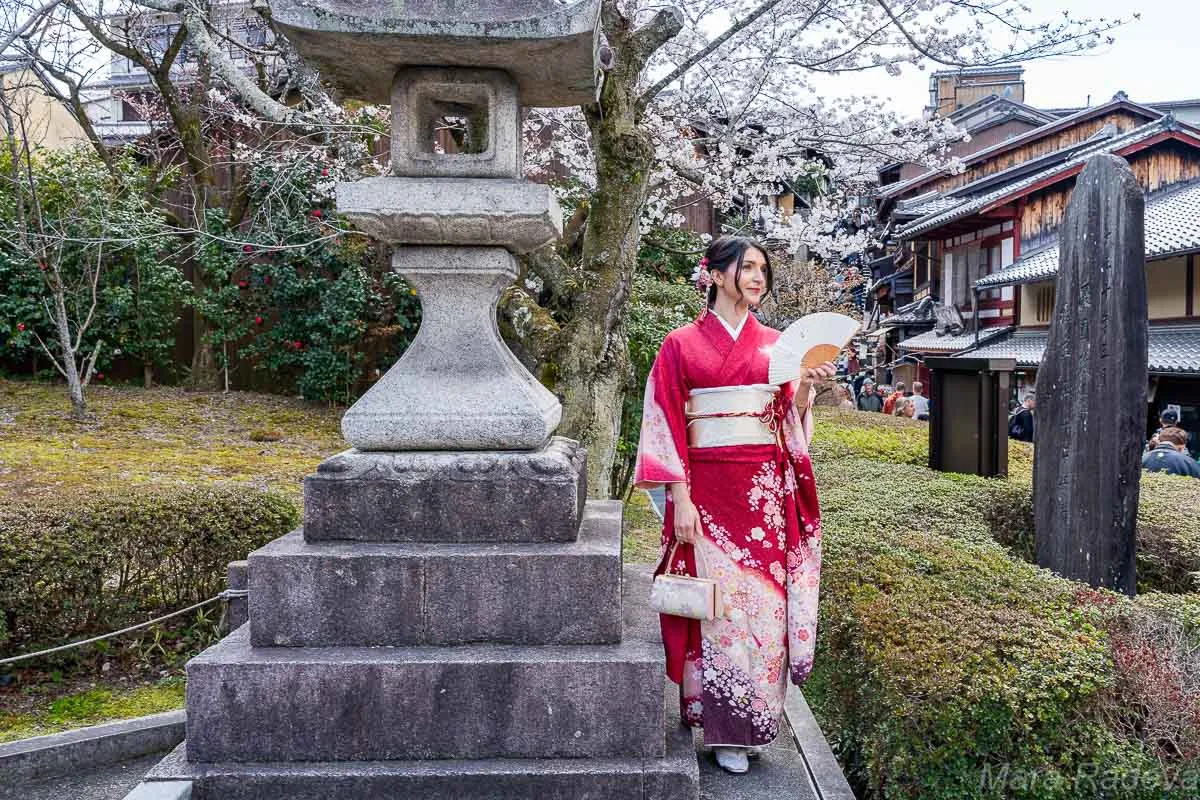
Maybe another hundred meters down the road there would be an even prettier street. Maybe the light would become softer. Maybe we would find a small garden where the red kimono would look even more beautiful.
And so we kept walking, and I kept taking photographs. For about six hours.
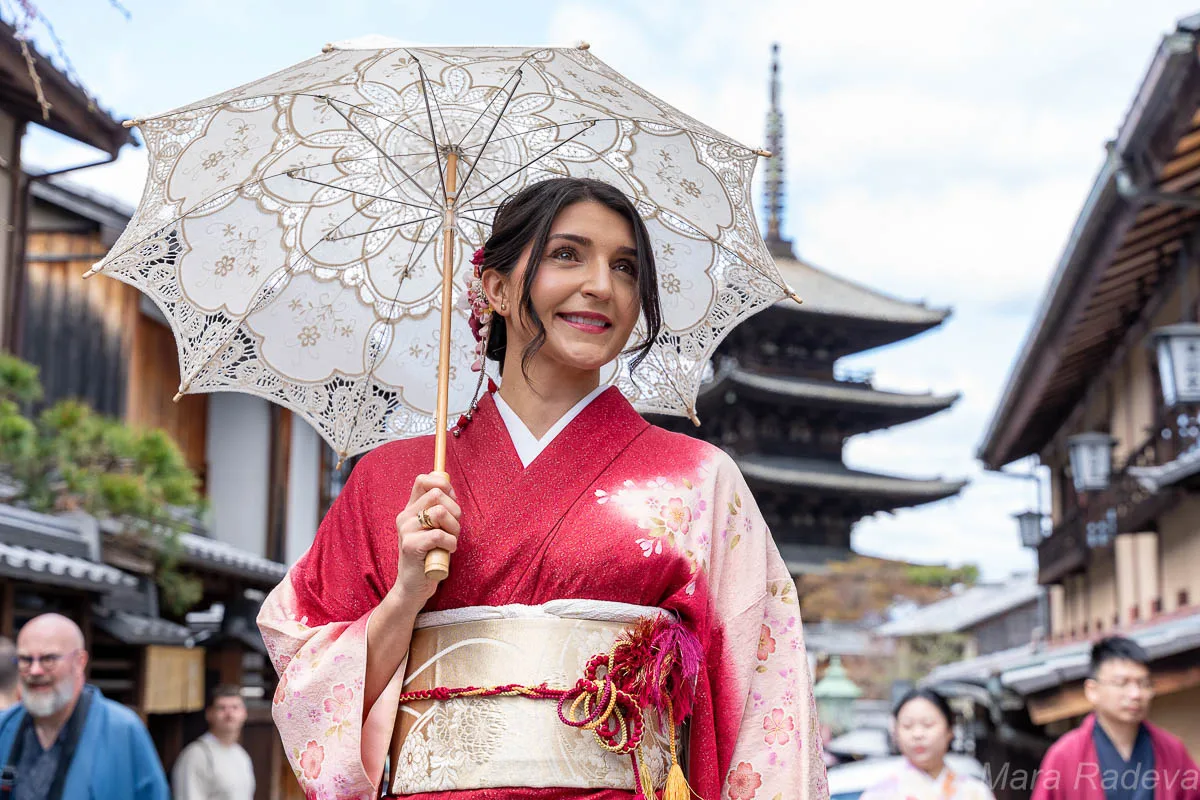
It is difficult to avoid the enormous number of tourists, so eventually they became part of the story too.
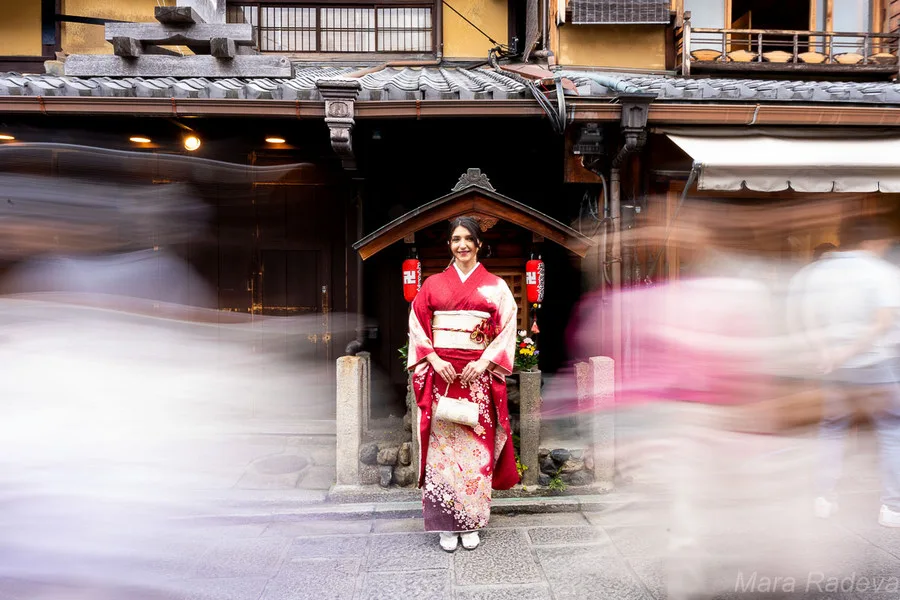
At first, I waited for people to leave the frame, but later I started using their movement instead. One of my favorite photographs is exactly like that - Inna stands quietly while the city continues moving around her.
Kyoto Kimono Rental Curun
39-2 Bishamoncho, Higashiyama Ward,
Kyoto 605-0812, Japan
Address in Japanese:
〒605-0812 京都府京都市東山区毘沙門町39-2
The location was very convenient for us, because from there we could easily walk to the beautiful streets and photography spots around Higashiyama.
I Would Recommend Giving Yourself a Day Like This
You do not need to be a photographer, and you certainly do not need to plan a major photo session. The experience itself is worth it.
Choosing the kimono, getting ready, walking through the city and simply feeling that this day is a little different from the other days of the trip are enough on their own.
There are also shorter kimono experiences, including photo sessions, walks and tea ceremonies. They are a good option if you do not have a full day or if you would like to combine wearing a kimono with another Japanese tradition.
Personally, I would choose the longer version again. I loved that we were not rushing and had enough time to move at our own pace.
Of course, my own pace included considerably more stops for photographs than Inna had probably anticipated.
Kyoto offers many different options for kimono rental, photo sessions and shorter experiences that can be combined with a tea ceremony or a walk.
You can browse the current options and choose the experience that best fits your schedule and the time you have available.
This section contains affiliate links. If you make a booking through them, BioGardn may receive a small commission at no additional cost to you.
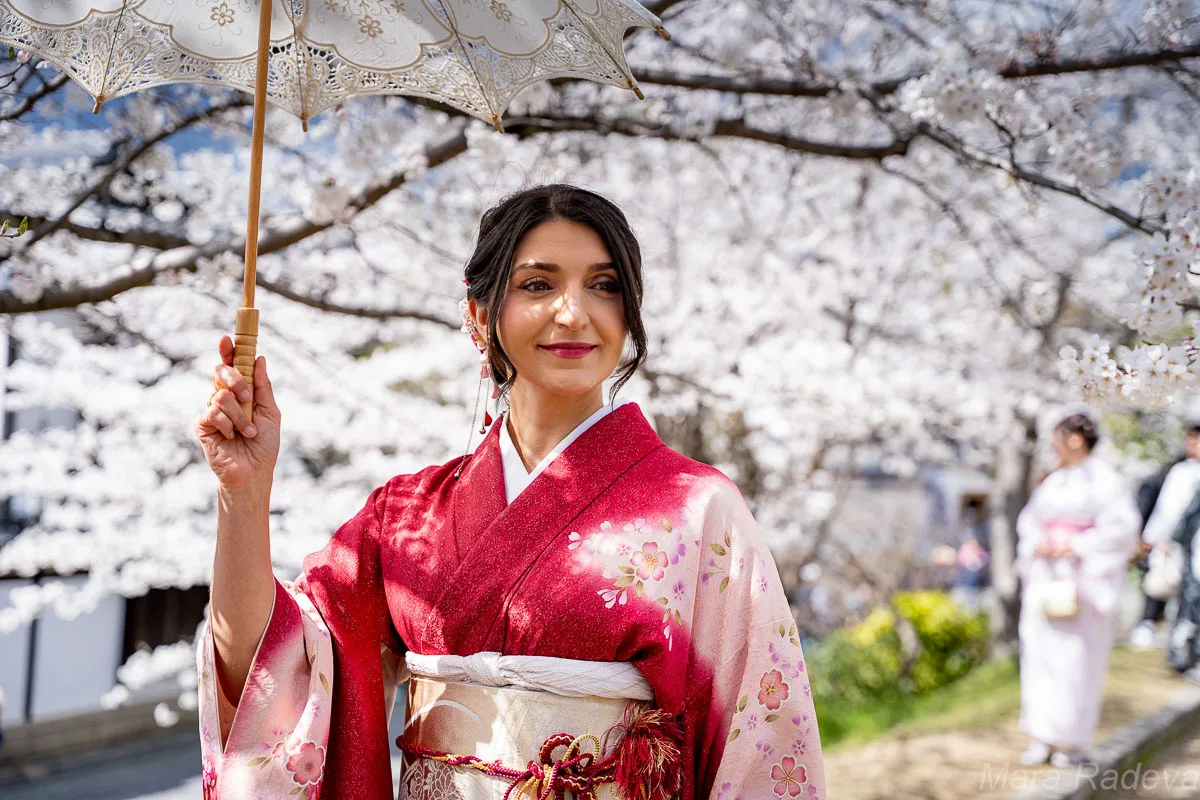
When I look at the photographs now, this day feels like much more than a photo session. I remember the April air, getting ready, the slow walk, the old streets and that constant feeling that perhaps just a little farther ahead another beautiful photograph was waiting for us.
I sincerely recommend the experience. For one day, Kyoto stops being simply a city you are visiting. You are left with the feeling that, for a little while, you experienced it in a different, slower and much more personal way.
This is just one of our stories from Japan - a journey that left me with many photographs, impressions and quite a few stories still waiting to be told.