
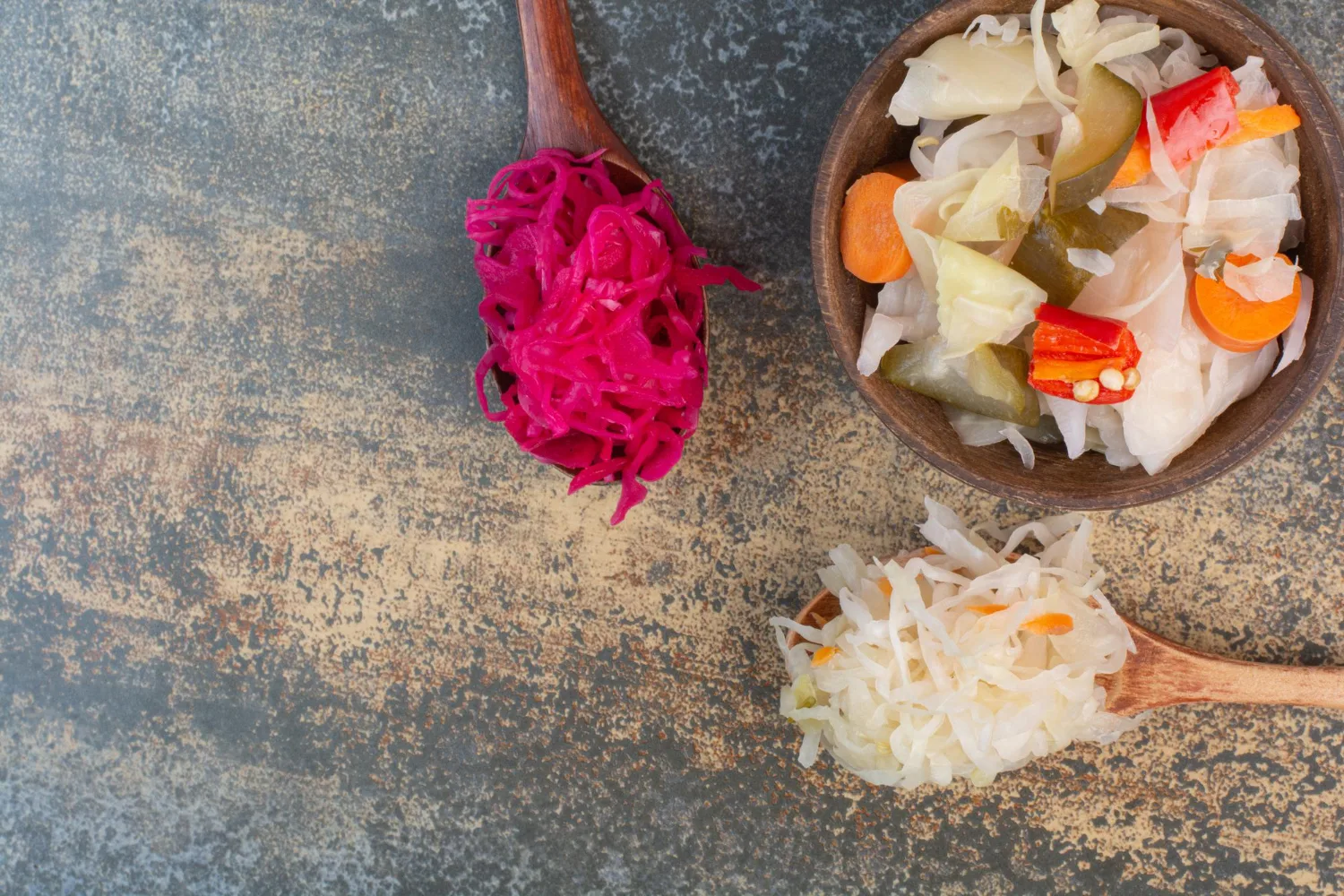
Almost every culture with a long winter and access to cabbage has arrived at the same sensible idea: slice it or pack it whole, add salt, keep it away from air, and wait for lactic acid bacteria to do the rest.
The result, however, is different everywhere.
In Bulgaria, cabbage often stays whole because we need the leaves for stuffed cabbage rolls. In Poland, it is shredded finely and often mixed with carrot. In Alsace, juniper and sometimes wine appear in the story. In the United States, sauerkraut is usually very simple — cabbage and salt. In Korea, cabbage is left in large pieces and coated with a complex mixture of chili flakes, garlic, ginger, radish, and fermented seafood.
One fermentation, but completely different kitchens.
For exact brine proportions and traditional Bulgarian recipes, see Bulgarian Fermentation: Sauerkraut, Raw Pickles, and the Right Brine .
And for a broader look at all preserving methods, start with Homemade Preserves: Drying, Pickling, Fermentation, and Other Ways to Keep the Taste of Summer .
A Quick Comparison
Before we go into each tradition, here is the short version. The differences are not only in the spices, but also in the way the cabbage is cut, how it is used after fermentation, and what role it has in the kitchen.
| Country | Type of Cabbage | Cutting Style | Main Seasonings | How It Is Used |
|---|---|---|---|---|
| Bulgaria | white cabbage | whole heads | horseradish, quince, corn cob, optional | stuffed cabbage rolls, kapama, pork with cabbage |
| France | white cabbage | very thin strips | juniper, white wine or beer when cooked | choucroute garnie |
| Poland | white cabbage | thin strips | carrot, caraway, apple in some versions | bigos, soup, pierogi |
| United States | white cabbage | fine strips | usually only salt | hot dogs, sandwiches, side dish |
| Korea | napa cabbage | halves or quarters | gochugaru, garlic, ginger, radish, fish sauce | everyday side dish |
Bulgaria: Whole Cabbage Heads, Brine Circulation, and Sauerkraut Juice
In Bulgaria, cabbage is usually not shredded. The heads are left whole, and the core is hollowed out or cut so the brine can penetrate. Sometimes some heads are cut into halves or quarters simply to fill the empty spaces in the barrel.
There is a very practical reason for this: we need whole leaves. Without them, there are no stuffed cabbage rolls, and without stuffed cabbage rolls, winter somehow feels incomplete.
Bulgarian sauerkraut is usually quite simple in seasoning. Horseradish gives a lightly sharp aroma, a stronger taste to the brine, and that traditional feeling of firmer cabbage. It is used as a root, cut into long pieces.
Some family recipes include quince. It gives a light fruity aroma, a warmer color to the brine, and a very homemade flavor. Usually, it is added in pieces.
In some regions, a dry corn cob is also added. This is a family and regional practice, not a necessary part of fermentation.
Bulgarian sauerkraut is most often used for:
- stuffed cabbage rolls;
- kapama;
- pork with cabbage;
- beans with sauerkraut;
- salad with oil and paprika;
- sauerkraut juice.
In Bulgaria, sauerkraut juice is not a by-product. It has its own role.
France: Choucroute From Alsace
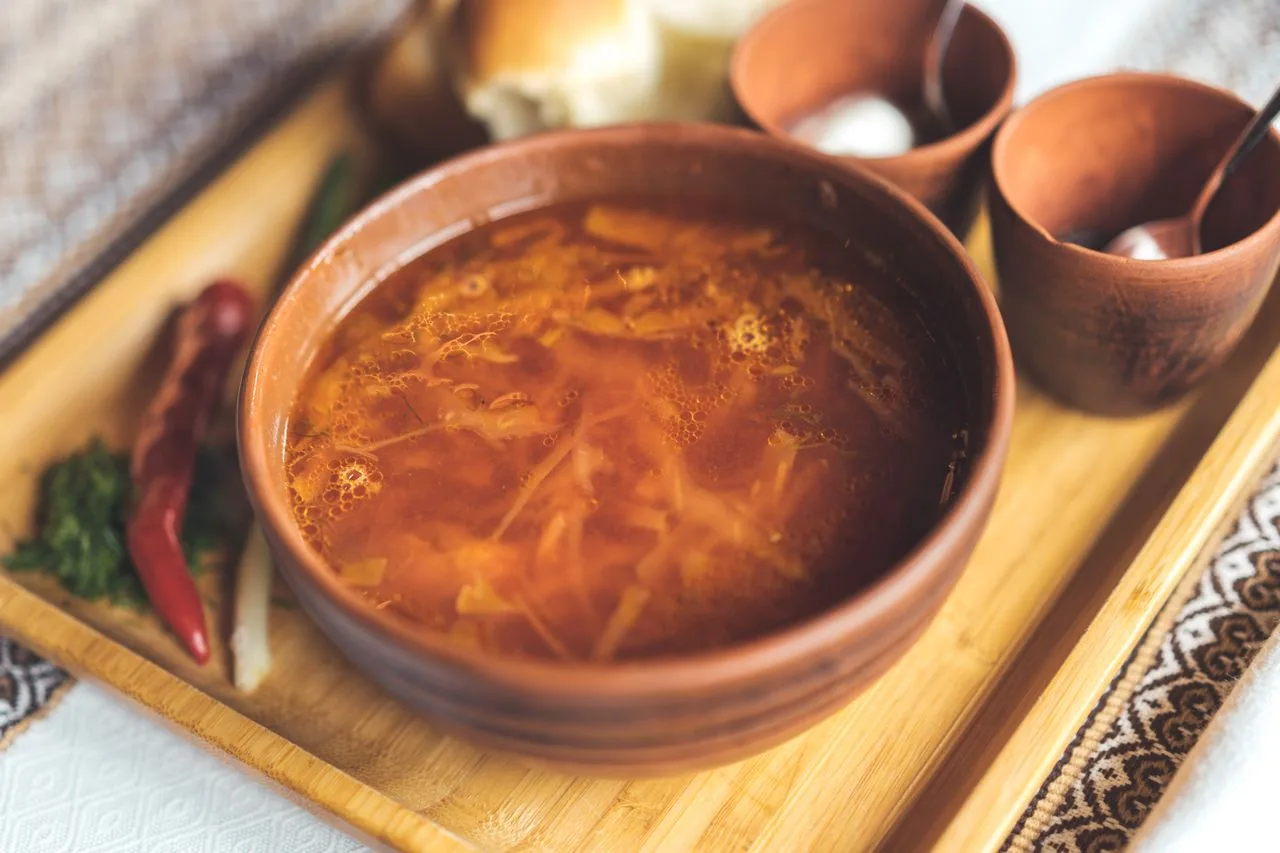
French choucroute is most strongly connected with Alsace.
Important: choucroute is the fermented cabbage itself, while choucroute garnie is the finished dish with cabbage, meats, sausages, and potatoes.
The cabbage is cut into very fine, long strips. Usually, the head is halved, the core is removed, and the cabbage is sliced with a cabbage cutter or a very sharp knife. The strips are thin, roughly 1–3 mm. Fine slicing allows the salt to draw out juice quickly and helps the cabbage ferment evenly.
Juniper berries are one of the most characteristic seasonings for Alsatian cabbage. They give a resinous aroma, a slightly bitter note, and a flavor that goes very well with smoked meat, bacon, and potatoes.
In some Alsatian and German versions, caraway is used too. It gives a warm aroma, a slight anise-like note, and a very Central European flavor to cabbage and meat. Bay leaf is more often added during cooking than during fermentation itself.
White wine or beer is usually not the main liquid for fermentation. It is added when the finished cabbage is cooked. Wine gives fruity acidity, aroma, and a lighter taste, while beer adds malty sweetness and a deeper character.
Choucroute garnie is served with smoked pork, sausages, bacon, potatoes, and mustard. The French do not simply serve sauerkraut. They build a whole meat architecture around it.
If you want this flavor direction at home, a small amount of juniper berries for cooking is enough for many batches. This is not a spice to throw around wildly unless you want your cabbage to taste like it wandered through a forest.
For extra inspiration, you can also look at this detailed recipe for homemade sauerkraut / choucroute .
Poland: Kapusta Kiszona
Polish sauerkraut is called kapusta kiszona. It is close to German sauerkraut, but it often has more additions.
The cabbage is cut into thin strips, usually 2–4 mm. Sometimes part of it is left slightly coarser for more noticeable texture. After slicing, it is rubbed with salt and pressed until it releases juice.
| Addition | What It Adds |
|---|---|
| Carrot | A lightly sweet taste, color, softer texture, and extra juice. |
| Caraway | A warm, slightly anise-like aroma and a typical Central European note. |
| Apple | Natural sugars, fruity aroma, and a gentle softening of the acidity. |
| Bay leaf and allspice | Used more often when cooking cabbage, especially for bigos. |
Kapusta kiszona goes into bigos, kapuśniak soup, pierogi, salads, mushroom dishes, and pork dishes. It is one of those ingredients that does not sit politely as a side dish. It participates seriously in the kitchen.
For this kind of cabbage, caraway seeds are more useful than a drawer full of random spices, because a small amount gives that recognizable Central European note.
United States: Sauerkraut
In the United States, sauerkraut is mostly a legacy of German and Eastern European immigrants. The homemade version is usually very simple.
The cabbage is cut into thin strips. The classic method is to clean the cabbage, quarter it, remove the core, and then shred or slice it finely.
Most often, the ingredients are only cabbage and salt. Sometimes caraway, juniper, apple, or carrot appear, but the plain version is the most common.
American sauerkraut is usually finely shredded, evenly sour, fairly soft, and without a complex spice profile.
It is most often served on hot dogs, in a Reuben sandwich, with sausages, with pork, or as a side dish. After fermentation, some home makers keep it in the refrigerator, while others process it with heat. Once pasteurized, the live bacteria are no longer preserved.
If you want to see the classic method in a practical way, you can also watch this video about sauerkraut .

Korea: Kimchi
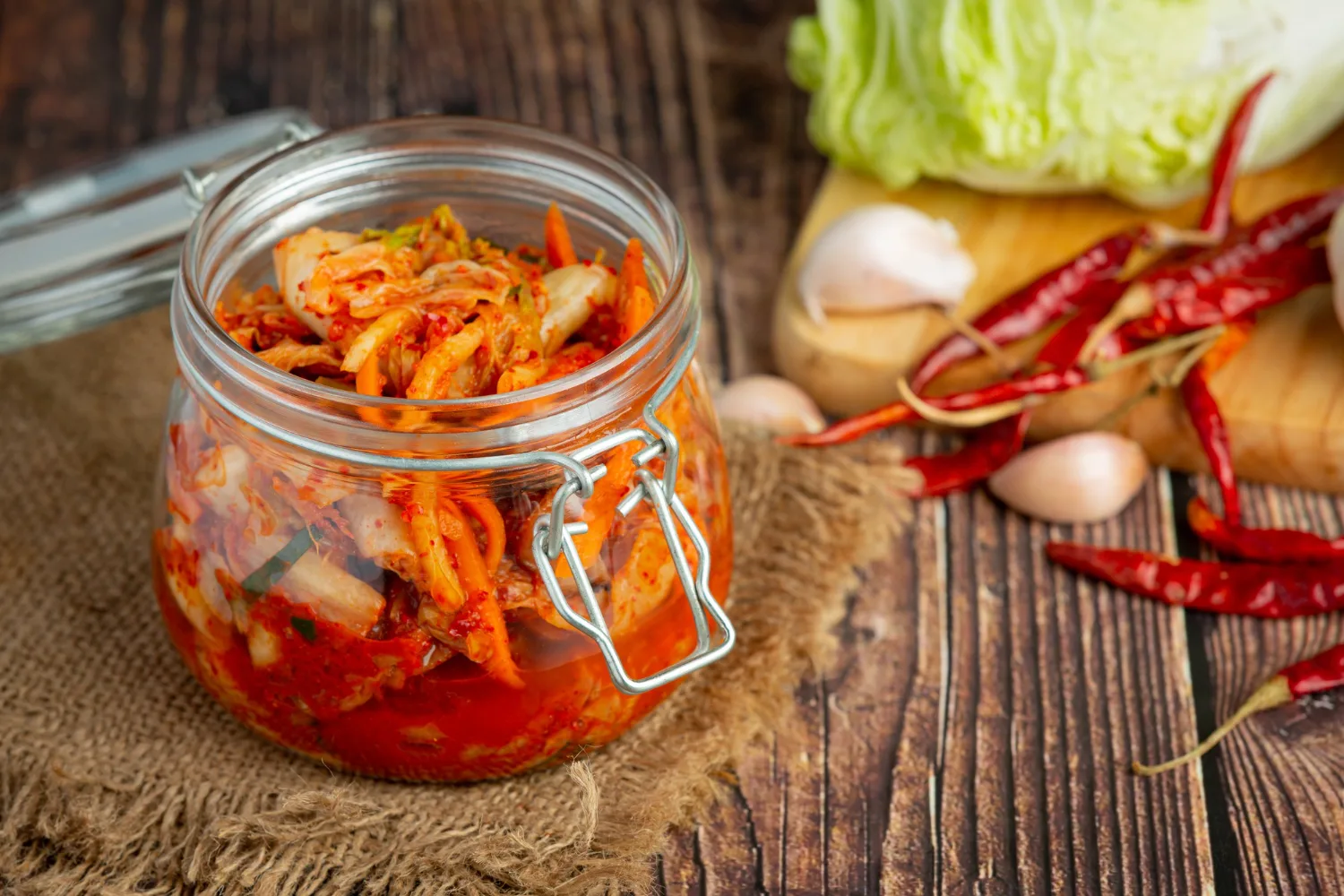
Kimchi is the most different relative in this family. It is not just fermented cabbage, but a whole group of fermented vegetable foods.
The tradition of kimjang — preparing and sharing kimchi before winter — is an important cultural practice in Korea.
Napa cabbage is usually not cut into fine strips. Most often, the head is divided into halves, and large heads are cut into quarters. The leaves stay connected at the base, salt is rubbed between them, and after salting they are coated with the seasoning paste.
This creates a completely different texture — large, juicy leaves instead of fine ribbons.
Gochugaru
Korean chili flakes give bright red color, fruity heat, and an aroma very different from ordinary crushed red pepper.
Garlic and Ginger
Garlic gives strong aroma and sharpness, while ginger adds fresh heat, a citrus-like note, and more complexity.
Radish and Green Onion
Radish adds crunch and extra juice, while green onion brings a fresh, lightly sharp aroma.
Fish Sauce and Shrimp
Fish sauce and fermented shrimp add saltiness, umami, depth, and a characteristic fermented aroma.
In some recipes, a paste made with glutinous rice or rice flour is added. It thickens the seasoning mixture, helps it cling to the leaves, and adds easily fermentable carbohydrates.
Kimchi is served every day as a side dish, but it also goes into soups, rice dishes, pancakes, stews, sandwiches, and modern recipes.
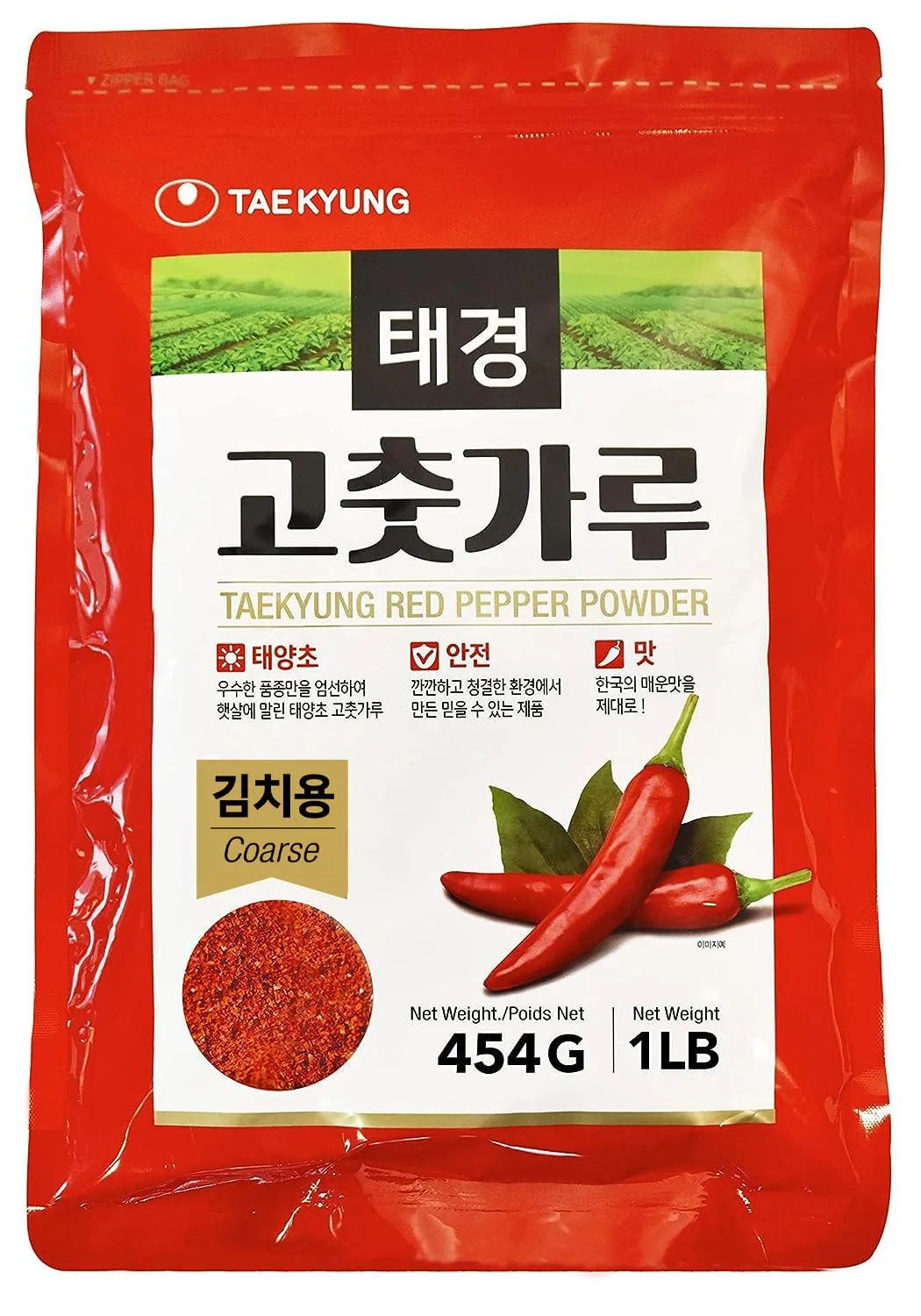
For kimchi-style cabbage, gochugaru Korean red pepper flakes are the ingredient that changes everything. Regular hot pepper flakes can add heat, but they do not give the same color, texture, or Korean flavor.
For kimchi, I would start with real gochugaru
If Bulgarian sauerkraut can survive happily with cabbage and salt, kimchi asks for a completely different personality. Gochugaru gives the red color, fruity heat, and gentle coarse texture that ordinary chili powder does not really copy.
It is useful not only for kimchi, but also for Korean-style soups, stews, marinades, and quick spicy vegetable sides.
For a visual idea of the process, you can also watch this video about kimchi .
China, Japan, and Other Asian Versions
In Asia, fermented vegetables do not end with kimchi.
In China, fermented and pickled cabbage vegetables are common, often with ginger, garlic, chili peppers, rice wine, and Sichuan pepper.
In Japan, tsukemono includes different ways of salting, fermenting, and pickling vegetables. Cabbage can be cut into larger pieces and flavored with salt, kombu, chili pepper, citrus peel, and ginger.
These products are often fermented for a shorter time and served in small portions with rice.
Seasonings by Country — A Structured Comparison
If we summarize the flavor only through seasonings, the picture looks like this:
| Seasoning | Bulgaria | France | Poland | United States | Korea |
|---|---|---|---|---|---|
| Horseradish | often | rare | sometimes | rare | no |
| Juniper | rare | characteristic | sometimes | sometimes | no |
| Caraway | rare | sometimes | characteristic | sometimes | no |
| Carrot | in mixed pickles | rare | often | sometimes | often radish instead of carrot |
| Apple | sometimes | sometimes when cooked | often in home versions | sometimes | sometimes fruit in the seasoning paste |
| Garlic | in pickles | rare | sometimes | rare | essential |
| Ginger | no | no | no | rare | essential |
| Chili peppers | optional | rare | rare | optional | essential |
| Fish sauce | no | no | no | no | often |
| White wine | not in fermentation | characteristic when cooked | rare | rare | no |
How Cutting Style Changes the Flavor
Cutting style is not only about appearance. It changes fermentation speed, texture, and the way cabbage absorbs seasonings.
Whole Heads
They ferment more slowly, preserve the leaves, and keep a denser texture. That is why they are so useful for stuffed cabbage rolls.
Thin Strips
They release juice faster, ferment more evenly, absorb seasonings more strongly, and soften sooner.
Halves and Quarters
They keep a juicier structure and allow seasoning pastes to go between the leaves. That is why this shape is typical for kimchi.
Large Pieces
They give a more juicy texture, ferment more slowly, and work well for shorter Asian-style versions.
For small-batch shredded sauerkraut, a cabbage shredder or mandoline slicer can make the cutting more even. And even cutting, boring as it sounds, usually means calmer fermentation.
Which Tradition Is the Most Practical
For a Bulgarian home, whole cabbage heads remain the most practical if we are making stuffed cabbage rolls.
For a small apartment, shredded cabbage is more convenient.
For a strongly aromatic version, choucroute with juniper and wine gives an interesting direction.
For people who love heat and complex flavors, kimchi is a whole separate universe.
All these methods start from the same place: cabbage, salt, and control over air. After that, culture takes over.
Before experimenting with juniper, caraway, or Korean chili flakes, see the traditional Bulgarian recipes for sauerkraut and raw pickles .
This post may contain affiliate links. As an Amazon Associate, I earn from qualifying purchases.