

Masha's Story
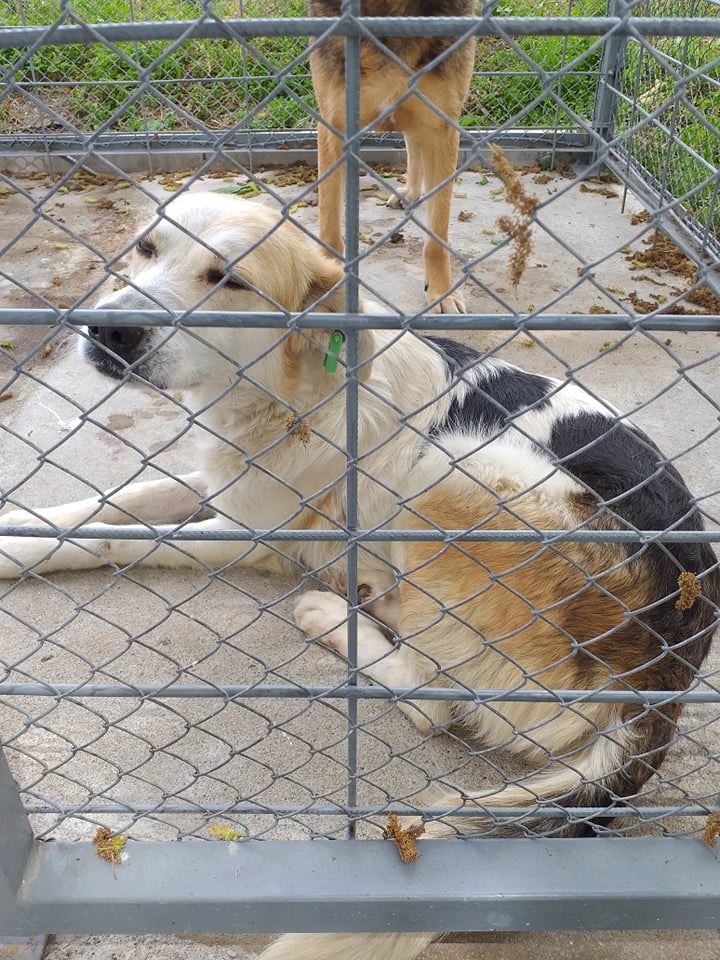
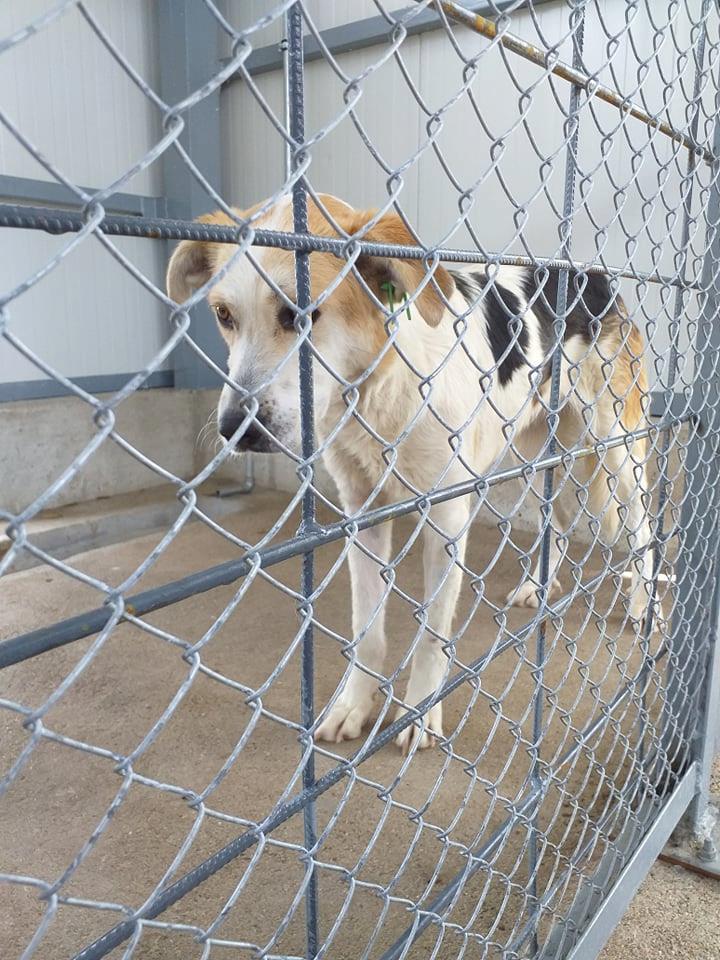
Masha had been living on the street, probably abandoned by a previous owner. She had been taken in to be neutered and then released back onto the street.
A few months later, she was found after being shot, with pellets in her jaw.
Who would do that to a dog, for God's sake?
She was taken to a clinic, operated on, and then left at the shelter to recover.
Somehow this dog “spoke to me.” I recognized something of myself in her. I can't explain what or how, but I trusted my intuition and took her home immediately.
Usually people have several meetings, walk different dogs and make their choice gradually. And that is the right way to do it.
In some places, it is even a requirement so they can assess you as a future owner.
I, however, acted spontaneously.
When you adopt, intuition often goes hand in hand with responsibility. One does not cancel out the other.
Health Is Not a Minor Detail
You should definitely ask for the most up-to-date information possible about the dog's health: what tests have been done, what vaccinations it has had, and what is known about its medical history.
Some shelters simply do not have the resources to carry out every possible test. That is why it is a good idea to take the dog to a veterinarian early on and decide together what is necessary.
Masha was trembling and more nervous than I was. She got into the car and breathed rapidly the entire way. At one point I thought the poor dog was going to faint.
I took her to a veterinarian immediately. The tests showed that she had parasites that the shelter had not known about.
There followed quite a few complications and a search for the right doctor, but we got through that too.
She is now completely recovered.
I want to mention the Small Animal Clinic at Trakia University in Stara Zagora, where the way we were treated was wonderful and we received excellent care from both doctors and interns.
So it really is important to find out as much as possible about the dog's health and history so you know what it may need.
The First 30 Days with a Shelter Dog
Adjustment Does Not Happen in a Day
At first, I was quite worried and hardly took my eyes off her.
During the first few weeks, a shelter dog may very well try to run away, so I did not fully trust her outdoors.
Masha looked at me suspiciously, kept her distance, and it took about a month before she relaxed and understood that we were going to stay together.
She was not very social. She barked at cyclists and runners.
Meanwhile, I watched all kinds of videos and training lessons. Gradually I realized that I needed to be more consistent, not spoil her too much, and not make every one of her reactions the center of my life.
Most of the time, a dog is simply happy to be in your company - whether it is lying beside your chair while you work from home, riding in the car, or wandering around the garden.
It is happy because it is with you.
That is why dogs are such great company. There is no one who likes you exactly as you are more than your dog. Not even your mother. Especially your mother. 🙂
Four Years Later
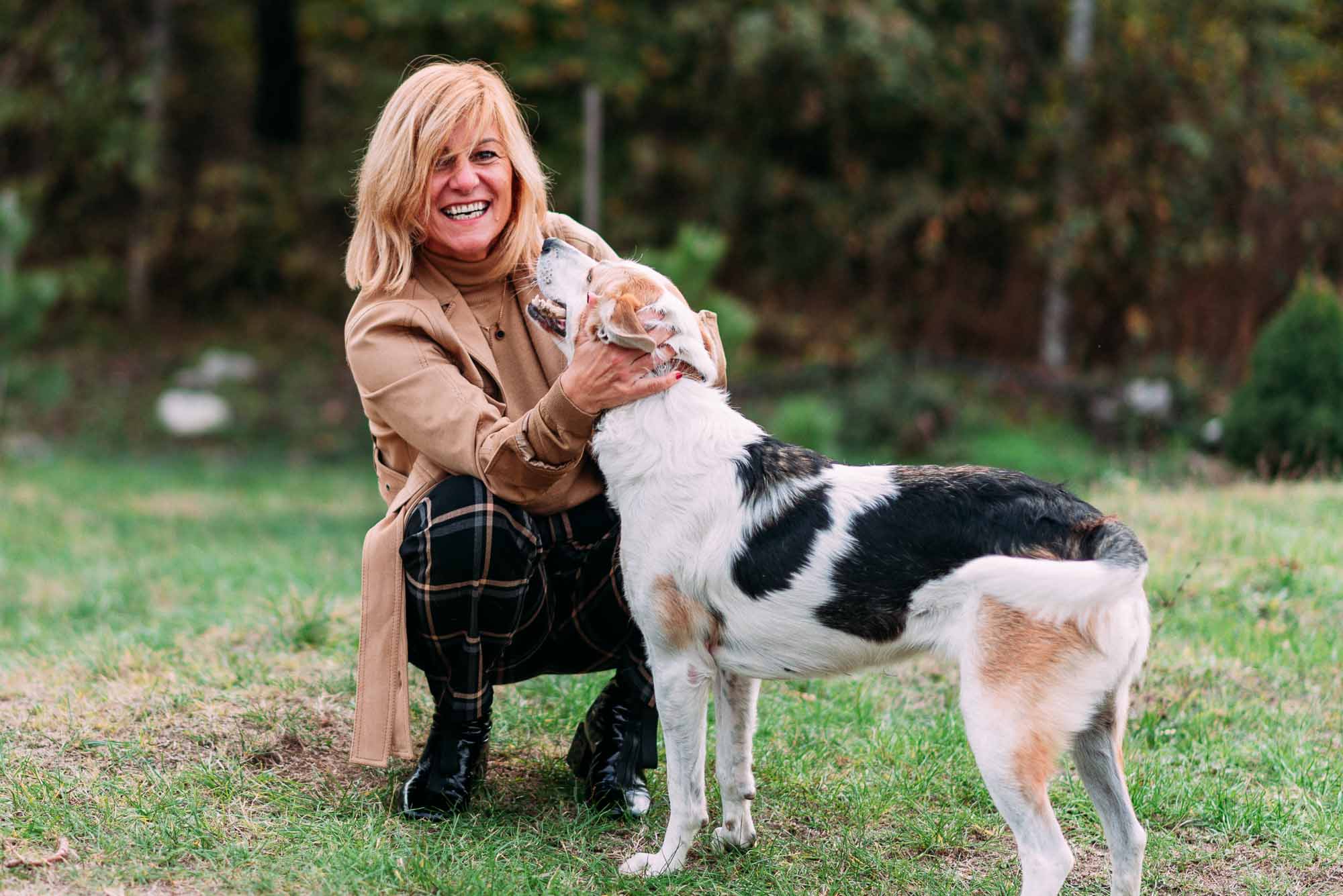
Four years have now passed, and our relationship keeps becoming more trusting. We understand each other's wishes and have become great friends.
Masha revealed her charming personality and turned out to be a cheerful, sociable creature who loves to communicate.
And in my opinion, she can unfailingly recognize people with bad vibes.
It is almost unbelievable.
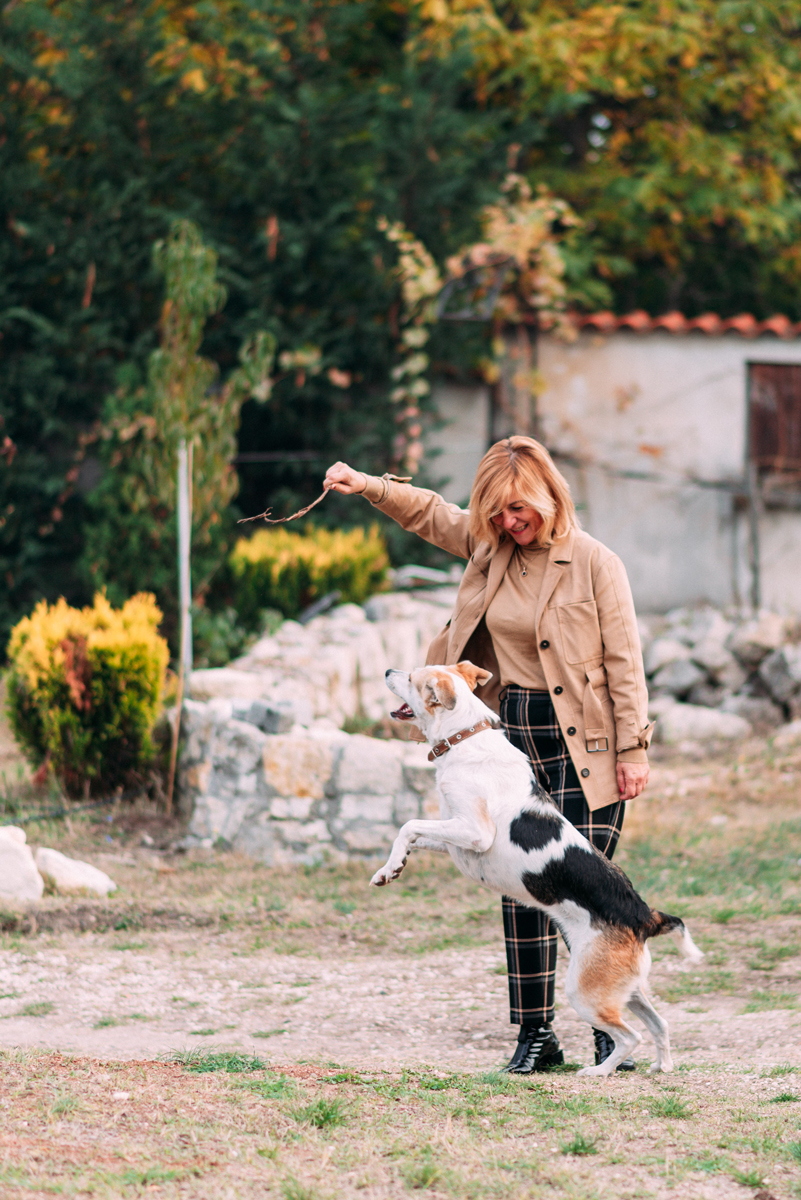
Masha is not some fancy breed, but she turned out to be one of the easiest animals to live with, and she brings me an enormous amount of joy and affection.
My favorite moment is when I call her and see her flying toward me with her ears flapping in the air.
Or when I give her a real bone and watch her search around the garden for a place to hide it. If she notices me watching, she moves it somewhere else so I cannot eat it.
Or how excited she gets when she sees Dark, the black Labrador.
How do I know?
Well, she makes several orbital laps around him at full speed. I assume this is her way of expressing romantic attraction.
Masha is such a character!
Routine Turned Out to Be One of the Most Important Things
During the first few months, it is important to create a rhythm.
Walks, feeding times, rest and meeting people gradually begin to follow a pattern, and the dog learns that it can rely on you and knows what to expect.
If you expose it to too many new experiences, you may simply confuse and exhaust it.
Everything comes gradually.
Clear boundaries are important too - what is allowed and what is not.
A dog that has spent time in a shelter may be stressed by its new environment and may show fear, distance or strong reactions.
But gradually it begins to understand the person in front of it.
It recognizes love especially well. It is hard to go wrong with that.
Why I Would Adopt a Shelter Dog Again
Having a dog also changed my daily rhythm. I go outside more, move more, see sunrises and sunsets I would probably have missed before, and talk to people I might never otherwise have met.
But most of all, I gained a new friend.
And I would not even try to list all the unexpected happy moments that life with a dog can bring.
There has not been a single minute when I regretted adopting a dog from a shelter.
It is simply wonderful!