
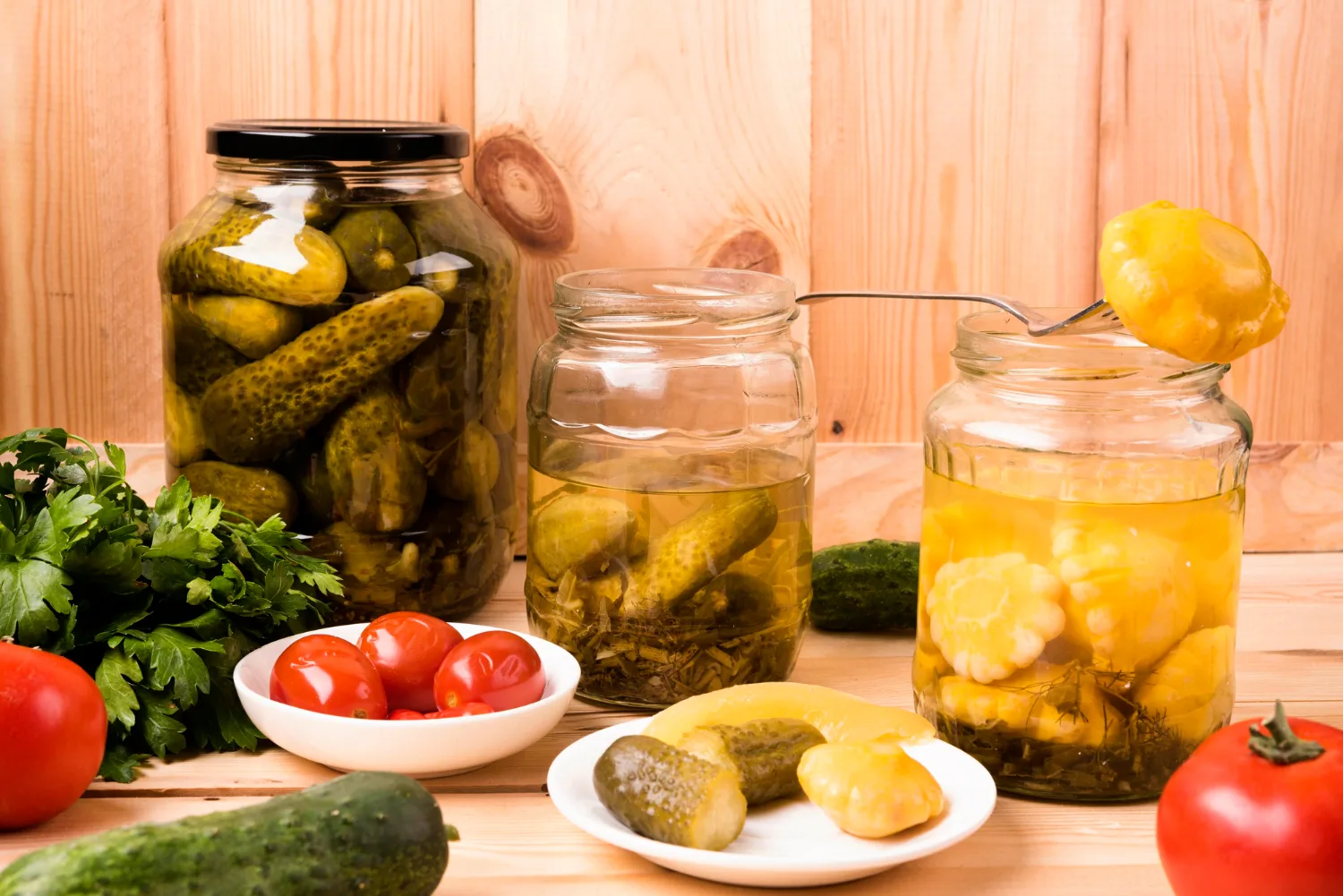
Homemade Pickled Vegetables: Vinegar, Salt, Spices, and Balance
Pickled vegetables are one of those things that look easy: vegetables, vinegar, salt, a few spices, and done. Except that between “crisp little pickle” and “a jar with a suspicious mood,” there are a few important differences.
Vinegar is not just flavor. Salt is not just habit. Spices are not just decoration. In a good brine, every ingredient has a job — to add flavor, protect texture, and, when we are talking about jars stored for longer, play its part in safety.
This article is about making pickled vegetables at home without chaos: how to think about vinegar, salt, sugar, water, and spices, which vegetables work well, when jars can go through a water bath, and when it is better to keep them in the refrigerator and not pretend we are a canning factory.
What Pickling Actually Is
Pickling means preserving and flavoring food in an acidic environment — most often with vinegar, salt, water, sugar, and spices. It can be quick, refrigerator-style pickling, or part of proper jar preserving with a water bath.
The difference matters. Quick pickled vegetables are wonderful, but they usually live in the refrigerator and are eaten soon. Shelf-stable jars need a tested recipe, correct acidity, and proper processing time.
In the shortest possible version: if you are making the brine “to taste,” think refrigerator. If you want shelf-stable jars, think tested recipe, vinegar with 5% acidity, and exact proportions.
Vinegar: Flavor, but Also Safety
Vinegar is the backbone of many pickling brines. It gives the sour taste, but it also creates an acidic environment that makes the product safer when the recipe and processing are correct.
For home preserving, vinegar with 5% acidity is usually used. This should be written on the label. Vinegar with unknown or lower acidity is not a good idea for jars that will sit on a pantry shelf.
White Vinegar
Sharper and cleaner in flavor. It works well with pale vegetables like cauliflower, onions, and cucumbers when you want the color to stay clear.
Apple Cider Vinegar
Softer and fruitier. It may darken the brine slightly, but gives a warmer taste.
Wine Vinegar
It gives character, but you need to be sure about its acidity. For preserving, do not use vinegar with unknown strength.
If the brine tastes too sour, do not reduce the vinegar in a canning recipe. It is safer to balance the taste with a little sugar, spices, or to choose a tested recipe that was already developed with a softer flavor.
Salt: Not Just “To Taste”
Salt gives flavor, helps texture, and in some recipes helps draw water out of the vegetables. But not every salt behaves the same way in a jar.
For pickling, pure salt without additives is usually recommended. Iodized salt can sometimes change the color or make the brine cloudy. This is not always a catastrophe, but if we want a clean brine and predictable result, it is better to use pickling salt or plain salt without additives.
If you pickle often, canning and pickling salt is useful to keep in the kitchen, because it dissolves cleanly and avoids the cloudy-brine drama before it starts.
For Flavor
Salt makes the vegetables taste more expressive. Without it, the brine often feels flat and watery.
For Texture
With some vegetables, salting beforehand helps pull out extra water and keep the texture firmer.
For Balance
Salt should not fight the vinegar. A good brine has acidity, saltiness, and aroma without one thing punching first.
No Guesswork
For shelf-stable recipes, do not drastically reduce salt if it is part of a tested proportion.
Sugar: Not Only for Sweet Pickles
Sugar in a brine does not automatically mean sweet pickles. Sometimes it simply softens the acidity and makes the flavor feel more complete.
A little sugar can make vinegar less aggressive, especially with carrots, onions, peppers, and cauliflower. Too much sugar, however, pushes the taste too far, and the vegetables start behaving like a dessert that took a wrong turn.
Which Vegetables Work Well
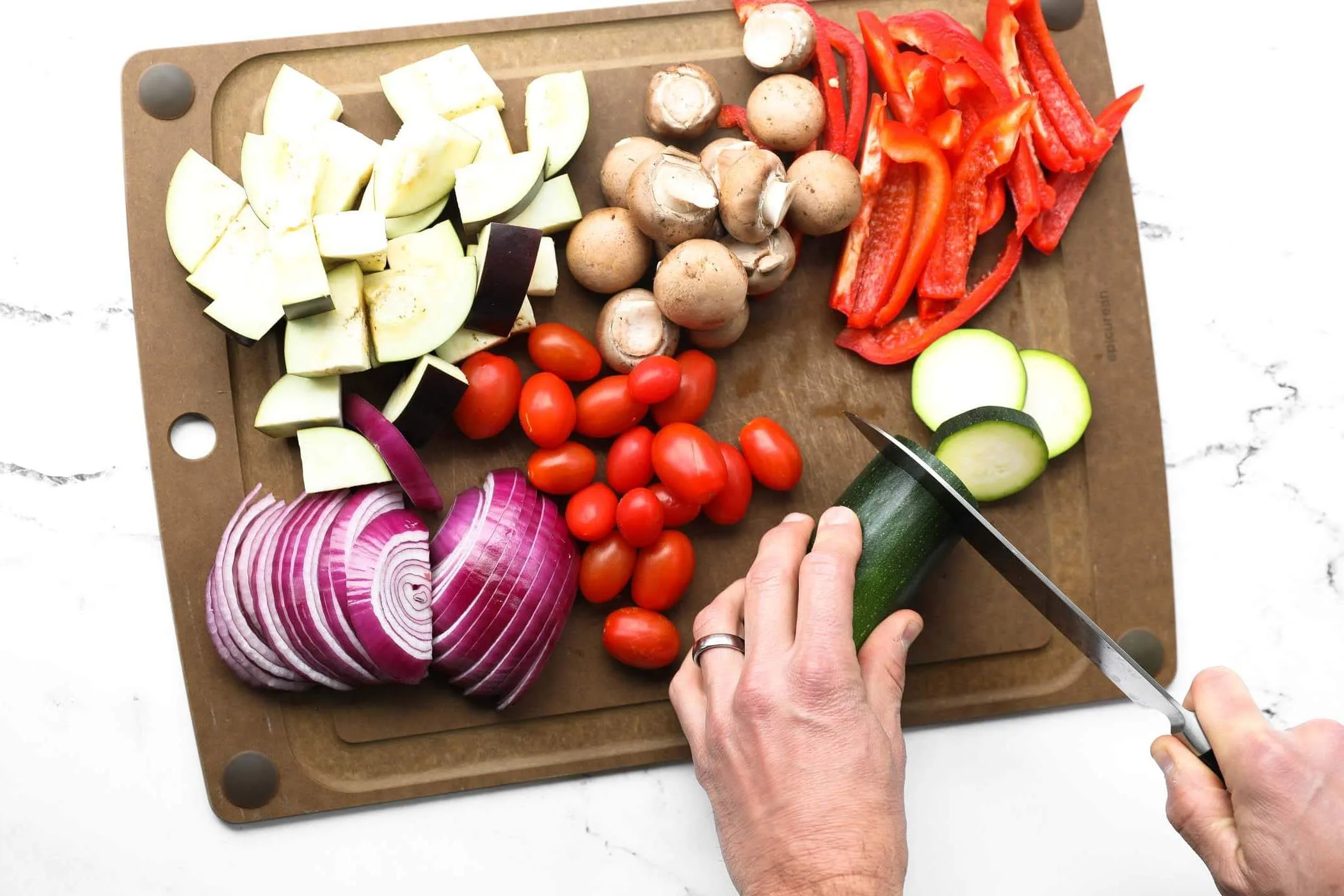
Pickling is generous because it accepts many different vegetables. The important thing is that they are fresh, firm, and healthy. A brine is not a spa treatment for tired vegetables.
Classic Choices
- cucumbers;
- cauliflower;
- carrots;
- peppers;
- onions.
Great for Quick Pickles
- zucchini;
- radishes;
- red onion;
- cabbage;
- hot peppers.
Need More Attention
- mushrooms;
- eggplant;
- garlic;
- mixed vegetables;
- very watery vegetables.
Spices: Aroma Without Chaos
Spices are where pickled vegetables can become very interesting — or very confused. Not every jar needs the entire spice cabinet.
Classic
- black peppercorns;
- allspice;
- bay leaf;
- mustard seeds;
- dill.
Fresh
- garlic;
- parsley;
- dill;
- celery leaves;
- lemon zest for quick refrigerator pickles.
Bolder
- chili;
- coriander;
- cumin;
- ginger;
- rosemary.
For refrigerator jars, you can experiment more. For shelf-stable jars, it is better not to change the main recipe. Play gently with spices, but do not change the vinegar-water-vegetable ratio.
A small jar of pickling spices or mustard seeds is enough for many batches, and it is much more useful than buying ten separate spices that will then sit in the drawer judging you.
Quick Pickles or Shelf-Stable Jars
This is the most important distinction. Quick pickles are for the refrigerator. They can be freer, more personal, more experimental. Shelf-stable jars require a tested recipe, correct acidity, and processing in a water bath.
| Type | Where It Is Stored | How Flexible the Recipe Is | Good For |
|---|---|---|---|
| Quick Pickles | In the refrigerator | More flexible | red onion, zucchini, carrots, radishes, cucumbers |
| Shelf-Stable Pickled Vegetables | Pantry/cellar after proper processing | Not changed randomly | pickles and relishes from tested recipes |
| Fermentation in Brine | First at room temperature, then cool storage | A different method | sauerkraut, fermented cucumbers, vegetables in salt brine |
Important: vinegar pickling and salt-brine fermentation are not the same thing. Both can give a sour taste, but they work in different ways.
How to Pack the Jar
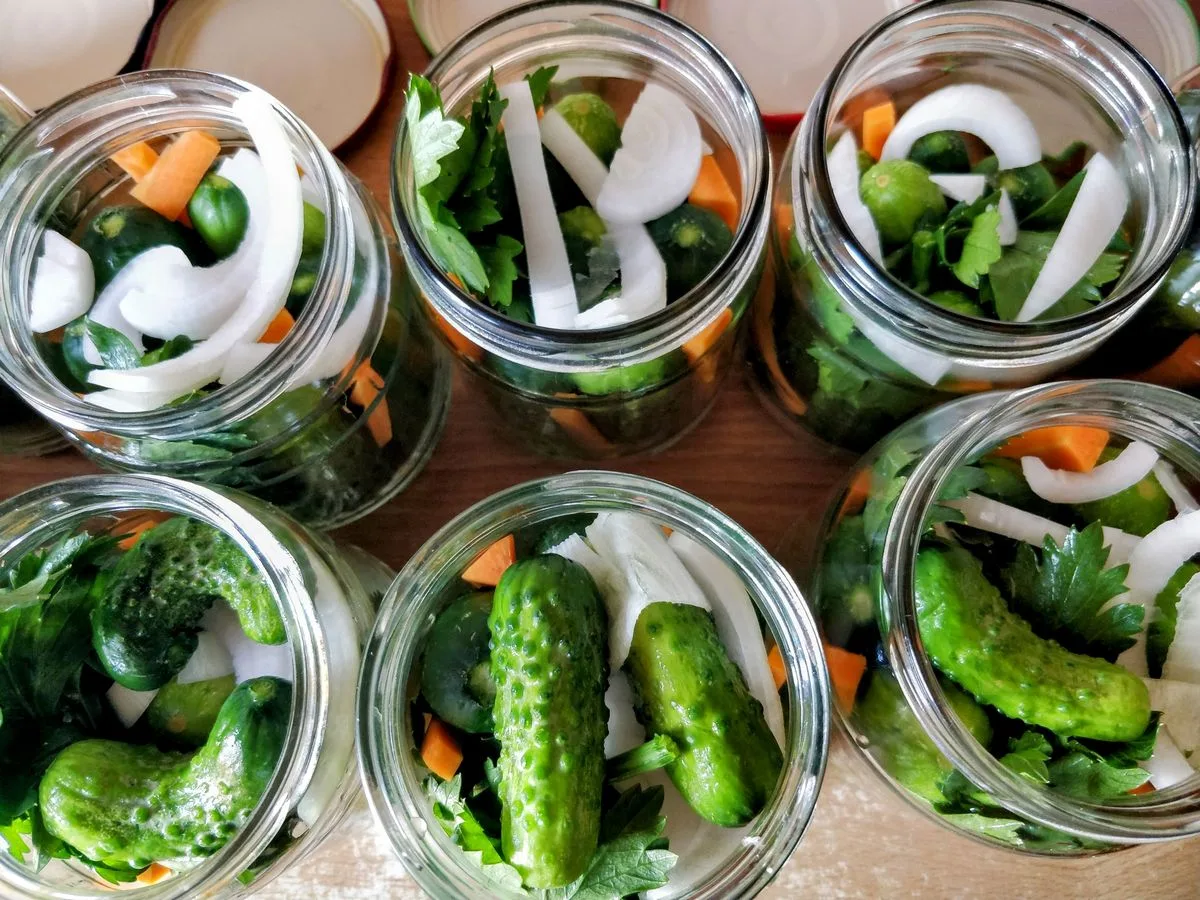
With pickled vegetables, packing the jar is not only about beauty. If the vegetables are packed too tightly, the brine does not surround them properly. If they are cut very unevenly, some soften while others stay too raw.
- Cut the vegetables fairly evenly.
- Do not use bruised or softened parts.
- Do not overfill the jar so much that the brine has no room.
- Leave the headspace required by the recipe.
- Wipe the rim of the jar before closing.
- For shelf-stable recipes, follow the water-bath processing time.
For small refrigerator batches, wide-mouth Mason jars are practical because they are easier to fill with sliced vegetables and much less annoying to wash afterward.
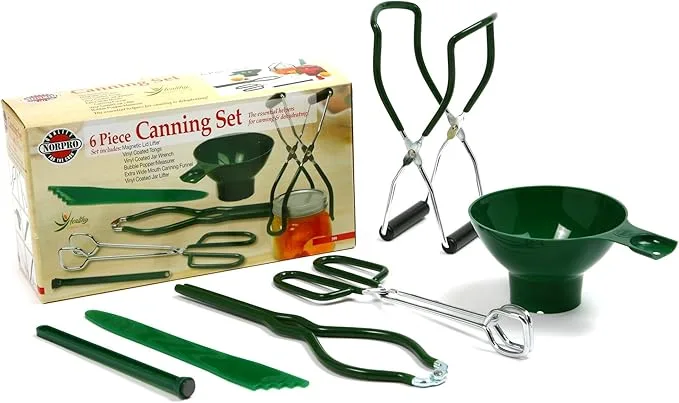
For water-bath pickles, I would keep a small canning tool set nearby
You can make quick refrigerator pickles with very little equipment. But once hot brine, jars, and water-bath processing are involved, a jar lifter and a wide-mouth funnel stop being “extra things” and start being the difference between calm preserving and chasing hot liquid around the counter.
A simple canning tool set is useful for pickles, jams, sauces, and anything that needs clean jar filling, headspace control, and safer handling of hot jars.
Water Bath and Safety
If you are making pickled vegetables for storage outside the refrigerator, the water bath is part of the process. It does not replace acidity; it works together with it.
It is not enough to add vinegar “approximately” and then boil the jars. The ratio between vinegar, water, and vegetables matters. Reducing the vinegar or increasing the water can make a recipe unsafe for shelf storage.
That is why, for canned pickles, it is best to use a recipe from a reliable source and not change the main proportions. Spices can be adjusted more carefully, but acid and water are not the place for creative freedom.
Common Mistakes
Pickled vegetables look easy right up until someone decides that vinegar is only a matter of taste.
Mini Recipe: Quick Refrigerator Pickled Vegetables
A good way to test flavors without behaving like a factory
Ingredients
- 2 cups sliced vegetables — carrots, cucumbers, red onion, cauliflower, or peppers;
- 1 cup vinegar with 5% acidity;
- 1 cup water;
- 1 tablespoon salt;
- 1–2 tablespoons sugar, optional;
- black peppercorns;
- mustard seeds;
- bay leaf or dill, optional.
Method
- Wash and slice the vegetables fairly evenly.
- Pack them into a clean jar without pressing them too tightly.
- Combine the vinegar, water, salt, and sugar in a small saucepan.
- Heat the brine until the salt and sugar dissolve.
- Add the spices to the jar.
- Pour the hot brine over the vegetables.
- Let the jar cool, then place it in the refrigerator.
- Taste after 24 hours. They are usually better after 2–3 days.
- Keep refrigerated and use soon.
This recipe is for the refrigerator, not for the pantry shelf. If you want jars for long-term storage outside the refrigerator, use a tested canning recipe and proper water-bath processing.
When Pickled Vegetables Make Sense
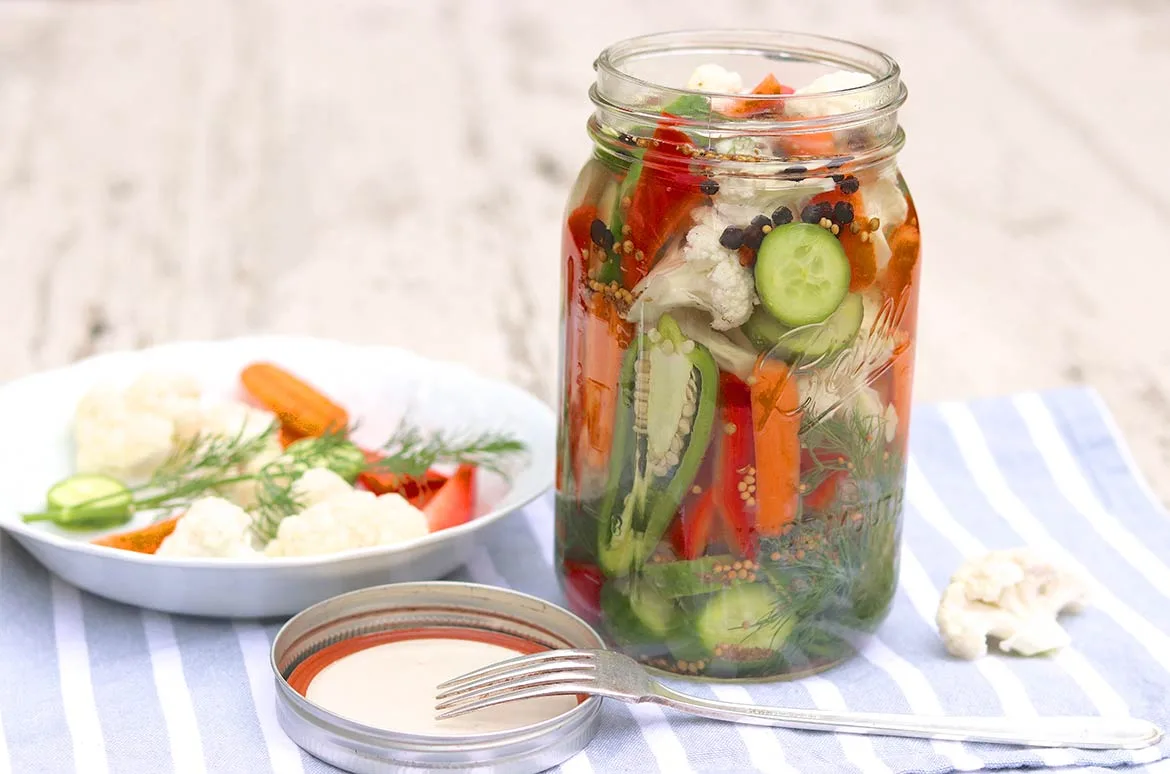
They make sense when you want something fresh, sour, crisp, and convenient. A small jar of pickled onion can change a sandwich. Carrots and cauliflower can wake up a boring dinner. A few hot peppers can give character to a whole dish without writing its biography.
Pickled vegetables are a great way to use seasonal surplus, but also to make a small refrigerator batch. Not every recipe needs to end with twenty jars and a heroic photo of the countertop.
The best balance is simple: fresh vegetables, vinegar with clear acidity, salt, a little sugar, sensible spices, and proper storage. The rest is taste.
This post may contain affiliate links. As an Amazon Associate, I earn from qualifying purchases.
