
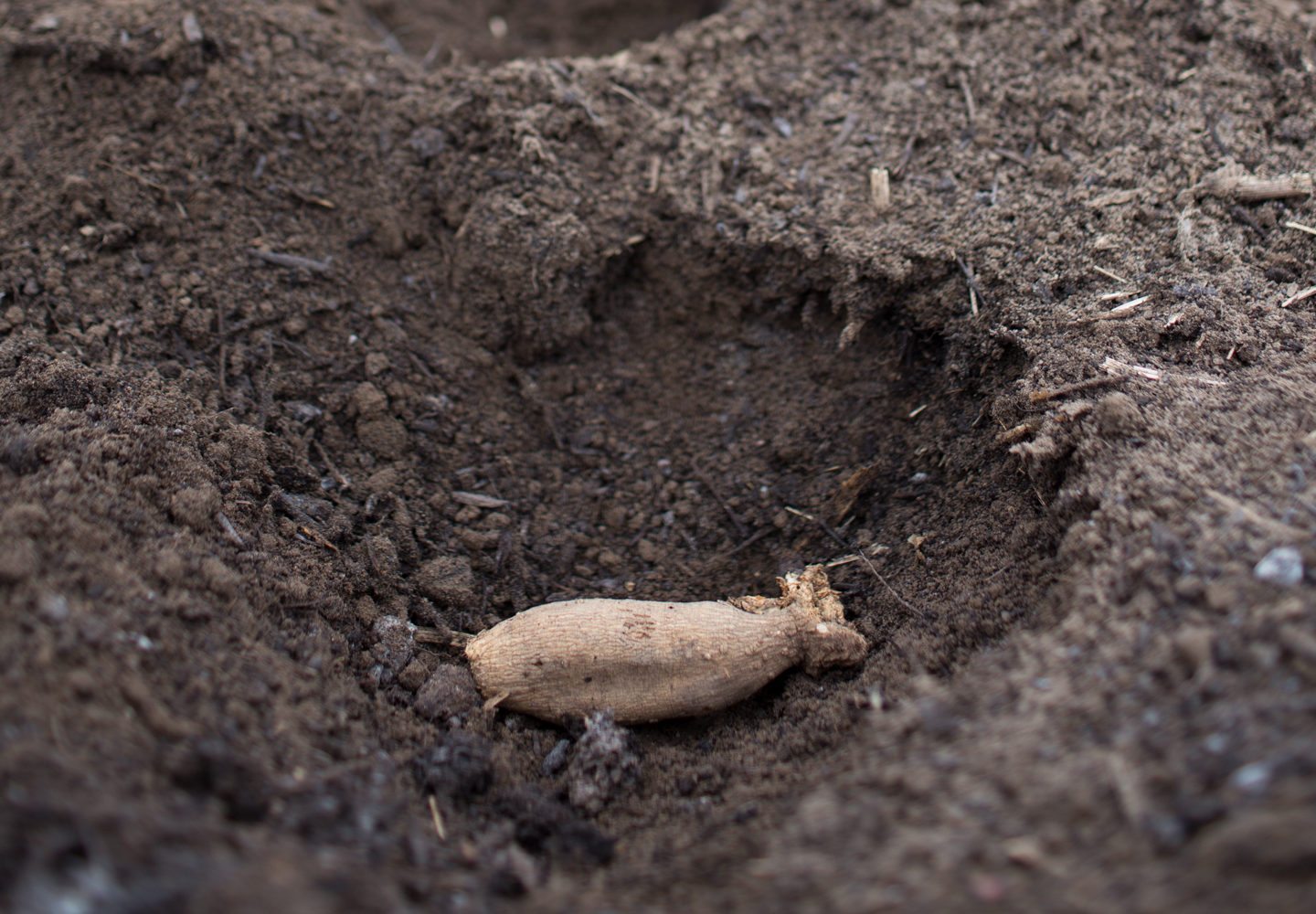
Planting dahlias is not complicated, but a few small details at the beginning can make a big difference to how the plants develop later in the season.
The most important things are well-warmed soil, healthy tubers, enough space, and a position with plenty of sun.
Then comes the more enjoyable part - giving them water, nutrients, and a little support while they gradually turn into some of the most impressive plants in the garden.
How to Plant Dahlia Tubers
Dahlias are planted in spring, once the soil has warmed and the danger of late frost has passed. I do not rush them - cold, wet soil is not a good start for the tubers.
I also consider the mature size of the variety in advance. Around 40-50 cm between plants is a good starting point, but larger and taller dahlias need more space.

If the variety is tall, I put the support in place at planting time. It is much easier now than two months later, when there is already a huge plant around the stake that has no intention of cooperating.
How to Care for Dahlias During the Growing Season
Once they get going, dahlias grow quickly. The larger the plant becomes, the more water and nutrients it uses, especially when active flowering begins.
I do not let them stay dry for long periods, but I also do not want the soil around the tubers to remain constantly wet. Good soil and even watering are far more important than simply adding more water.
Pinching for Bushier Plants
When a young dahlia reaches approximately 25-30 cm in height and has several well-developed pairs of leaves, the main growing tip can be pinched out.
It can feel a little cruel, especially when the plant looks perfect and has finally started growing exactly as it should. But the aim is to encourage side shoots.
One tall shoot looks promising. Several well-branched stems, however, mean many more places for flowers.
Removing Faded Flowers
With dahlias, this is one of those small jobs that makes a noticeable difference.
As the flowers begin to fade, I cut them off regularly. This prevents the plant from wasting unnecessary energy on seed production and encourages it to keep producing new flower buds.
With many varieties, it becomes a continuous cycle - you cut off the old flowers while the next ones are already waiting below.
What I Do With Dahlias at the End of the Season
After the first serious frosts, the top growth gradually reaches the end of its season. At that point, I cut the stems back, leaving about 5-10 cm above the soil, and carefully lift the tuber clump.
The tubers need to be lifted carefully because the point where they join the stem is relatively fragile.
Before storing them, I inspect the tubers and remove any damaged or rotting sections. The aim over winter is to keep them dry, healthy, and protected from freezing without allowing them to become completely dehydrated.
They can be stored in a cool, frost-free place in a suitable container and covered with a material such as vermiculite or dry sand.
I check them periodically during winter. It only takes a few minutes, but it is much better to discover a problem in January than when you are ready to plant them in April.
The Most Important Things for Good Flowering
There is no single secret to growing dahlias. Warm soil at planting time, sun, enough water, nutrients, space, and regular deadheading do most of the work.
And when the plant becomes tall and starts carrying dozens of heavy flowers, you will be glad you put the support in place back in spring.