
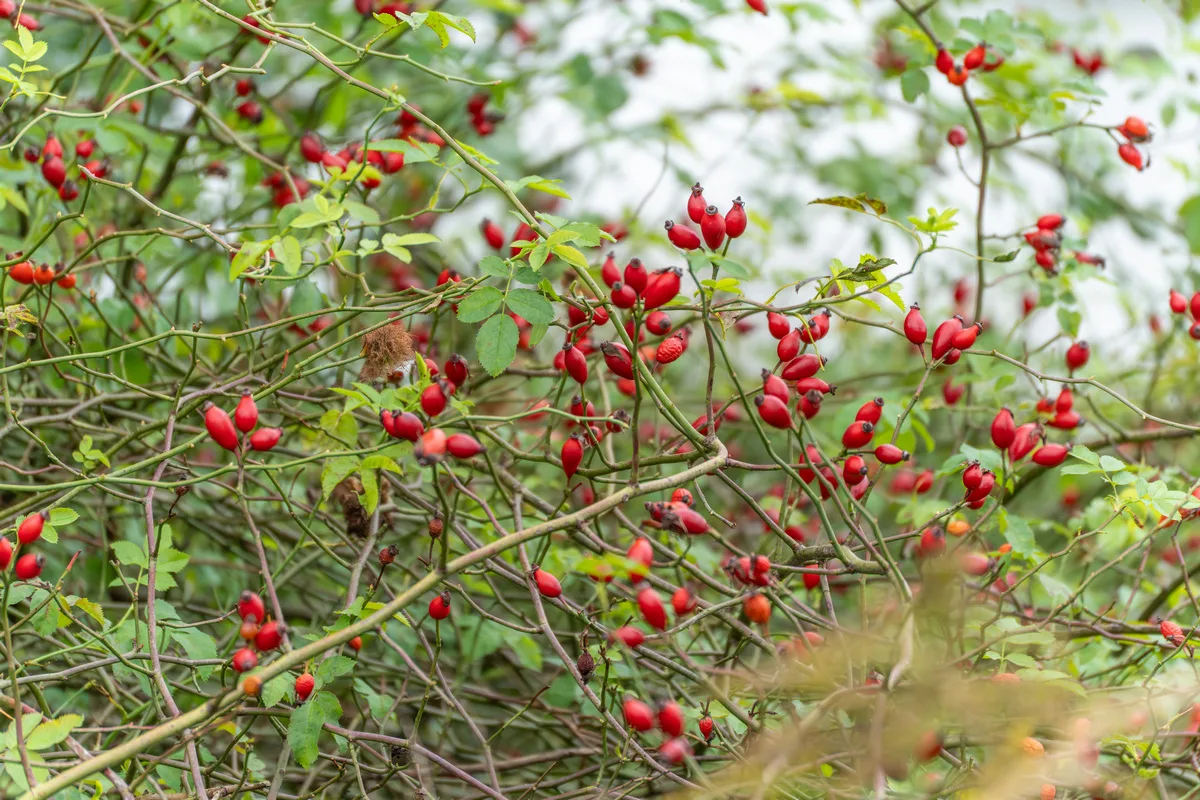
Preparing roses for winter actually begins well before the first frost.
From late summer onward, we gradually change the way we care for them so we do not encourage soft new growth just before cold weather arrives. The goal is for roses to enter winter with healthy roots, well-ripened canes, and as few unresolved problems from the growing season as possible.
The simplest principle works best: stop pushing the plant to grow and start helping it prepare for dormancy.
Winterizing roses is not one big operation in November. It is a gradual slowing down that begins in late summer.
Start preparing roses in late summer
Stop high-nitrogen feedingIn spring, nitrogen is important for new leaves and shoots. By late summer, however, that is exactly the kind of growth we no longer want to encourage.
If we continue feeding heavily with nitrogen, the rose may produce a lot of soft new growth that will not have enough time to mature before cold weather.
So we gradually stop high-nitrogen feeding.
If needed, you can use an appropriate fall fertilizer with less nitrogen and more emphasis on potassium, but always according to the specific product and the condition of the plants.
For the full seasonal feeding routine: Feeding and Caring for Roses Through the Seasons
During the active growing season, we regularly deadhead roses to encourage repeat flowering.
Toward the end of summer, we gradually do less of this.
Leave some flowers to form rose hips and allow the plant to begin slowing down naturally.
There is no need to convince a rose in October that it is still June.
Adjust watering and pruning for fall
Water according to the weather, not the calendarReducing watering does not mean allowing roses to dry out completely.
September and October can be very different from one year to another - from long periods of warm, dry weather to cool and rainy conditions.
So check the soil. If it is dry deeper down, water. If rainfall has already provided enough moisture, do not add water simply out of habit.
Roses generally do better with deeper, less frequent watering than with constantly wet soil near the surface.
If fall is dry, one deeper watering before the ground freezes can be useful. In a wet fall, that step is naturally unnecessary.
Fall is not the time for the main shaping of a rose bush.
Limit pruning to sanitation and remove only what genuinely needs to come off.
Leave the main pruning for spring.
For proper pruning: Pruning and Propagating Roses: When to Prune and How to Take Cuttings
This post contains affiliate links. As an Amazon Associate, I earn from qualifying purchases at no extra cost to you.
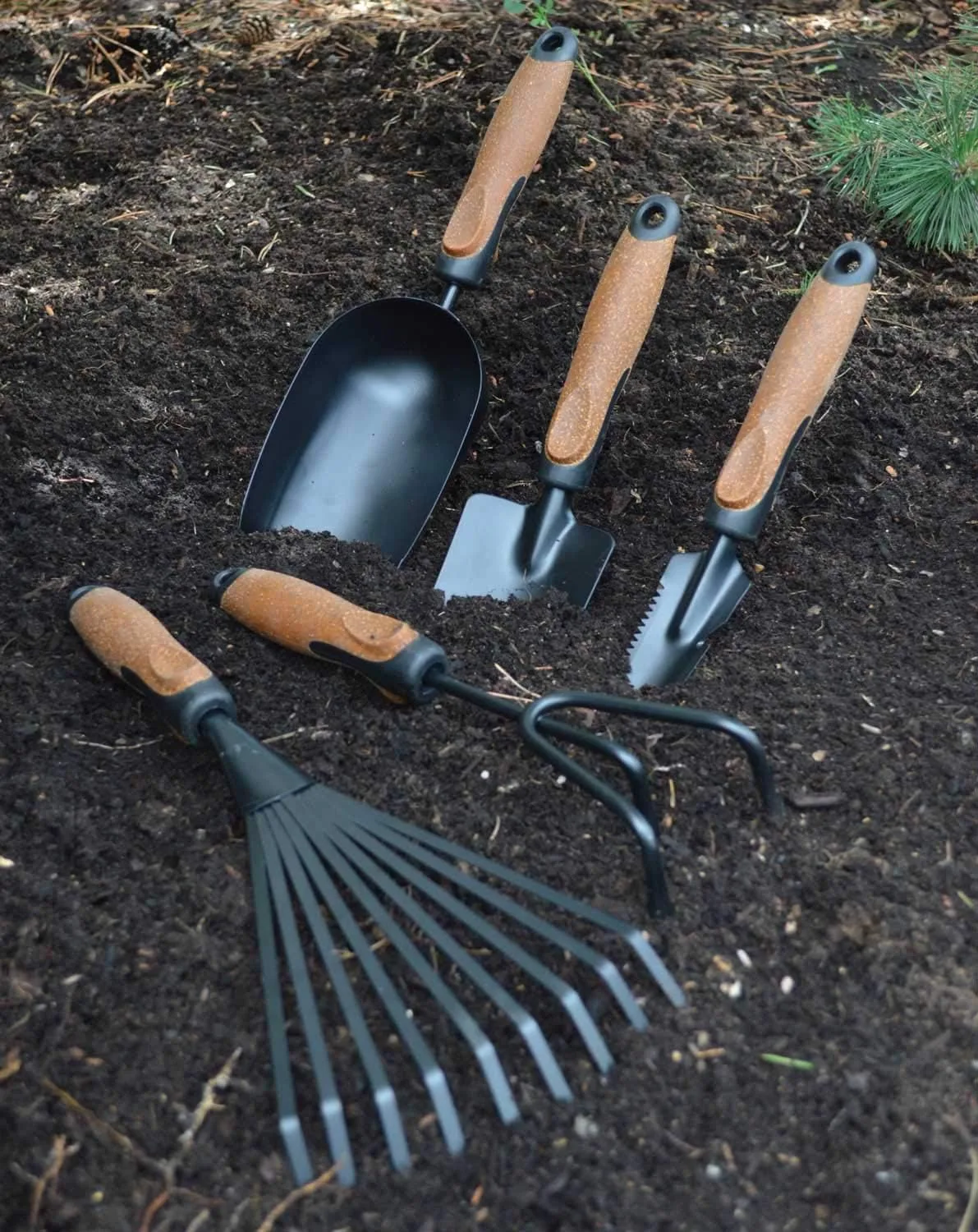
Fall rose care involves plenty of small practical jobs: removing plant debris, tidying the soil surface, working around newly planted roses, and cleaning up the border before winter.
A compact hand-tool set is useful for these lighter garden tasks and can stay close at hand while you work through several rose beds. For actual pruning, use proper sharp bypass pruners rather than general-purpose garden tools.
Clean up the garden and treat only when needed
Do not leave fallen leaves under the rosesThis is one of the most useful fall jobs.
Fallen leaves can carry the organisms responsible for black spot, powdery mildew, and other recurring problems.
Collect diseased and badly damaged leaves, along with infected plant debris around the bushes.
If the roses had a serious disease problem during the season, do not leave that material around the plants.
I would not add it to an ordinary cold compost pile either unless I were confident that the composting process would destroy the pathogen.
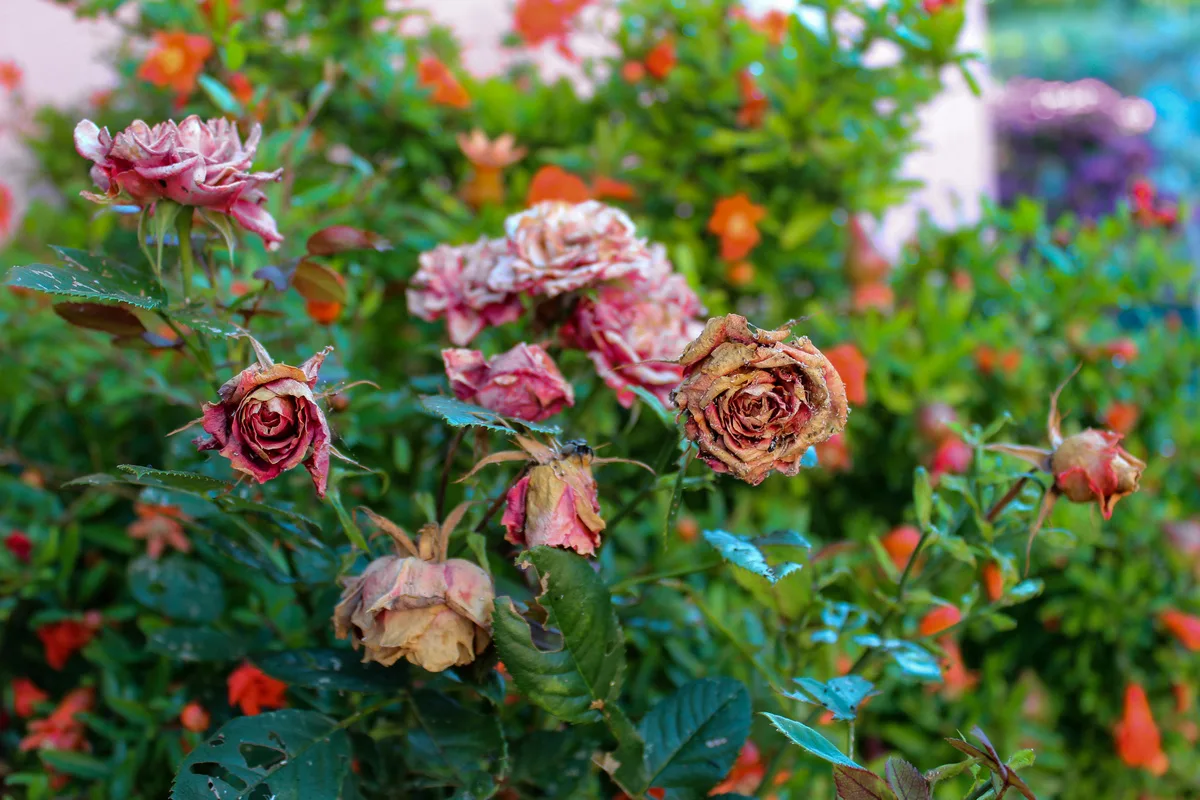
There is no need to automatically spray several different products every fall.
First, look at the problems you actually had during the season.
Where fungal diseases repeatedly caused trouble, an appropriate treatment may be considered according to the specific product and label directions.
If there was a serious pest problem, treatment should likewise be chosen for the specific pest and intended use.
Never increase the concentration on your own, and do not use a product simply because fall has arrived.
For proper diagnosis: Rose Diseases and Pests: How to Recognize Problems and When to Act
Prepare climbing and newly planted roses
Secure climbing rosesWith climbing roses, winter damage is not always caused by cold alone.
Long canes can be whipped around by strong winds, rub against their support, and gradually become damaged.
Before winter, check all ties, replace any that are too tight, secure loose long canes, and make sure the arch or pergola itself is stable.
Use soft ties that will not cut into the bark.

Newly planted roses are more vulnerable than well-established mature bushes.
Their root systems are smaller, and the first winter can be a more serious test.
Pay particular attention to:
Protect the base after consistently cold weather arrives
Do not rush winter protection.
If we mound soil or mulch around the plant too early, while the weather is still warm and damp, unnecessary moisture can build up around the base.
Wait until consistently cold weather arrives, then create a protective mound around the base of the rose.
With grafted roses, pay particular attention to the graft union.
The amount of protection needed depends on the variety, the age of the plant, and the local climate.
Do not protect every rose in exactly the same way. A well-established, cold-hardy rose does not have the same needs as a young plant that was planted only a few months ago.
By this point in the season, I would not add treatments simply because winter is approaching. If a pest or disease problem still needs attention, the treatment should be chosen for that specific problem and used according to its current label.
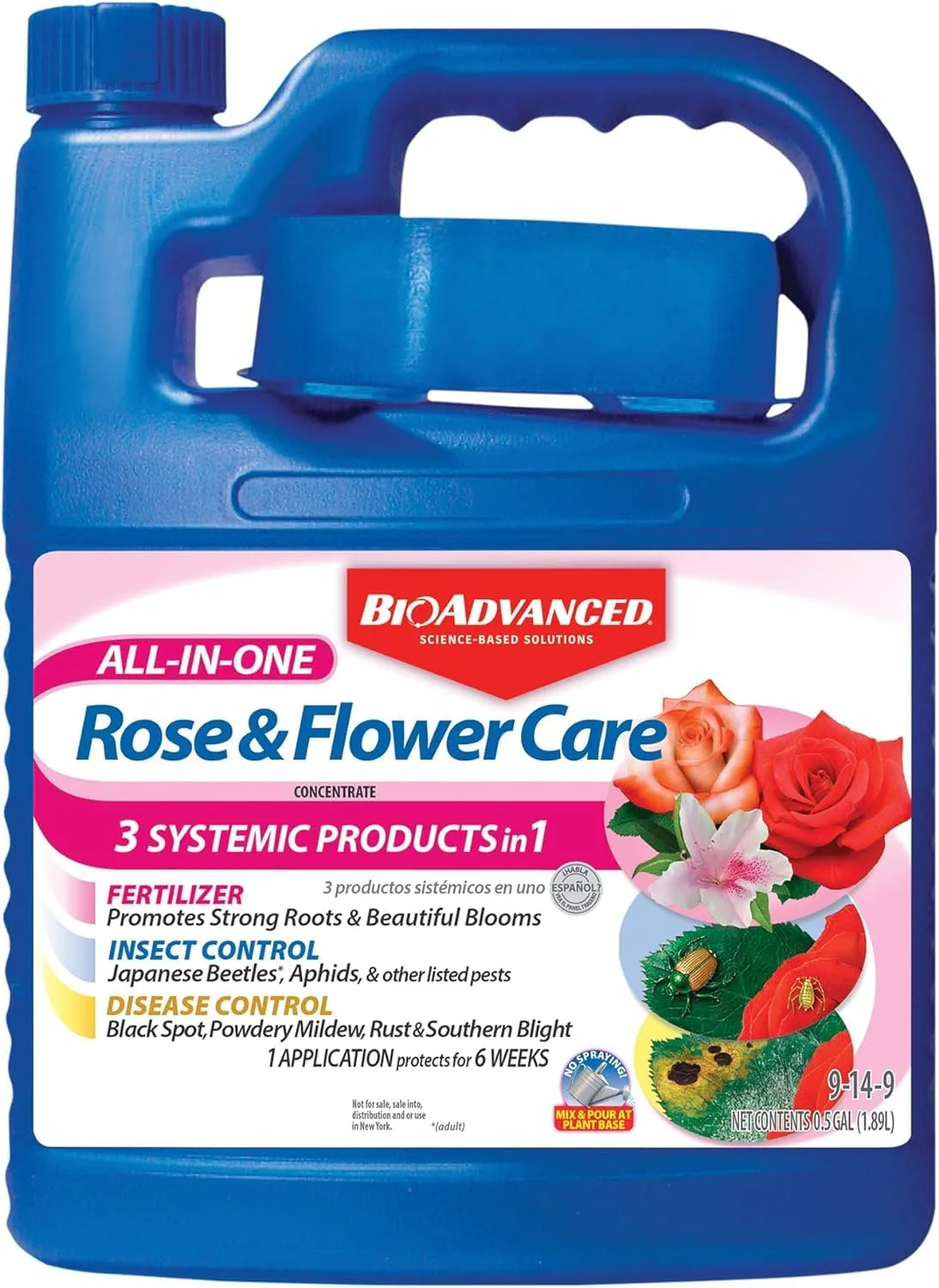
BioAdvanced All-In-One Rose & Flower Care combines fertilizer, insect control, and disease control in one concentrate intended for roses and flowering plants.
I would not use it automatically as part of winter preparation. Identify the problem first and follow the current label for application rates, timing, restrictions, and safety instructions.
Fall rose care at a glance
| Period | What to do |
|---|---|
| Late August | Reduce and stop high-nitrogen feeding |
| September | Gradually stop encouraging continuous new flowering |
| September - October | Water according to the weather and soil moisture |
| After leaf drop | Remove diseased and fallen leaves |
| Late fall | Do only necessary sanitary pruning |
| When needed | Apply an appropriate treatment for an identified problem |
| Before winter | Secure climbing roses and inspect supports |
| After consistently cold weather arrives | Protect the base of the plants |
What not to do in fall
Let the roses finish the season quietly
Preparing roses for winter does not mean panicking and pruning, spraying, feeding, and wrapping everything in one weekend.
It is a gradual slowing down.
Stop encouraging new growth, clean up the problems left by the season, secure anything that could be damaged by wind, and give the plants time to move naturally into dormancy.
Sometimes the best fall care is simply to stop asking the rose to do one more thing.