
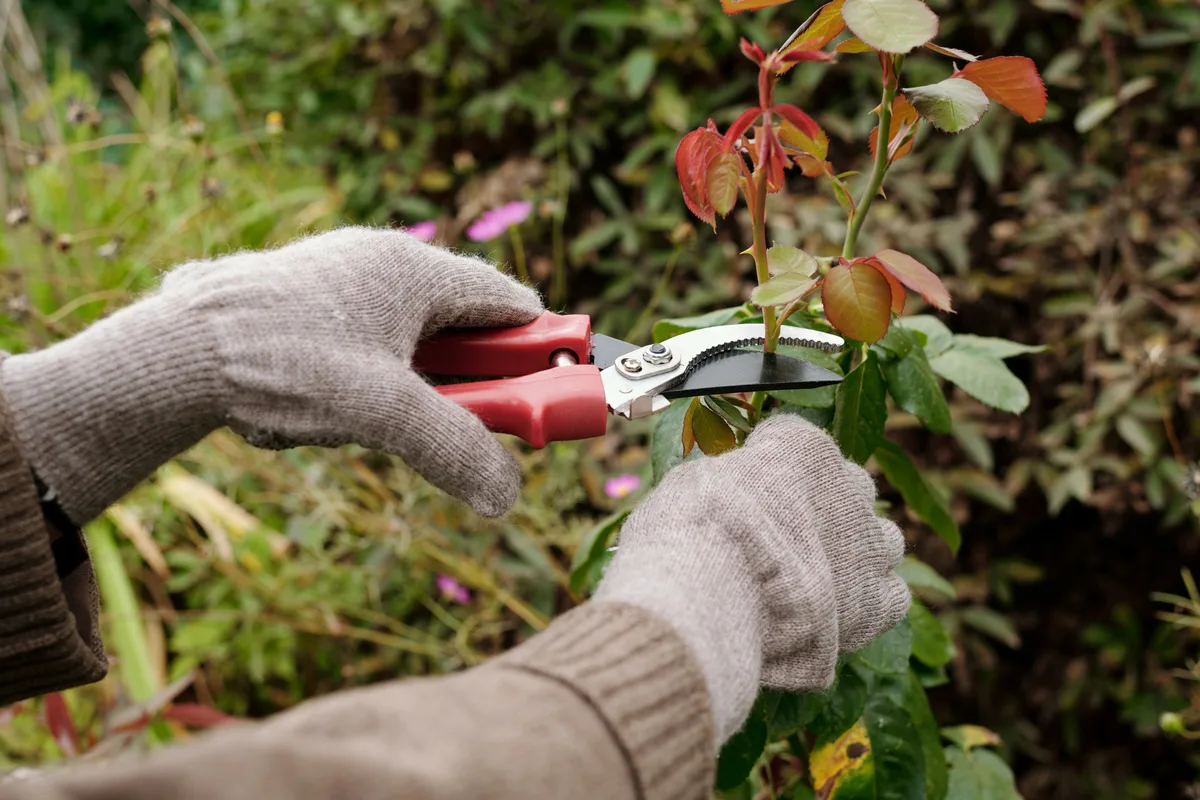
Pruning is one of the subjects that worries new rose growers the most. It can seem as though there are dozens of rules and that one wrong cut will finish the rose forever.
In practice, roses are much more forgiving than that.
What matters more is knowing what type of rose we have, why we are pruning, and when we are doing it. And when we find a variety we truly love, some of those healthy shoots can also be used for propagation.
Not all roses are pruned the same way. That is the most important rule in this entire guide.
Why and when to prune roses
Pruning is not just about making a rose bush look tidy. It serves several very practical purposes.
For most roses, the main pruning is done in late winter or early spring, after the hardest freezes have passed and the plant begins showing signs of new growth.
The exact timing depends on your climate and the weather.
I trust the buds on the rose much more than I trust the calendar.
Once the buds begin to swell, it becomes much easier to distinguish living wood from frost-damaged growth and decide what should stay.
Where to start and where to make the cut
Before thinking about shape, remove the obvious problems first:
- dead branches;
- frost-damaged growth;
- broken shoots;
- diseased wood;
- very weak, thin stems;
- branches that rub against one another.
Only after that do we step back, look at the whole plant, and decide what shaping actually makes sense.
Good pruning shears matter. A dull blade crushes the stem instead of making a clean cut. For roses, a good pair of bypass pruning shears is one of those tools we use constantly - for spring pruning, deadheading, and taking cuttings.
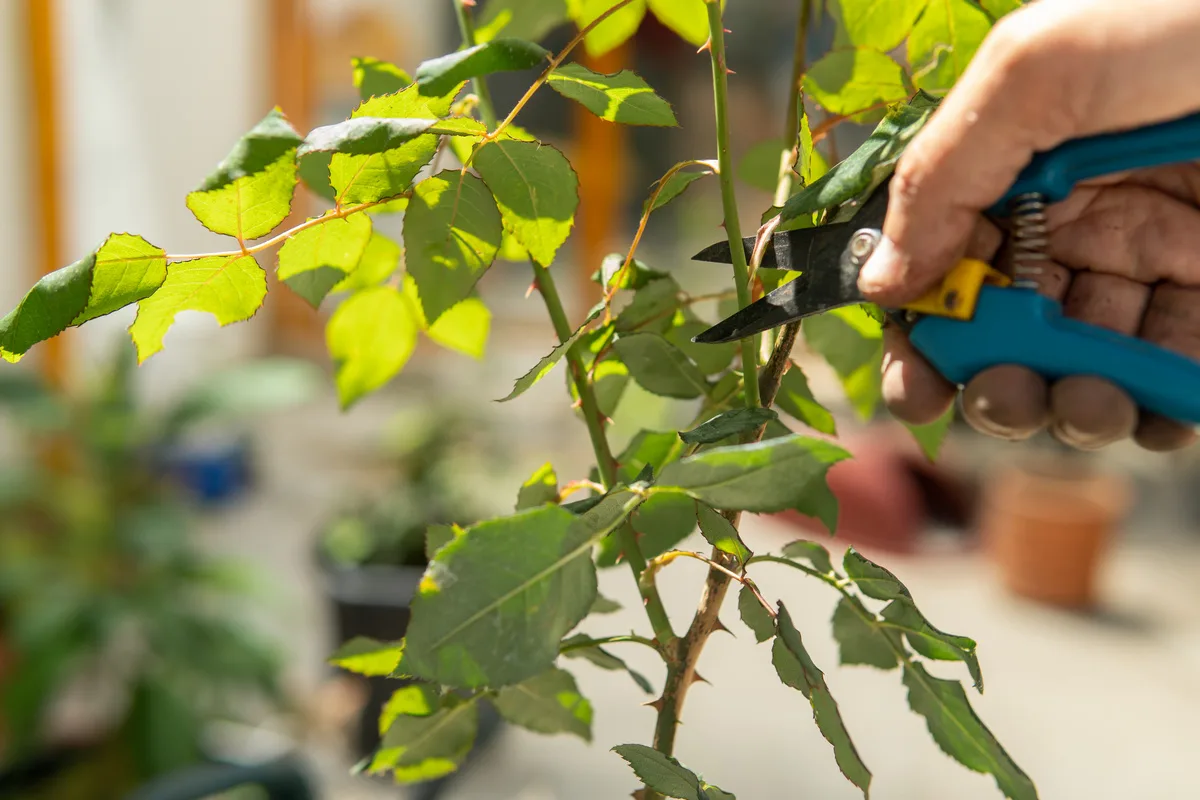
For standard pruning, make the cut just above a healthy bud.
We usually choose a bud that points away from the center of the plant. This gives the new shoot a better chance of growing outward rather than back into the middle of the bush.
The cut should be clean, without leaving an unnecessarily long piece of stem above the bud.
There is no need to walk around the garden with a ruler, though. A rose is not going to be offended by a few millimeters.
How to prune different types of roses
Hybrid tea and floribunda rosesThese roses usually tolerate a stronger spring pruning.
Remove weak and older growth and keep the healthy main stems that will produce the new growth for the season.
With hybrid tea roses, the goal is often stronger individual stems and high-quality flowers. With floribundas, we usually want a more branched plant with more flowering shoots.
That does not mean cutting every rose to exactly the same height every year. Look at the individual plant.
This post contains affiliate links. As an Amazon Associate, I earn from qualifying purchases at no extra cost to you.
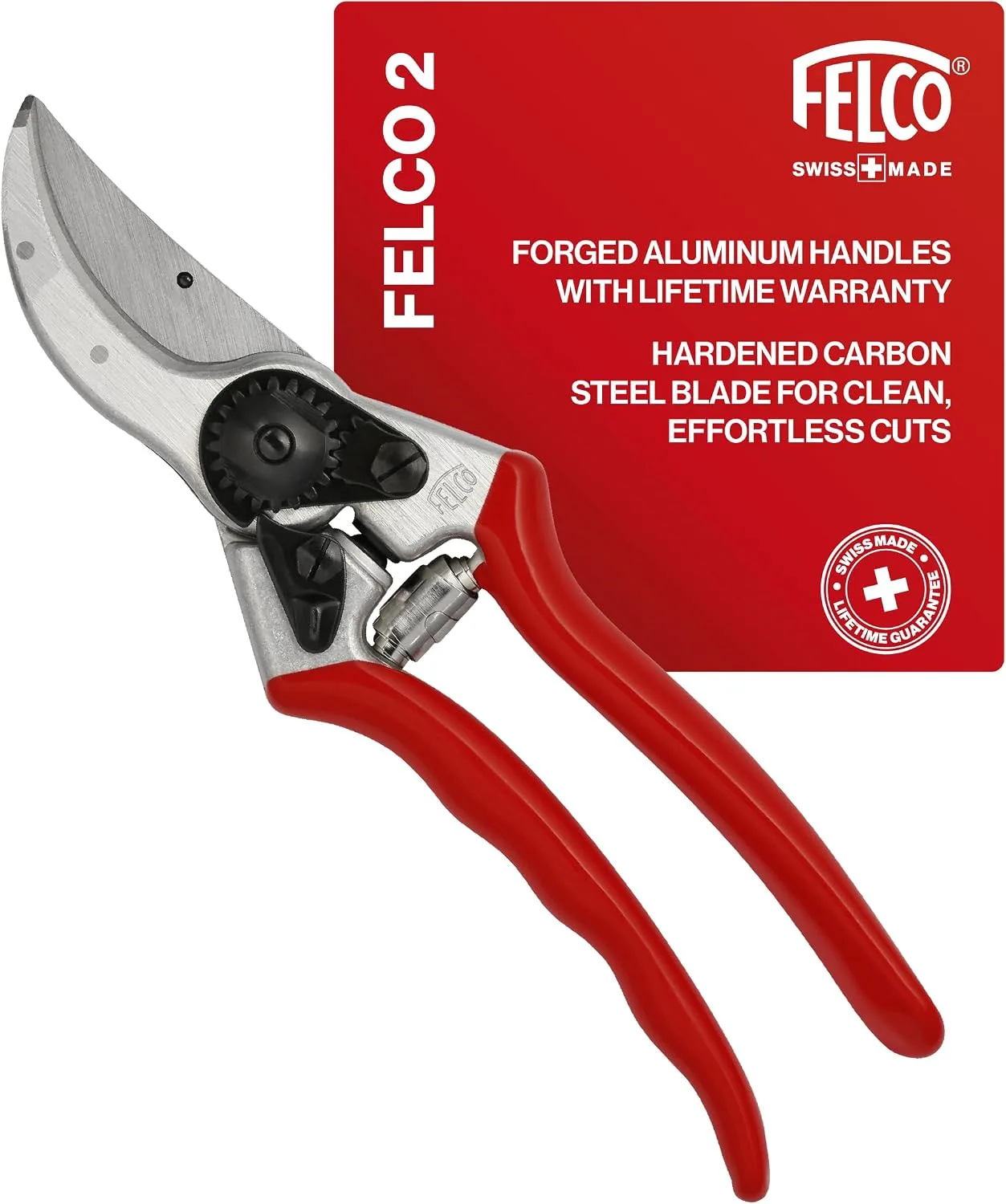
A good pair of bypass pruners is one of the tools I would use repeatedly around roses - for spring pruning, deadheading, removing smaller damaged stems, and preparing cuttings.
The FELCO F-2 is designed for clean bypass cuts and can be maintained rather than treated as a disposable tool. As with any hand pruner, choose a size that feels comfortable and do not force it through canes that are too thick.
With larger shrub roses, I prefer a more moderate approach.
Remove the oldest, damaged, or badly positioned branches and gradually rejuvenate the plant.
If we prune too hard every spring, we can lose the natural shape that made us choose the shrub rose in the first place.
Climbing roses follow a different logicI like these roses a little more relaxed. Not every shrub needs to look as though it has just come back from the hairdresser.
This is where many pruning mistakes begin.
A climbing rose should not automatically be shortened in the same way as an ordinary shrub rose.
With climbers, it helps to distinguish between two main types of growth:
Keep the healthy main canes and tie them to the support. The lateral shoots can be shortened according to the variety and its flowering habit.
The more horizontally we can reasonably train some of the main canes, the more flowering side shoots often develop along them.
If you are not sure what type of rose you have: Growing Roses: A Practical Guide for Beginners
Rambling roses often flower on older wood, and some varieties are mainly pruned after flowering rather than during the standard spring pruning period.
This is another reason to identify your rose before you start cutting.
If you do not know the variety, it is usually better to be conservative during the first year and observe how it grows and flowers.
Pruning roses through summer and fall
After the first flush of flowers, deadhead repeat-flowering roses.
This keeps the plants tidy and, with many varieties, encourages another round of buds.
During the season, also remove broken growth, diseased shoots, and very weak branches that are clearly interfering with the shape of the plant.
After significant pruning or a heavy flush of flowers, the plant may also benefit from appropriate feeding.
For seasonal feeding: Feeding and Caring for Roses Through the Seasons
In fall, avoid heavy shaping.
Remove diseased, broken, or dangerously long shoots and secure plants that could be damaged by winter winds.
Leave the main shaping for spring.
More about fall care: How to Prepare Roses for Winter: Fall Care Step by Step
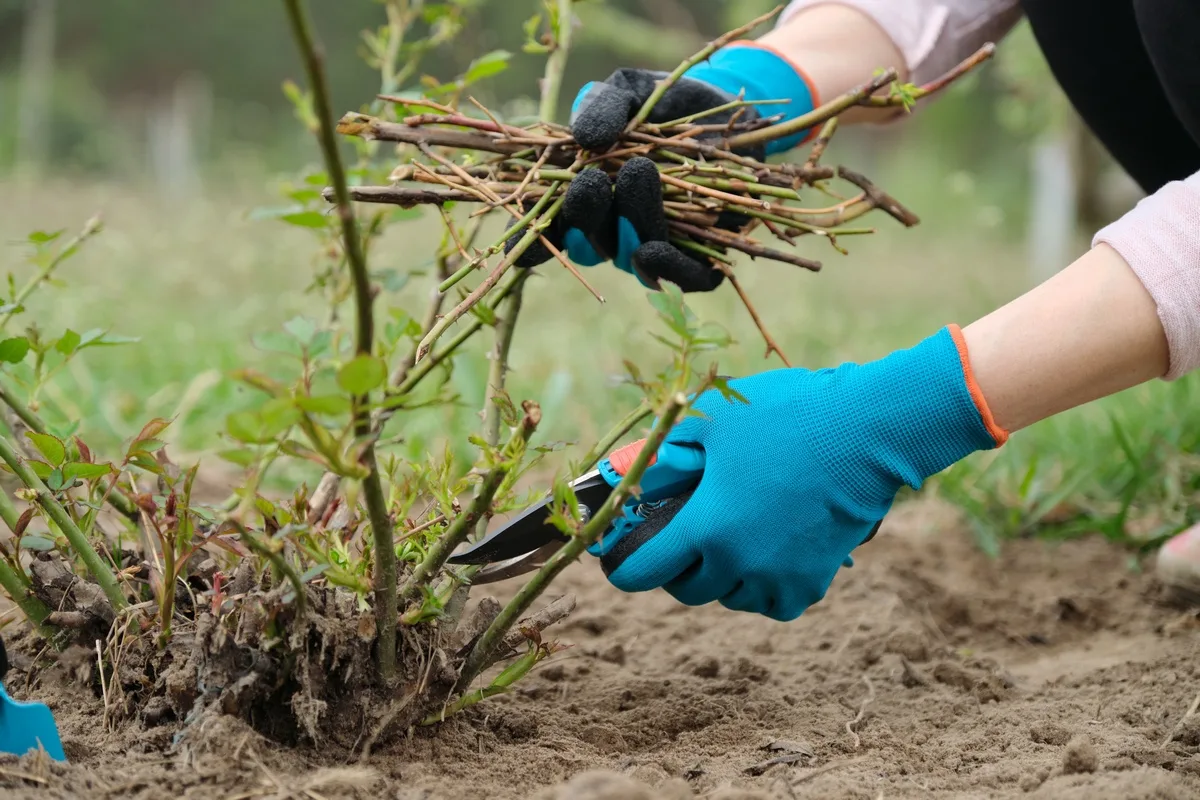
How to propagate a favorite rose from cuttings
This part has always been more interesting to me than simply buying another finished rose.
There is something satisfying about having a plant and knowing that it started from one small piece of a shoot taken from a favorite variety.
Propagating roses from cuttings does not guarantee 100% success. So I do not take one cutting and place the entire family honor on its shoulders.
I take several.
When to take rose cuttingsA good time can be from late spring through summer, when there are healthy young or semi-ripe shoots available.
Look for a shoot that has become reasonably firm but is still actively growing.
How to prepare and plant the cutting
Choose a section of healthy shoot with several nodes.
Make the lower cut close below a node, and remove flowers and buds so the cutting does not spend energy trying to bloom.
Remove the lower leaves as well, while some of the upper leaves can remain.
The idea is simple: reduce water loss while leaving enough foliage to support the cutting's basic functions.
If you wish, the base can be treated with a suitable rooting hormone.
What to plant the cutting inUse a light, clean, well-draining growing medium.
It should retain enough moisture without turning into heavy, waterlogged soil.
Insert the cutting so that at least one node is below the surface. Then water it and allow the container to drain.
Humidity, light and rooting
Until the cutting develops its own roots, it loses water faster than it can replace it.
That is why we maintain higher humidity around it. A clear cover or another simple method can help create a more humid environment, but regular ventilation is important.
The growing medium should stay lightly moist. Not permanently soaked.
How much light does it need?That is probably the most common difference between “I am taking care of the cutting” and “I drowned the cutting with love.”
Keep the cuttings in a bright location, but protect them from strong midday sun.
Under a clear cover, temperatures can rise very quickly, and a tender cutting can quite literally cook.
Bright, indirect light is the better choice in the beginning.
How do we know it has rooted?New growth is a good sign, but do not rush.
After some time, you can very gently test whether the cutting offers slight resistance when tugged carefully.
Once roots have formed, gradually begin acclimating the plant to normal air humidity.
Do not suddenly remove the protection for an entire day.
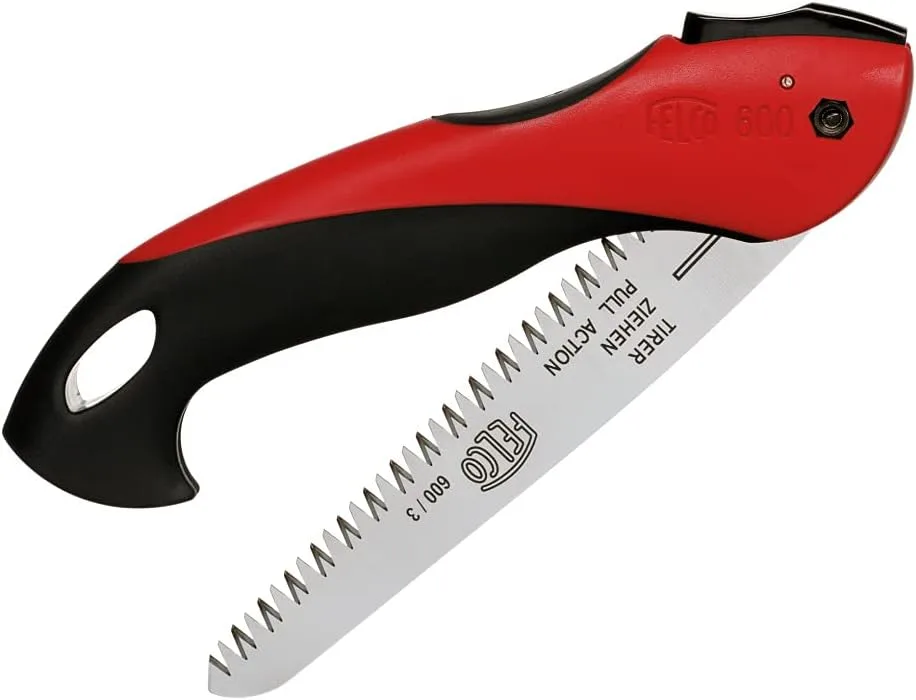
When an older rose cane is too thick for standard hand pruners, a small pruning saw is the more appropriate tool. There is no benefit in forcing a pair of secateurs through wood they were not designed to cut.
The FELCO 600 is a compact folding pull-stroke saw intended for thicker woody growth. It has a different job from the FELCO F-2, so the two tools complement one another rather than duplicating the same function.
An important detail about grafted roses
A rose grown from a cutting grows on its own roots.
If the original plant was grafted, the new rose will not have the same rootstock.
This can affect vigor, hardiness, and how the plant behaves in particular growing conditions. The flower and other characteristics of the variety, however, can be preserved through successful vegetative propagation.
Protected varieties may have restrictions on commercial propagation. If the plants are being propagated for production or sale, plant variety rights should be checked.
Pruning and propagation at a glance
| Task | Best time |
|---|---|
| Main pruning | Late winter / early spring |
| Removing dead branches | Whenever they are noticed |
| Deadheading | During the active growing season |
| Climbing roses | According to the variety and flowering habit |
| Sanitary pruning | During the active season when needed |
| Heavy fall pruning | Avoid |
| Taking cuttings | Late spring and summer |
And that is exactly when pruning stops being the frightening part of growing roses and becomes one of the most enjoyable.