
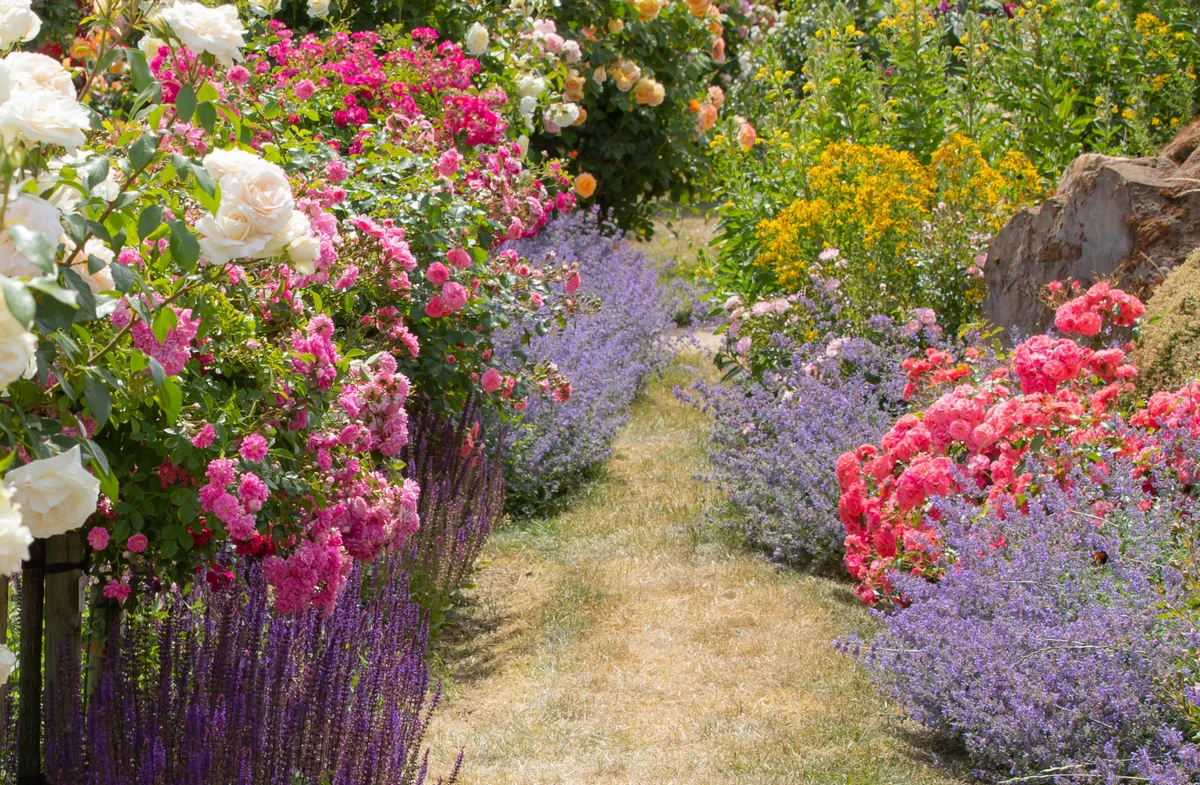
Roses are impressive enough on their own, but to me they look best as part of a flower garden rather than as individual shrubs lined up next to one another.
When I choose plants to grow around them, I do not look only at color. They need to have reasonably similar growing requirements, avoid crowding the roses, and leave enough air around the bushes.
Over time, I have developed a few clear favorites: salvias, hardy geraniums, catmint, alliums, and clematis.
For me, a good planting combination is not the one with the greatest number of plants, but the one where everything works well together.
How I choose plants to grow with roses
It is not especially important whether a plant has a reputation as a traditional “rose companion.”
What matters more is that the plants have reasonably similar needs and do not compete with one another unnecessarily.
These are the main things I look at:
My favorite companions for roses
Salvias are among the best companions for rosesIf I had to choose just one plant to start with, it would probably be salvia.
Its upright flower spikes create a beautiful contrast with the large rounded blooms of roses, while blue and violet shades work especially well with pink, white, and apricot roses.
There are many different salvias, though, and they do not all grow in exactly the same way.
Salvia viridisSalvia viridis is an annual and is easy to grow from seed.
Most of its decorative effect comes from colorful bracts in blue-violet, pink, or white.
I like it in looser planting schemes because it can be sown in a different place each year.
Salvia pratensisSalvia pratensis, or meadow sage, is a perennial.
It has a more natural appearance and works especially well with large shrub roses. Its upright flowers add structure without making the border look too formal.
Salvia verticillataSalvia verticillata is also a perennial.
Its flowers are arranged in distinctive whorls along the stems, giving it a slightly more airy form.
It is a good choice for more natural planting schemes and gardens designed with pollinators in mind.
Salvia nemorosaSalvia nemorosa is probably the easiest choice for the classic combination of roses and violet salvia.
It forms compact clumps with clearly defined flower spikes. With many varieties, cutting the plant back after the first flush encourages another round of flowers.
Here I would repeat one salvia variety between the roses rather than using five different ones. The whole composition immediately feels more intentional.
This post contains affiliate links. As an Amazon Associate, I earn from qualifying purchases at no extra cost to you.
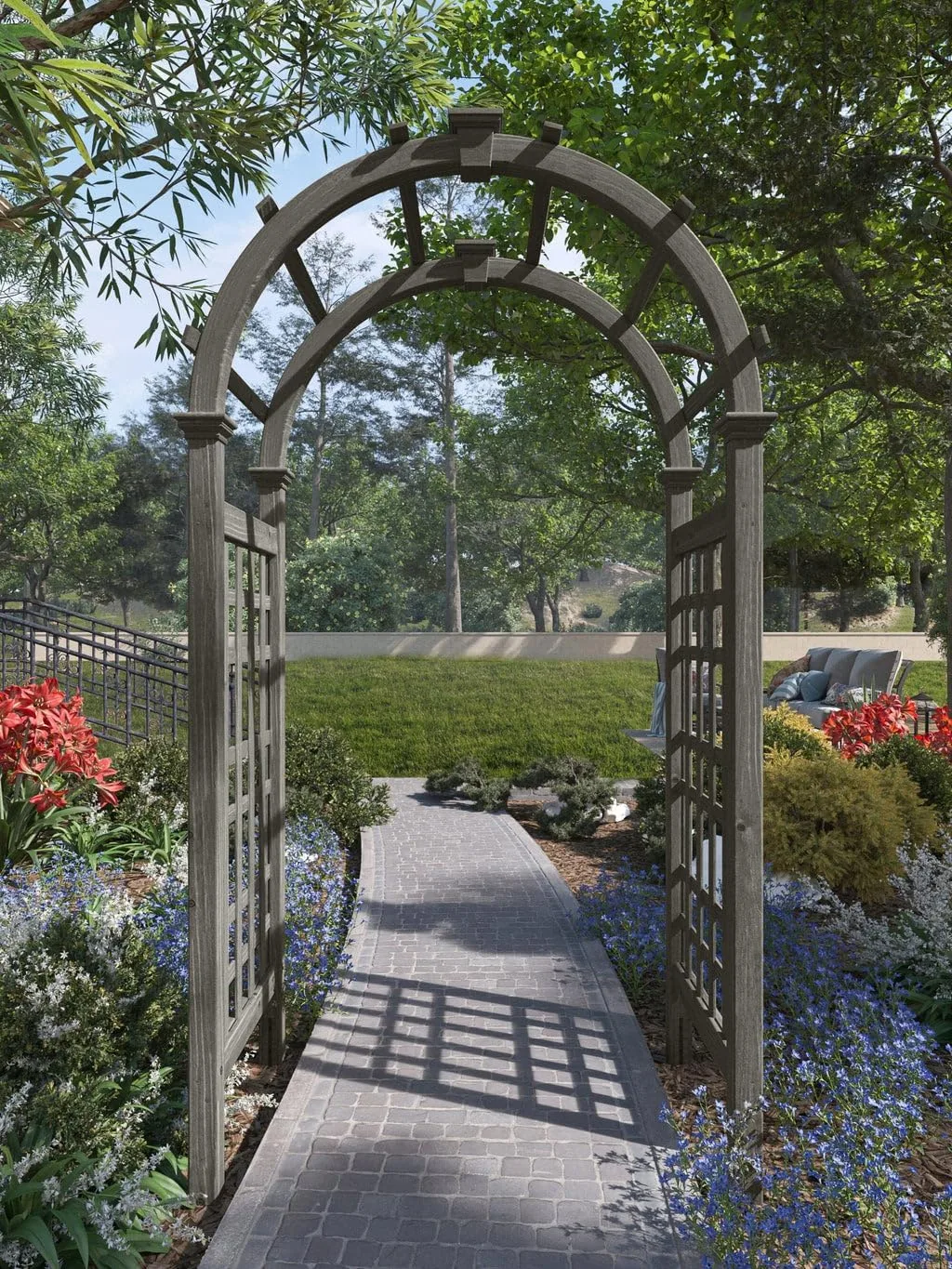
A sturdy arbor gives climbing roses and clematis a defined structure to grow over and can turn a planting combination into an architectural feature in the garden.
This cedar arbor provides support on both sides and across the top. It requires assembly and should be anchored securely, especially once mature climbing plants add weight and catch the wind.
Hardy perennial geraniums are plants I am very comfortable recommending around roses.
They form low clumps, disguise the not-always-beautiful lower part of taller rose bushes, and fill the space without stealing attention from them.
There are varieties in white, pink, blue, and violet. I especially like them with shrub roses and English-style roses because the combination remains natural and soft.
Catmint for a low, airy borderCatmint serves a similar purpose. It creates a soft, low cloud around roses without dominating them.
Its gray-green foliage and blue-violet flowers make a very good background for pink, white, and apricot roses.
It is also useful when I want to soften the bare soil between rose bushes, although I still leave enough space around the base of each rose.
Alliums for color before the main rose seasonOrnamental alliums add height and their distinctive spherical flower heads just as the rose garden is beginning to wake up.
I like them between roses because they do not take up a huge amount of space at soil level and they introduce a completely different shape.
They are also a good way to make the border interesting before the roses reach their main flowering period.
Rose and clematis - one of my favorite combinations
A climbing rose and clematis growing on the same structure is a combination I particularly love.
An arch, pergola, or fence can become an entire wall of flowers.
The rose provides the framework and large blooms, while the clematis threads its way through the canes and adds a different flower shape and a second color.
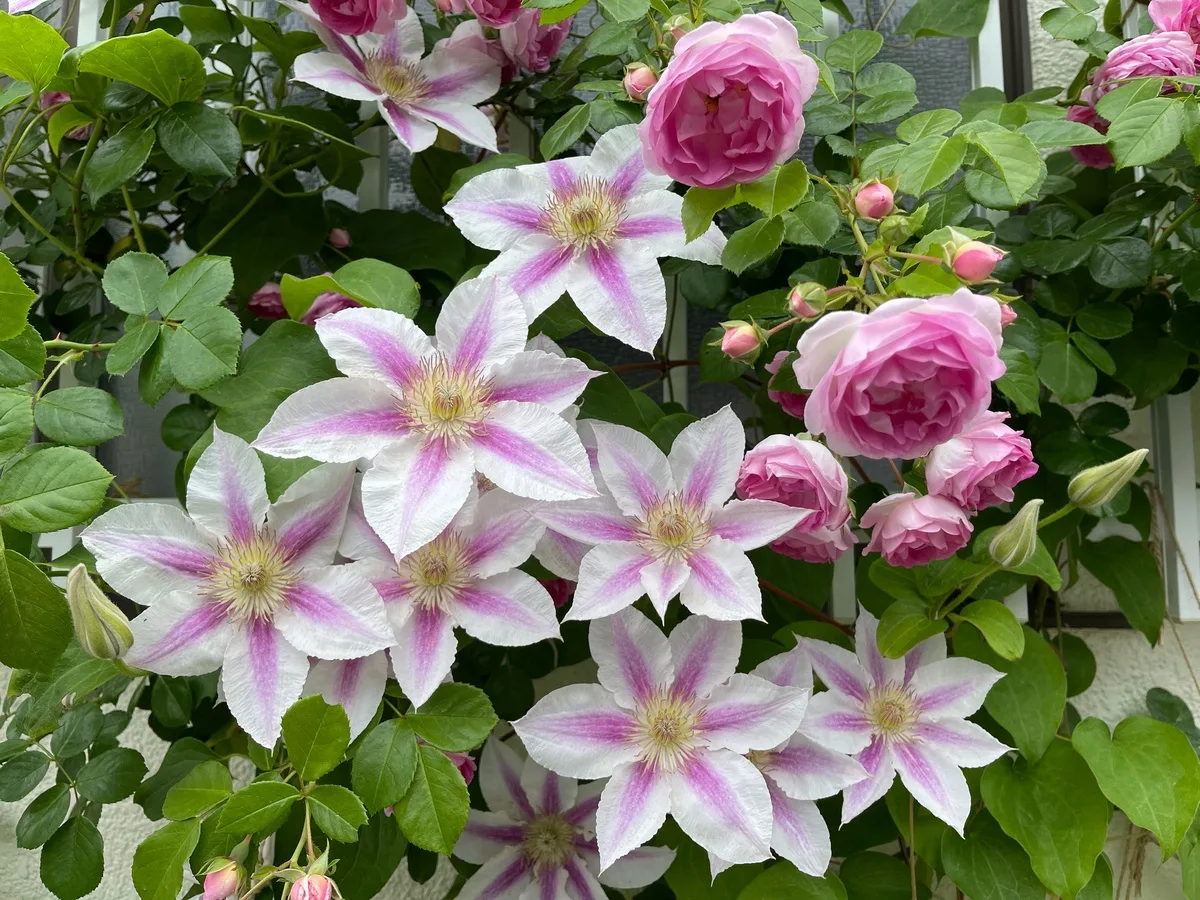
It is better not to plant the two practically in the same hole. Give both plants enough room for their roots.
And always check the pruning group of the clematis.
After a few years, the plants can become so thoroughly intertwined that spring pruning starts to require a little detective work.
For rose pruning: Pruning and Propagating Roses: When to Prune and How to Take Cuttings
Beautiful combinations that come with a catch
What about lavender?I know this is one of the classic combinations, and visually it really is beautiful.
But I do not recommend planting lavender immediately around roses, because the two plants have different preferences when it comes to water.
Lavender does best in relatively dry, very well-drained soil. Roses, during active growth, need more regular and deeper watering.
To me, there is little point in creating a beautiful combination if one of the plants then has to live with the wrong watering routine.
If I want lavender in the same overall composition, I place it farther away in a drier zone.
If roses are planted close to a lawn, pay particular attention to the lawn sprinklers.
Do not let the sprinklers regularly soak the roses.
I learned this the hard way in my own garden.
When rose leaves are repeatedly wet and stay damp for long periods, especially in the evening, conditions become much more favorable for fungal diseases.
Since then, my rule has been simple: the lawn gets sprayed; the roses get watered at the roots.
If I were installing a new irrigation system, I would separate the flower borders from the lawn sprinkler zones.
For leaf problems: Rose Diseases and Pests: How to Recognize Problems and When to Act
Give roses enough space
This is especially important with roses.
There should be enough room around the bushes for air circulation, watering, feeding, pruning, and cleaning up fallen leaves.
Empty spaces can bother us when the garden is new, and the temptation is to fill them immediately.
After two or three years, the plants usually solve that problem themselves.
And then we often start wondering why we planted quite so much.
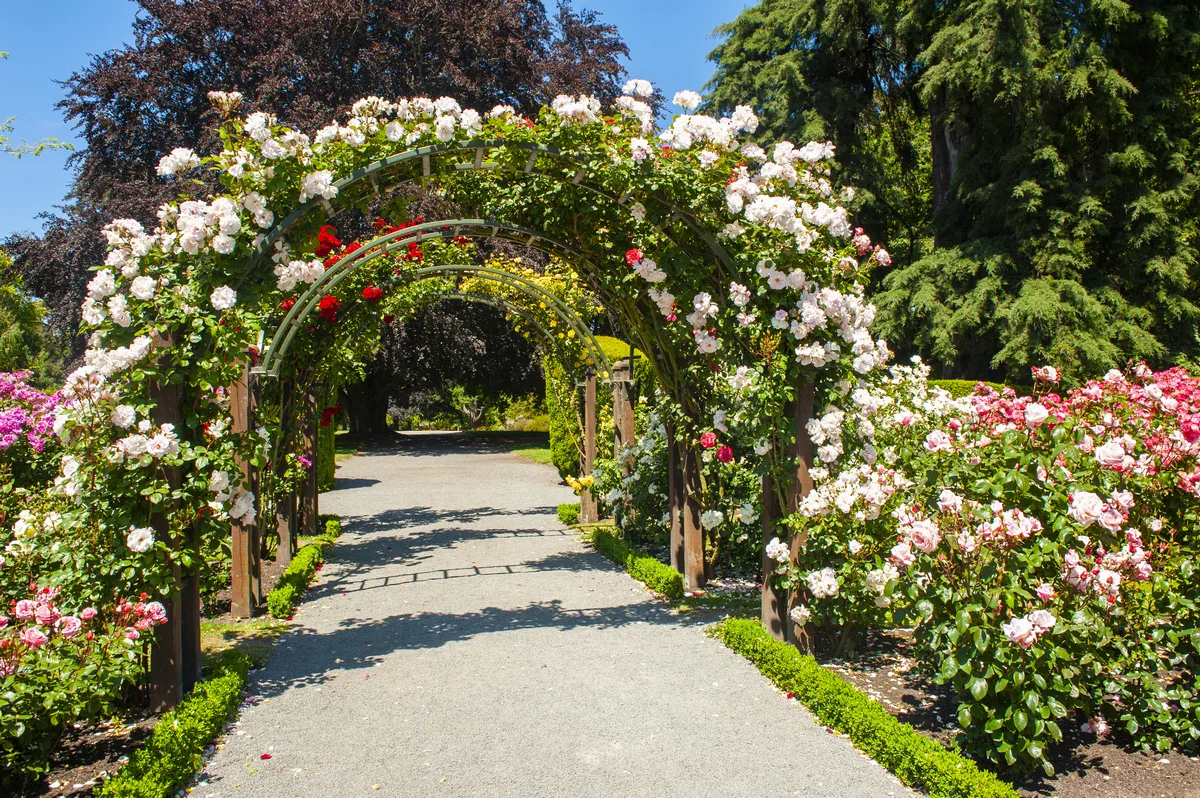
How I would build a simple rose border
I would not use ten different plant species.
Instead, I would give each plant a clear role in the composition.
Repeating a few plants almost always looks better than using one of every plant that happened to tempt us at the garden center.
I say that as someone who has also been through the “Oh, I’ll take that too” phase.
If I wanted to add a climbing rose to an arch or pergola, I would also check the mature size and hardiness of the variety before buying it. A rose that looks manageable in a nursery pot can become a very different plant after several seasons.
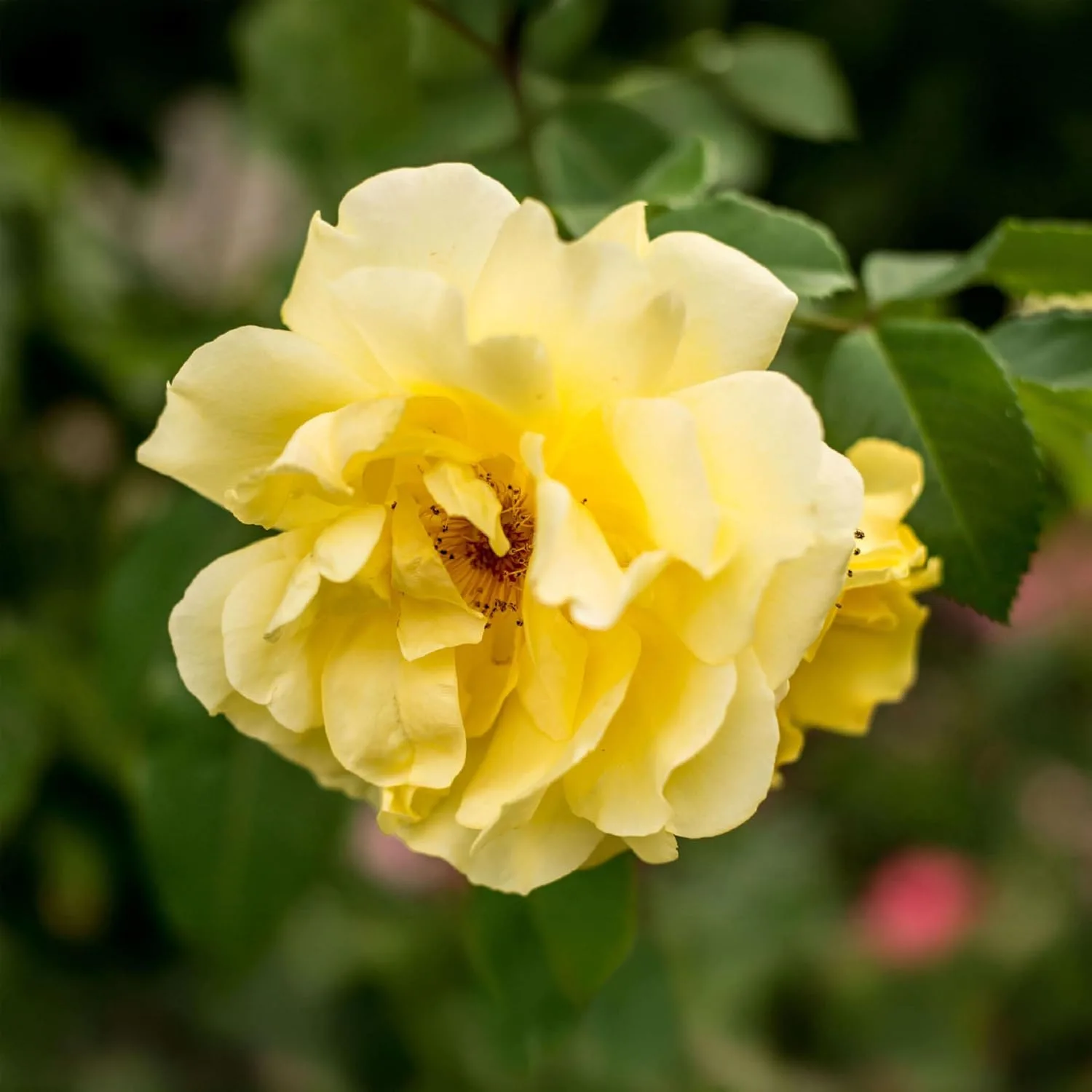
Golden Gate™ is an own-root climbing rose that can be considered for an arbor, pergola, fence, or other substantial support where vertical growth is part of the planting design.
With any live rose, check the current product details, mature size, USDA hardiness information, and availability before ordering. The support should also be large enough for the plant once it reaches maturity.
| Plant | Type | Why I recommend it |
|---|---|---|
| Salvia viridis | Annual | Easy to move around and change from year to year |
| Salvia pratensis | Perennial | Natural appearance and upright color |
| Salvia verticillata | Perennial | A lighter, more airy structure |
| Salvia nemorosa | Perennial | Excellent for a more structured rose border |
| Hardy geranium | Perennial | Softens the base of roses and fills gaps |
| Catmint | Perennial | Creates a soft, low border |
| Allium | Perennial bulb | Adds color before the main rose flowering season |
| Clematis | Perennial climber | One of my favorite partners for climbing roses |
Let the rose remain the main character
Not every plant around a rose needs to be impressive on its own.
A better question is what it adds to the composition.
Salvia adds vertical lines. Hardy geranium softens the base. Alliums extend the season. Clematis uses the height.
And that, to me, is what makes a rose garden interesting - not how many different plants we managed to collect, but how well they work together.