
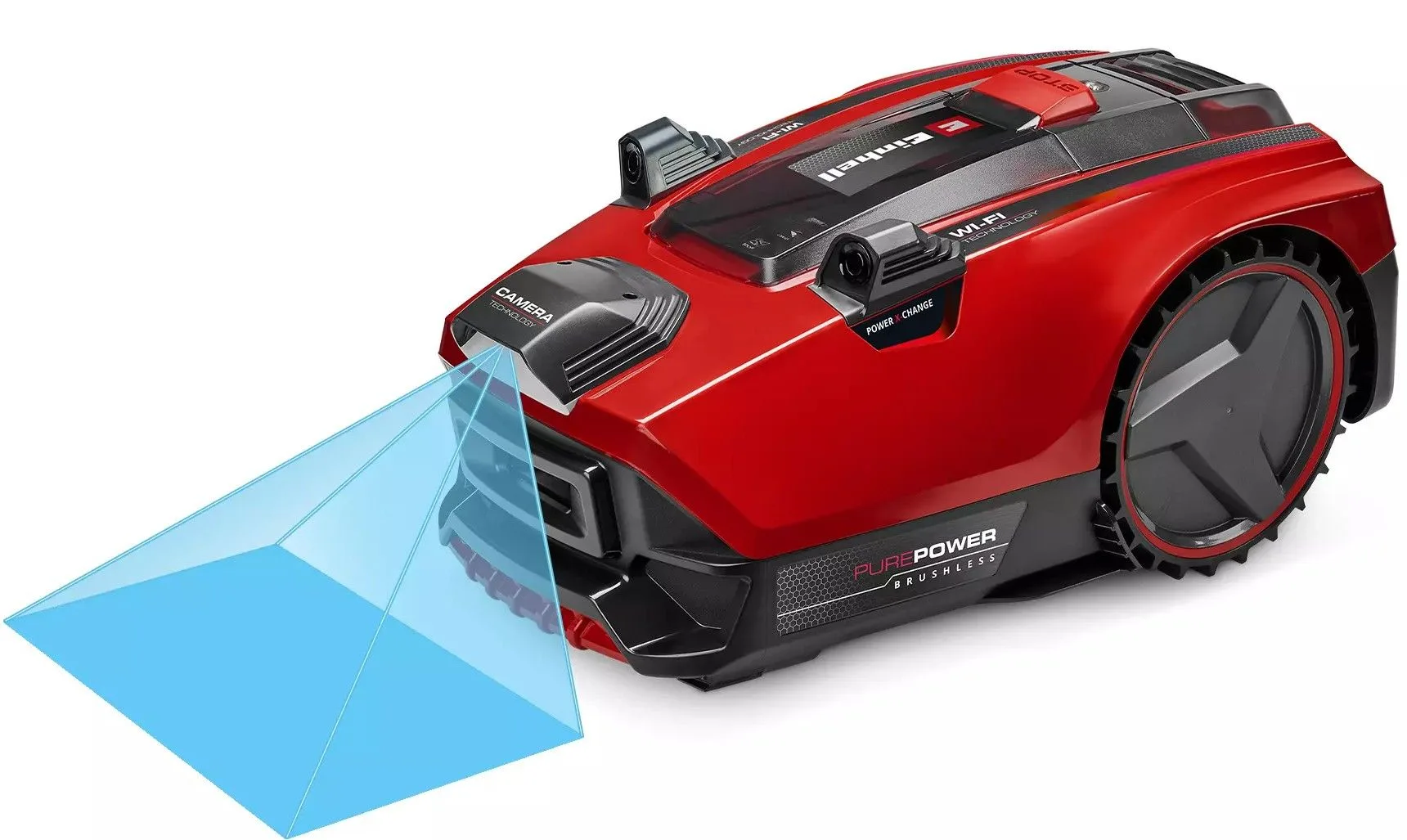
The idea of a robot lawn mower sounds wonderful: the grass looks after itself, the machine works quietly, and we simply watch while the yard stays neat.
That was exactly how I imagined it too. The only problem was that my yard turned out to be far more complicated than the perfect lawns we see in advertising.
I have several separate areas of fine ryegrass, sloping sections, uneven ground, fruit trees, patches of tough wild grass and places where a mower would need to travel between completely separate lawn areas.
That was when I realized that choosing a robot lawn mower involves much more than simply measuring the lawn.
First Question: Is Your Yard Suitable for a Robot Lawn Mower?
Before comparing brands, batteries and smartphone apps, take a good look at the yard itself.
A robot mower can work beautifully on one lawn and struggle badly on another lawn of exactly the same size.
A mower rated for 10,000 sq ft is not automatically suitable for every 10,000 sq ft yard. Shape, slopes, obstacles and connections between lawn areas can matter more than total square footage.
Boundary Wire, Camera or RTK: How Robot Mowers Navigate
Navigation is one of the biggest differences between robot mower systems. Modern machines use several different methods to understand where they are supposed to mow.
| System | How it works | Best suited to | Main drawback |
|---|---|---|---|
| Boundary wire | A physical wire defines the mowing area. | Clearly defined lawns with permanent boundaries. | Installation takes work, and damaged wire must be located and repaired. |
| Camera / AI Vision | The mower visually recognizes grass, hard surfaces and obstacles. | Small and medium yards with clearly visible boundaries. | Unclear edges, tall grass and complex transitions can make navigation more difficult. |
| RTK navigation | Virtual boundaries are created using high-precision satellite positioning. | Large lawns, multiple zones and systematic mowing. | Higher cost and the need for suitable positioning conditions. |
| Combined navigation | Cameras, RTK and other sensors work together. | Complex yards and higher-end machines. | Higher purchase price and more technology to configure correctly. |
Slopes Matter, but Do Not Look at the Percentage Alone
Manufacturers usually specify the maximum slope their mower can handle. But this figure tells only part of the story.
A slope becomes much more challenging when it is combined with uneven terrain, wet grass, exposed roots or a place where the mower needs to turn.
A 40% slope is roughly 22°, while a 50% slope is around 27°. When comparing machines, always check which measurement the manufacturer is using.
If your yard is hilly, I would not choose a mower whose maximum rating exactly matches the steepest part of the property.
Some margin for difficult conditions is much more reassuring.
What Specifications Are Actually Worth Comparing?
Once you know that your yard is realistically suitable for robotic mowing, technical specifications start to become meaningful.
| Feature | What to check |
|---|---|
| Maximum lawn size | Leave some capacity in reserve, especially with divided lawns or many obstacles. |
| Number of zones | Check how many separate lawn areas the mower can manage. |
| Maximum slope | Compare the rating with the steepest areas in the actual yard. |
| Narrow passages | Particularly important when the mower must move between separate areas. |
| Obstacle avoidance | Look for cameras, sensors, bumpers and object recognition. |
| Cutting height | Make sure the available range suits your grass and preferred lawn height. |
| Rain and weather protection | Check rain sensors, water resistance and how easy the mower is to clean. |
| App and connectivity | Wi-Fi, Bluetooth, cellular connection and which features depend on the app. |
| Service and replacement parts | Blades, batteries, wheels, local servicing and long-term availability of parts. |
Which Type of Robot Mower Fits Which Yard?
During my research, I realized that comparing individual models too early can actually make the decision harder.
It is more useful to first decide what type of machine the yard requires.
This is also where I would later add specific product recommendations. A small vision-based mower, a mid-range model and a machine designed for difficult or large properties would make a much more useful comparison than three products chosen simply by price.
Can a Robot Lawn Mower Handle Several Separate Lawn Areas?
This was one of the main issues in my own yard. The individual lawn sections are not especially large, but they are separated from one another.
In this situation, you need to check not only whether a mower supports several zones, but also how it actually reaches them.
- Is there a physical connection between the lawn sections?
- Can the mower travel over paving?
- What is the minimum passage width the mower requires?
- Can separate working zones be created in the app?
- Will the mower need to be carried manually between separate sections?
A mower may technically support several lawn areas, but if there is no suitable route between them, you may still need to move the machine by hand.
Why a Robot Mower Did Not Win in My Yard - At Least Not Yet
After all this research, I invited a specialist to look at the property in person.
I have several small lawn sections, uneven transitions, areas of tough wild grass and slopes.
In theory, almost every one of those problems can be solved with sufficiently good technology.
But when all of them exist in the same yard, the question stops being: “Can a robot somehow manage this?”
The more important question is: will it be reliable enough to actually save me work?
The most expensive robot mower is not automatically the best one. The best mower is the one that fits the actual yard.
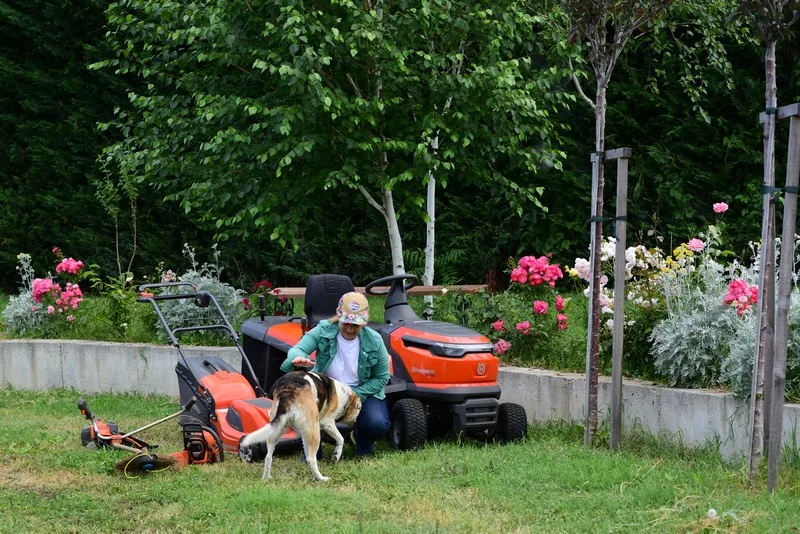
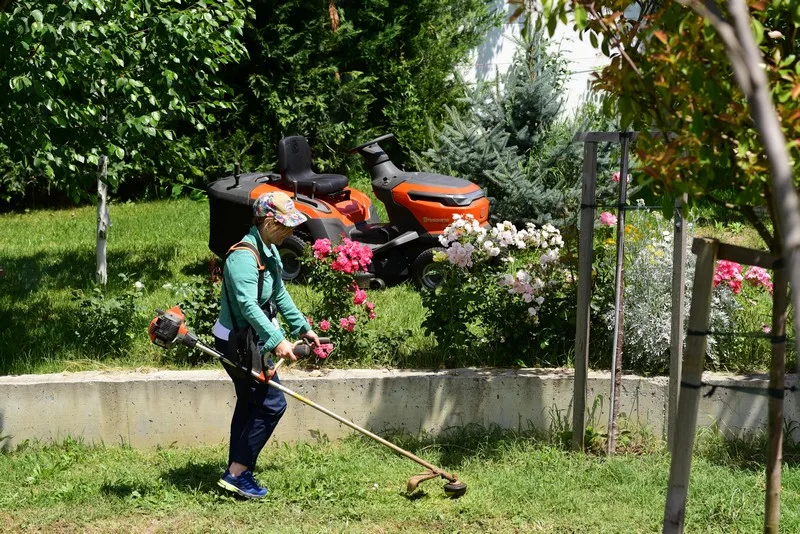
For us, the solution for now was a riding lawn mower for the larger and more difficult areas, combined with a trimmer for places the larger machine cannot easily reach.
My Checklist Before Buying a Robot Lawn Mower
If I were starting the search again today, I would measure much more than just the total lawn area.
I would look at the entire yard as one system.
- What is the actual lawn area?
- Is it one continuous lawn or several separate zones?
- Can the mower move between them by itself?
- How steep is the steepest section?
- Are there narrow passages?
- Is there a clear boundary between lawn and garden beds?
- Are there many trees, heavily shaded areas or tall walls?
- Are there exposed roots, holes or very uneven ground?
- How will edges and areas the robot cannot reach be maintained?
- Are service, batteries and replacement parts readily available for the model?
A robot lawn mower can be one of the most convenient tools in a well-organized yard. But it is not a universal solution for every lawn.
I would begin the selection process not with the brand, but with the property itself: zones, slopes, passages, obstacles and navigation requirements.
If those conditions match what the mower can actually handle, a robot can save a great deal of time.
If they do not, there is a real risk that mowing the lawn simply gets replaced by regularly rescuing a robot that has become stuck somewhere in the yard.