
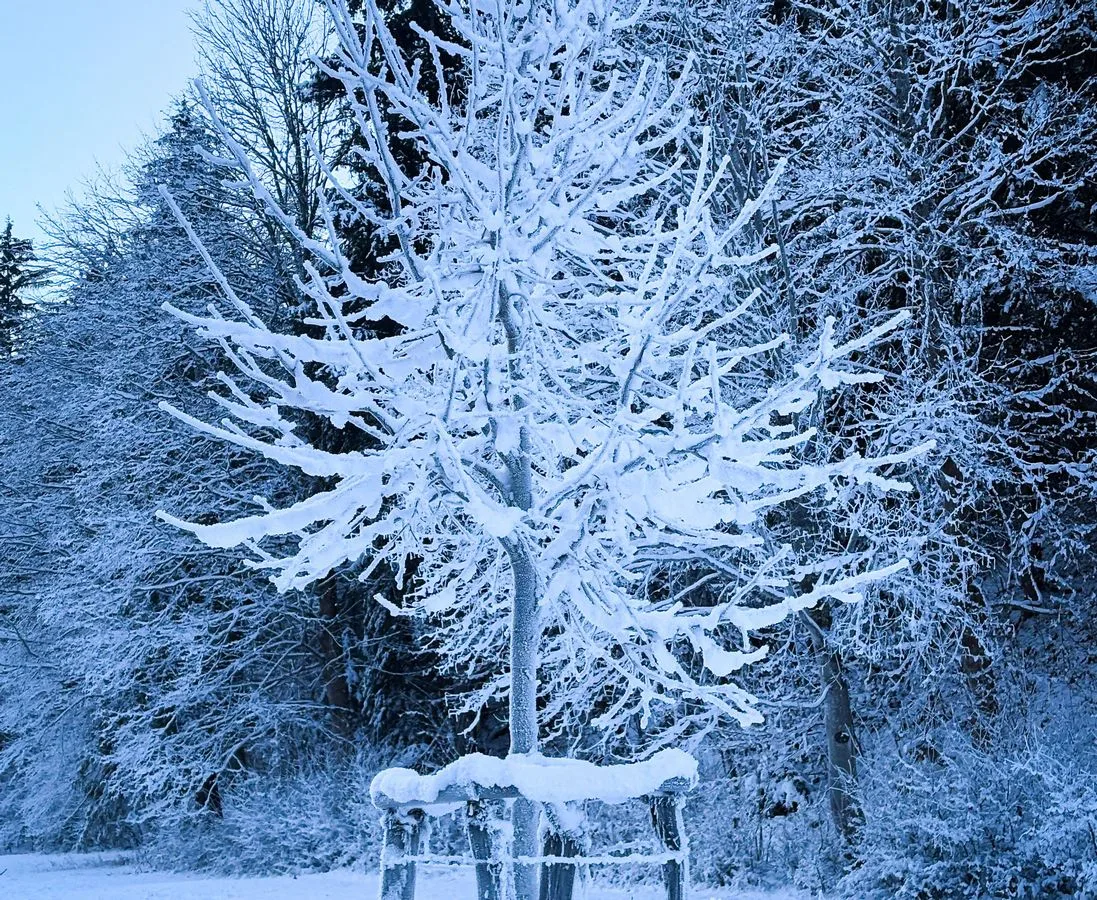
December is the month when the garden seems to be resting, while the gardener starts making lists.
There is less work outside. We check the trees, evergreens, containers and winter protection. Indoors, however, the next season is already beginning.
And there is one important distinction here: “can be sown in December” certainly does not mean “should be sown in December.”
With early sowing, light is more important than enthusiasm.
In the Orchard, the Main Tasks Are Observation and Protection
After strong winds, wet snow or heavy rain, we pay particular attention to young trees.
- are the stakes stable;
- are the ties constricting the trunk;
- is the bark damaged;
- are there signs of rabbits or rodents;
- are there any mummified fruits left on the trees;
- are there any broken branches.
Mummified fruits should be removed because they can remain a source of infection for the following season.
Can We Still Plant?Yes, but only if the soil is not frozen, not waterlogged and severe cold is not expected immediately.
In colder regions, it is often wiser to wait until late winter or early spring.
We do not plant simply because the sapling has arrived by courier. The soil gets a vote too.
December is not a universal month for major pruning of all fruit trees. During severe cold, fresh pruning wounds may be more vulnerable.
Remove broken, dangerous or badly damaged parts. Everything else can safely wait for the appropriate window according to the species and climate.
Heavy Wet Snow Is More Dangerous Than Light, Powdery Snow
Dry, light snow usually does not cause serious problems. Heavy wet snow can weigh down columnar conifers, arborvitae, junipers, young trees and shrubs with long flexible branches.
Remove snow carefully. Frozen branches are more brittle and should not be hit or shaken forcefully.
A frozen branch and an enthusiastic broom are not a good combination.
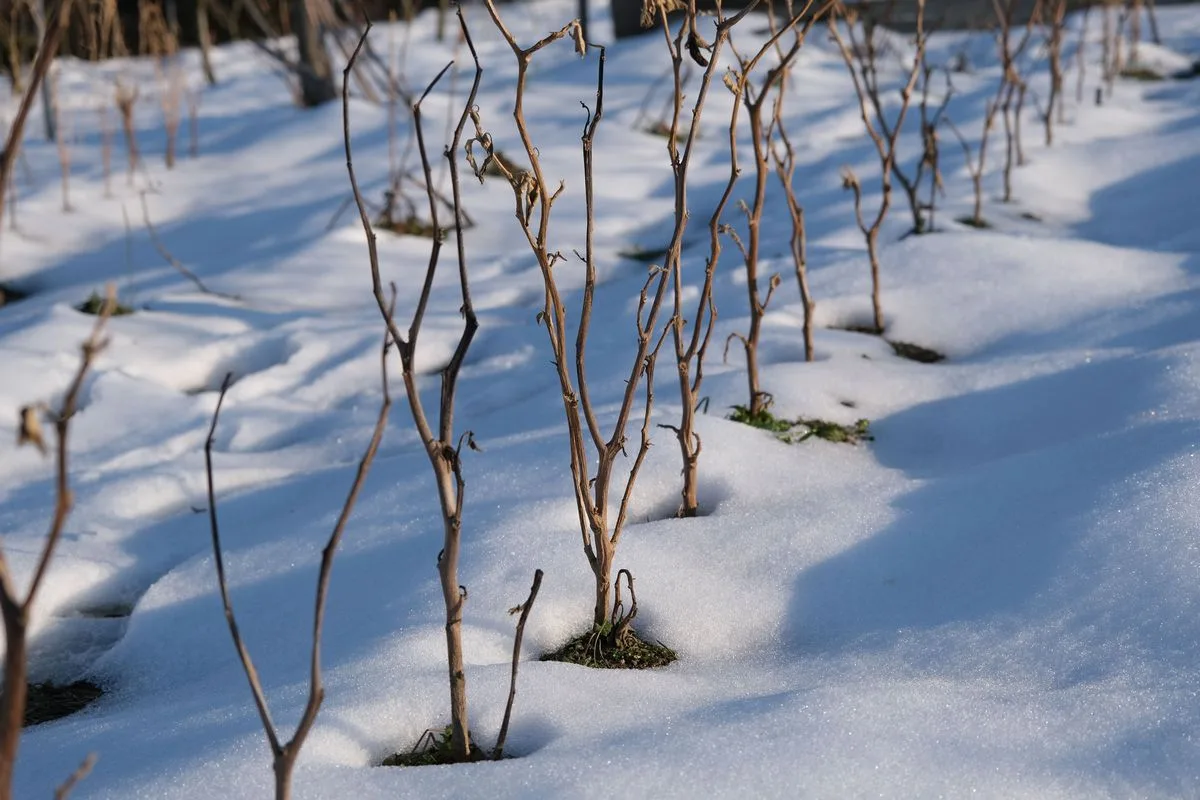
Evergreens and Container Plants Continue to Lose Water
During a dry, snowless winter, when temperatures are above freezing, young evergreens, recently planted shrubs and container-grown plants may still need watering.
Do not water frozen soil. The point is for the roots to actually be able to use the water.
In December, the Structure of the Ornamental Garden Is Fully Visible
If the garden looks empty, now is a good time to note what is missing. There is no need to plant everything immediately.
Perhaps in spring we need to add an evergreen shrub, a plant with interesting bark, a winter-flowering shrub, a small tree with a beautiful shape or plants with berries for birds.
| Winter Interest | Examples |
|---|---|
| Colorful bark | Dogwoods with red or yellow stems, birches. |
| Winter flowers | Witch hazel, sarcococca, mahonia. |
| Berries | Holly, viburnum, pyracantha, cotoneaster. |
| Structure | A small tree with an interesting form or an evergreen shrub. |
Roses and Perennials Can Rest Too
With roses, check the winter protection, mulch, long shoots and whether too much water is collecting around the base.
If you have climbing roses, check their ties to the supports as well.
For winter care: How to Prepare Roses for Winter
There is no need to cut back every perennial. Healthy dry stems and seed heads can provide structure, trap snow and also be useful for birds.
Two warm days in December do not mean that spring has arrived. And the rose usually knows this better than we do.
December Is Ideal for Taking Care of Tools
This is one of the few garden jobs we can do comfortably regardless of the weather.
- clean pruning shears;
- sharpen cutting tools;
- disinfect them;
- oil metal parts;
- repair handles;
- clean pots and seed trays;
- prepare labels.
In March, all of these things will suddenly be needed at once. In December, we still have a chance to deal with them without panic.
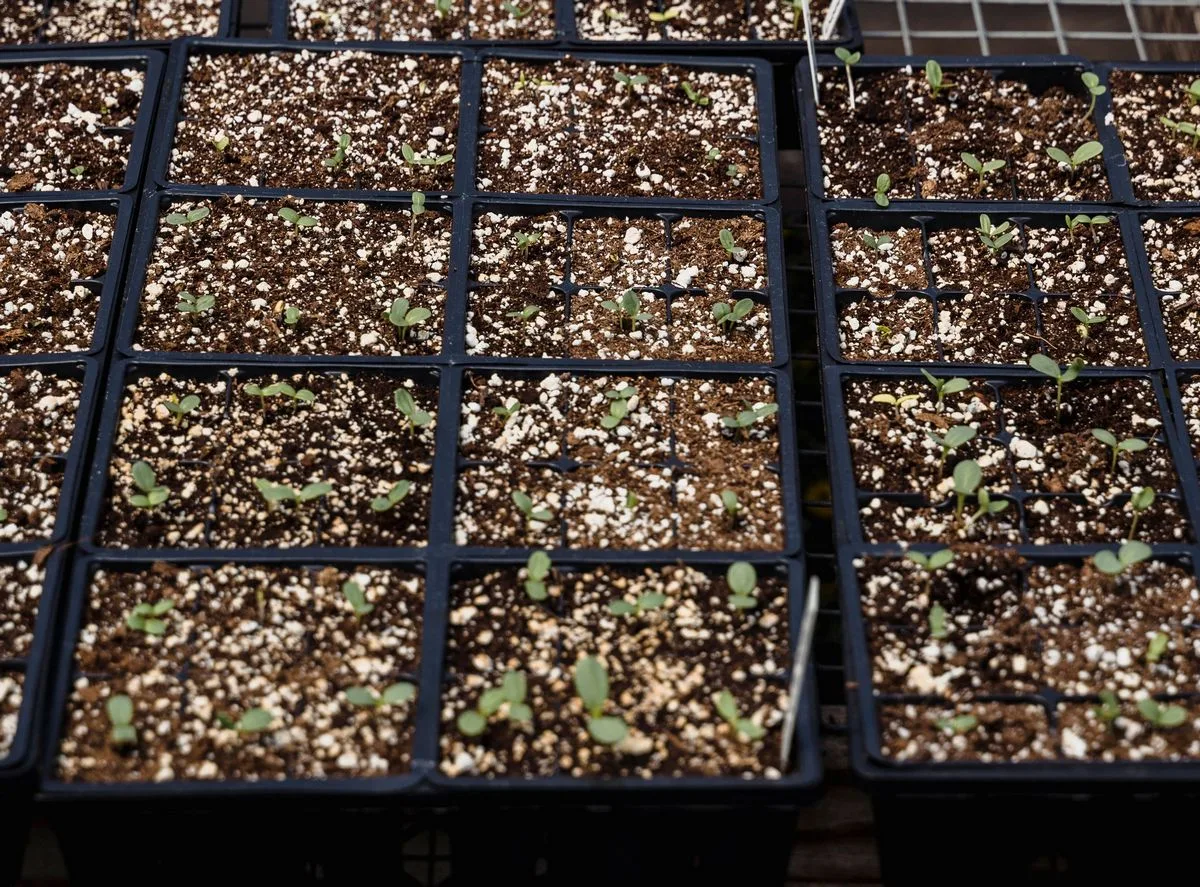
What Actually Makes Sense to Sow in December
Here we need to separate three very different situations: a heated greenhouse with good light, an unheated greenhouse and indoor sowing with supplemental lighting.
These are very different conditions. That is why a universal list of “what to sow in December” is rarely enough.
| Plant | December Sowing |
|---|---|
| Lisianthus | Makes sense with very good light and controlled conditions. |
| Begonia | Slow to start, making early sowing useful under controlled conditions. |
| Pelargonium | Can be started early if there is enough light. |
| Celery | Its long growing period can justify an early start. |
| Leeks | Can be started early when seedlings are grown under suitable conditions. |
| Delphinium | Possible, but not essential for an ordinary home garden. |
For most home-growing situations, December is too early for tomatoes. They grow quickly, and without enough light by February we can easily end up with tall, pale seedlings that are difficult to transplant.
Peppers and eggplants have a longer growing season, but starting them very early does not automatically give an advantage if the light and temperature are not suitable.
Cucumbers, Squash and Zinnias Can Happily WaitOtherwise, by February we may have seedlings that have already spent two months trying to survive on a windowsill.
Cucumbers, zucchini, pumpkins, melons and watermelons grow very quickly and should be started much closer to the time when they will be planted out.
The same applies to fast-growing flowers such as zinnias, cosmos, marigolds, sunflowers and nasturtiums.
An Unheated Greenhouse Is Not a Warm House
On winter nights, the temperature inside an unheated greenhouse can come very close to the outdoor temperature.
That is why I would not start heat-loving seedlings such as tomatoes, peppers, eggplants, begonias or lisianthus there.
Depending on the climate, more cold-tolerant leafy crops can be grown: spinach, winter lettuce, arugula, lamb's lettuce, green onions and some Asian greens.
This is winter production, not necessarily spring seedling production.
Light Is More Important Than the Calendar
We may have good potting mix, quality seeds, clean trays and ideal moisture. If there is not enough light, the seedlings still will not be good quality.
Before opening the seed packet, it is more useful to ask ourselves a few questions.
December Is a Good Month for Seeds - but Start With an Inventory
Before placing a new order, gather all the seed packets, check what you already have and note which varieties were genuinely worth the space.
- check the dates;
- remove damaged packets;
- mark the varieties that performed well;
- decide which ones are not worth repeating;
- only then order new seeds.
Otherwise, by March it is very easy to find ourselves with nine tomato varieties, six packets of basil and no lettuce at all.
December Is a Quiet Month, but It Is Not an Empty One
Outside, we inspect, protect and intervene only when there is a reason.
Indoors, we can already begin the next season, but only with plants that genuinely need such an early start.
Sometimes the best thing we can do for the spring garden in December is simply not to sow something two months earlier than necessary.