
Table of Contents
Some plants are associated with newer, more contemporary gardens, while others have been used for so long that we have almost stopped noticing them.
Privet is exactly that kind of plant for me. For a long time, I associated it with old hedges and spaces where the planting had been left without much thought.
Then I began noticing how well it works in carefully maintained European gardens, where the hedge has a clear shape and acts as structure rather than simply a boundary.
The price of a plant rarely determines the quality of a garden. What matters much more is how the plant is used.
What Is Privet?
The genus Ligustrum, commonly known as privet, includes a range of shrubs and small trees.
Some are deciduous, others semi-evergreen, and in milder climates certain species can retain much of their foliage through winter.
That is why, when choosing privet, I would always check the exact species and cultivar rather than assuming they all behave in the same way.
Why Privet Is So Easy to Underestimate
Because we often see it in its least flattering form: overgrown, bare, neglected or clipped without a clear shape.
But that is not necessarily the character of the plant itself.
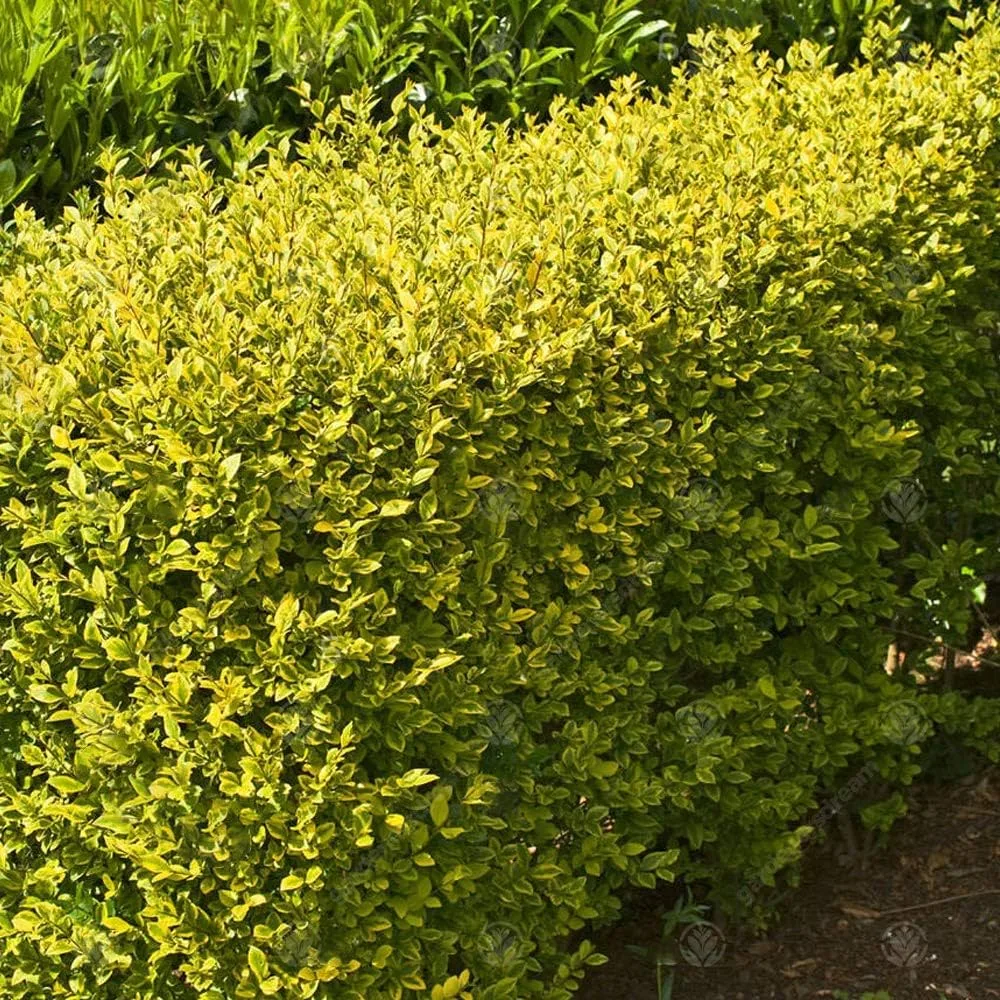
A well-maintained privet hedge can create a very even, dense and calm green surface.
At that point, it begins to work more like part of the architecture than an ordinary shrub.
With hedges, shape, proportion, height and the relationship with the surrounding space often matter more than how rare the plant itself is.
Its Greatest Strength Is the Way It Responds to Pruning
Privet can be clipped repeatedly and generally responds with new branching.
This makes it possible to build a dense hedge gradually with a clearly controlled height and width.
Unlike some conifers that struggle to recover from old bare wood, privet often has a much better ability to regenerate after harder pruning.
With privet, pruning is not simply maintenance. It is part of the way the hedge itself is built.
How I Would Prune Privet for a Dense Hedge
I would not wait for the plants to reach their final height first.
A better approach is to encourage branching while the plants are still young.
First I decide what function the hedge needs to perform.
Light regular pruning encourages denser branching from the beginning.
This allows more light to reach the lower part and helps keep the hedge dense near the base.
It is much easier to preserve an established shape than to repeatedly reduce a huge overgrown hedge.
Privet Grows Relatively Quickly
This is one of the practical reasons privet has been used for hedging for so many years.
In good conditions, it can produce a considerable amount of new growth in one season.
That means faster coverage, but also more pruning if I want a strict formal shape.
For me, that is the trade-off: vigorous growth is helpful while the hedge is being established, but later becomes part of the maintenance routine.
What Soil and Position Would I Choose?
One of privet's strengths is its adaptability.
It can grow in different soil types, but as with almost any hedge, I would expect the best results in reasonably well-drained soil with adequate moisture.
It can grow in sun or partial shade, although better light generally helps produce denser foliage.
A Young Privet Hedge Still Needs Water
The fact that a plant is considered tough does not mean a newly planted hedge can simply be left without care.
During the first few years, I would maintain reasonably consistent moisture, especially through hot summers.
Once well established, the plants generally cope better with temporary dry periods.
If I want a dense hedge to establish quickly, the plants need sufficient water, reasonably structured soil and healthy root development.
Privet Is Not Always Evergreen
This is an important detail if my main goal is year-round privacy.
Depending on the species, cultivar and winter climate, privet may lose some or almost all of its leaves.
In milder climates, some forms remain significantly greener through winter.
So I would not buy “privet for an evergreen hedge” without checking the exact species and how it behaves in the local winter climate.
Privet or Thuja - Which Would I Choose?
For me, these create two different types of green structure.
- broadleaf texture;
- fast and vigorous branching;
- tolerates regular pruning very well;
- can often recover after harder renovation pruning;
- winter foliage depends on species and climate.
- evergreen conifer structure;
- more consistent winter screening;
- naturally tidy form;
- well suited to a formal evergreen background;
- hard pruning into old brown wood can be problematic.
If my goal is a reliably evergreen screen, I would consider a suitable evergreen species.
If I want a fast broadleaf hedge that I can shape actively and renovate when necessary, privet has real advantages.
Privet Can Look Very Architectural
This is where, for me, the whole perception of the plant changes.
When the height is well chosen, the line is clean and the hedge is dense enough, the plant stops looking like a “budget option.”
It simply becomes a green framework for the space.
It can work around a more classical house or in a contemporary garden, as long as the shape is part of the overall design.
A good hedge does not need to prove how expensive the plants were. It needs to organize the garden.
Where I Would Use Privet
For me, it is particularly useful when I need to create a lot of structure across a relatively large area.
- along a long garden boundary;
- as a medium-height hedge;
- to divide different garden areas;
- along paths;
- as a green background behind flowering plants;
- for clear geometric lines in a more formal garden.
What I Would Plant with Privet
Once the hedge provides a sufficiently clear framework, I would use looser planting in front of it.
- roses;
- hydrangeas;
- peonies;
- flowering perennials;
- ornamental trees;
- spring bulbs.
This allows the hedge to remain the calm background rather than becoming the only thing we notice.
What Are the Disadvantages?
An affordable hedge does not mean a maintenance-free hedge.
Why I Think Privet Is Still Worth Considering
Because it shows how little a good garden has to do with the price of an individual plant.
Privet can be fast-growing, dense, easy to shape and adaptable enough to solve many practical problems.
And when it is used as part of the design, rather than simply as a row of plants along a fence, it can look surprisingly refined.
If I am looking for a hedge that establishes relatively quickly, tolerates pruning well and does not require a huge initial investment just to buy the plants, privet remains a very practical option.
But I would check the exact species and cultivar, its winter behaviour and how much maintenance I am prepared to do.
For me, the best lesson from privet is simple: good design can turn an ordinary plant into part of a very good garden.