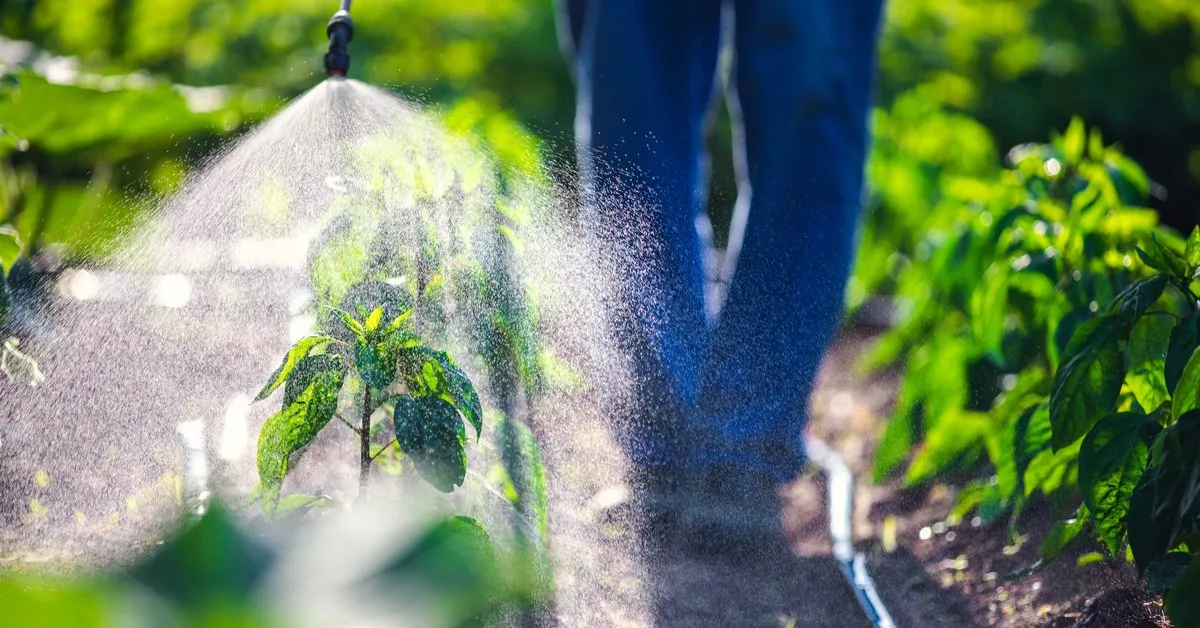
Spraying correctly in a home garden is not simply a matter of filling a sprayer and wetting the plants.
The result depends on an accurate diagnosis, the right product, application timing, dose, nozzle choice, even coverage and the conditions during treatment.
A mistake in any one of these areas can make a treatment ineffective, damage the plant or unnecessarily increase the risk to people, beneficial organisms and the environment.
Good spraying does not begin with the sprayer. It begins with knowing exactly what problem you are trying to control.
First Decide Why You Are Spraying
Before mixing anything, you need to know what the treatment is intended to control.
A fungal disease, aphids, spider mites and a physiological problem do not require the same treatment.
If the diagnosis is wrong, even technically perfect spraying may be completely ineffective.
When Is the Right Time to Spray?
There is no single universal time of day that is correct for every product.
Cooler parts of the day are often more suitable than intense midday heat, but the specific label remains the deciding guide.
Temperature, humidity, wind speed and expected rainfall can affect both effectiveness and safety.
| Condition | Why it matters |
|---|---|
| Extreme heat | Some products may cause phytotoxicity or evaporate more quickly. |
| Strong wind | Increases spray drift away from the intended target. |
| Rain expected soon | May reduce the amount of time the product remains on the plant. |
| Flowering | Some products carry specific restrictions designed to protect pollinators. |
That can be a useful general guideline, but an individual product may have its own temperature, weather or timing restrictions.
What Does Good Spray Coverage Mean?
Good coverage does not necessarily mean spraying until liquid runs off the leaves.
The goal is to apply an even amount to the required plant surfaces according to the directions for the product.
With contact products, coverage is often especially important because the treatment works where it actually reaches the plant or pest.
The Undersides of Leaves Often Matter
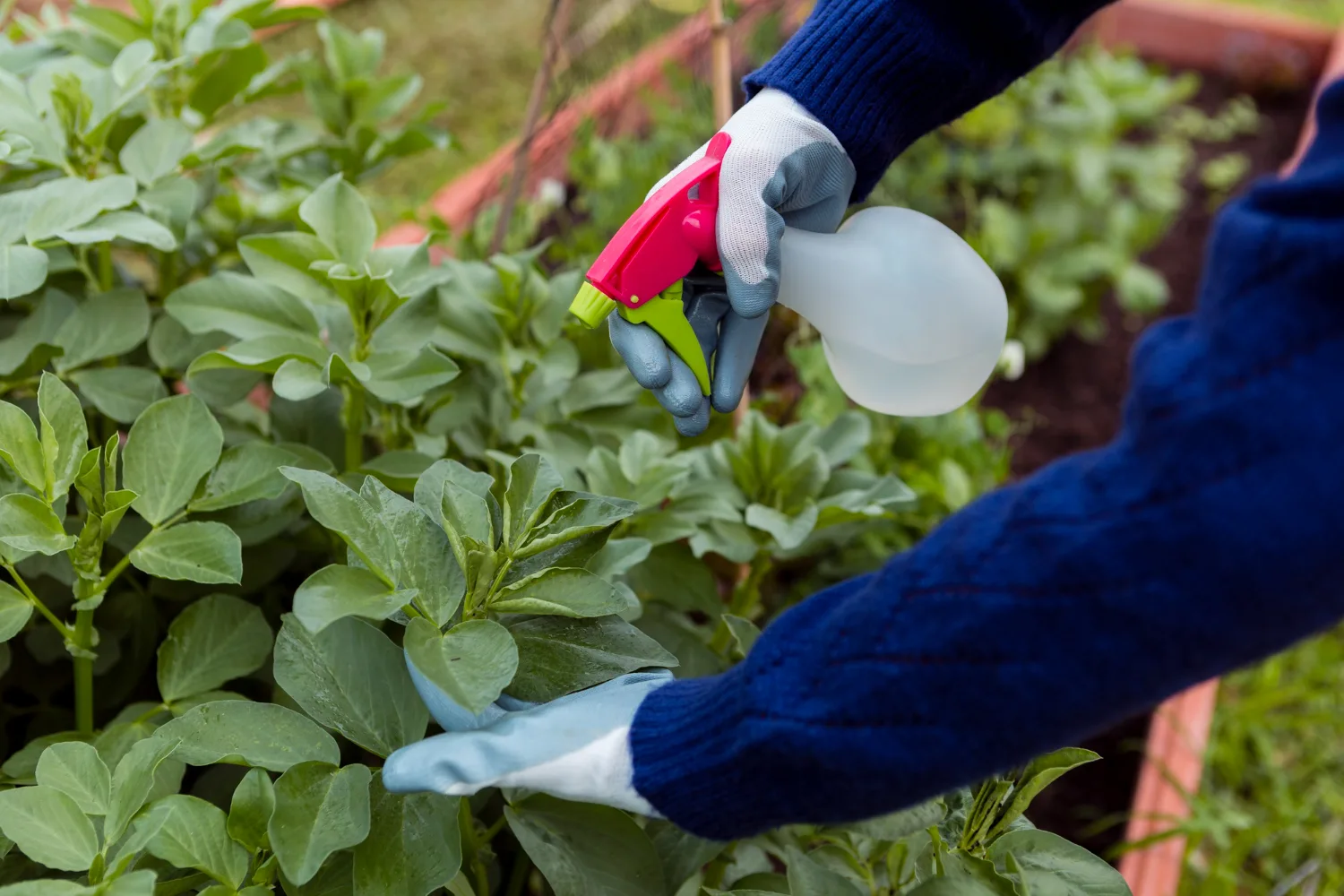
With pests such as aphids, whiteflies and spider mites, much of the population may be found on the undersides of leaves.
If the product works primarily by contact, failing to reach those areas can greatly reduce its effectiveness.
This does not mean, however, that every treatment must cover every surface in exactly the same way. Follow the product directions.
Never Increase the Dose on Your Own
One of the most common mistakes is assuming that a stronger mixture will provide better control.
Excess concentration can cause leaf burn, plant injury, unnecessary residues and greater environmental risk.
Double the dose does not mean double the control. It means you are no longer using the product in the way it was approved.
The Sprayer, Nozzle and Pressure Matter
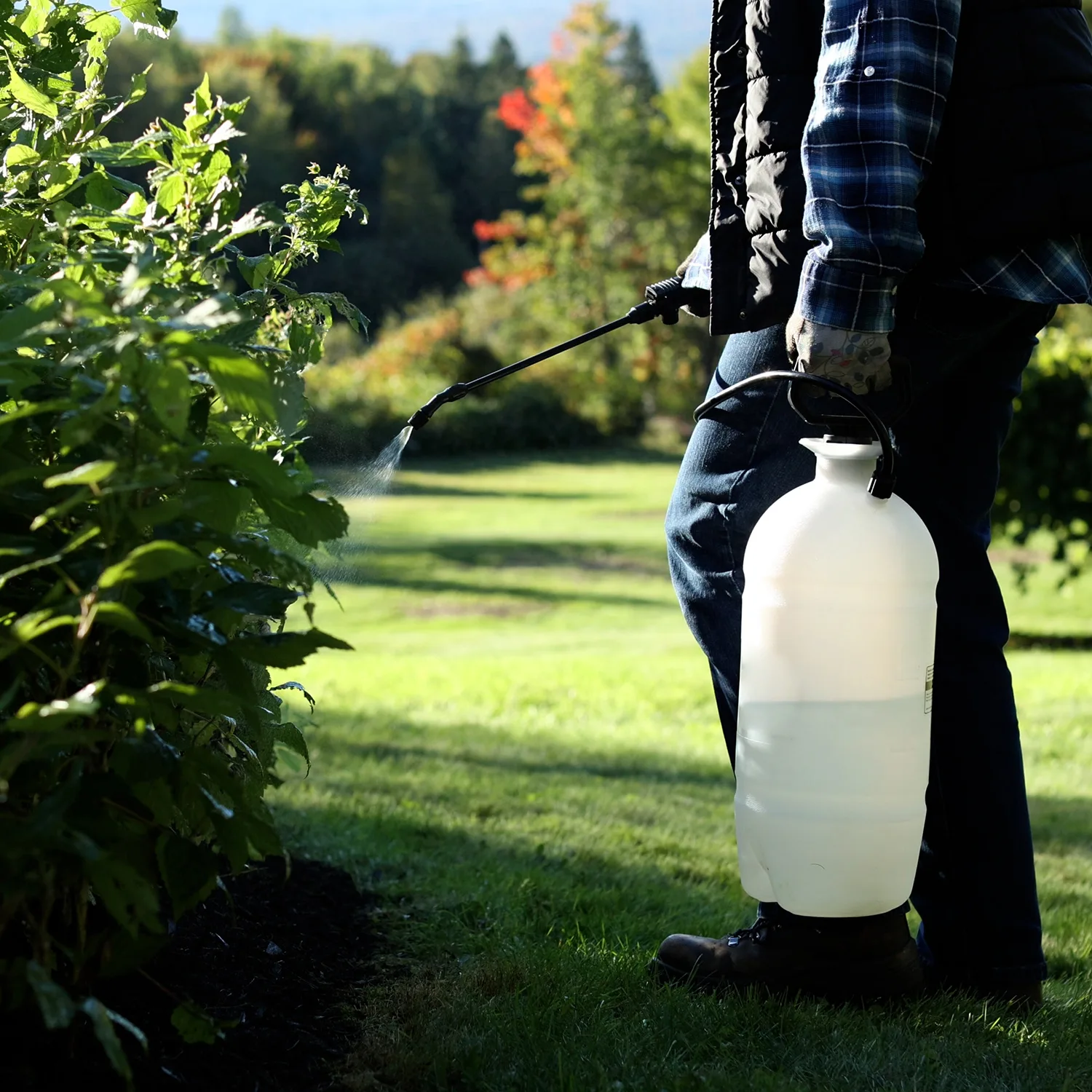
Good equipment should provide reasonably consistent and controllable application.
Handheld, backpack and battery-powered sprayers can all work well when they are properly maintained and calibrated.
The nozzle affects droplet size, spray pattern and the amount of solution delivered.
Do Not Mix Products at Random
Two products that can be used separately are not automatically suitable for mixing in the same tank.
Possible problems include chemical incompatibility, precipitation, clogged nozzles and increased risk of phytotoxicity.
If the labels do not provide clear information, do not combine products based on guesswork. When in doubt, seek qualified horticultural or pesticide advice.
Safety Before, During and After Spraying
Personal protection should always be determined by the label of the specific product.
Gloves, protective clothing, eye protection or other equipment may be explicitly required.
- mix the solution exactly according to the instructions;
- wear the required personal protective equipment;
- do not eat, drink or smoke while handling or applying the product;
- keep children and pets away from the area as directed;
- prevent spray drift onto neighboring plants, water, other properties or unintended areas;
- clean equipment according to the product directions.
Pre-Harvest Interval and Re-Entry Interval
With edible crops, the pre-harvest interval can be particularly important.
It is not something the gardener decides. It is specified on the label of the individual product.
Some products also specify how long people must wait before entering a treated area without required protective equipment.
| Term | What it means |
|---|---|
| Pre-harvest interval | The minimum time between the final treatment and permitted harvest. |
| Application interval | The minimum period between successive applications of the product. |
| Maximum number of applications | The limit on how many times the product may be used during a defined period or season. |
| Re-entry interval | The time that must pass before people can re-enter the treated area according to the label. |
What to Check if a Treatment Did Not Work
Poor results do not automatically mean that you should increase the dose.
First confirm that the diagnosis was correct and that the product was actually intended for the problem.
Common Spraying Mistakes
Correct spraying combines an accurate diagnosis, appropriate timing, suitable equipment and strict adherence to the product label.
Do not increase the dose, do not mix products without confirmed compatibility, and do not assume that every treatment requires spraying until runoff.
The best treatment is the one that addresses a specific problem with the minimum necessary intervention and without unnecessary risk to plants, people or beneficial organisms.