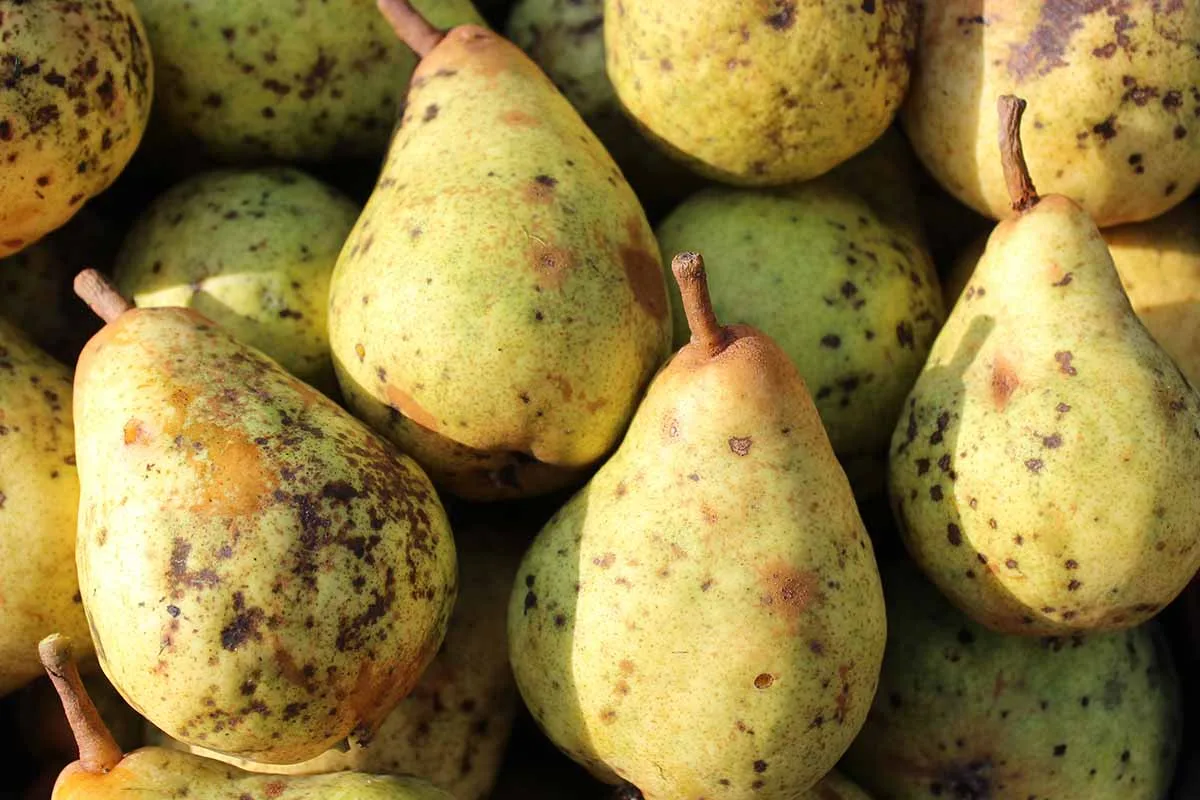
Apple and pear scab are among the most common diseases affecting these fruit trees. They can damage leaves, young tissues and fruit and, in severe cases, significantly reduce crop quality.
Apple scab is most commonly associated with Venturia inaequalis, while pear scab is caused by the related pathogen Venturia pyrina.
Good control does not begin with the first spray. Early recognition, reducing sources of infection and monitoring periods of high infection risk are equally important.
Scab rarely kills an established tree, but it can seriously reduce fruit quality and storage life.
What Apple and Pear Scab Look Like
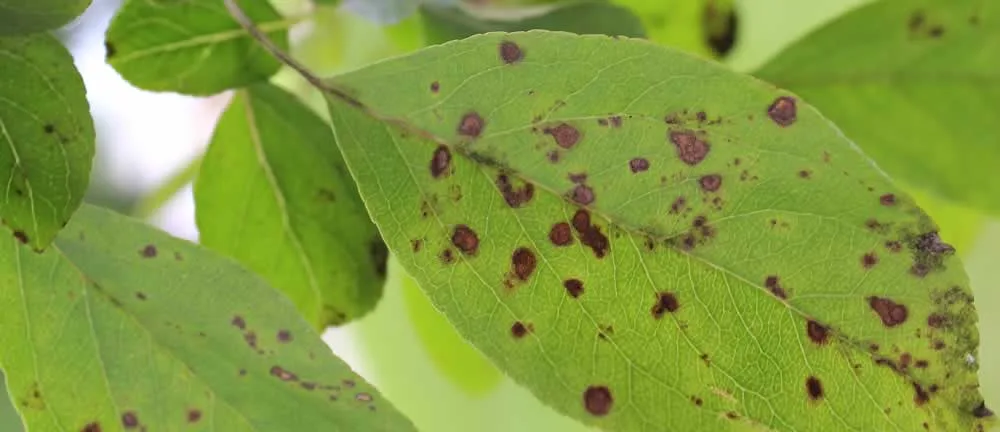
Early leaf symptoms are usually olive-green spots that later become darker.
As the disease develops, affected tissue may turn brown to almost black, and leaves can become distorted.
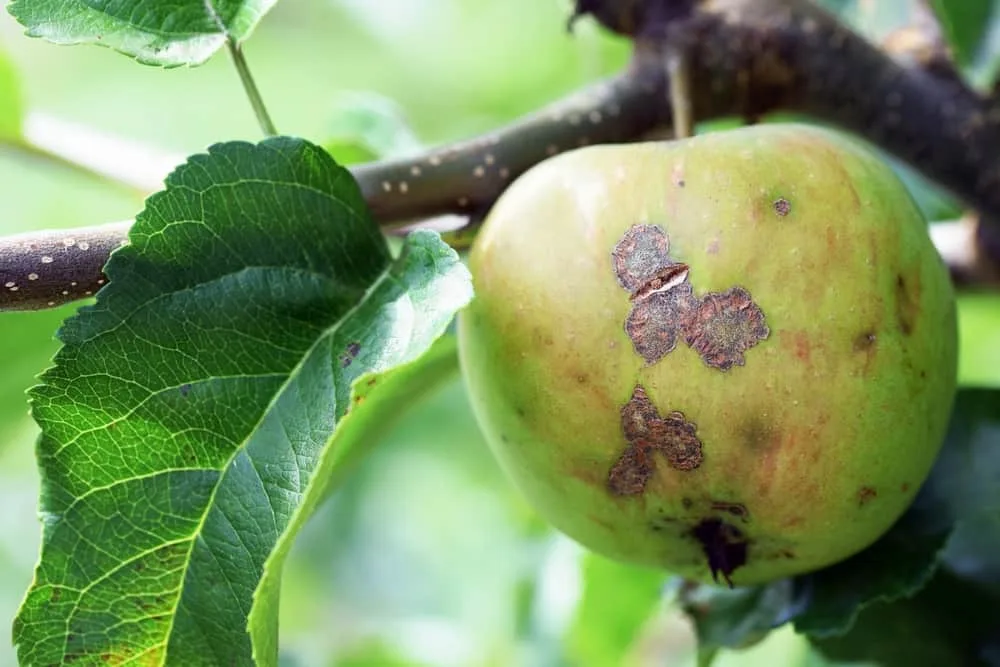
On young fruit, scab may produce dark, corky lesions. When infection occurs early, fruit growth can become uneven, leading to distortion and cracking.
When Infection Risk Is Highest
Scab is closely linked with wet weather and extended periods of leaf wetness.
During spring, risk increases when young susceptible tissues, suitable temperatures and sufficiently long wet periods occur together.
Not every rainfall event automatically leads to severe infection. Temperature, duration of leaf wetness and the presence of viable inoculum all matter.
| Condition | How it affects risk |
|---|---|
| Extended leaf wetness | One of the most important conditions for infection. |
| Frequent spring rain | Can create repeated periods of high infection risk. |
| Dense tree canopy | Foliage dries more slowly after rain. |
| Poor air movement | Extends the time leaves remain moist. |
How the Disease Starts Again in Spring
With apple scab, infected fallen leaves from the previous season are an important source of primary infection.
The pathogen survives in this material and, under suitable spring conditions, releases spores that infect new leaves and young tissues.
After these primary infections, new spores can develop on infected tissue and spread the disease repeatedly through the season.
Reducing the amount of infected leaf material beneath trees can lower the source of primary infection the following spring.
Why Pruning Matters
Pruning does not cure scab, but it can make the tree canopy less favorable for disease development.
In an overcrowded canopy, moisture after rain persists longer, and inner foliage dries more slowly.
A moderately open, well-lit canopy improves air movement and helps leaves dry more quickly.
What to Do When You See the First Symptoms
If you notice suspicious spots, first make sure the symptoms are consistent with scab.
Other leaf spots, mechanical damage and physiological problems can sometimes look similar.
If scab is likely, the next step is to consider the growth stage, recent weather and whether another high-risk infection period is expected.
The goal of control is to reduce new infections and protect healthy tissue. Corky lesions and fruit distortion that have already developed will not disappear.
When Fungicide Protection May Be Needed
In areas with recurring high risk or where scab has already been confirmed, fungicide protection may be necessary.
There is no single universal product or spray schedule that is correct for every cultivar, region and growth stage.
Use only a product currently labeled for apple or pear, for scab and for the specific intended use.
| Approach | General role | What to check |
|---|---|---|
| Preventive contact products | Protect the surface of susceptible tissue before infection occurs. | Crop, growth stage, rate, interval and rainfastness. |
| Locally systemic or systemic products | Some may be used at specific times according to the label and infection risk. | Application window and all label restrictions. |
| Copper products | May have a role during certain preventive periods. | Growth stage, crop sensitivity and the specific registered use. |
| Seasonal protection program | In areas with persistent pressure, decisions are based on weather, growth stage and previous treatments. | Resistance management and the maximum number of permitted applications. |
Check the crop, target disease, rate, interval, maximum number of applications, pre-harvest interval and all safety requirements.
Practical Decisions in Different Situations
| Situation | First step | What comes next |
|---|---|---|
| No symptoms, but a history of scab | Reduce infected leaf debris, manage the canopy and monitor wet spring periods. | If risk becomes high, labeled preventive protection may be appropriate. |
| First lesions on leaves | Confirm the symptoms and assess current weather and tree growth stage. | If new infection periods are likely, consider labeled fungicide protection. |
| Lesions already present on fruit | Accept that existing fruit damage will not disappear. | Focus on reducing additional infection and protecting unaffected tissue. |
| Very dense canopy | Plan appropriate pruning to improve airflow. | Avoid drastic thinning all at once simply because scab is present. |
| Severe scab every year | Review sanitation, cultivar susceptibility, canopy structure and disease history. | A more structured seasonal program may be needed according to local risk. |
How to Prevent Apple and Pear Scab
Good prevention does not necessarily mean more spraying.
The goal is to reduce the amount of primary inoculum, shorten the time leaves remain wet and respond when weather conditions genuinely create infection risk.
Common Mistakes With Scab
Apple and pear scab develop most readily when susceptible young tissue remains wet for a sufficiently long period.
The foundation of good control is sanitation, a well-managed canopy, regular observation and early recognition of symptoms.
If fungicide protection is needed, it should match the specific crop, growth stage, infection risk and current label of the authorized product.