
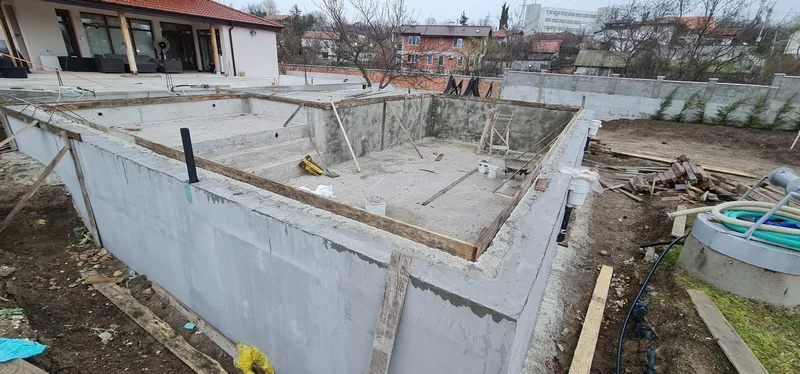
Building a swimming pool looks easy when we see the finished result. We see water, paving, sun loungers and plants. The real process, however, begins much earlier — with excavation, soil, concrete, pipes, equipment, waiting and decisions that you need to make at the right time.
In our case, the construction was not a quick story. Several months passed between the excavation and the first concrete. After that, the pool spent the winter unfinished, and the work continued in spring. This was not the most pleasant scenario, but it was real. That is exactly why it helps to talk not only about the beautiful final photo, but also about the stages before it.
A swimming pool does not start with the water. In reality, it starts with the structure and the infrastructure. If the team completes these stages well, everything afterwards feels calmer. When people underestimate them, the problems usually come later.
Choosing the Type of Pool
Before construction begins, you need to decide what type of pool you want to build. The most common options are a concrete pool, a ready-made fibreglass shell, a modular system or a pool with a liner.
A concrete pool gives the greatest freedom in terms of size, shape and depth. It also allows the design to follow the specific garden and the specific idea. At the same time, it requires quality workmanship, a good plan, proper reinforcement, waterproofing and reliable equipment.
A fibreglass pool comes as a ready-made shell. Because of that, installation can move faster, but the available sizes and shapes limit the design. The team still needs to prepare the base well, organise transport and place the shell correctly.
Modular systems can also offer a faster solution, but the final quality depends on the system itself, the installation and the way the team buries or reinforces it. A liner is another commonly used option, but you need to think about quality, underlay, installation, maintenance and future replacement.
So there is no universally best type of pool. Instead, each garden, budget, timeframe and set of expectations needs its own suitable option.
The Excavation: The Moment the Project Becomes Real
The excavation is the first big encounter with reality. Until this point, the pool is an idea, a size, a conversation or a drawing. When the excavator enters the garden, the abstract project disappears. A hole opens in the ground. Soil starts piling up. The lawn suffers. For a while, the whole garden looks much worse before it starts to look better.
Before excavation begins, you need a clear plan for the excavated soil. Will someone remove it, or can you use it somewhere in the garden? Also, can machinery reach the area easily? And what will happen to the lawn, paths, plants and irrigation system?
If the garden already has structure, excavation can affect many more things than you first expect. That is why it is worth thinking not only about the hole itself, but also about access, movement and the route machinery will take through the whole garden.
Why Construction Can Take Longer Than Expected
In theory, construction looks orderly: excavation, reinforcement, concrete, waterproofing, equipment, finishing. In practice, however, pauses and delays can appear at almost every stage.
- bad weather;
- delays with contractors;
- waiting for materials;
- changes to the project;
- soil problems;
- groundwater;
- lack of readiness for equipment installation;
- other renovation work in the garden;
- budget pauses;
- the end of the active season.
For us, this was one of the lessons. Construction does not always follow the schedule we imagine at the beginning. Months passed between the excavation and the first concrete. Then winter came, and the pool remained unfinished.
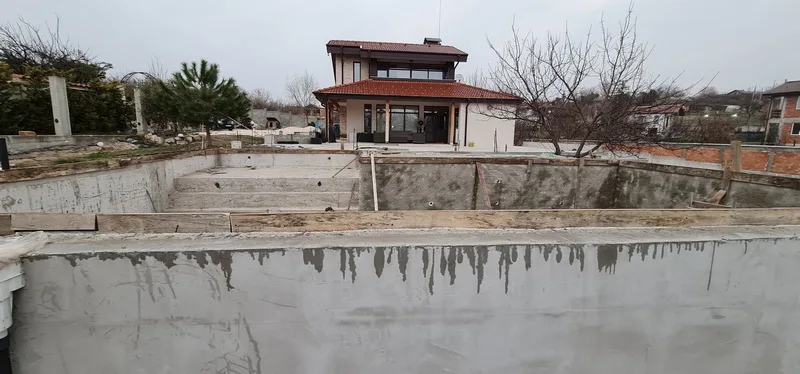
If a pool remains unfinished during winter, you need to think about protection. The structure should stay safe, and someone should monitor water in the excavation. It also helps to consider what might freeze, what the weather might damage and whether the unfinished work could collapse or lose strength.
Concrete, Waterproofing and Structure
With a concrete pool, the structure forms the foundation of everything. Later, you barely see this stage, but it determines how confidently you can use the pool.
This stage is not simply about pouring concrete. The team needs to shape the pool correctly, place the reinforcement, prepare the base, build the walls and solve the details around skimmers, jets, pipes and lighting. Any mistake at this point can later appear as a leak, cracking or a problem with the finishing.
Waterproofing is also critical. A pool constantly deals with water, pressure, temperature changes and chemicals. For that reason, this is not a place for improvisation.
The Technical Room
The technical room rarely appears in the dream image of a swimming pool, but in practice it becomes one of the most important places.
This space holds the pump, filter, valves, pipes, controls and possibly a salt system, automation or other additional elements. If the space feels inconvenient, every maintenance task becomes annoying.
The technical room should sit close enough to the pool, allow easy access, stay protected from moisture, ventilate well and offer enough space for servicing. It is also important to think about noise, because the pump runs regularly during the season.
Water, Electricity and Drainage
A swimming pool needs infrastructure. You need water for filling and topping up. The pump, lighting and possibly additional equipment also need electricity. In addition, you need a plan for where the water will go during filter backwashing, pool draining or an emergency.
These decisions should come before the last moment. If the garden already has paving, lawn and plants, every additional pipe or cable means more digging and damage to finished areas.
From Concrete Structure to Finished Pool
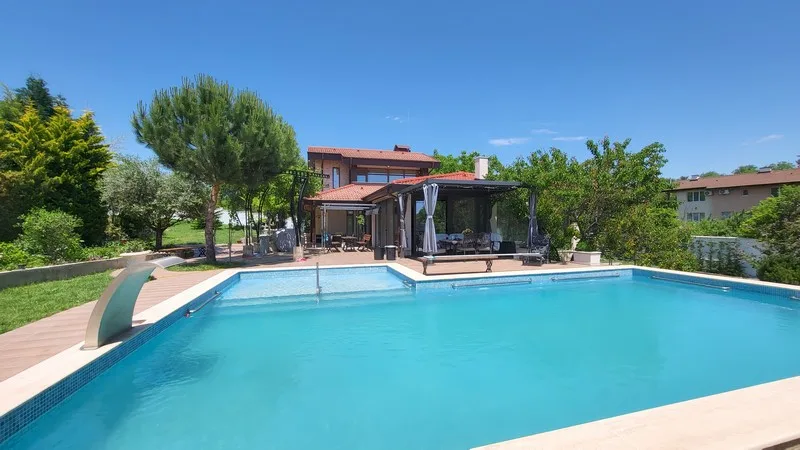
When we look at a finished pool, we easily forget how many decisions stay hidden beneath the final appearance. We no longer see the concrete, pipes, waterproofing, technical openings, levels and drainage. Yet these hidden details determine whether the pool will feel comfortable and reliable.
That is why it is useful to keep photos from the construction process. They show what really stands behind the finished result. In our case, the difference between the concrete stage and the final look is huge — and this contrast explains why building a pool deserves careful planning.
What I Would Plan Better in Advance
If someone is at the beginning, I would advise them not to start with the excavator before they have at least an approximate plan for all the main stages: excavation, structure, pipes, equipment, waterproofing, finishing, paving, drainage and final works.
Not everything needs to be bought in advance, but the next steps should be clear. The worst scenario is having to make important decisions when the garden already has a huge excavation and everyone is waiting.
After the Pool Is Built: Shade, Planters and the Garden Around It
Once the excavation, concrete and equipment are finally behind you, the pool still does not feel finished. The real garden begins around it — with shade, large planters, privacy and a few calm details that make the space feel less like a construction project and more like a place to live.
- KYBOLT 10x13 ft Outdoor Pergola with Retractable Canopy — a practical shade structure for creating a finished poolside seating area.
- Patio Kingdom 10x10 ft Louvered Pergola — a more architectural option for shade near the pool, with a cleaner modern look.
- VEVOR 22 inch Tall Outdoor Planters, Set of 2 — tall black planters that can soften the concrete edge and bring structure around the pool.
- LA JOLIE MUSE Tall Outdoor Planter Set — an elegant planter option for patio, poolside corners or the transition between paving and garden.
Conclusion: building a swimming pool is much more than excavation and concrete. The finished pool looks light and pleasant, but behind it stand structure, equipment, pipes, electricity, water, drainage and a lot of organisation.