
A fruit tree spraying calendar sounds wonderfully simple: do one thing in January, another in March, something else in April, and the orchard is taken care of. The problem is that trees, diseases and pests do not follow the calendar hanging on our wall.
It is far more useful to watch the tree's stage of development, the weather and what is actually happening in the orchard. A warm, wet spring can bring disease pressure weeks earlier than a cold, dry season.
So this is not a list of fixed dates and compulsory sprays. It is a guide to what deserves attention during the different stages of the season and when particular problems are more likely to appear.
There is another important point. A plant-protection product that was approved for a particular crop several years ago may not necessarily have the same registration today. Always check the current label and the official pesticide registration system for the country where you garden before using any product.

Follow the Tree, Not the Date
One of the easiest mistakes to make is repeating last year's treatment on exactly the same date. If an apple tree had swelling buds on March 20 last year, it might already be flowering on the same date this year - or it may still be almost dormant.
Temperature controls how quickly both trees and many pests develop. Humidity and the length of time leaves remain wet influence the risk of many fungal diseases. Rain can also wash some products from plant surfaces.
That means several things need to be watched together:
- the stage of buds, flowers and young fruit;
- daytime and nighttime temperatures;
- extended wet periods and rainfall;
- the first symptoms on leaves, flowers and shoots;
- insects, eggs, larvae or visible feeding damage;
- problems the same tree experienced during the previous season.
A tree beside a solid fence, where air movement is limited, may remain wet much longer than a tree growing in an open position. This is one of the situations where the small-scale microclimate of a yard really matters.
The Six Main Stages of the Fruit-Growing Season
For a home orchard, it is usually enough to think of the year as a series of developmental stages. These stages do not begin on the same date for apples, peaches, apricots or cherries.
| Stage | What is happening | What to watch |
|---|---|---|
| Winter dormancy | Trees are leafless and active growth has stopped. | Mummified fruit, dead and diseased branches, bark damage and overwintering pest stages. |
| Bud swell and bud break | New growth begins. | Early infections, aphids and other early-season pests. |
| Bloom | Flowers are open and pollination is taking place. | Blossom diseases in susceptible species, frost, rain and pollinator activity. |
| After bloom / young fruit | Fruit begins to form and grow. | Scab, aphids, fruit-feeding insects and other problems depending on the species. |
| Summer and fruit development | The tree supports the crop while new shoots continue to grow. | Later pest generations, fruit rots, powdery mildew and fruit damage. |
| After harvest and leaf fall | Growth gradually slows and the tree prepares for dormancy. | Diseased leaves and fruit, dead wood, wounds and the overall condition of the tree. |
Winter and Early Spring - Orchard Hygiene Is Part of Plant Protection
The tree may look inactive in winter, but many of the problems that will matter next season are still present in the orchard.
Mummified fruit left on branches, diseased wood, infected fallen leaves and damaged bark can all contribute to problems when spring arrives.
That is why winter plant protection does not necessarily begin with a sprayer.
- remove mummified fruit still hanging on the tree;
- check for dead, broken and badly affected branches;
- inspect trunks and main branches for wounds and cracking;
- remove heavily infected plant material;
- carry out pruning appropriate for the particular fruit species;
- keep pruning tools clean and sharp.
Dormant or early-spring treatments can be useful for specific crops and specific problems, but product choice depends on the fruit species, the target pest or disease and the product's current registration. I would not automatically use the same mixture on every fruit tree in the garden.

From Bud Break to the End of Bloom
This is the period when the orchard can change remarkably quickly. Buds may move from barely swollen to fully open flowers within a relatively short time.
For apples and pears, wet spring conditions increase concern about scab. Peach leaf curl is an important early-season problem in peaches. In apricots, peaches, cherries and other stone fruit, wet weather around bloom can also be important for blossom blight and brown rot infections.
Bloom is a period when extra caution is necessary. Bees and other pollinating insects are part of the crop itself, so any treatment made around flowering needs to take pollinator protection and the product label into account.
Preventive treatment makes sense when it is directed at a genuine risk and a specific problem. Unnecessary treatments add cost, increase pressure on beneficial organisms and create more opportunities for incorrect product use.
Good sanitation also means removing clearly dead or badly affected branches when appropriate. On larger or taller fruit trees, some of that work can become difficult to reach safely from the ground.
This post contains affiliate links. As an Amazon Associate, I earn from qualifying purchases at no extra cost to you.
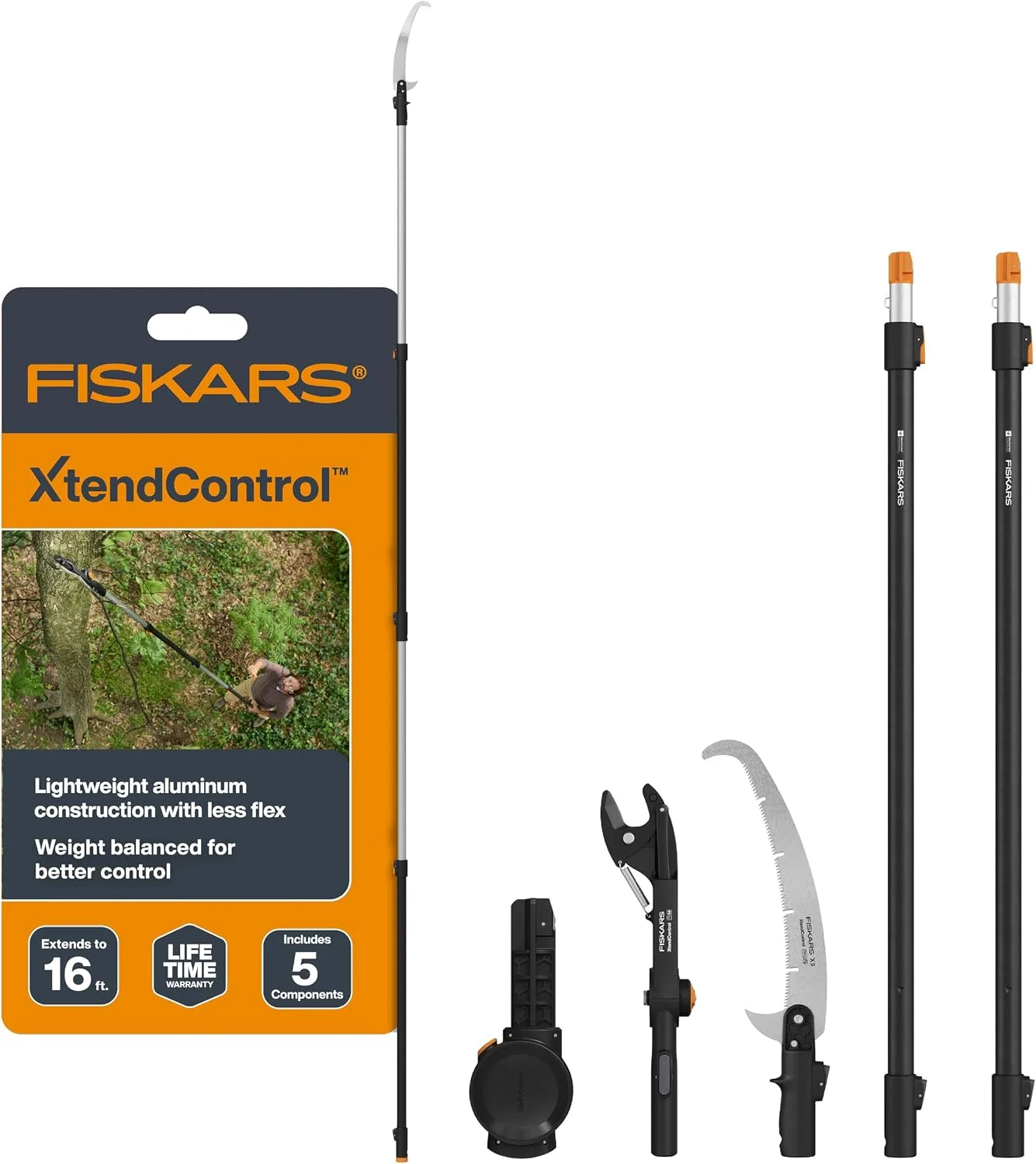
When dead, damaged or badly affected branches are higher in the canopy, an extendable pruning system can make them easier to reach from the ground.
The Fiskars XtendControl combines an extendable pole, pruning head and saw, so it can handle different types of overhead tree maintenance. I would still work slowly and make sure there is a clear area below before cutting any branch overhead.
After Bloom - Young Fruit Brings a Different Set of Problems
Once the petals have fallen, one of the most important monitoring periods begins. The fruit is small, leaf growth is rapid and new generations of pests begin to appear.
On apples, common concerns can include scab, powdery mildew, aphids and codling moth. Peaches and apricots have a different set of important problems, and cherries are different again.
This is why a single chart recommending “one insecticide plus one fungicide for all fruit trees” is far too crude to be genuinely useful.
More useful questions are:
- Which fruit species am I dealing with?
- What developmental stage is the tree in?
- What problem am I actually seeing, or what genuine risk exists right now?
- Is the product approved for this crop and this use?
- What is the pre-harvest interval?
- How many applications are permitted?
- Is tank mixing with another product allowed?
Those answers belong on the current label and in the relevant official registration database, not in an old chart saved several seasons ago.
Summer, Harvest and Why the Pre-Harvest Interval Matters
As fruit develops and begins to approach harvest, every treatment also has to be considered in relation to the amount of time remaining before picking.
The pre-harvest interval is not a casual recommendation. It is the minimum period that must pass between the final permitted application and harvest for the approved use of that specific product.
Summer is also a good time to inspect trees frequently. A problem can begin on only a few fruits or shoots before it becomes obvious across the whole canopy.
Even in a small home orchard, writing down the date, crop, reason for treatment and product used can be surprisingly helpful. A year later, you will not have to rely on memory to work out whether the same tree had the same problem and when it first appeared.
There is work after harvest too: removing diseased fruit, checking branches, cleaning up infected material and looking at the condition of the trees before leaf fall.
Regular inspection often means dealing with occasional high branches throughout the season, not only during winter pruning. An extendable pruner can be useful here as long as the work remains within a safe and manageable range.
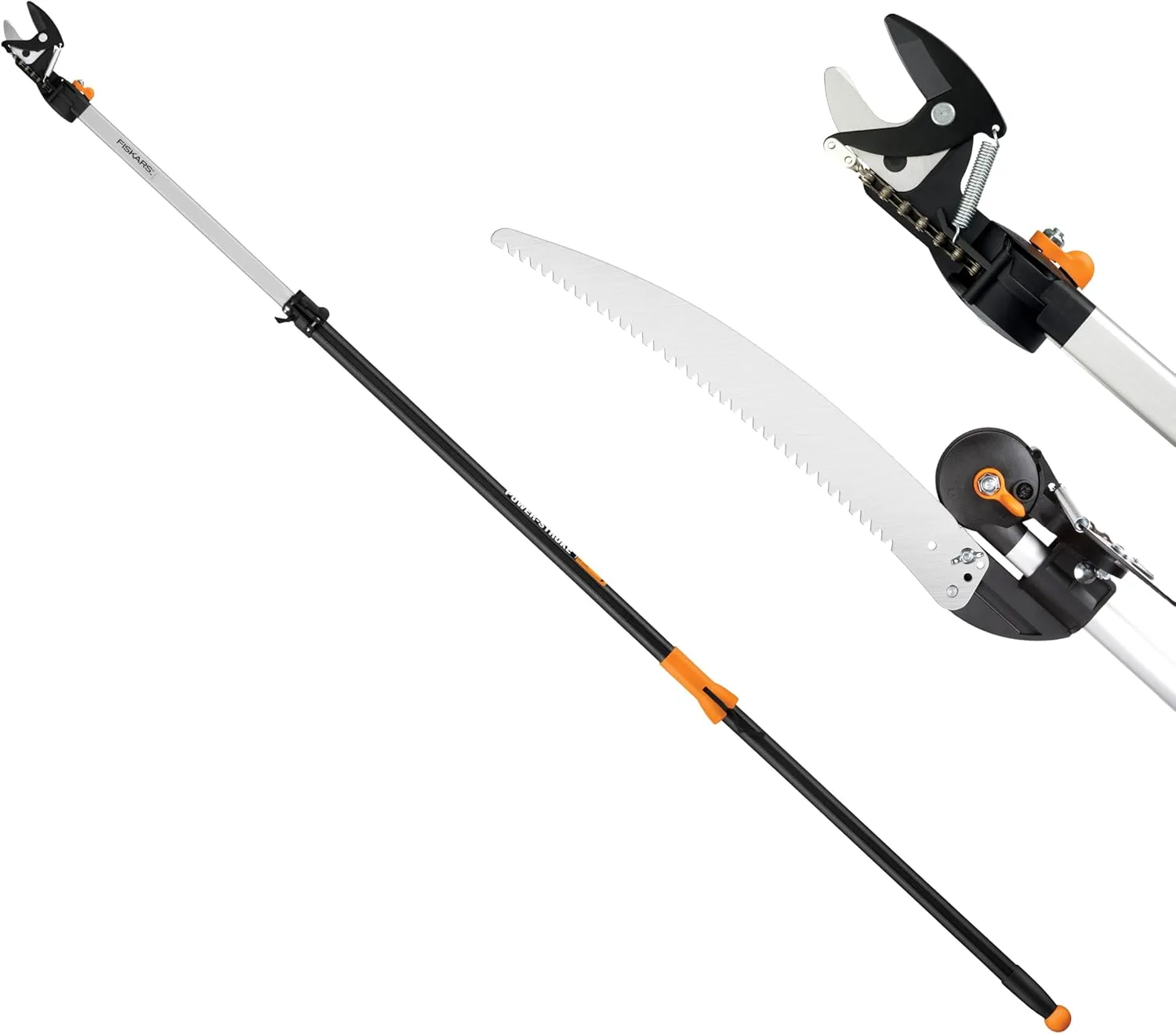
For routine maintenance of higher fruit-tree branches, a lighter extendable pruner can be a practical alternative to repeatedly moving a ladder around the orchard.
This Fiskars model combines a pruning head with a saw for thicker growth. As with any overhead pruning, it is worth keeping the area underneath clear and avoiding cuts on branches that are too large to control safely from the ground.
How to Use a Fruit Tree Protection Calendar Sensibly
A calendar is useful when it reminds us what to watch. It becomes a problem when we turn it into an automatic spraying program.
- identify the fruit species and the actual problem first;
- follow the stage of development rather than the date alone;
- take weather and rainfall risk into account;
- never exceed the rate stated on the current product label;
- do not mix products simply because someone else has done so before;
- check the maximum permitted number of applications;
- observe the stated pre-harvest interval;
- protect bees and other beneficial insects;
- do not use a product on a crop for which that use is not approved.
And do not underestimate the things that do not come in a bottle: an open canopy, good air circulation, orchard sanitation, appropriate irrigation and choosing varieties that are not exceptionally susceptible to the most common problems in your area.