
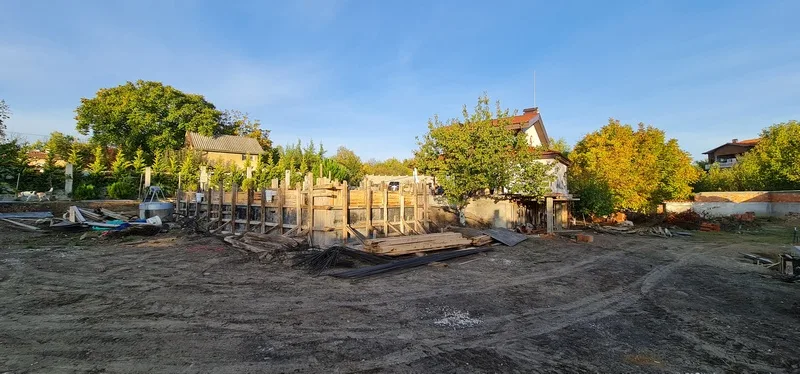
A swimming pool in the garden may look like a single decision: you choose a place, dig, build and fill it with water. In reality, however, it changes the entire garden — the movement, the views, the plants, the paving, the shade and the way we use the outdoor space in summer.
When we first started thinking about a swimming pool, the first question seemed simple: where should it be? Soon, however, we realised that this was not just a matter of choosing an empty space. We had to think about how we would move around it, how it would look from the house, where shade would fall, where the sun loungers could go, what would happen to the lawn and which plants could live near the water without creating constant maintenance.
That is why a swimming pool should not stand as a separate object. It needs to belong to the whole garden. When you choose the location, size and shape well, the pool can become a natural centre of the outdoor space. If you make those decisions too quickly, compromises begin later — and those are not always easy to fix.
The Pool Changes the Whole Garden
Before the pool, a garden may have different zones — a lawn, fruit trees, a dining area, a place for children to play or simply open space. After the pool, a new centre appears. The eye goes to the water. Movement starts to happen around it. Plants also need a different kind of thinking, because beauty alone is not enough near a pool. You begin to ask whether they drop leaves into the water, whether they have aggressive roots and whether they will make cleaning more difficult.
This is the first thing I would say to anyone planning a pool for the first time: do not think only about the pool itself. Instead, think about the garden after the pool.
Will there be a place to sit? Is there going to be enough shade? How will you get from the house to the water? Do you want to walk across grass with wet feet? Where can the outdoor shower go? And where will you place the pool equipment, chemicals and accessories?
These questions may sound small, but they determine whether the pool will feel comfortable in everyday use.
Where to Start
Before the first excavation, it is worth answering several basic questions:
- where exactly the pool will be;
- how large it should be;
- what shape is most suitable;
- what depth is needed;
- where the technical room will be;
- where the pipes will run;
- how water around the pool will be drained;
- what paving will be used;
- how the area will be planted;
- whether there will be shade, a shower, a pool cover and space for sun loungers.
At first, we tend to look at the size of the pool. Later, however, we realise that the real work happens around it. The water itself is only the centre, while the whole area has to work together.
This post contains affiliate links. As an Amazon Associate, I earn from qualifying purchases at no extra cost to you.
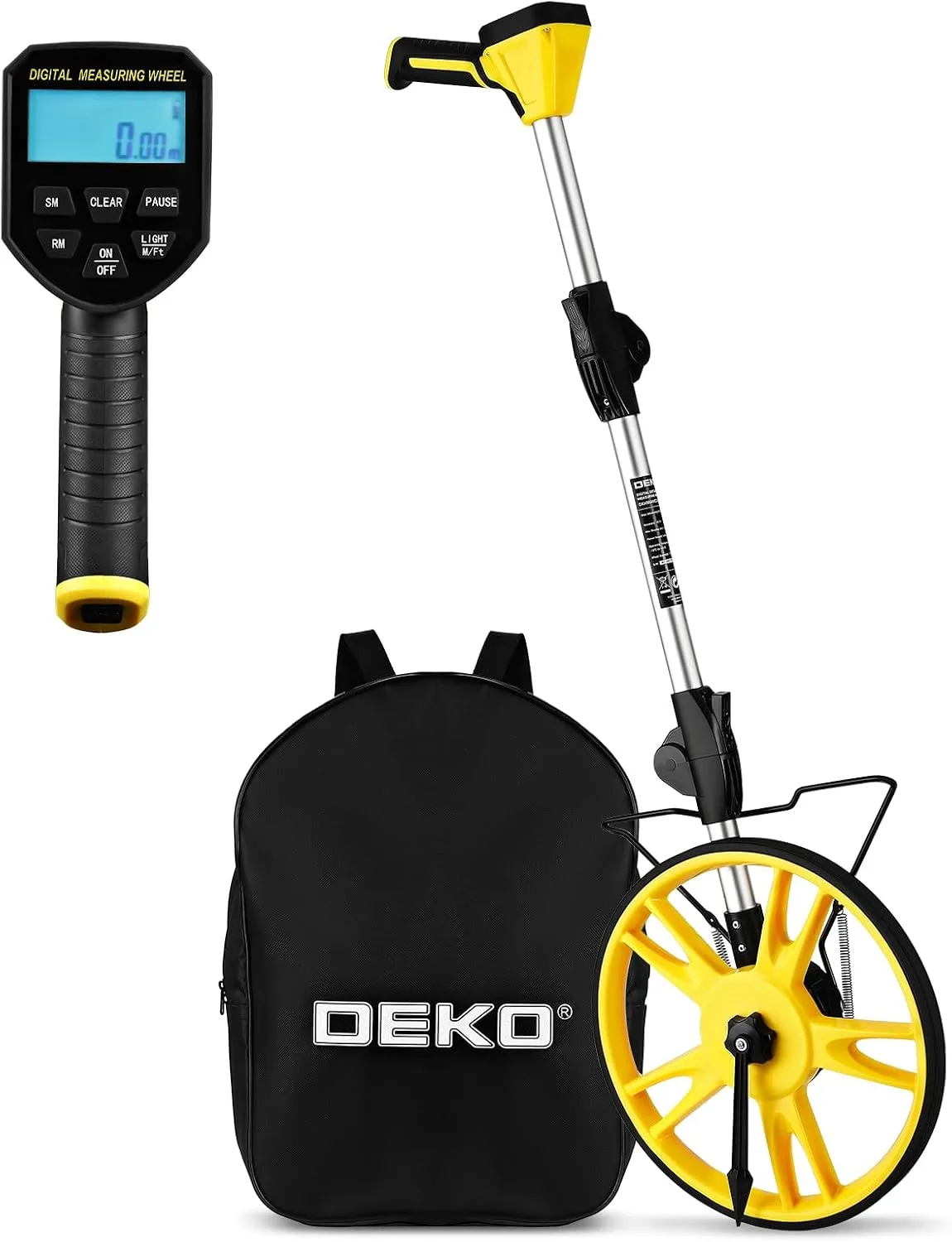
Before excavation begins, accurate measurements make planning much easier. A measuring wheel is useful for checking pool dimensions, distances from the house, pathways and the space that will remain for planting, loungers and circulation around the water.
This DEKOPRO model has a digital display, a folding design and a 12.5-inch measuring wheel, making it practical for measuring longer distances around a garden without relying on a tape measure.
Choosing the Location
The location is probably the most important decision. It affects convenience, maintenance, water temperature and the overall feeling of the garden.
Usually, a sunny place works well because the water warms up more easily. In a very hot garden, however, full sun all day can become a problem. For us, this matters, because in summer the heat is not a decorative detail — it is a real condition.
That is why you should consider shade from the very beginning. Do not wait until everything is finished and you start moving umbrellas from one side of the pool to the other. Shade can come from a pergola, awning, parasol, canopy or carefully chosen plants, but it should already have a place in the plan.
Trees around the pool create both beauty and practical questions. A large tree close to the water may look wonderful, but it can bring leaves, flowers, seeds, birds, roots and more cleaning. This does not mean there should be no trees. It means you need to choose them carefully and keep them at a sensible distance.
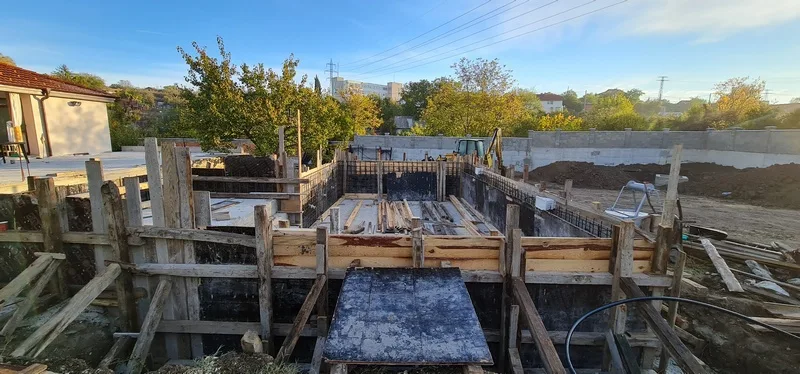
Size: Bigger Is Not Always Better
Many people start with the idea of a large pool. A large pool looks more impressive, but it also means more water, more chemicals, more powerful equipment, more maintenance time and higher costs.
The size should follow real use. Will you actually swim in it? Will you use it mainly for cooling off? Are children going to use it? Will guests come often? Or will the pool mainly become a summer living area around the house?
A smaller pool is not a compromise when it has the right position and feels comfortable. Sometimes the atmosphere does not come from the size, but from the proportions, the paving, the planting, the shade and the way the space around the water works.
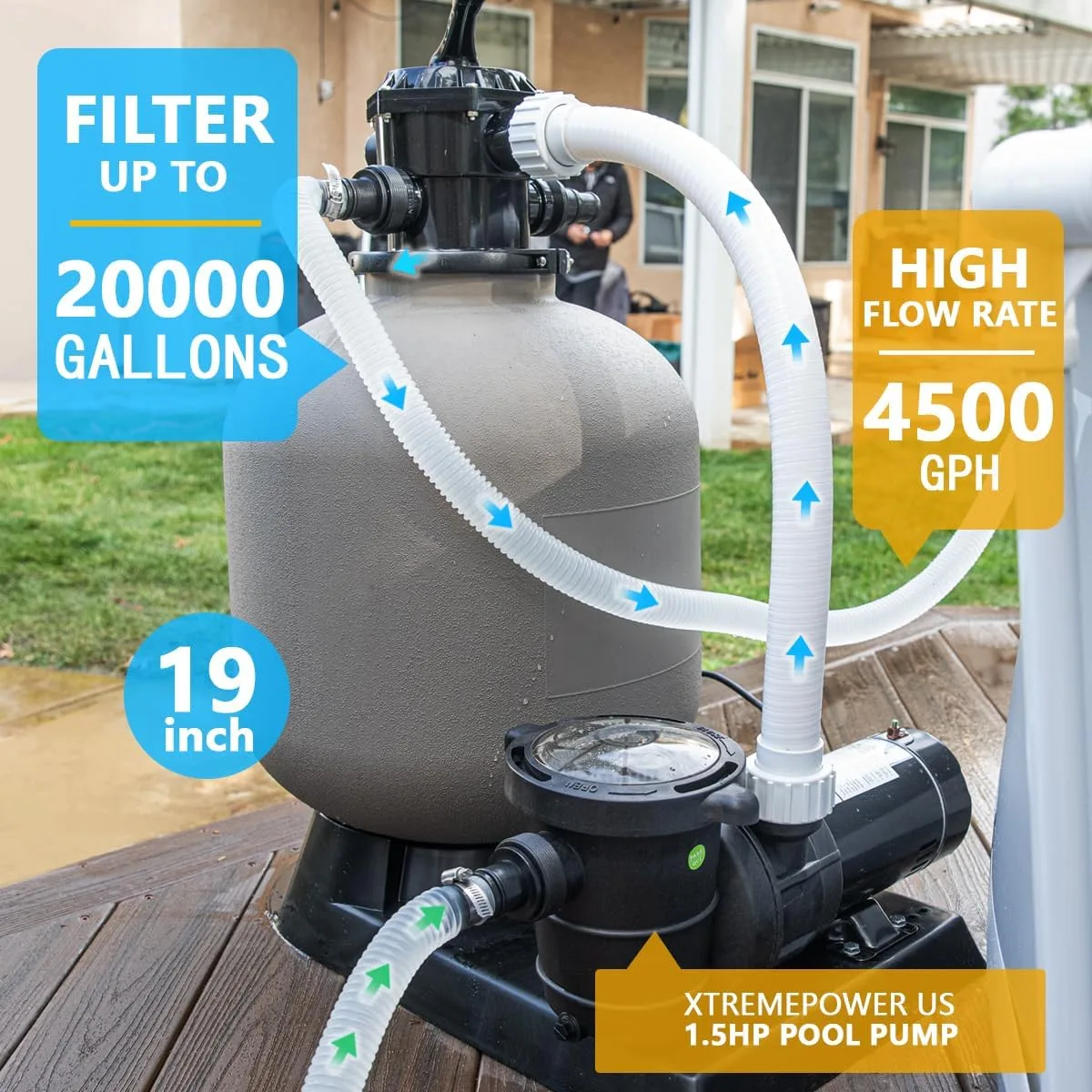
Pool size and filtration equipment need to make sense together. Once the volume of water increases, the pump and filter have more water to circulate and keep clean, so this is one part of the pool plan I would not leave until the end.
This system combines a 19-inch sand filter with a 1.5 HP pool pump. Before choosing any filtration system, check the actual pool volume and the manufacturer's sizing and installation guidance.
Shape and Depth
The shape affects not only the appearance, but also the construction, pool cover, paving and cleaning. Rectangular pools are practical, easier to cover and often look good next to a house with more defined architecture. Free-form pools feel softer, but they can make construction, covers and paving details more complicated.
You should not choose the depth by instinct alone either. A deeper pool means more water, slower warming, more chemicals and higher costs. If you mainly want the pool for cooling off and summer life in the garden, excessive depth may not be necessary.
It is worth deciding from the beginning whether the bottom will have a uniform depth, a gentle slope or different levels. This choice affects excavation, construction, comfort and price.
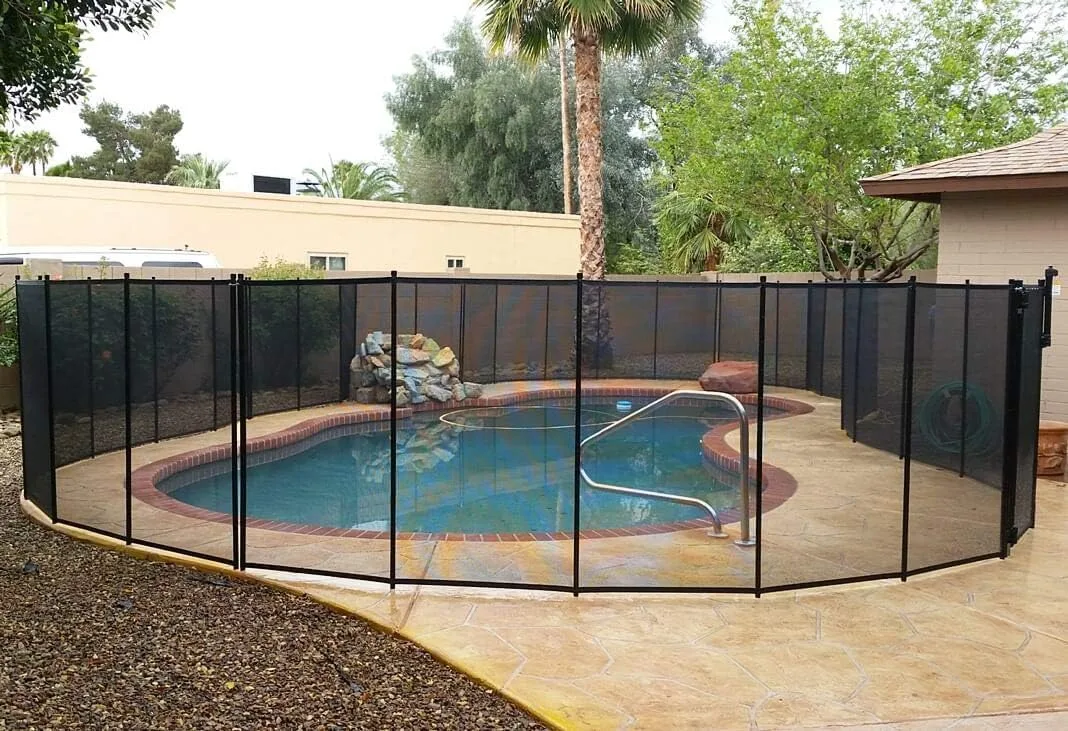
Safety also belongs in the planning stage, especially when children or pets use the garden. A separate barrier around the water can help control access without permanently changing the whole landscape.
This VINGLI mesh fence is designed for inground swimming pools and creates a removable 4-foot-high barrier around the pool area. As with any safety product, installation and local pool-safety requirements should be checked carefully.
What I Would Consider from the Very Beginning
If I had to start again today, I would think of the pool not as a “hole with water”, but as a complete summer zone. Where will people sit? Where will shade fall at 3 p.m.? Where can someone leave towels? How will the pool look from the house? And how will we use it in the evening?
These questions make the difference between a pool that simply exists in the garden and a pool that people truly use.
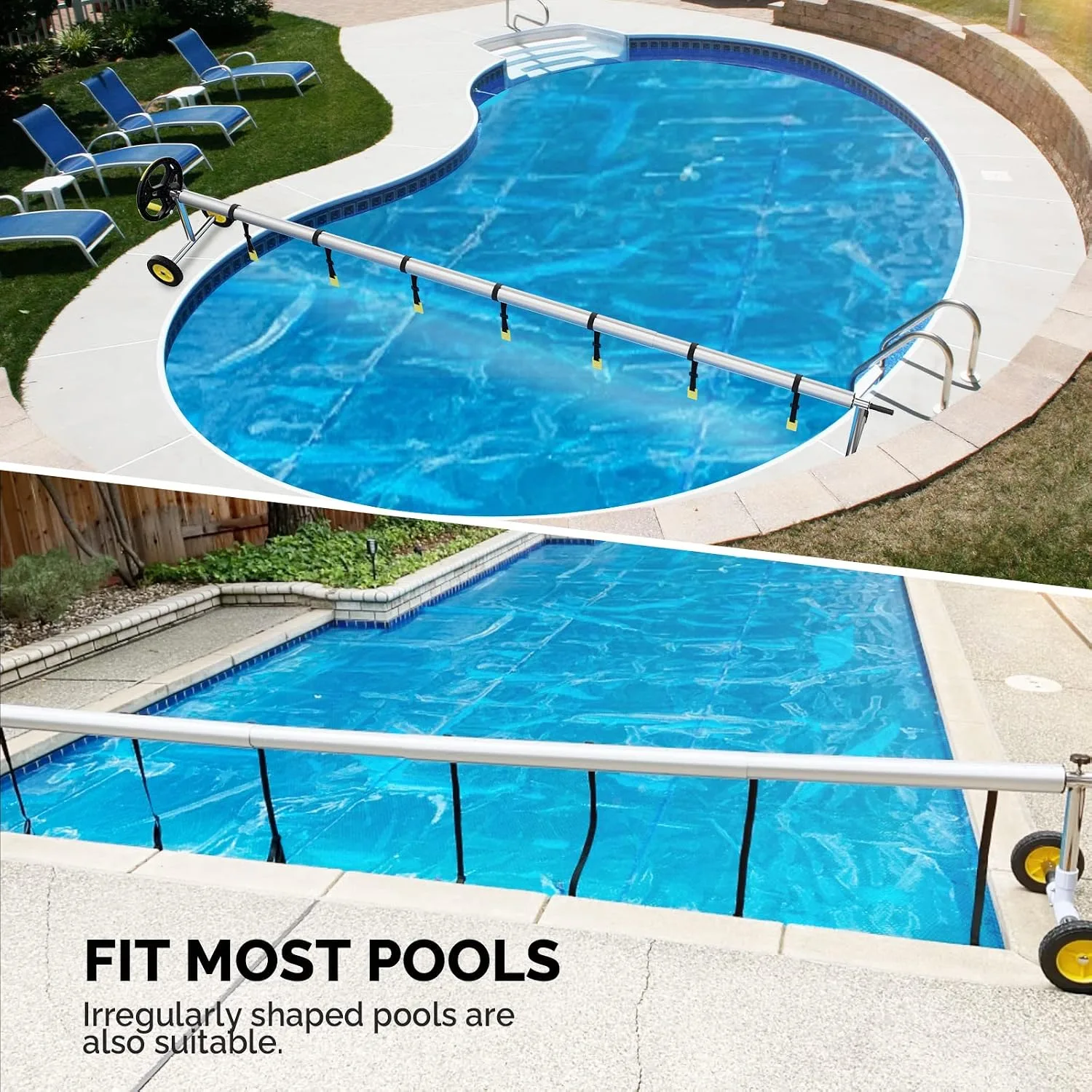
A pool cover may sound like a small detail while the garden is still being designed, but handling a large cover every day can quickly become one of those jobs nobody volunteers for.
This adjustable aluminum reel is designed for solar covers on inground swimming pools and helps make covering and uncovering the water easier. It is worth planning enough clear space around the pool so equipment such as a reel can actually be used comfortably.
Conclusion: a swimming pool in the garden starts long before construction. It starts with the location, size, shape, depth and connection with the garden. The most important thing is not to plan only the pool itself, but the life around it.