
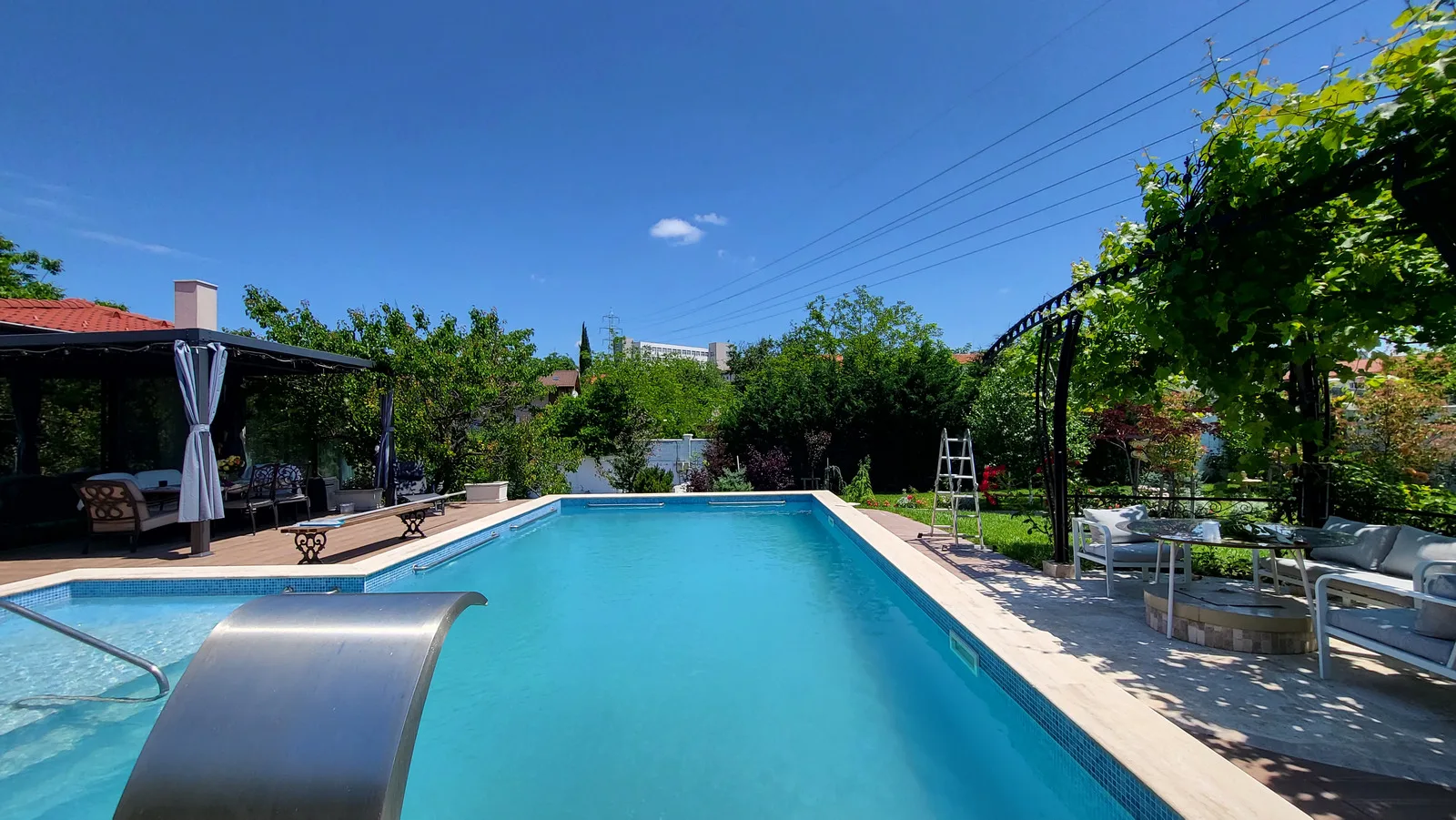
After the pool construction, the second important stage begins: shaping the area around it. At this point, the pool needs to stop looking like a construction site and start feeling like a natural part of the garden.
For us, this stage turned out to matter more than expected. The pool alone did not make the garden feel finished. Instead, the paving, plants, shade, seating area, lighting and practical little details completed the space — especially once we started using it every day.
The pool creates the foundation. However, everything around it creates the atmosphere.
Paving Around the Pool
Paving around the pool combines aesthetics, safety and practicality. It has to look good, but it also needs to handle water, sun, chemicals, wet feet, cleaning and temperature changes.
For that reason, I would not choose paving only from a photo. One material may look wonderful, yet become far too hot in July. Another may look elegant, but turn slippery when wet. A third may impress at first, although after a few seasons it can become difficult to clean.
The main requirements for pool paving are:
- it should not become slippery;
- it should not overheat too much;
- it should clean easily;
- it should handle moisture well;
- it should have the correct slopes;
- it should resist damage from chemicals and sun;
- it should feel comfortable when walking barefoot.
Good slopes are especially important. Water around the pool should drain away properly, instead of collecting in puddles or running back into the pool with dust, mud and leaves.
Seating Area and Sun Loungers
A pool still feels unfinished without a comfortable area around it. Ideally, the space should include room for sun loungers, a table, chairs, an umbrella or another source of shade.
Here, practical thinking makes a big difference. Where will the towels go? Where will you place a glass of water or coffee? Will people have enough space to walk around the sun loungers? Also, will you need to move the furniture constantly as the sun changes position?
Too little space around the pool makes everyday use uncomfortable. On the other hand, a large but poorly organised area can look empty and unfinished.
Shade Is Essential
A pool needs sun, but the people around it need shade. This becomes especially clear on the hottest days.
You can create shade with umbrellas, a pergola, an awning, a canopy, light fabric shade sails, trees placed at a sensible distance, tall shrubs or a living screen.
However, trees need careful planning. They provide natural shade, but when they stand too close to the water, they can drop leaves, flowers and seeds into the pool. Some attract birds, others develop strong roots, and a few simply create more work than comfort.
For me, shade belongs in the main plan, not in the “we will solve it later” category. Otherwise, temporary solutions often stay in place for years.
Landscaping Around the Pool
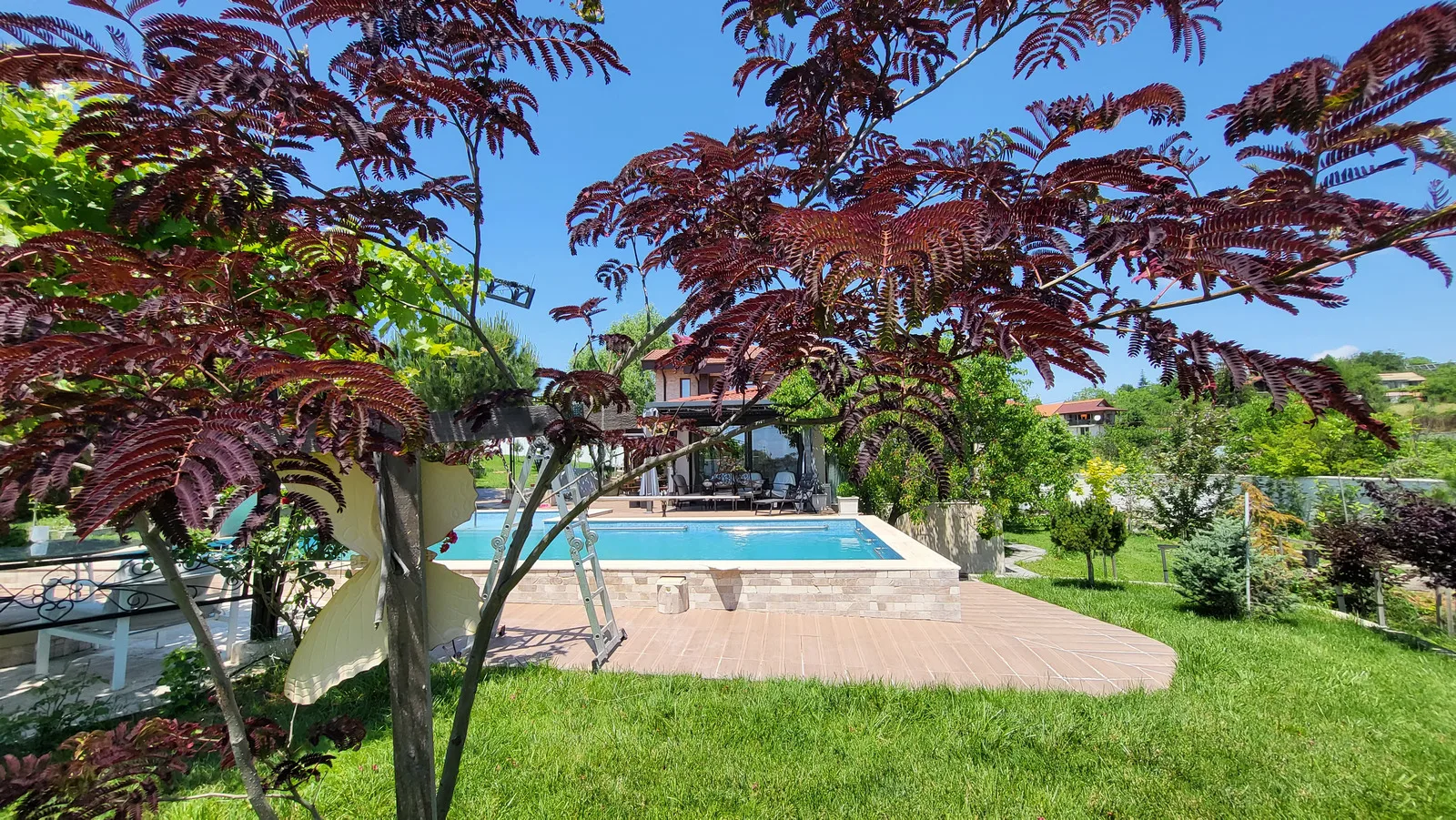
Landscaping helps the pool feel connected to the garden. Without plants, a pool can look hard, exposed and separate from the rest of the outdoor space. Plants soften the lines, create a background, add comfort and connect the water with the garden around it.
At the same time, not every beautiful plant works well near a pool. In this area, plants should be chosen not only for their appearance, but also for their behaviour.
It is better to avoid plants that:
- drop many leaves;
- flower heavily and dirty the water;
- produce small seeds;
- attract too many bees around the swimming area;
- have aggressive roots;
- need a lot of watering and create mud;
- struggle in strong sun.
Instead, look for plants that are resilient, relatively clean and good at creating structure. Depending on the style of the garden, you can use evergreen shrubs, Mediterranean plants, potted plants, ornamental grasses at a suitable distance, olive trees, cherry laurel, photinia or other species that tolerate the local climate.
Costs After Construction
When people talk about the cost of a swimming pool, they often focus only on the construction itself. In reality, the full budget continues after the pool is built.
- paving around the pool;
- coping stones;
- outdoor shower;
- lighting;
- sun loungers and furniture;
- umbrellas or a pergola;
- plants;
- soil, mulch and pots;
- chemicals;
- cleaning equipment;
- pool cover;
- winter preparation;
- future repairs and replacement parts.
This is exactly where many people get surprised. The pool may already be ready, yet the area around it still needs work. It needs paving, shade, plants, seating and a practical maintenance setup.
Maintaining the Area Around the Pool
Maintenance is not only about water chemistry. The more dust, leaves, mud and organic debris collect around the pool, the more work you will have in the water as well.
Therefore, the choice of paving, plants and shade directly affects cleanliness. Unsuitable plants, poor slopes or a crumbling surface can make the water dirty much faster.
What I Would Plan from the Very Beginning
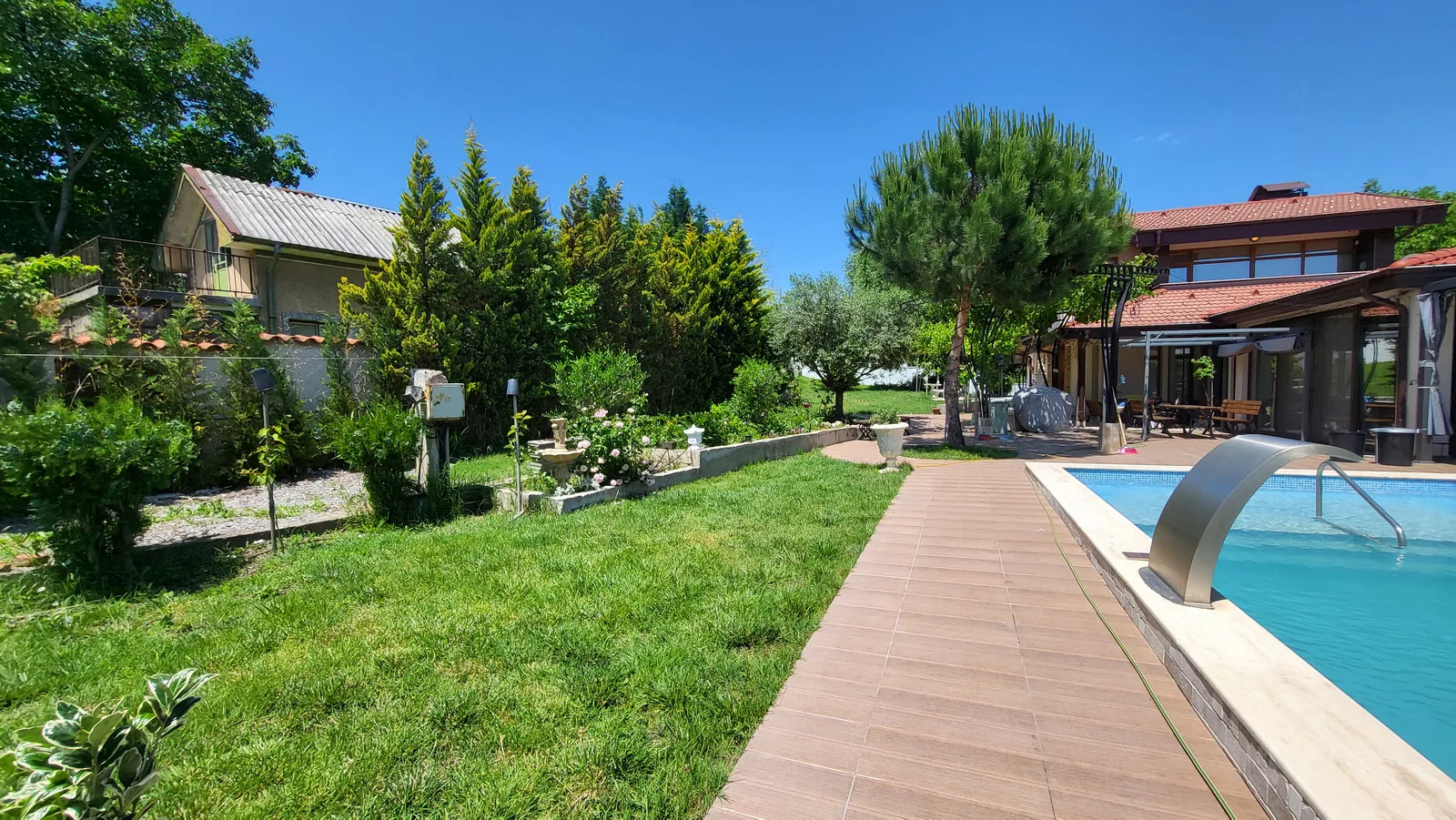
If you are planning a swimming pool, do not think only about the water. Instead, think about the whole scene around it.
Where will you sit? Where will shade fall during the hottest hours? How will people move around the pool? Where will the equipment stay? Where will you store the chemicals? How will you clean the area? What will the pool look like from the house? How will you use it in the evening? Finally, what will the plants look like in five years?
This post may contain affiliate links. As an Amazon Associate, I earn from qualifying purchases.
Poolside details worth planning early
Some poolside decisions are much easier to make before the area is finished: shade, large planters, evening lighting and privacy. These are not small decorative extras. They shape how comfortable the pool feels every day.
Conclusion: the pool should not stand apart from the garden. When you plan the area around it well, it becomes a natural part of the outdoor space. Otherwise, it remains only a water feature that constantly needs another small fix, another object or another “temporary” solution.