
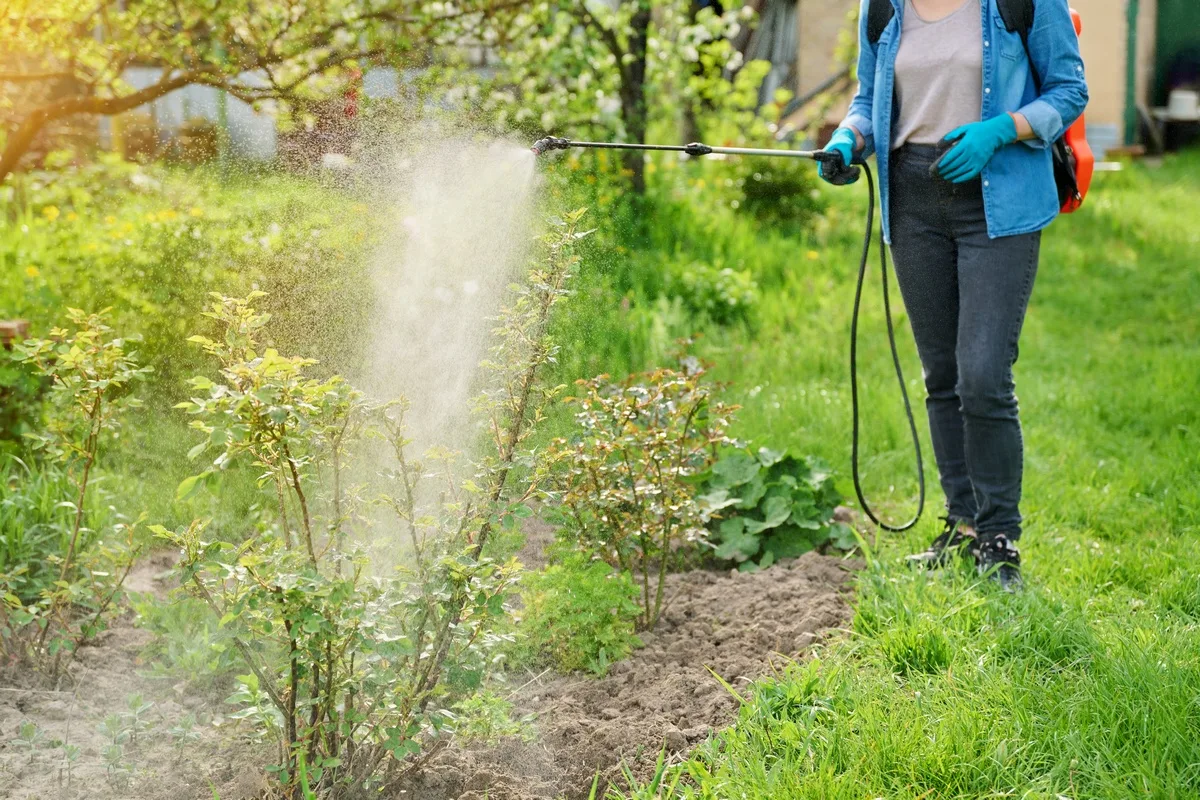
Roses are very good at showing us when something is wrong. The problem is that a single yellow leaf can mean at least five different things.
That is why one of the most useful habits with roses is not immediately reaching for a treatment, but first looking at the whole plant.
What does the new growth look like? Does the problem begin at the bottom or at the top? Are there spots? Are there insects? Is the soil too wet? How long has it been since the rose was fed?
First identify the problem. Then decide whether treatment is even necessary.
Start with the symptoms
The first step is not to assume that every symptom means disease.
Yellow leaves: not always a diseaseYellowing is one of the most common warning signs, but by itself it is not a diagnosis.
The cause may be:
If only a few older leaves near the bottom are turning yellow while the new growth looks healthy, there is often no reason to worry.
But if yellowing spreads across the entire plant or appears together with spots, distorted growth, or weak development, then it is time to look for a specific cause.
If you suspect a feeding problem: Feeding and Caring for Roses Through the Seasons
Common fungal diseases of roses
Spots and visible coatings point us toward a more specific type of problem. Even then, it helps to look at the entire plant rather than one leaf in isolation.
Black spotBlack spot is one of the easiest rose diseases to recognize.
Dark spots appear on the leaves, often followed by yellowing around them. In a severe case, the leaves may drop and the plant can become weakened.
Start with a few practical steps:
- collect affected fallen leaves;
- remove heavily infected plant material;
- improve air circulation;
- avoid repeatedly wetting the foliage;
- use an appropriate fungicide if needed, following the label.
I do not leave infected leaves under the bush thinking, “nature will take care of them.” Sometimes nature does. Along with the spores for next season.
Prevention also begins with plant selection. Some rose varieties are naturally better suited to certain climates and growing conditions than others.
Choosing disease resistance as one of the criteria when buying a rose does not make the plant immune, but it can reduce the amount of intervention needed later in the garden.
This post contains affiliate links. As an Amazon Associate, I earn from qualifying purchases at no extra cost to you.

If disease resistance is one of your priorities, the Heirloom Roses Amazon Store is a useful place to compare live own-root roses presented as hardy or disease-resistant varieties.
No rose is completely disease-proof. Airflow, sanitation, appropriate watering, sensible feeding, and correct diagnosis still matter. Check the individual variety, current availability, mature size, and USDA hardiness zone before ordering.
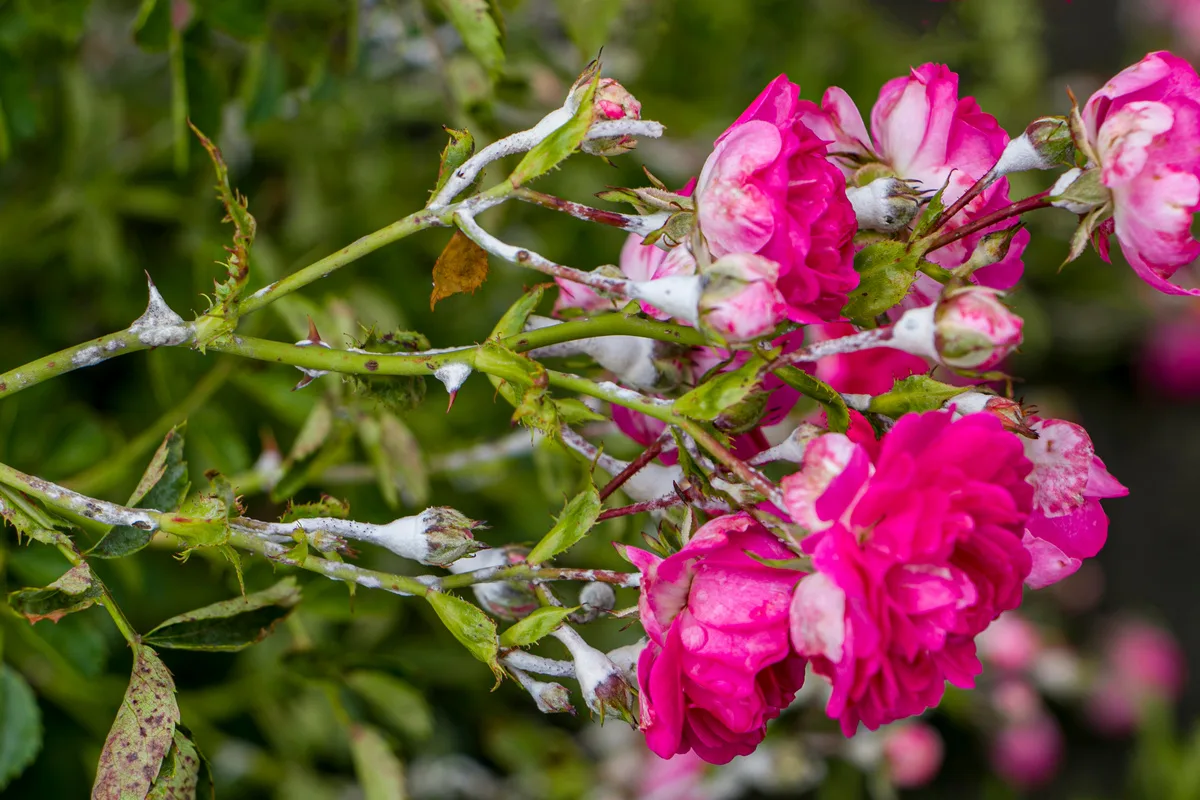
Powdery mildew appears as a whitish coating on leaves, young shoots, and sometimes flower buds.
Young leaves may become distorted, and growth can slow down.
Its development is often encouraged by a combination of unfavorable conditions, dense growth, and temperature fluctuations.
The first steps are to remove badly affected parts, improve airflow around the plants, and watch the new growth. If the problem becomes serious, an appropriate fungicide may be necessary.
Always treat according to the label of the specific product rather than following a universal homemade recipe.
Rose rust can appear as yellowish or orange growths, often on the undersides of the leaves.
In a severe case, leaves may turn yellow and fall prematurely.
As with other fungal diseases, start with sanitation - remove infected leaves, do not leave them around the plants, and maintain good air circulation.
If the problem becomes serious, use a product approved for that specific use and follow the label instructions.
Common rose pests
With pests, sometimes the culprit is obvious. Other times, we notice the damage first and only then find what caused it.
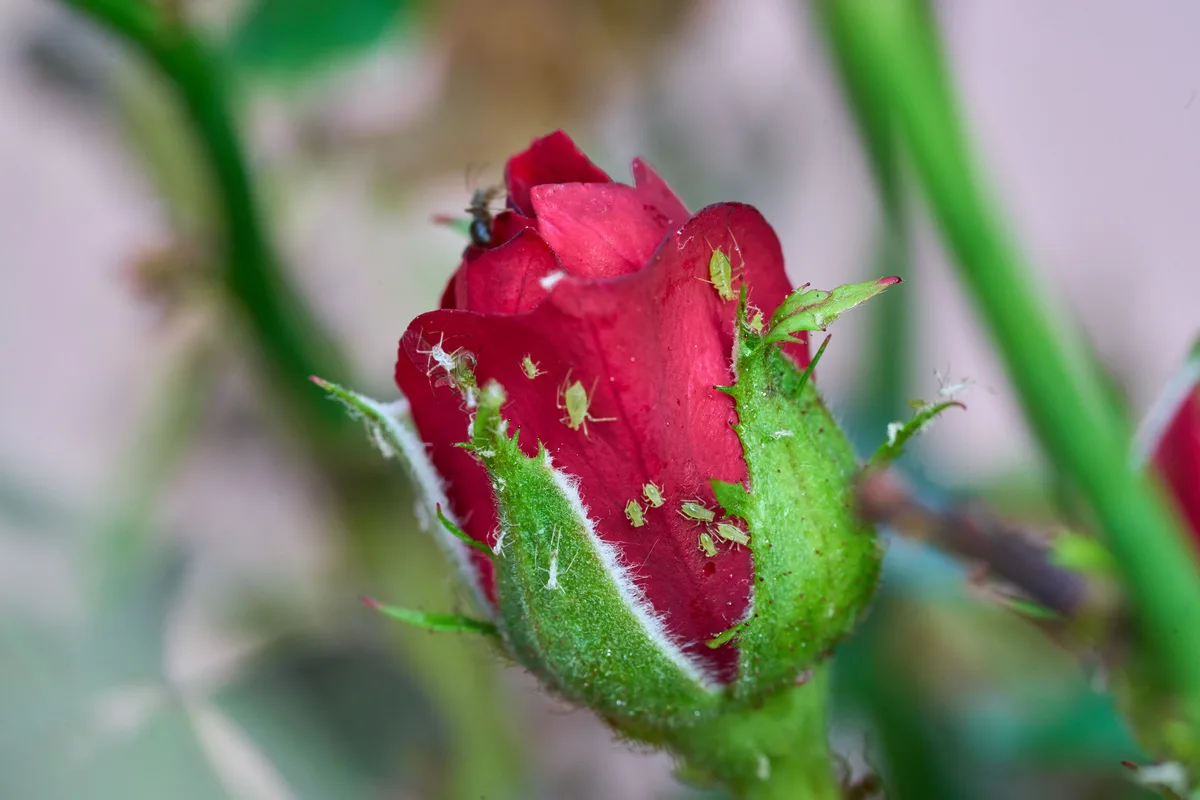
AphidsAphids are relatively easy to spot. They usually gather on tender shoot tips, young leaves, and flower buds.
With a light infestation, they can often simply be removed by hand or washed off with a stream of water.
Before reaching for an insecticide, it is worth looking at how serious the problem actually is.
Gardens also contain natural helpers, including ladybugs and other predatory insects, so every aphid does not automatically require spraying.
Spider mite damage is sometimes noticed later.
Leaves may look faded, develop fine pale speckling, or gradually take on a bronzed appearance.
With a heavier infestation, very fine webbing may also appear.
Spider mites are not insects. That means an ordinary insecticide will not necessarily solve the problem. Once an infestation is confirmed, choose an appropriate miticide approved for the specific pest and plant, following the label.
Thrips are tiny and can be harder to notice than aphids.
They often damage flowers and young tissue. Petals may develop discolored, distorted, or brown areas, and buds may fail to open normally.
Again, the first step is making sure that thrips are actually the problem.
For serious infestations, use an appropriate approved product while also considering the presence of pollinators.
Choosing the right treatment
Different problems require different approaches. That sounds obvious, but this is exactly where many mistakes happen.
Fungicide, insecticide, or miticide?That does not mean we use a product simply because we have noticed a problem.
First identify what is affecting the rose. Then check whether the product is approved for that specific plant and pest or disease, and use it exactly as directed on the label.
When copper treatments make senseDo not increase the concentration because you think it will “work better.” With garden treatments, more does not mean more effective.
Copper-based products have a place in plant protection, but they are not a universal solution for every spot on a rose leaf.
They may be appropriate in certain situations depending on the specific product, the season, and the manufacturer's instructions.
In some fall or early spring care programs, they may be used as part of a broader preventive approach.
But “copper treatment” does not automatically mean “spray everything right now.”
For fall rose care: How to Prepare Roses for Winter: Fall Care Step by Step
If you have two or three roses, a small hand sprayer is usually more than enough.
With twenty, thirty, or more plants, the situation is different.
A battery-powered sprayer saves constant pumping and makes it easier to maintain a more consistent spray when treating many plants.
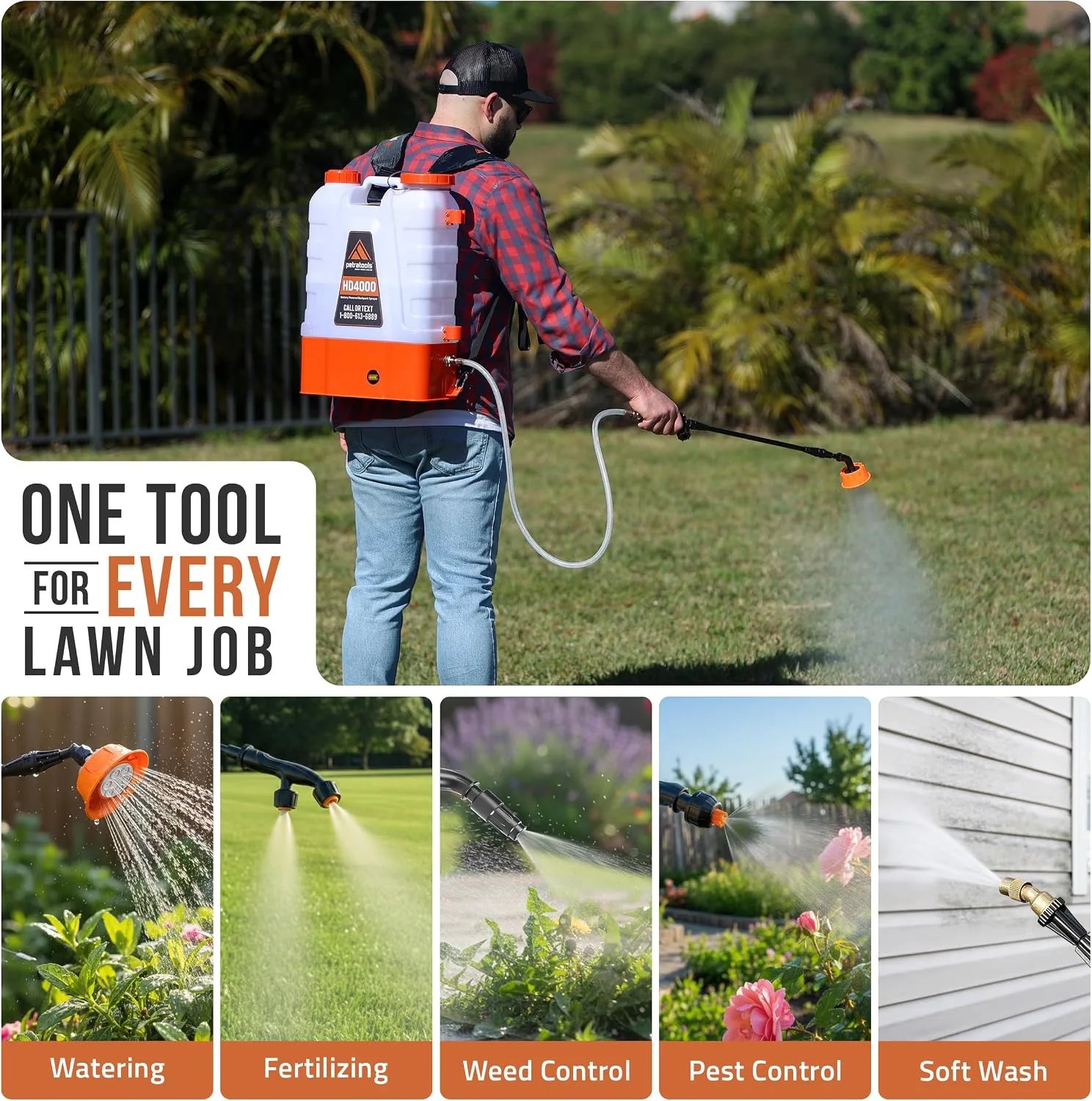
If you grow a large number of roses, a battery-powered backpack sprayer can reduce the constant pumping required with a hand sprayer and make it easier to apply an appropriate treatment evenly.
The sprayer does not tell us which treatment to use. Diagnose the problem first, choose a product legally approved for the intended use, follow its label, and use the specified personal protective equipment.
Prevention starts before treatments
Several simple habits can reduce problems before we ever open the cabinet with plant-protection products.
For proper pruning: Pruning and Propagating Roses: When to Prune and How to Take Cuttings
For seasonal feeding: Feeding and Caring for Roses Through the Seasons
Quick rose problem diagnosis
| What you see | Possible cause | What to check first |
|---|---|---|
| Black spots + yellowing | Fungal disease | Leaves, moisture, and infected debris |
| White coating | Powdery mildew | New growth and air circulation |
| Yellow leaves without spots | Water, nutrition, or root problems | Soil and the overall condition of the plant |
| Clusters of tiny insects on buds | Aphids | The severity of the infestation |
| Fine pale speckling and webbing | Spider mites | The undersides of the leaves |
| Damaged or discolored flowers | Possible thrips | Buds and petals |
What not to do
- Do not spray everything preventively at the same time.
- Do not mix products unless the manufacturer specifically allows it.
- Do not increase the dose on your own.
- Do not treat flowering plants without considering the risk to bees and other beneficial insects.
- Do not assume that every yellow leaf means disease.
Most importantly, do not try to make your roses sterile. They live in a garden.
Insects will land on them, an occasional leaf will be damaged, and after a heavy rain they will not look like a catalog photo.
The goal is healthy, resilient plants, not perfection every day of the season.