
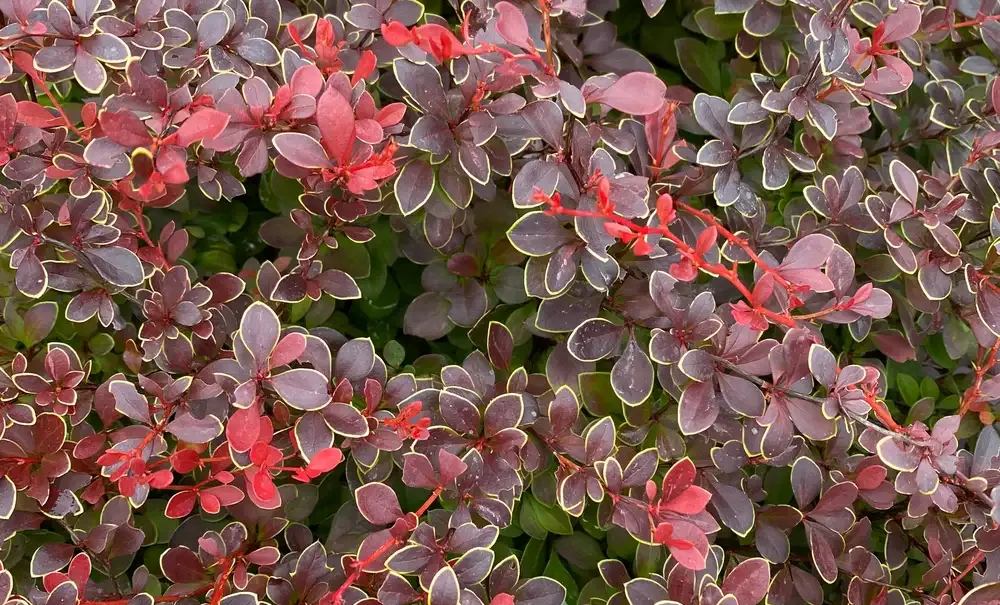
Barberry is one of the most practical ornamental shrubs for the garden. It is colorful, resilient, easy to shape and thorny enough to be not only beautiful, but also useful as a protective hedge.
In the “Designer Accents in the Garden” series, barberry has a very clear role. It is not delicate like azalea, not airy like ornamental grasses and does not create a big spring scene like magnolia. Its strength is in color, structure and contrast.
This is a shrub that can be a low border, a bright accent, a dark contrast next to light greenery or a practical thorny boundary. Barberry is especially useful in gardens where we want decorative effect without overly complicated maintenance.
What Is Barberry?
Barberries are ornamental shrubs from the genus Berberis. There are deciduous and evergreen species, but in gardens the most commonly used are the deciduous colored-leaf cultivars of Berberis thunbergii. They are valued for their red, purple, yellow, orange or variegated leaves.
Many cultivars are compact and suitable for small gardens, borders and planting beds. Others can become taller and be used for hedges or stronger color accents. In spring, barberry has small yellow flowers, and in autumn some cultivars produce red berries, adding another seasonal detail.
Barberry is a little like a good punctuation mark in the garden — it does not take up the whole page, but it emphasizes the important places.
Why Barberry Is Valuable in Garden Design
The greatest advantage of barberry is the color of its foliage. Many shrubs are simply green for most of the season, but barberry can bring red, burgundy, golden or orange tones from spring onward.
This makes it very useful in compositions that lack contrast. A dark red barberry next to light green grass or silvery santolina immediately changes the feeling. A golden cultivar next to dark conifers or a purple ornamental plum can also look very striking.
Barberry also has a practical side. Its thorns make it suitable for protective plantings — around boundaries, low fences, places where we do not want easy passage, or as a dense but decorative hedge.
This post contains affiliate links. As an Amazon Associate, I earn from qualifying purchases at no extra cost to you.
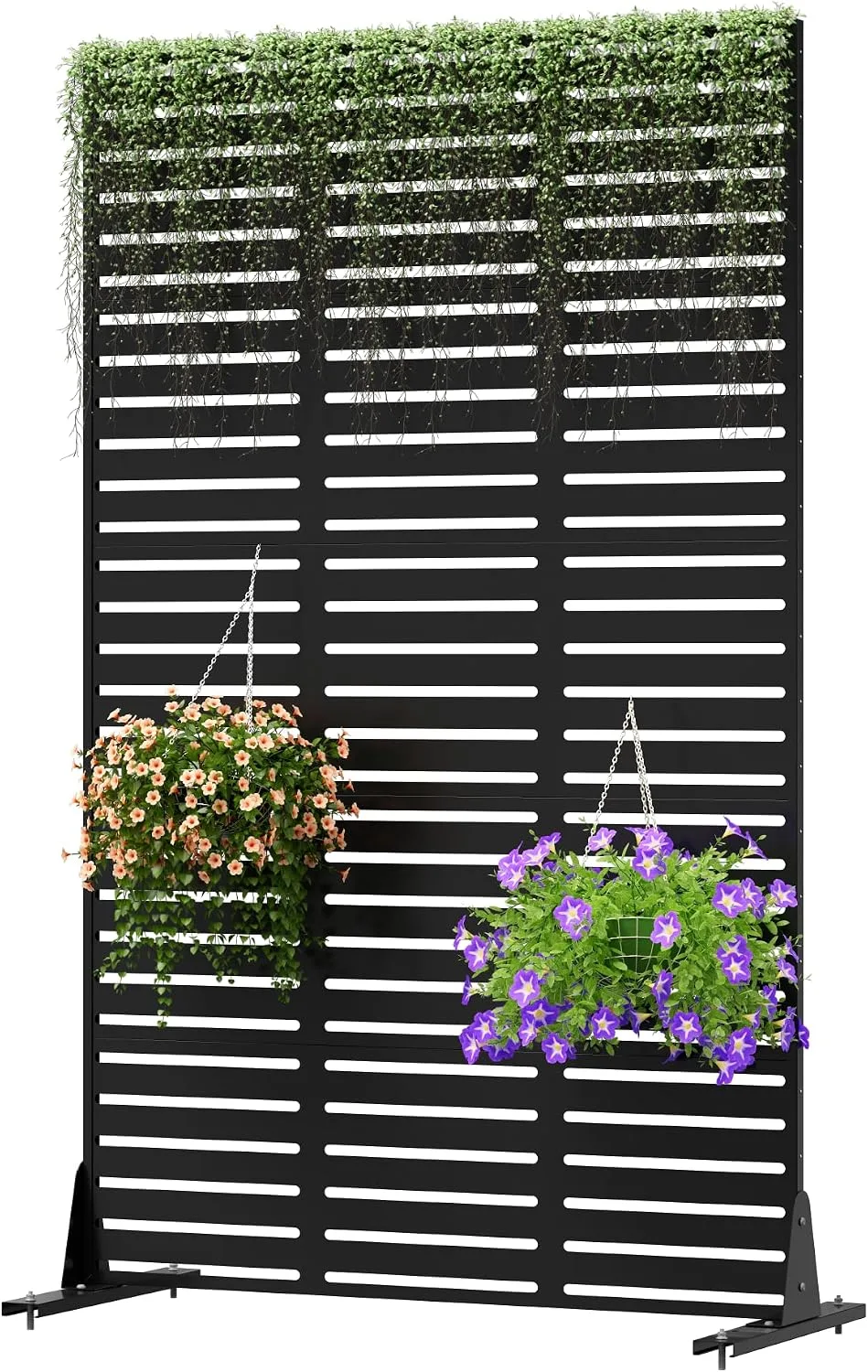
Barberry is often used where a garden needs both definition and a little protection. Its thorny growth works well along boundaries, while a solid visual element behind the planting can make the same area feel more deliberate and private.
This freestanding Cofar metal screen can be used on a terrace, patio or garden boundary without relying on the shrubs themselves to provide complete screening. Barberry planted in front can then add foliage color and a softer planted edge to the structure.
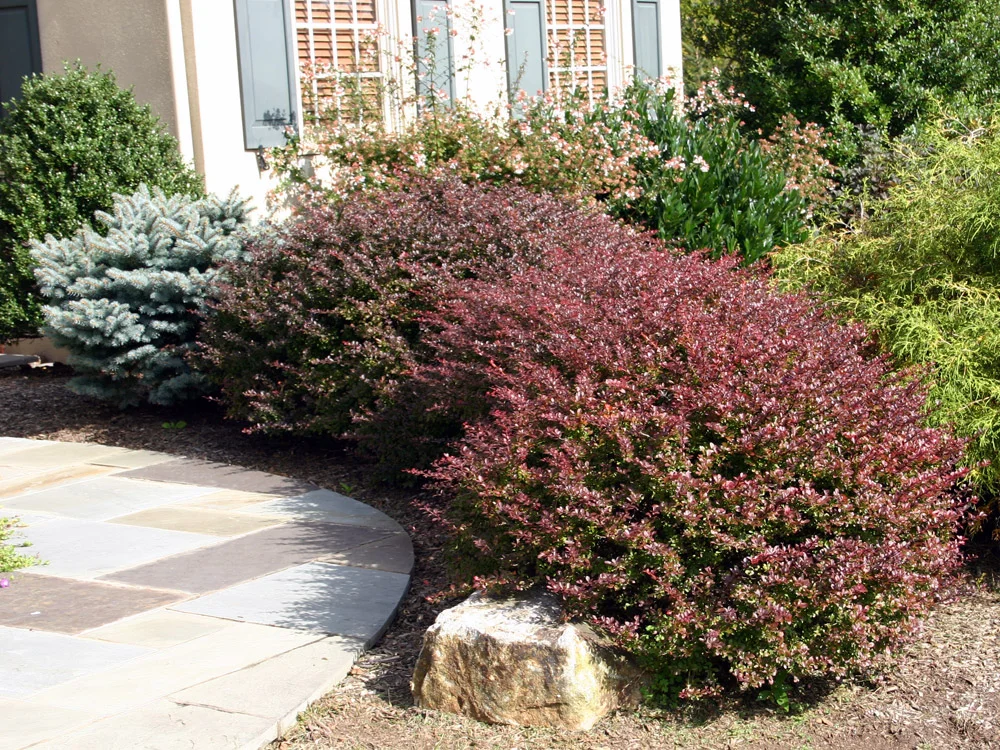
Where to Plant Barberry
Barberry loves sun. For colored-leaf cultivars, this is especially important because the leaves are more intense in bright light. The shrub can grow in partial shade, but the red and yellow tones often become weaker.
It is suitable for the front parts of planting beds, low borders, colorful groups, hedges, along paths, around entrance areas and in modern compositions with stone, gravel and ornamental grasses. Compact cultivars are very good for small gardens because they give a strong effect without taking up much space.
It is important to remember that most barberries have thorns. This is a plus if we want a protective shrub, but a minus if we place it too close to narrow paths, children’s areas or places where we often pass with bare hands and optimism.
Practical tip: if you want strong foliage color, choose a sunny place. If you plant it in shade, barberry may survive, but it will lose part of its decorative effect.
Popular Types and Cultivars of Barberry
The most common barberry in ornamental gardens is Berberis thunbergii and its cultivars. They are used for their compact growth, colorful leaves and relatively easy maintenance.
Berberis thunbergii 'Atropurpurea' is a classic red-leaved barberry. It is suitable for contrasting groups, hedges and larger borders. It has deep purple leaves and a good seasonal effect.
'Atropurpurea Nana' is a more compact form, very suitable for low borders, small gardens and foreground planting. It does not become too tall and is easy to shape.
'Golden Rocket' and other golden cultivars bring yellow-green to golden color. They look very good next to dark shrubs, conifers or purple plants.
'Orange Rocket' is a cultivar with upright growth and bright orange-red tones. It is suitable for more modern compositions and places where we want a vertical but compact accent.
| Cultivar | What It Looks Like | Where It Works Best |
|---|---|---|
| Berberis thunbergii 'Atropurpurea' | Purple leaves, medium size, strong contrast | Hedges, groups, background in colorful compositions |
| 'Atropurpurea Nana' | Compact, low, dark red shrub | Borders, small gardens, foreground planting |
| 'Golden Rocket' | Golden leaves, upright form | Contrast next to dark shrubs, modern borders, containers |
| 'Orange Rocket' | Orange-red leaves, vertical silhouette | Narrow beds, accents, compositions with grasses and stone |
Soil, Watering and Feeding
Barberry is not very demanding about soil. It grows best in well-drained, moderately fertile soil. It does not like constant waterlogging, but once rooted, it tolerates drier conditions fairly well.
In heavy clay soil, it is a good idea to add compost and improve the structure so that water does not remain around the roots. When planting, young plants should be watered regularly until they establish well.
After the first years, barberry usually does not require much care. Moderate feeding with compost in spring is enough. Excessive fertilizing is not necessary and may lead to overly strong growth at the expense of the compact form.
Pruning Barberry
Barberry tolerates pruning well, but the way it is pruned depends on its role in the garden. If we use it as a low hedge or border, it can be shaped more regularly. If it is an accent shrub in a composition, it is better to preserve its natural form.
Most often, dry, damaged or very old branches are removed. In older shrubs, rejuvenation pruning can be done by cutting some of the old branches low down to stimulate new growth.
When working with barberry, gloves are not a luxury, but common sense. The thorns are small, but convincing enough.
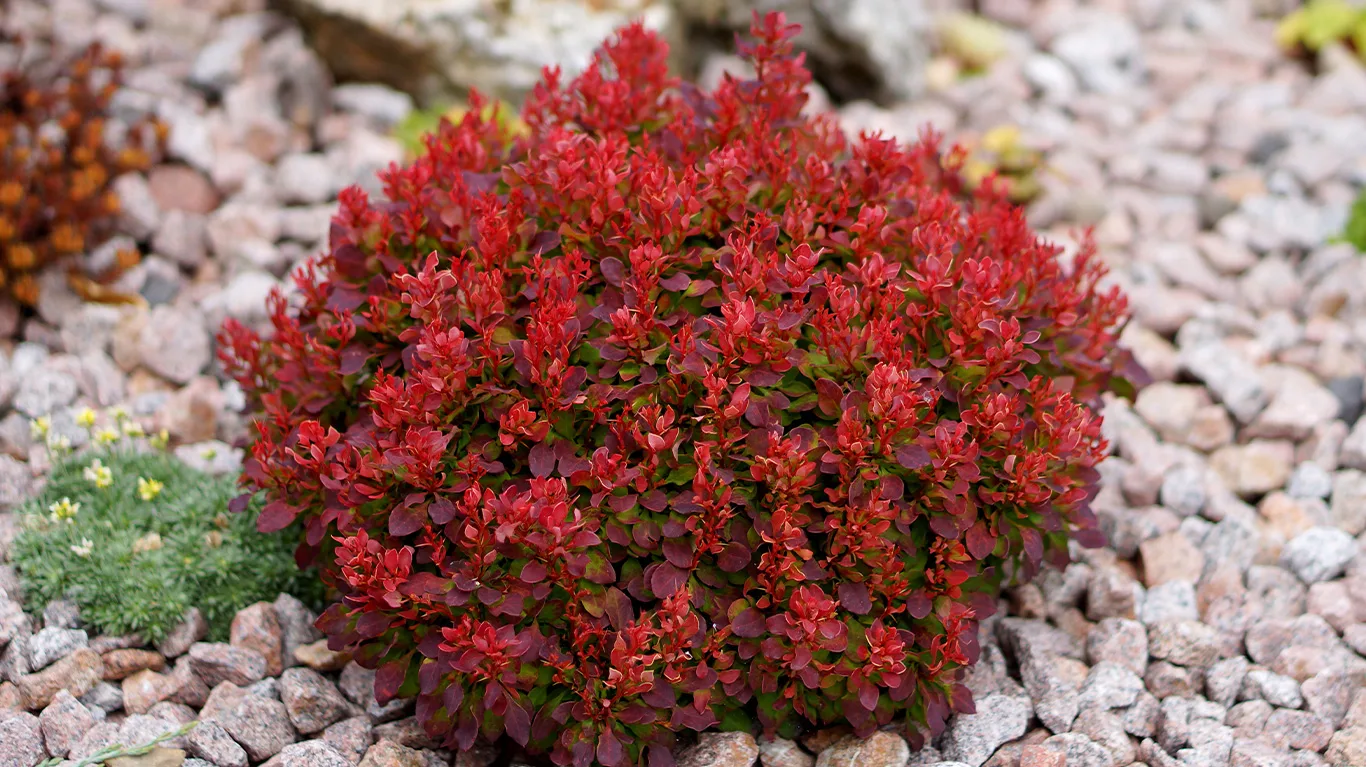
Can Barberry Be Grown in a Container?
Yes, especially compact cultivars such as 'Atropurpurea Nana', 'Golden Rocket' or 'Orange Rocket'. In a container, barberry can be a colorful accent around an entrance, terrace or small urban garden.
The container should be large enough, stable and have good drainage. In summer, plants in containers dry out faster, so watering should be monitored more carefully. In winter, it is best not to keep the container in a place with strong cold wind.
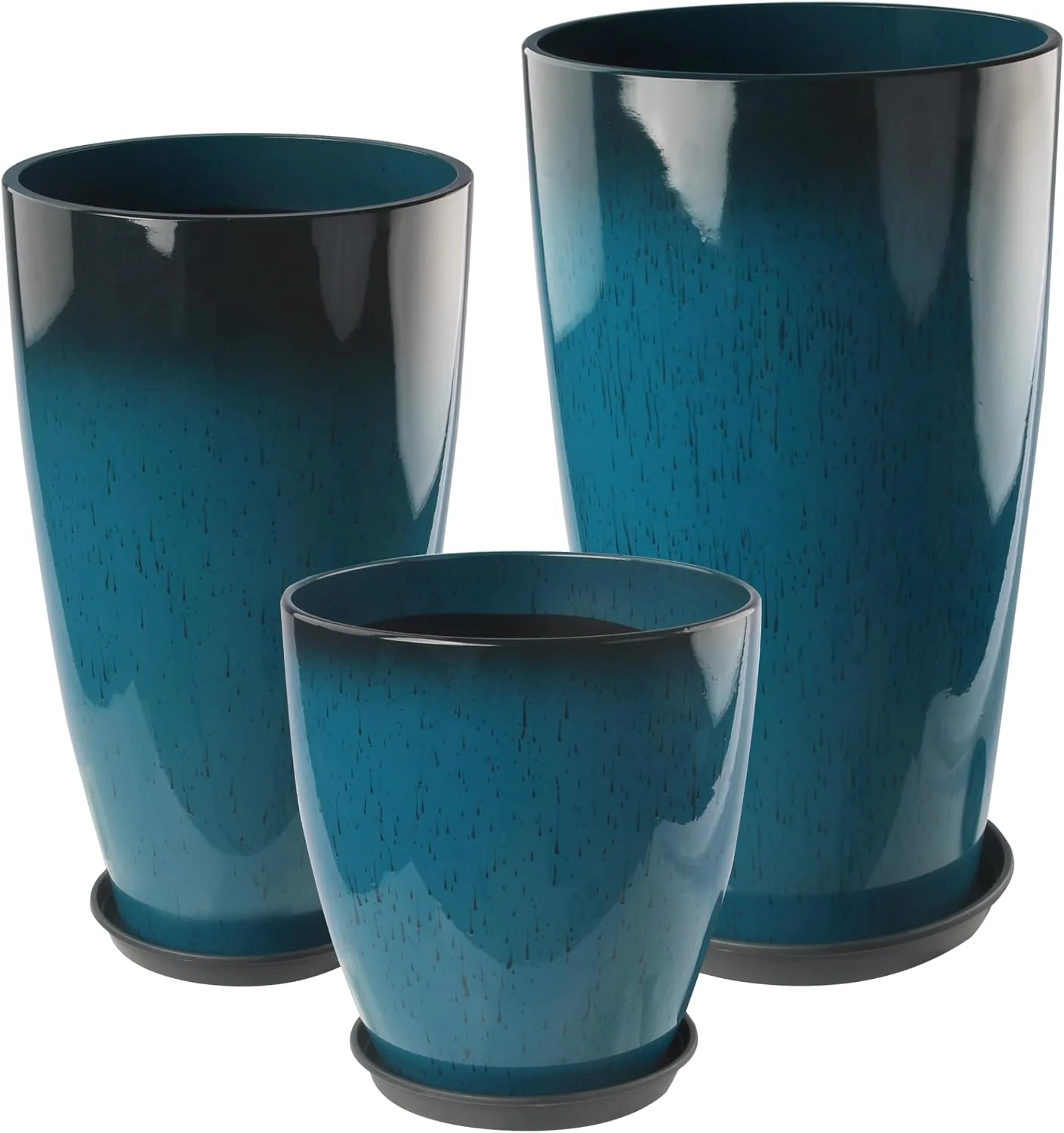
Upright cultivars such as 'Golden Rocket' and 'Orange Rocket' naturally suit taller containers because both the shrub and the pot create a clear vertical accent without needing much ground space.
This set includes three graduated blue planters that can be grouped near an entrance or terrace. With barberry, I would choose the final size according to the mature cultivar and make sure the container is stable, well drained and positioned away from narrow passages.
The Most Common Mistakes
The first mistake is planting a colored-leaf barberry in too much shade. This makes the leaves lose part of their strong color, and the shrub becomes less noticeable.
The second mistake is placing it too close to areas where we constantly pass. The thorns are useful for a protective hedge, but they are not pleasant next to a narrow path or around a seating area.
The third mistake is overly harsh shaping of shrubs chosen as natural accents. Barberry can be clipped, but not every cultivar looks best as a small thorny ball.
What to Combine Barberry With
Barberry combines beautifully with plants that emphasize its color. Red-leaved cultivars look good next to light green, silvery or golden plants. Golden cultivars stand out strongly next to dark conifers, purple ornamental plum or green shrubs.
Good partners include ornamental grasses, lavender, santolina, hosta, low conifers, roses, salvia, spirea, photinia, ornamental plum, Japanese maple and plants with silvery foliage.
In a modern garden, barberry can be used with gravel, stone, wood and clean lines. In more naturalistic borders, it works well as a color accent among perennials and grasses.
Is Barberry Worth Growing?
Yes, if you are looking for a shrub with color, structure and easy maintenance.
Barberry is a practical choice for small and medium-sized gardens, low borders, protective hedges and colorful compositions. It does not require complicated care, but gives a strong visual effect through much of the season.
This is a plant for people who want the garden to have contrast, not just different shades of green.