
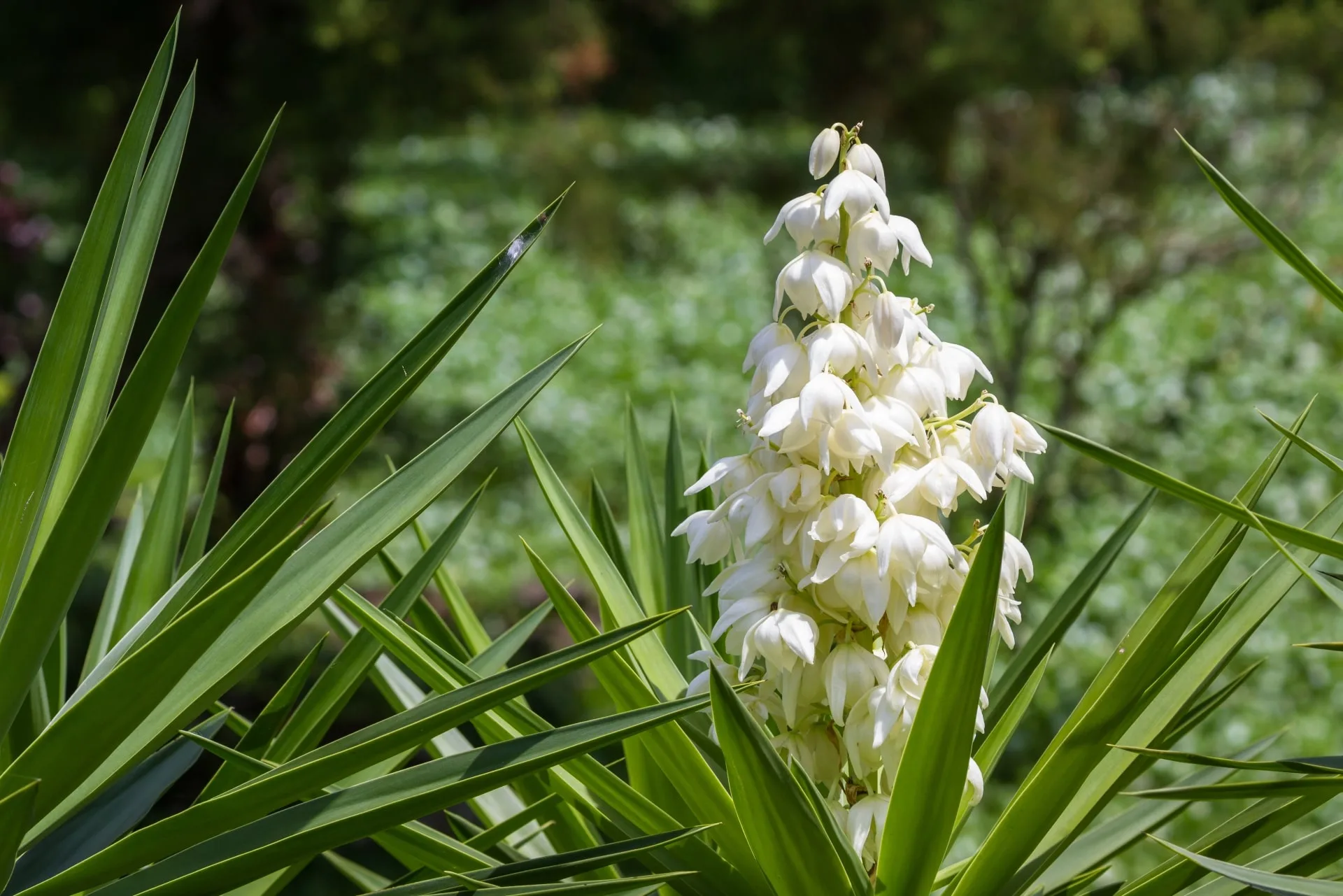
Yucca is one of the strongest architectural plants for sunny and dry places in the garden. It is not used for softness, but for form, contrast and clear presence — especially in modern, Mediterranean and drier garden compositions.
Among plants for sun, heat and easier maintenance, yucca has a different role from buddleia, lavender, perovskia or spirea. It is not a shrub that softens the border, nor a plant for an abundant cloud of flowers. Yucca is structure. It stands like a sculpture, even when it is not flowering.
This is exactly why it should be used carefully. One well-placed yucca can make a composition more modern, clearer and bolder. But if we put it in the wrong place — next to a narrow path, a children’s area or a soft romantic border — it can look harsh and inconvenient.
What Is Yucca?
Yucca is a perennial evergreen plant with stiff, sword-like leaves gathered in a rosette. Some species remain low and clump-forming, while others can develop a stem and a stronger silhouette over time. In gardens, hardy species such as Yucca filamentosa and its cultivars are most commonly used.
In summer, mature plants can flower with tall flowering stems covered in white or cream bell-shaped blooms. The flowering is impressive, but it is not the only reason to plant yucca. Its real value is in the leaf form and resilience.
Yucca is a plant for places that need character, not just another soft green mass.
Why Yucca Is Valuable in Garden Design
Yucca gives something many plants cannot — strong geometry. Its leaves are stiff, sharp and clearly defined. This makes it very suitable for modern gardens, dry gardens, gravel beds, compositions with stone, around pools and in Mediterranean-style planting.
It looks good where we want contrast between soft and hard forms. For example, next to ornamental grasses, yucca looks even more expressive because the grasses move and soften its strictness. Next to lavender, santolina and perovskia, it creates a drought-tolerant, silver-green composition.
Yucca is also valuable because it is relatively drought tolerant once established. This makes it suitable for hot places where we do not want plants that constantly suffer from lack of water.
Where to Plant Yucca
Yucca loves sun. It grows best in open, bright and warm places. The more sun it receives, the more compact and healthy it looks. In partial shade, it can survive, but it often loses part of the strength of its form.
It is suitable for southern and western exposures, dry beds, gravel compositions, around stone walls, near a pool, in modern gardens or as an accent in a more Mediterranean-style garden. It also looks good in raised beds, where drainage is better.
It is not a good idea to plant yucca immediately next to a narrow path, seating area or children’s zone. The leaves are stiff and can be sharp. Yucca needs space around it — not because it is fussy, but because of form and safety.
Practical tip: place yucca where it will be visible as an accent, but where you will not constantly need to pass tightly beside it. This is a beautiful plant, but not one to stroke.
What Soil Does Yucca Like?
The most important thing for yucca is good drainage. It tolerates dry conditions much better than wet ones. Heavy, waterlogged soil is one of the main reasons yucca looks poor or begins to rot.
It grows best in light to moderately fertile, well-drained soil. If the site is clayey, it is good to improve the soil with sand, fine gravel, compost and materials that make it more airy. A raised bed is also a good option.
Yucca does not need rich, constantly moist soil. Too much care sometimes harms it more than slight neglect. This is a plant that prefers a stable, dry and sunny place.
This post contains affiliate links. As an Amazon Associate, I earn from qualifying purchases at no extra cost to you.
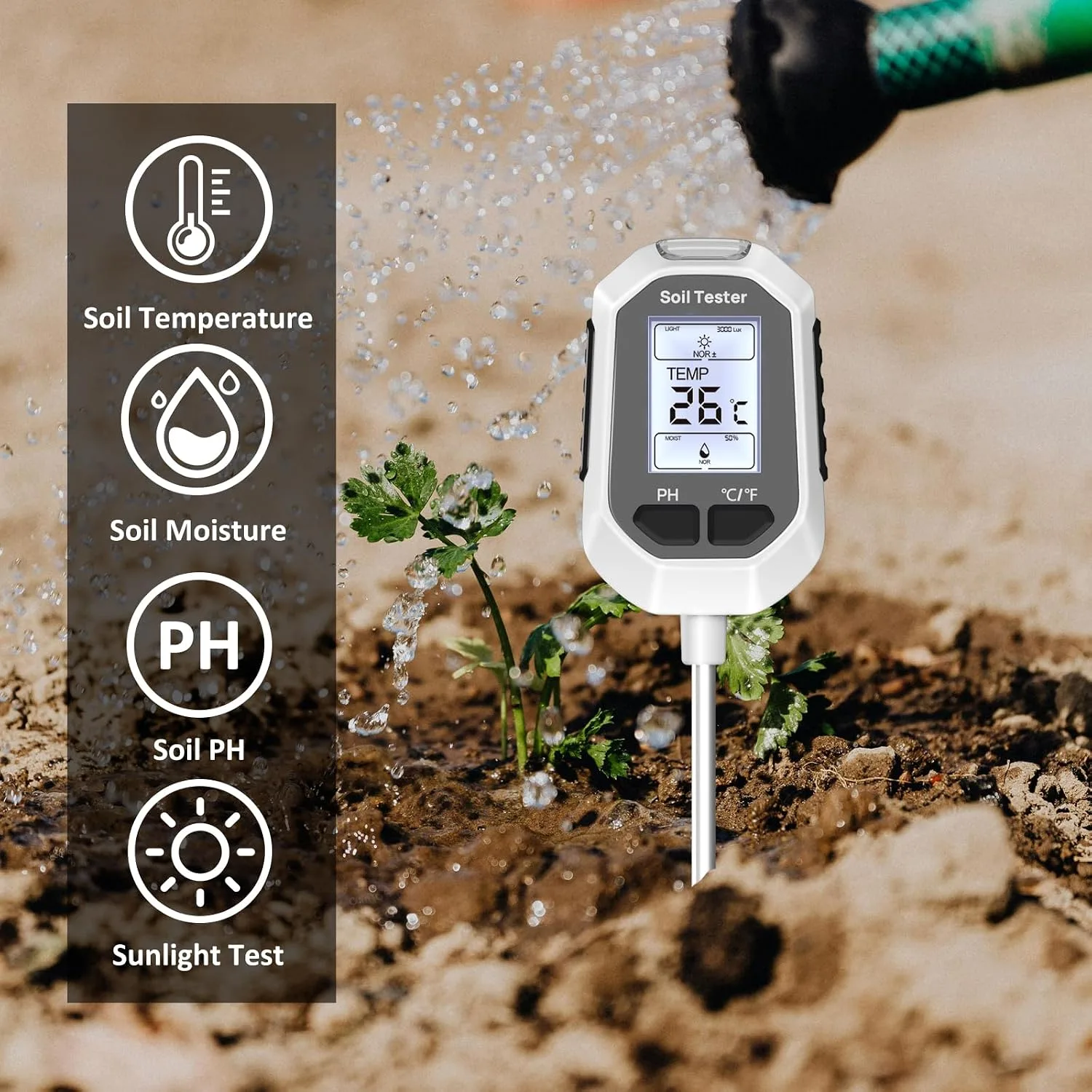
With yucca, too much water is usually more dangerous than a short dry period. When the surface looks dry but the soil below is still holding moisture, another watering can do more harm than good.
This digital tester checks soil moisture, temperature, pH and light. I would use it mainly as an extra reference when deciding whether the root zone has actually dried enough, rather than following a fixed watering schedule.
Popular Types and Cultivars of Yucca
Yucca filamentosa is one of the most commonly used hardy species for the garden. It has stiff green leaves, often with filaments along the edges, and can flower with tall white flower spikes. It is suitable for sunny beds and dry compositions.
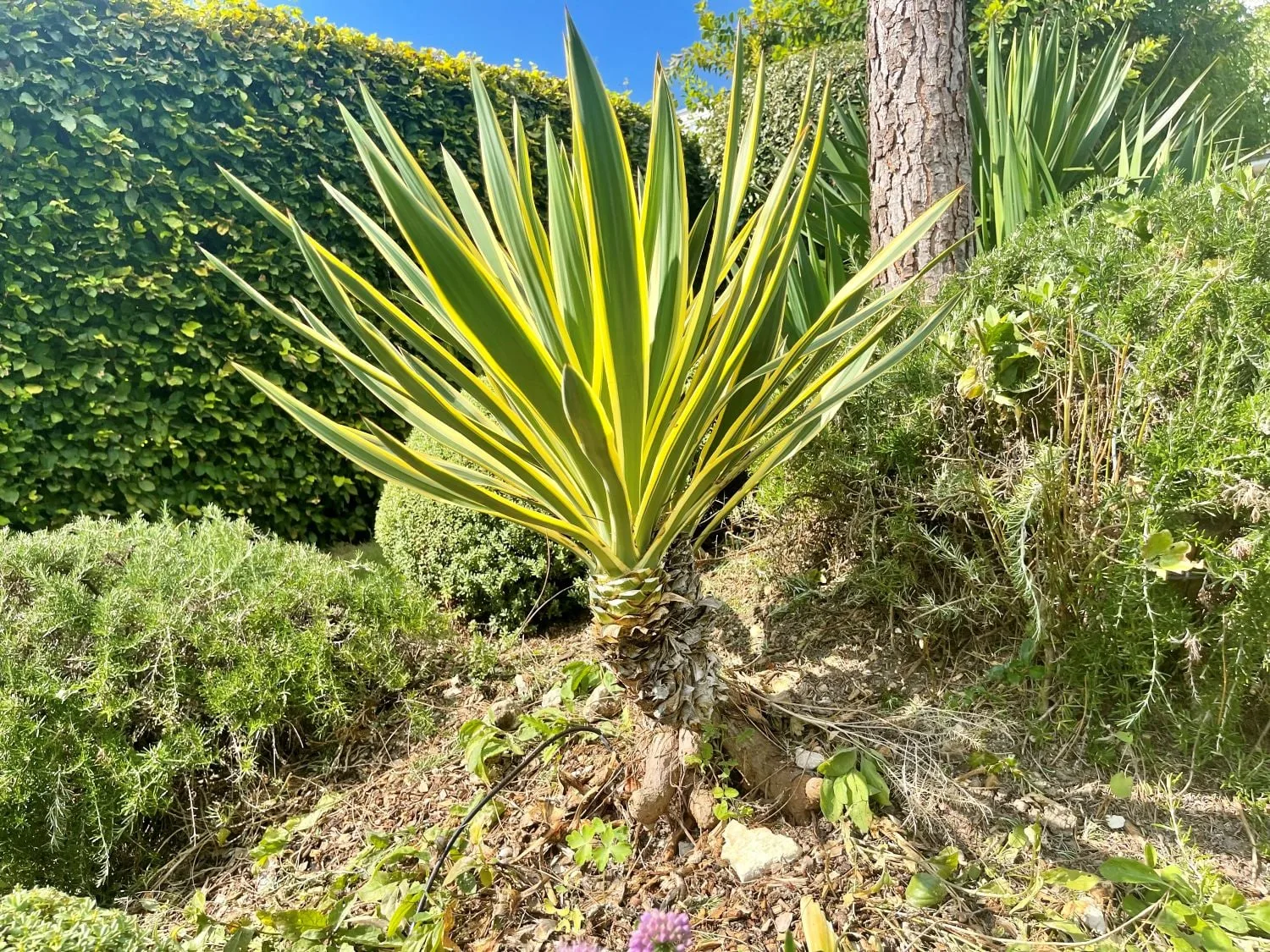
'Color Guard' is a very decorative cultivar with a yellow stripe along the center of the leaves. During the season, the colors may change slightly and the plant looks brighter than the ordinary green form.
'Bright Edge' has green leaves with a yellowish edge. It is suitable as a lighter accent in modern beds and stone compositions.
Yucca gloriosa can become larger and develop a stronger silhouette. It is impressive, but should be used with care because it takes up more space over time.
| Type / Cultivar | What It Looks Like | Where It Works Best |
|---|---|---|
| Yucca filamentosa | Green sword-like leaves, white summer flowering | Dry beds, sun, gravel, stone, modern gardens |
| 'Color Guard' | Variegated leaves with a yellow central stripe | Accent in borders, next to silvery and dark green plants |
| 'Bright Edge' | Green leaves with a yellowish edge | Sunny compositions, containers, small modern corners |
| Yucca gloriosa | Larger, with a stronger architectural silhouette | Larger gardens, standalone accent, Mediterranean style |
Watering and Feeding
After planting, young yucca should be watered until it roots well. After that, watering should be reduced. With established plants, overly frequent watering can be a bigger problem than drought.
In a hot summer, yucca can receive water from time to time, especially if it is in a container or has been planted recently. But it should not stand in constantly wet soil. If the leaves begin to soften or the base looks unstable, too much moisture is often the cause.
Feeding should be moderate. Yucca is not a plant that needs heavy fertilizing. A little compost or light feeding in spring is enough. Overly rich soil can make growth softer and less resilient.
Yucca Flowering
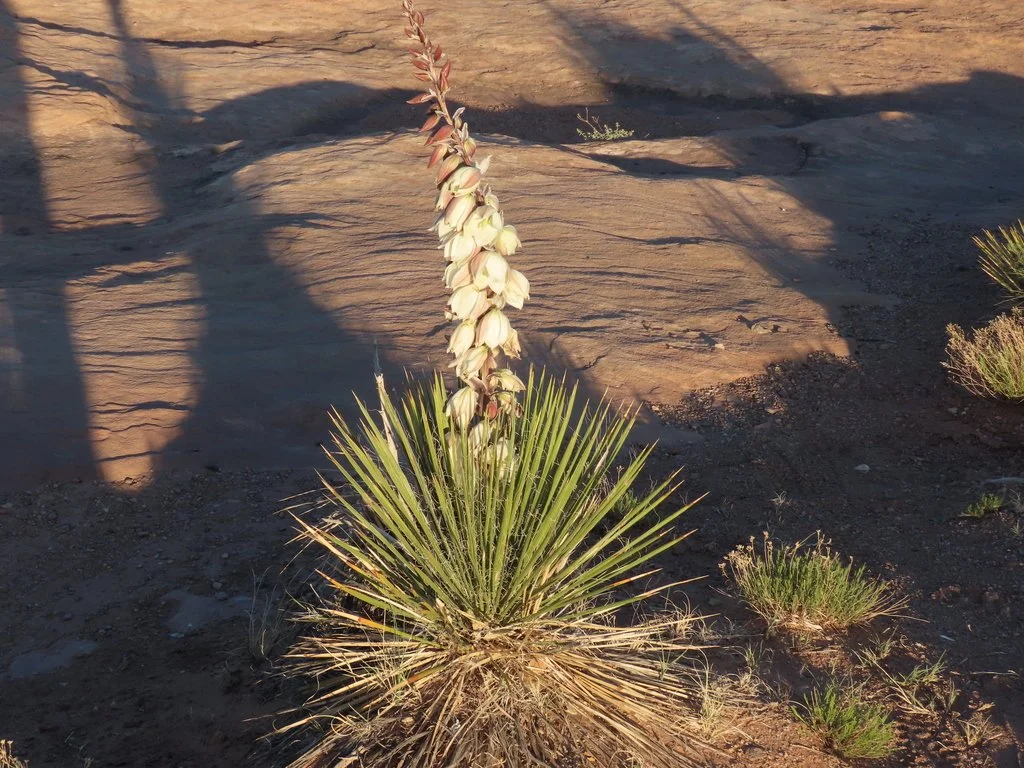
Yucca flowers on tall stems that rise above the leaf rosette. The flowers are white to cream, bell-shaped and very striking. Flowering usually appears on more mature plants and under good conditions.
If yucca does not flower, this does not always mean there is a problem. The plant may be young, may not have enough sun or may not be well established yet. Sometimes a site that is too wet or too shady also reduces the chance of flowering.
After flowering, the flower stalk can be cut low. The leaf rosette remains decorative afterward.
Pruning and Cleaning
Yucca is not pruned like a shrub. The main care is removing dry, old or damaged leaves. This should be done carefully, with gloves and preferably with a sturdy tool.
On some plants, old leaves remain lower down and can look untidy. If they are removed regularly, yucca looks cleaner and more architectural.
If the plant produces many offsets and becomes too large, some of them can be separated. This way yucca can be propagated or the size of the clump can be controlled.
Can Yucca Be Grown in a Container?
Yes, yucca can be grown in a container, especially the more compact forms. In a large pot, it looks very good on a sunny terrace, by an entrance, around a pool or in a courtyard.
The container should be stable, heavy and have excellent drainage. The substrate should be light, free-draining and should not hold water. In winter, it is important that the container does not stay constantly wet, because roots in pots are more vulnerable.
In a container, yucca has a strong decorative presence, but it should be placed so it does not interfere with movement. The sharp leaves are not pleasant next to narrow passages.
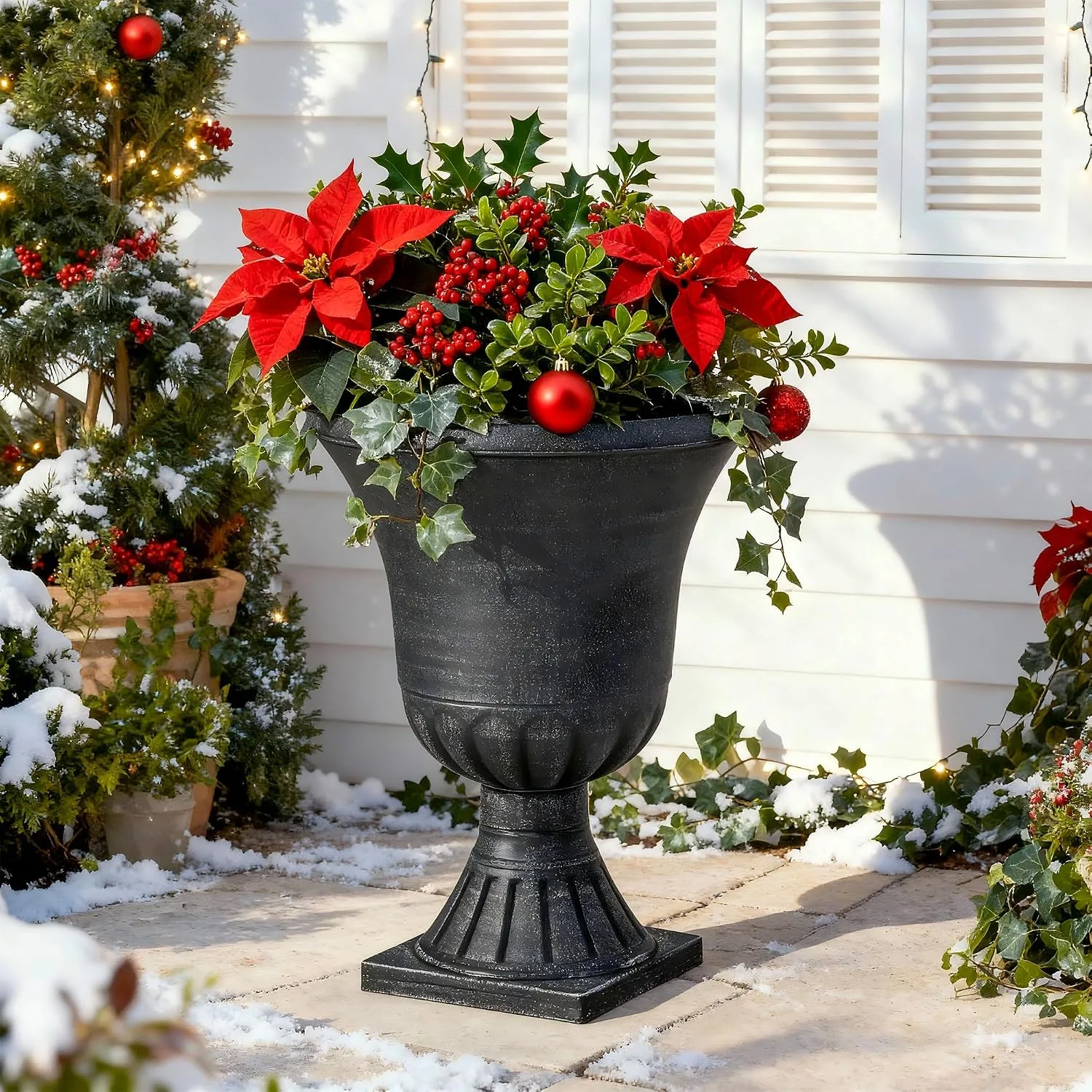
Yucca already has a sculptural silhouette, so it works well in a substantial container that gives it visual weight rather than disappearing underneath the foliage.
These 22-inch urn-style planters can work at an entrance, on a terrace or in a formal garden setting. For yucca, I would prioritize stability and drainage, and make sure the final pot is large enough for the particular cultivar without becoming top-heavy.
The Most Common Mistakes
The first mistake is heavy and wet soil. Yucca does not like waterlogging. The second is planting it in shade, where the form weakens and the plant looks less convincing.
The third mistake is placing it in the wrong spot — too close to a path, children’s area or seating place. The fourth is overwatering “out of care”. With yucca, good drainage and moderate care are more important than constant attention.
What to Combine Yucca With
Yucca combines best with plants that love sun, heat and well-drained soil. Good partners include lavender, santolina, perovskia, ornamental grasses, sedums, salvia, catmint, barberry, olive, rosemary and other Mediterranean plants.
In a modern garden, yucca looks good with gravel, stone, concrete, wood and clean lines. In a more Mediterranean composition, it can be combined with silvery foliage, aromatic plants and more drought-tolerant shrubs.
Balance is important. If we place only stiff, prickly and sharp forms around yucca, the composition can become aggressive. It is better to soften it with grasses, perovskia or lavender.
Is Yucca Worth Growing?
Yes, if you have a sunny, dry and well-drained place.
Yucca is a strong architectural plant that gives structure all year round. It tolerates heat, does not require complicated care and looks especially good in modern, gravel and Mediterranean compositions.
This is a plant for gardens that need clear presence, form and a little more character.