
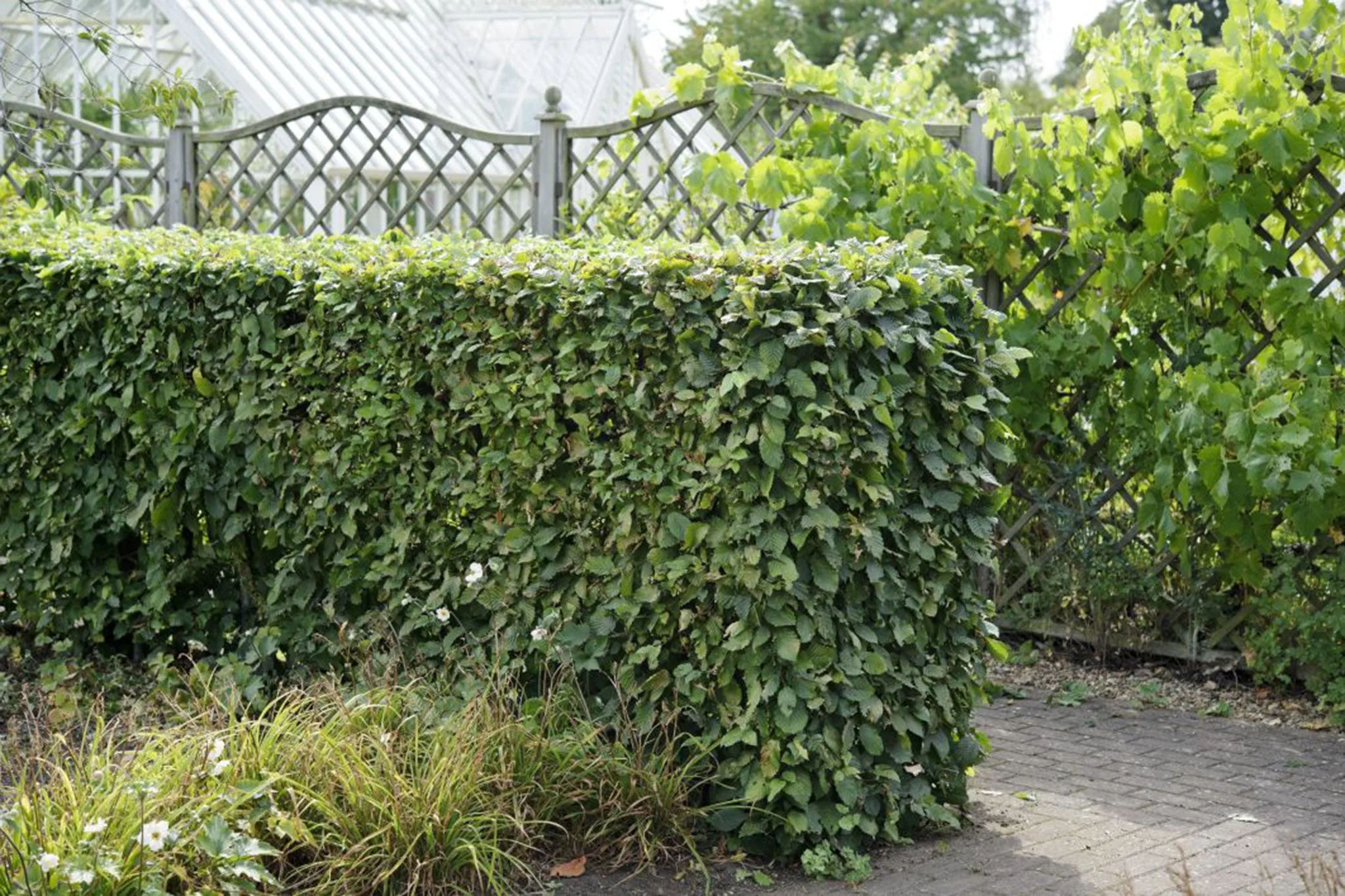
European Hornbeam – the hedge that makes a garden feel like a European estate
Some plants are beautiful because of their flowers. Others because of their color.
European Hornbeam is different.
Its beauty comes from structure.
The first time I noticed mature hornbeam hedges in old European gardens, I understood why landscape designers have used them for centuries.
They create something that is difficult to describe but immediately noticeable — order without feeling artificial.
Unlike many modern hedge plants, hornbeam feels connected to the landscape around it.
It doesn't look like a green wall placed in a garden. It looks like it belongs there.
The most elegant gardens rarely rely on flashy plants. They rely on structure.
What exactly is European Hornbeam?
European Hornbeam (Carpinus betulus) is a deciduous tree that is often clipped and maintained as a formal hedge.
For centuries it has been used throughout:
- French gardens;
- English estates;
- historic parks;
- and traditional European landscapes.
One reason for its popularity is its ability to create incredibly refined hedge forms while still feeling natural.
It can be shaped into a very formal line, but it does not have the stiff, plastic feeling that some evergreen hedges develop. That is exactly where its charm begins.
It feels more natural than many evergreen hedges
This is one of the reasons I find hornbeam so attractive.
Many evergreen hedges can feel rigid and repetitive.
Hornbeam changes throughout the seasons.
Its fresh green leaves in spring become deeper during summer and turn warm golden-brown in autumn.
That seasonal change gives the garden much more character.
It feels alive rather than static.
And sometimes that is exactly what a garden needs — not another perfect green wall, but a structure that still breathes with the seasons.
The fascinating winter feature nobody talks about
One of the most interesting qualities of hornbeam is that it often keeps many of its dry leaves throughout winter.
This means that even after autumn, the hedge continues providing:
- texture;
- privacy;
- structure;
- and visual interest.
The leaves eventually fall when new growth appears in spring.
It's a subtle detail, but one that makes hornbeam surprisingly useful throughout the year.
A great hedge doesn't disappear in winter. It continues shaping the garden.
Why designers love it so much
Hornbeam responds beautifully to pruning.
That allows gardeners to create:
- formal hedges;
- garden rooms;
- green walls;
- architectural shapes;
- and elegant outdoor spaces.
Despite this, it never feels overly artificial.
There is always a softness to it that many evergreen hedges lack.
This is why hornbeam works so well in gardens that need discipline, but not stiffness. It can draw lines, divide spaces, frame views, and still look like a living part of the landscape.
For this kind of hedge, a clean cut matters. A good pair of manual hedge shears helps keep the line sharp without making the hedge look brutally machine-cut.
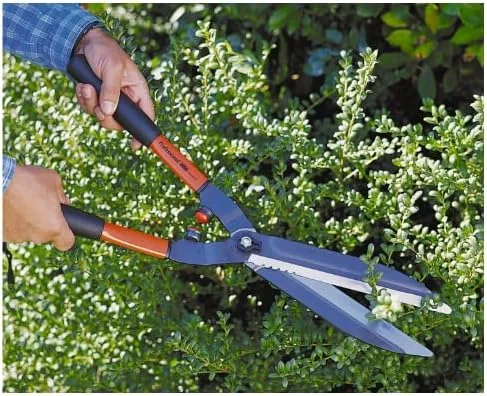
For hornbeam, I would choose proper manual hedge shears
European Hornbeam looks its best when it is shaped regularly and calmly. The beauty is in the line, the rhythm, and the structure — not in letting it grow wild for years and then trying to correct everything in one afternoon.
A solid pair of manual hedge shears is useful for keeping formal hornbeam hedges clean, soft, and controlled. It gives more precision than rough cutting, especially when you want that old-European-garden feeling rather than a rushed green wall.
European Hornbeam vs Thuja
European Hornbeam
Advantages:
- elegant and timeless appearance;
- beautiful seasonal changes;
- retains many leaves in winter;
- excellent for formal pruning;
- more natural character;
- classic European aesthetic.
Disadvantages:
- not evergreen;
- requires pruning;
- slower visual impact when young;
- needs patience before it looks truly established.
Thuja
Advantages:
- year-round green screen;
- faster instant privacy;
- formal appearance.
Disadvantages:
- can feel artificial;
- little seasonal interest;
- more repetitive appearance;
- often looks copied from garden to garden.
How I would use hornbeam today
Personally, I think hornbeam looks best when it is allowed to become part of the architecture of the garden.
It works beautifully around:
- gravel paths;
- stone terraces;
- traditional homes;
- formal gardens;
- and naturalistic planting.
It creates a sense of permanence that very few plants can match.
I would use it where the garden needs rhythm and quiet authority — along paths, around seating areas, as a boundary between garden rooms, or as a soft formal backdrop for perennials and ornamental grasses.
The most beautiful hedges don't compete with the garden. They organize it.
Are there any disadvantages?
Yes, and they should be mentioned honestly.
Hornbeam:
- requires regular pruning;
- is not fully evergreen;
- takes patience to establish;
- and is often overlooked in favor of faster-growing options.
But I think many of those disadvantages disappear when you see a mature hornbeam hedge.
It is not the hedge for someone who wants an instant wall by next summer. It is the hedge for someone who wants the garden to become better with age.
My honest conclusion about European Hornbeam
The more gardens I visit, the more I appreciate plants that age gracefully.
Hornbeam is one of those plants.
It isn't trendy. It isn't exotic. And it doesn't try to impress you immediately.
Instead, it slowly becomes one of the most important elements in the entire landscape.
And perhaps that's exactly why so many of Europe's most beautiful gardens continue using it generation after generation.
To me, European Hornbeam is not just a hedge plant. It is a way to give the garden bones, rhythm, and that quiet estate-like feeling that no quick decorative trick can really replace.
This post may contain affiliate links. As an Amazon Associate, I earn from qualifying purchases.
