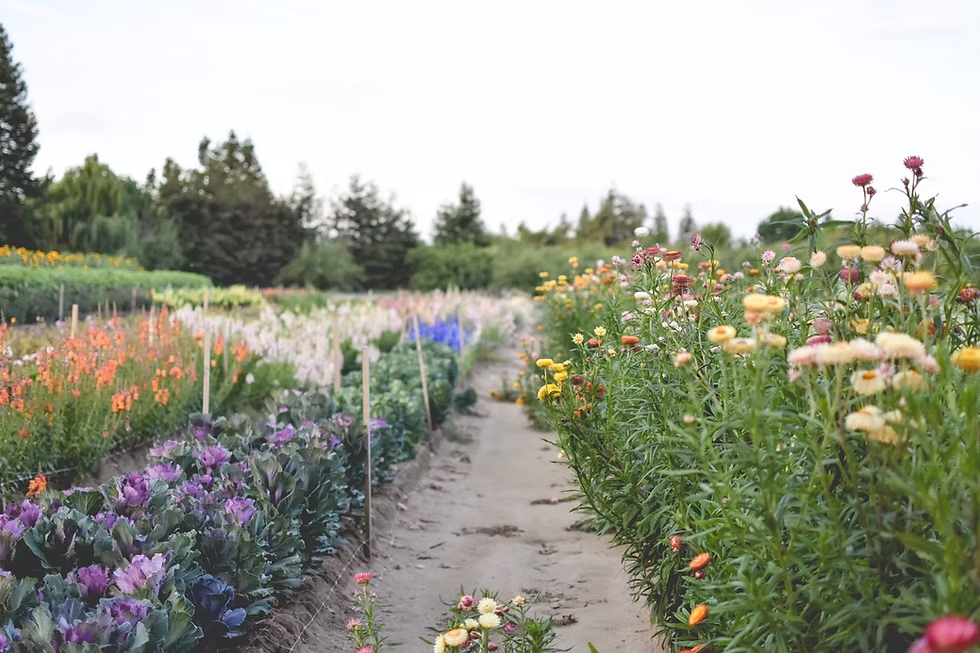
A flower farm does not begin with flowers. It begins with a sheet of paper, a few measurements and at least one realistic conversation with yourself about how much time, space and water you actually have.
The beautiful varieties come later. If we want the garden to produce flowers for bouquets rather than simply be a beautiful place, we need to plan it as a working system.
When I first started thinking about my own flower farm, I imagined dahlias, cosmos and enormous bouquets gathered from the garden. I quickly realized, however, that if I wanted it to become more than a hobby, I also had to start thinking like a grower.
A flower farm is a calendar of color, but behind that calendar are beds, water, paths, quantities and quite a lot of organization.
I Look at the Site Before I Look at the Catalog
Before buying seeds, bulbs or tubers, I want to know exactly what kind of site I am working with. Most cut flowers perform best in an open, sunny position, usually with at least six to eight hours of direct sunlight a day.
I watch where the morning light falls, which areas remain sunny in the afternoon, where water collects after rain and which parts of the site are constantly exposed to strong wind.
These things sound obvious until you plant two hundred flowers somewhere the hose cannot reach or where water sits after every heavy rain.
Measure the usable area. Mark the water source, entrance, shaded spots, prevailing wind direction and the easiest route from the growing area to the place where you will handle and arrange the flowers.
I Do Not Use Every Inch of Space for Flowers
This is one of the differences between a decorative garden and a small flower farm. If we fill every square foot with plants, very quickly there is nowhere to walk, nowhere to put a bucket and no comfortable way to reach the middle of a bed.
In addition to growing beds, you need practical paths and some working space. Depending on the size of the farm, even a small area for buckets, tools, sorting and temporarily holding cut flowers can make the whole system much easier to manage.
They should be narrow enough to reach the plants comfortably without constantly stepping into the growing soil.
I leave enough room for normal movement, buckets, irrigation lines and, when necessary, a garden cart.
Even a small place for sorting, cleaning and setting down buckets can completely change the way the farm functions.
Water Needs to Be Part of the Plan From Day One
In a small home garden, a hose and a little patience may be enough. Once the number of plants starts increasing, hand watering can quickly become one of the biggest drains on your time.
That is why I think about water while I am planning the beds themselves: where it will come from and how it will reach every growing area. Drip irrigation or another organized watering system can save an enormous amount of work, particularly during hot summer weather.
The larger the growing area becomes, the more important it is not to build a system that depends on standing outside with a hose every single day.
Then Comes the Soil
A beautiful variety cannot compensate for poor soil. For cut flower production, we need plants that can build healthy roots, strong stems and productive growth.
Most cut flowers perform well in fertile, well-drained soil with plenty of organic matter. When preparing new beds, I use compost and add well-decomposed organic material when needed.
If I were starting production on a more serious scale, I would also have the soil tested. That way, amendments and feeding are based on what is actually present or missing, rather than on a universal fertilizer recipe.
Soil may not be the most photogenic part of a flower farm, but it is probably one of the most important.
I Choose Crops According to How I Plan to Sell Them
This is something that is easy to overlook at the beginning. It is not enough for me to simply like a flower. I need to know what I intend to do with it.
If I want to sell mixed bouquets, I need a combination of focal flowers, smaller flowers, foliage and different textures. If the goal is to sell bunches of a single crop, the variety selection and quantities will look different.
Professional cut-flower varieties are often selected for practical characteristics such as:
- long, strong stems;
- good productivity;
- a useful shape for bouquet work;
- good vase life after cutting;
- a reasonably predictable flowering period.
The beautiful catalog photograph still matters. It is simply no longer the only criterion.
The Season Needs to Be Planned in Waves
The goal is not for the garden to look spectacular for two weeks in June. A flower farm needs continuity.
Some annual crops can be sown in several succession plantings. Other crops are combined according to their natural flowering season.
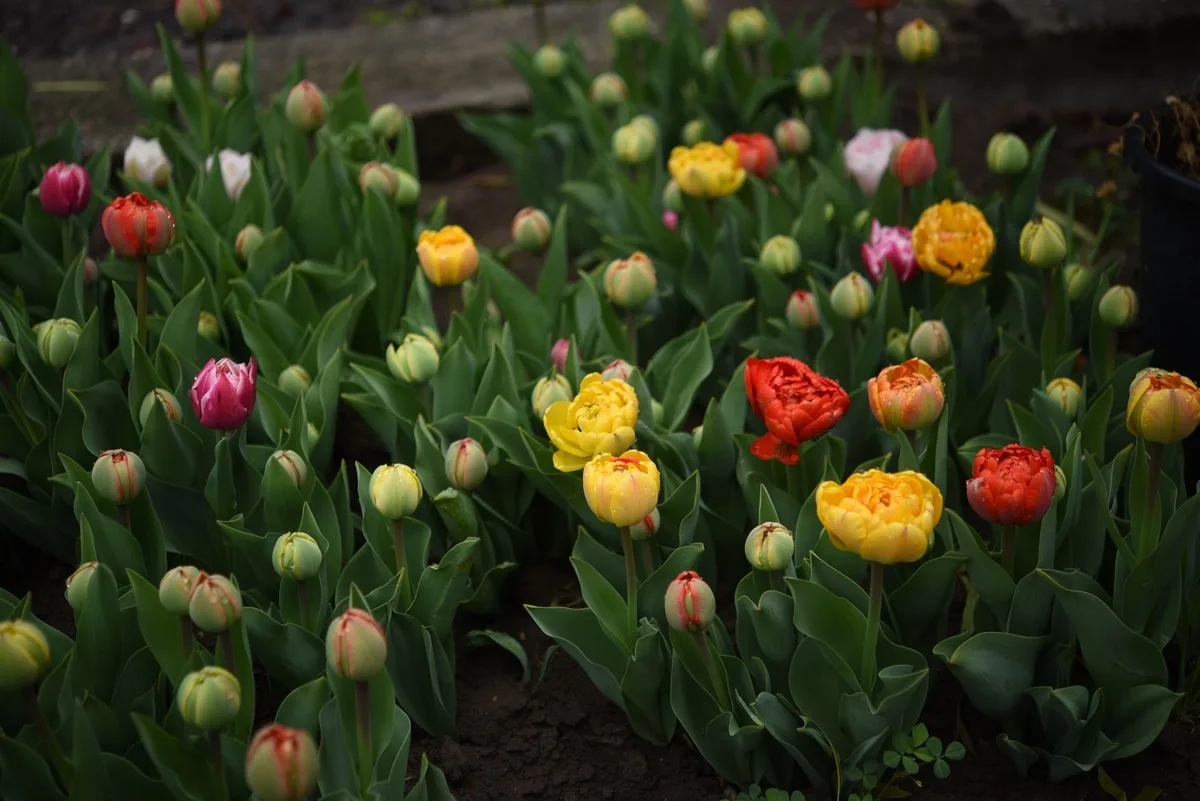
Bulbs and other early crops begin the season.
The first richer combinations of different flowers begin to appear.
This is often the period of greatest abundance, so the challenge is to prevent every crop from peaking at exactly the same time.
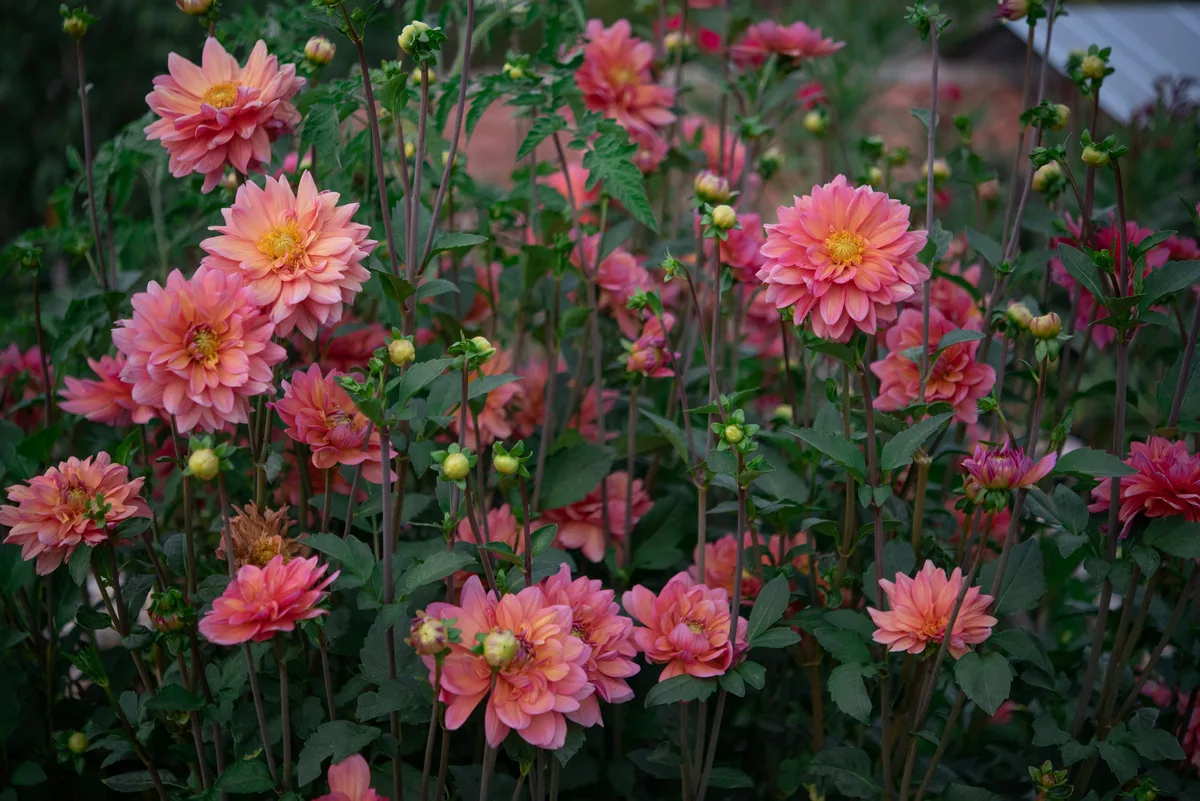
Dahlias and other late-season crops extend production as some of the summer flowers begin to slow down.
I Plan Quantities, Not Just Varieties
At the beginning, it is very easy to buy a small amount of twenty different things. For production, that is not always the most useful approach.
I would rather make the first season varied enough to learn what works, but simple enough to actually track the results.
- variety and supplier;
- sowing or planting date;
- bed area and approximate number of plants;
- start and length of flowering;
- number of usable stems;
- which varieties are actually easy to sell or use.
After one season, these notes are far more useful than memory. They show which crops deserve more space the following year and which simply looked wonderful in the catalog.
The Plan Does Not Need to Be Perfect
A flower farm will almost certainly not look in its second year exactly the way it was drawn in the first. That is normal.
Some varieties will be excellent. Others will dislike the site. Some may produce beautiful flowers but stems so short that they are difficult to use.
That is why I would begin on a relatively manageable scale: with enough plants to produce useful information, but not so many that one mistake can ruin the entire season.
A well-planned flower farm combines sunlight, good soil, water, practical beds, suitable varieties and a seasonal calendar. But the most useful plan is one that can change according to what actually happens in the garden.
The goal is not simply to plant as many flowers as possible. It is to create a growing space that we can maintain, harvest from and gradually develop into a functioning small business.
As I plan and develop my own project, I am collecting varieties, suppliers, seasonal calendars, bed layouts and real numbers in one place. Gradually, this is becoming a practical guide to starting a small flower farm.
If this topic interests you, you can leave your email through the signup form to hear when the guide is ready.