
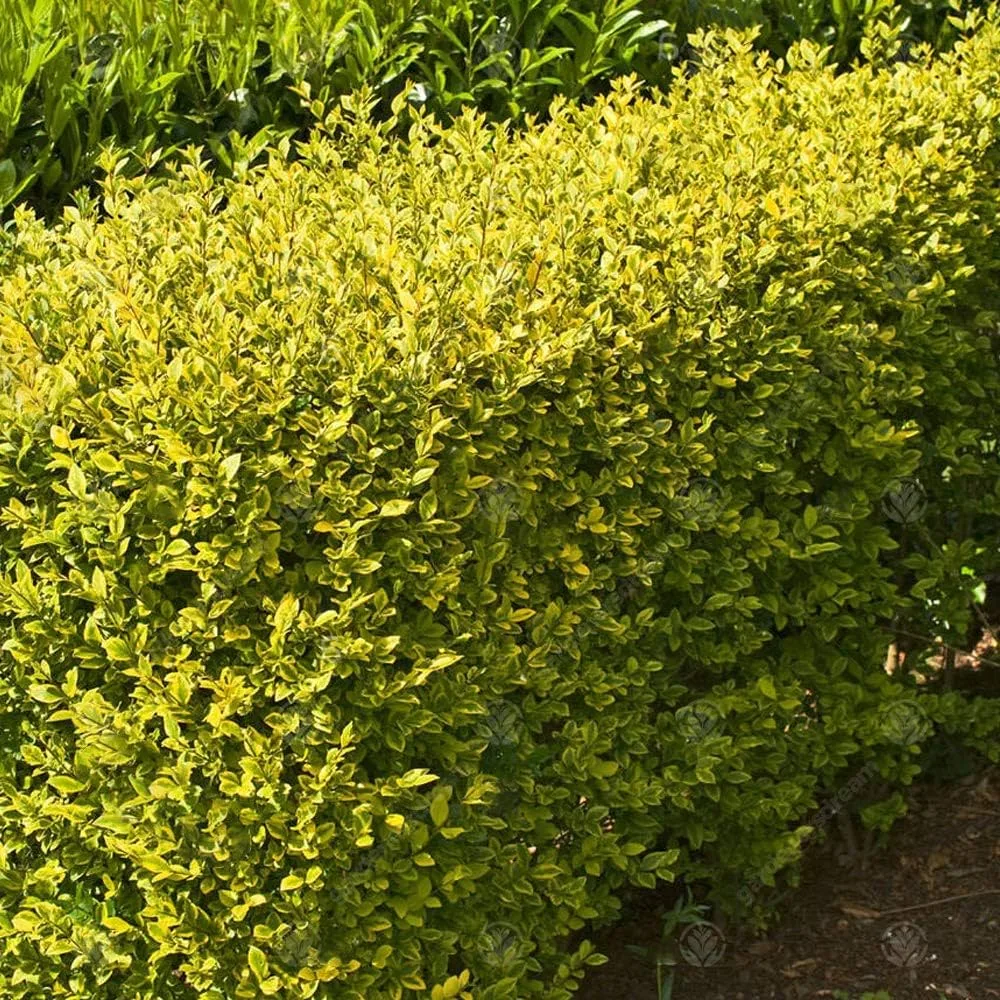
Privet – proof that an affordable hedge doesn't mean an ordinary garden
Some plants are automatically considered luxurious. Others have become so common over the years that people stop noticing their potential.
Privet is one of those plants.
For a long time, I associated it with old hedges, public spaces and gardens that had been neglected for years.
Then I started paying closer attention to some of the most beautiful European gardens.
And I noticed something interesting — many of the elegant, structured hedges surrounding historic homes and refined landscapes were actually Privet.
Simply used well.
The problem is rarely the affordable plant. More often, it's the way people choose to use it.
What exactly is Privet?
Ligustrum, commonly known as Privet, is one of Europe's classic hedge plants.
Its popularity comes from a few simple qualities:
- fast growth;
- excellent response to pruning;
- adaptability;
- and the ability to create dense green structure.
It is also significantly more affordable than many modern hedge alternatives.
And that is where the conversation becomes interesting.
Why people often underestimate Privet
I think the reason is simple — most people know it only in its worst form.
Usually that means a hedge that is:
- overgrown;
- poorly maintained;
- sparse;
- or never properly shaped.
At that point, of course it begins to look cheap.
But the truth is that almost any plant looks unattractive when it lacks structure.
A well-maintained Privet hedge can look surprisingly sophisticated.
Its greatest strength – it responds beautifully to pruning
This is one of the main reasons Privet has remained popular for centuries.
It allows gardeners to create:
- clean lines;
- dense hedges;
- architectural forms;
- and beautifully organized spaces.
When maintained correctly, it can feel like an extension of the garden's architecture.
Honestly, it often looks better than far more expensive plants.
The most luxurious gardens are not necessarily built with the most expensive plants. They are built with the smartest choices.
Fast, durable and far more practical than people think
This is another reason Privet has remained a landscape favorite for generations.
It tolerates:
- urban environments;
- regular pruning;
- different soil types;
- challenging conditions;
- and occasional neglect.
It also grows relatively quickly, allowing homeowners to establish a substantial hedge without waiting decades.
There is something wonderfully European about it
This is difficult to explain until you see it in the right setting.
Privet looks especially beautiful around:
- gravel paths;
- stone terraces;
- traditional homes;
- and classic garden designs.
It doesn't feel trendy.
It feels timeless.
And perhaps that is exactly why it never truly goes out of style.
Privet vs Thuja – two completely different approaches
Privet
Advantages:
- more affordable;
- fast growing;
- excellent for shaping;
- more natural appearance;
- ideal for architectural forms;
- classic European character.
Disadvantages:
- requires pruning;
- not always fully evergreen;
- can look untidy without maintenance.
Thuja
Advantages:
- year-round green screen;
- quick privacy effect;
- formal appearance.
Disadvantages:
- can feel overused;
- more artificial appearance;
- less resilient in some conditions;
- harder to rejuvenate once damaged.
How I would use Privet today
Personally, I think Privet looks best when it is used with restraint and precision.
I would combine it with:
- traditional architecture;
- European-style gardens;
- gravel surfaces;
- ornamental grasses;
- and layered planting schemes.
It also works beautifully as a lower structured hedge that organizes space without completely closing it off.
Sometimes the simplest plants create the strongest garden structure.
Are there any disadvantages?
Yes, and they should be mentioned honestly.
Privet:
- requires regular pruning;
- can become messy if neglected;
- is not considered exotic;
- and is sometimes associated with older landscapes.
But in my opinion, those are mostly perception problems rather than real limitations.
My honest conclusion about Privet
The more beautiful gardens I see, the more convinced I become that great design is not about spending the most money.
It is about:
- structure;
- maintenance;
- thoughtful combinations;
- and atmosphere.
Privet can provide all of those things.
Especially when people stop seeing it as merely an affordable hedge and start seeing it as a design element.