Some plants are planted for one particular season, and afterwards we start thinking about what should replace them.
Rudbeckia is interesting for a different reason. With the right species, cultivar and position, it can return year after year or reappear through self-seeding.
We notice the bright yellow flowers first, but over time we begin to appreciate something else as well: its ability to bring colour to the hottest part of summer and into early autumn.
Some plants are impressive only briefly. Rudbeckia can become part of the garden's natural rhythm.
What Is Rudbeckia?
Rudbeckia is a genus of plants native to North America.
Some species are perennial, while others may behave as biennials, short-lived perennials or annuals, depending on the species, cultivar and climate.
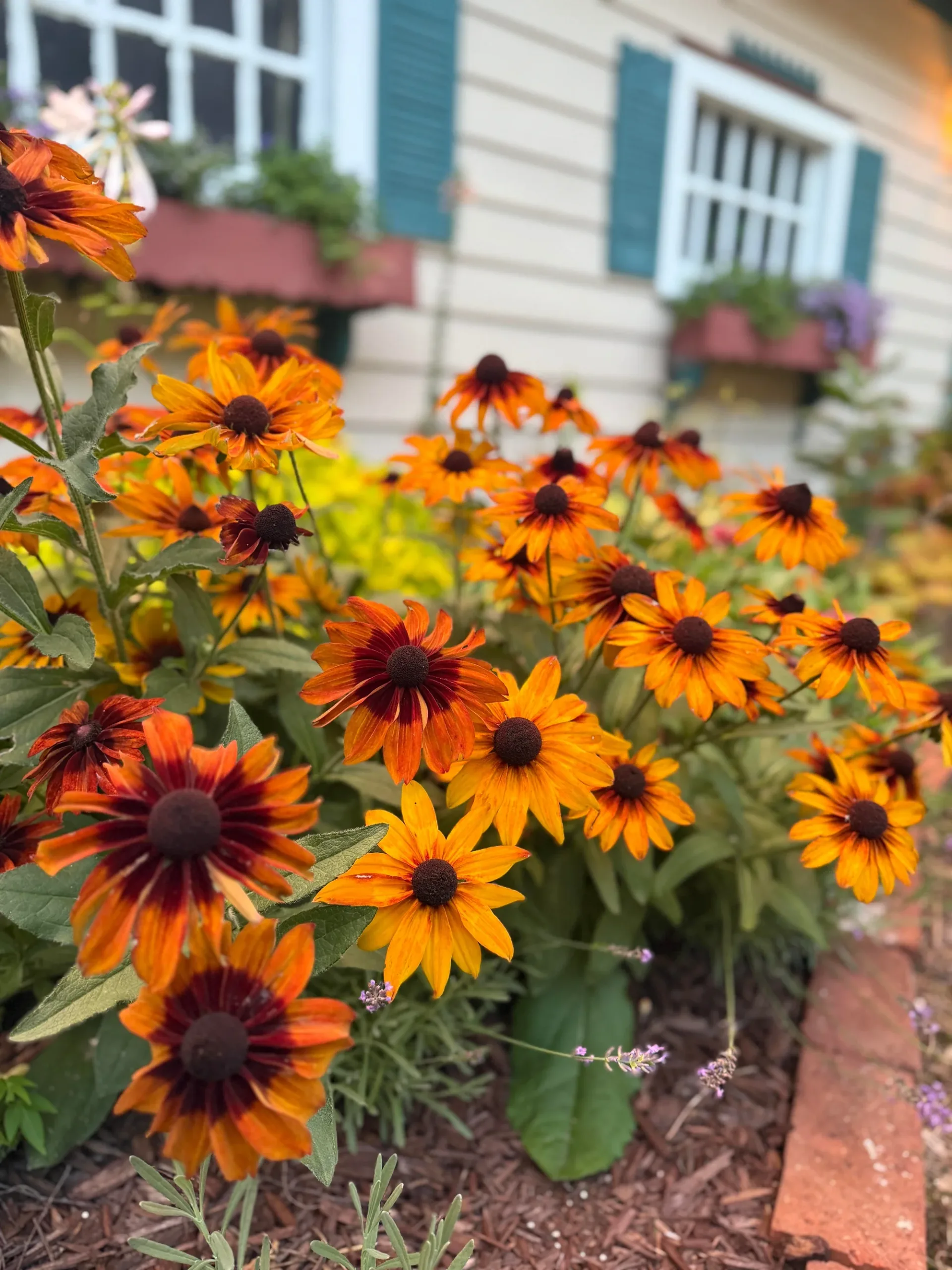
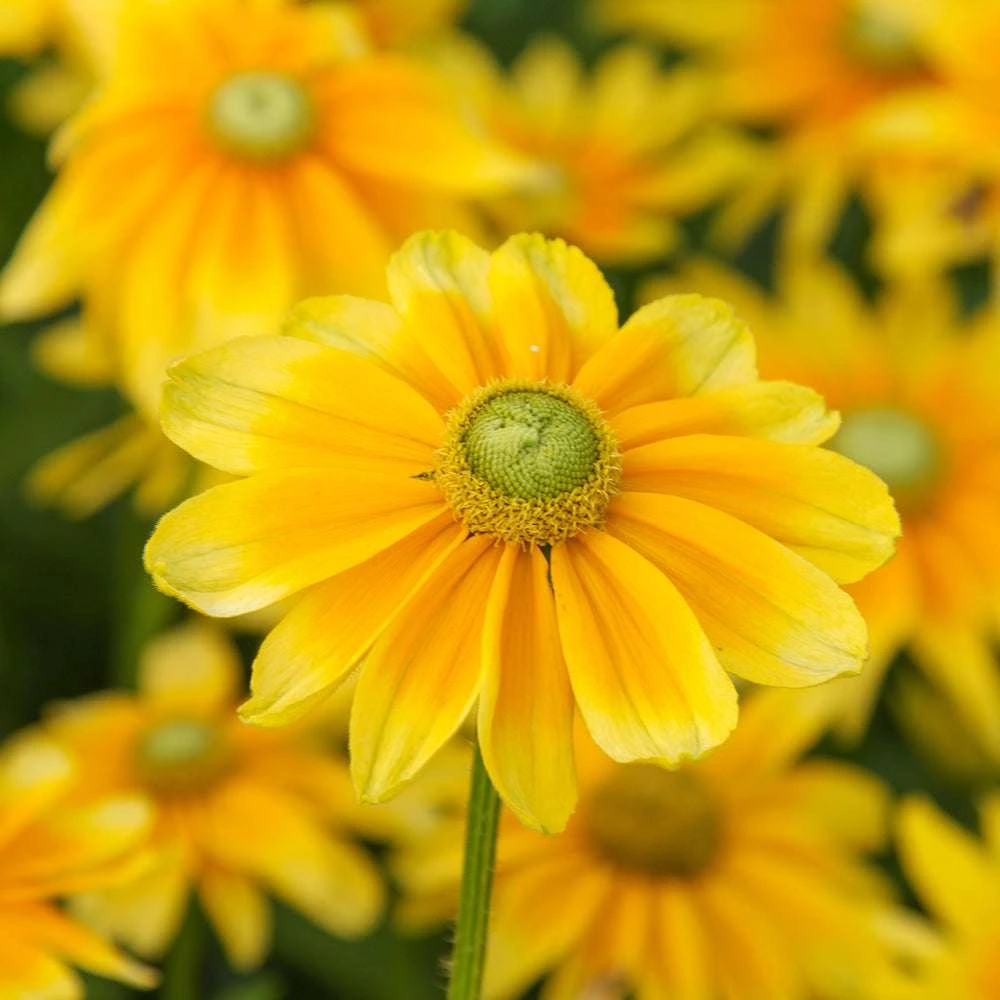
The best-known look is the combination of bright yellow petals and a dark central cone, although cultivars can also include orange, copper, reddish and bicoloured tones.
Not All Rudbeckias Behave the Same Way
This matters, because Rudbeckia is often discussed as though it were one single type of plant.
In reality, the different species can behave quite differently.
For example, Rudbeckia fulgida and some of its cultivars can form stable perennial clumps.
Rudbeckia hirta, on the other hand, often behaves as a short-lived perennial, biennial or annual, depending on the cultivar and growing conditions.
I would check the exact species and cultivar rather than relying only on the general name “Rudbeckia”. This is particularly important if I want a stable perennial group.
What Rudbeckia Needs to Grow Well
For most garden Rudbeckias, I would begin with a sunny position.
Partial shade can be tolerated, but with insufficient light the plants usually flower less and may become looser in form.
The soil does not need to be exceptionally rich. Reasonably fertile and well-drained garden soil is enough for many species.
Once established, the plants can tolerate some drier periods, but this does not mean they should be left without water through prolonged drought.
Watering, Feeding and Seasonal Care
Newly planted Rudbeckia needs reasonably regular moisture while it establishes a good root system.
After that, many species become more tolerant of temporary dry periods.
During prolonged heat, however, I would still water actively flowering plants if the soil remains dry for a long time.
I would keep feeding simple as well. A layer of compost at the beginning of the season is usually enough in ordinary garden soil.
Excessive nitrogen can encourage more foliage and softer stems without necessarily improving flowering.
The first goal is to help the plant build a strong root system.
This can keep the planting tidier and may extend flowering on some plants.
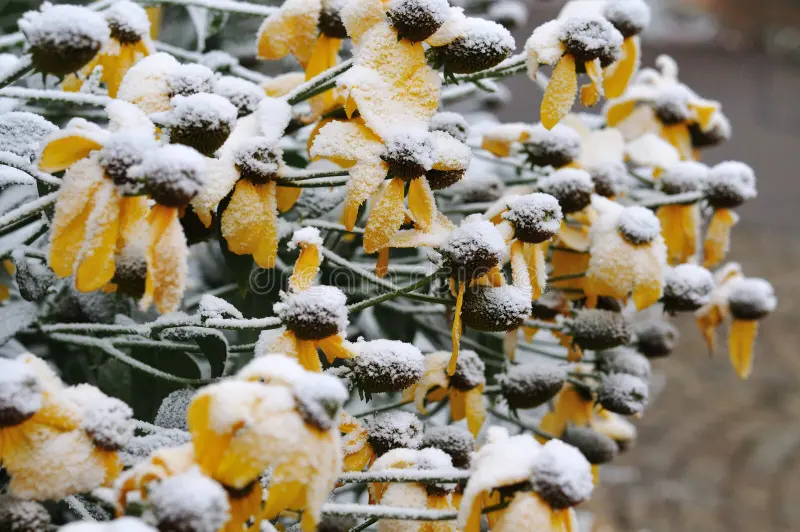
They can provide winter structure, food for birds and an opportunity for self-seeding.
If I leave them through winter, I would remove them before the new growth becomes well developed.
How Self-Seeding Works
This is one of the most interesting characteristics of some Rudbeckias.
If part of the faded flowers are allowed to produce seed, new seedlings may appear around the original plants.
But self-seeding is not guaranteed. It depends on the species, cultivar, climate, soil and whether the seeds find a suitable place to germinate.
With hybrid cultivars, seedlings also may not look exactly like the parent plant.
If I want Rudbeckia to move more freely through the garden, I leave a few seed heads. If I want strict control, I remove them.
Common Mistakes When Growing Rudbeckia
If I want self-seeding, another mistake would be removing every single faded flower.
If I do not want the plant to spread, then exactly the opposite may be the right choice.
How Rudbeckia Looks Through the Seasons
Where I Would Use Rudbeckia and What I Would Plant with It
Rudbeckia works well where I want strong summer colour combined with a relatively natural character.
- in a sunny perennial border;
- in prairie-style planting;
- in a pollinator garden;
- in a naturalistic border;
- in larger groups for late-summer colour;
- around more permanent ornamental shrubs.
I would combine it with plants that also prefer sunny conditions and do not require constantly wet soil.
- Echinacea;
- Salvia;
- Yarrow;
- Nepeta;
- Verbena;
- Gaillardia;
- Sedum;
- other sun-loving perennials.
The bright yellow is already visually strong, so around it I prefer plants with calmer forms or contrasting textures, rather than adding too many competing colours.
- strong late-summer flowering;
- attracts pollinators;
- many species tolerate heat well;
- some forms self-seed;
- seed heads can remain decorative;
- works well in naturalistic planting.
- not all species are equally long-lived;
- self-seeding can be more vigorous than expected;
- flowering is weaker in too much shade;
- some taller forms need enough space;
- seedlings may differ from the parent cultivar.
Why I Think Rudbeckia Is Worth Growing
Because it brings strong colour to a part of the season when summer heat is already testing many other plants.
In many temperate gardens, Rudbeckia can perform well in a sunny position with reasonably well-drained soil.
Well-established plants can tolerate temporary dry periods, but during prolonged drought I would still provide water, especially during flowering.
What I find most interesting is that we can choose how freely the plant behaves in the garden.
We can remove the seed heads and keep a tightly controlled group, or leave some of the seeds and allow the planting to become gradually more natural.
If I am looking for a plant for a sunny border that brings strong colour through summer and into early autumn, Rudbeckia would definitely be one of my options.
The most important thing is choosing the right species according to whether I want a long-lived perennial clump, a shorter-lived plant or freer self-seeding.
That is exactly what makes Rudbeckia so interesting: it can be both a strong visual accent and a natural part of a livelier, more relaxed garden.