
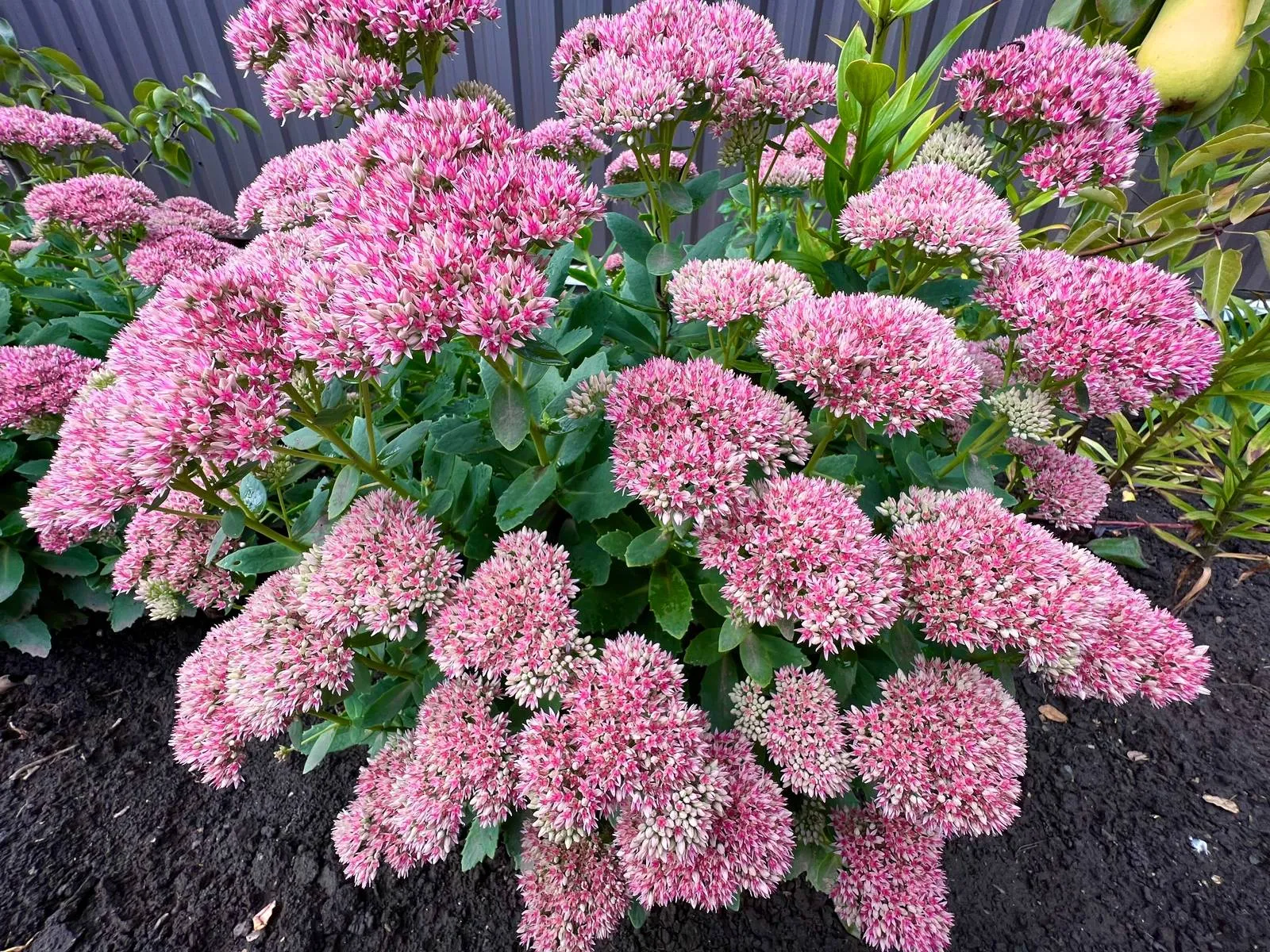
Some plants look their best the moment they are planted. Others become more interesting with time.
Sedums and the tall autumn-flowering plants we often still call sedum belong firmly to that second group.
At first, they may seem almost too modest, but with every year the clump becomes denser, the structure stronger and the late-season flowers more valuable to the garden.
With sedum, the greatest advantage is not only its resilience. It is its ability to look good when many other plants are already beginning to fade.
What Is Sedum?
Sedum is a large genus of succulent plants known for their fleshy leaves and ability to store water.
In gardening, however, the name “sedum” is still commonly used for tall autumn-flowering plants that are now botanically classified in the genus Hylotelephium.
These are the plants that form large, sturdy clumps topped with broad flower heads that begin colouring in late summer and autumn.
Low-growing sedums, on the other hand, are often used as groundcovers, in rock gardens, on dry slopes or between stones.
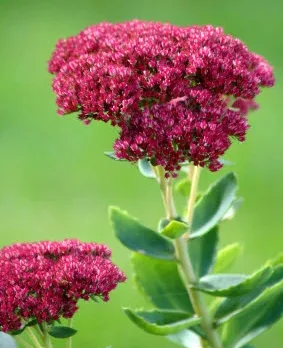
Not All Sedums Look or Grow the Same Way
This is important, because the name “sedum” covers plants with very different shapes and habits.
Low-growing species may spread almost like a carpet and remain only a few centimetres tall.
Tall forms, often sold under names such as “Autumn Joy sedum,” can form substantial perennial clumps around 40-70 cm tall, depending on the cultivar.
So I would choose not simply “a sedum,” but a specific form according to the position and the role I want it to play.
In garden centres and everyday gardening language, tall autumn-flowering forms are still frequently called Sedum. Botanically, however, many of them are now classified in the genus Hylotelephium.
What Sedum Needs to Grow Well
If there is one condition I would put above all others, it is good drainage.
Most sedums prefer soil that does not remain wet for long periods.
Heavy, constantly moist soil is a much greater problem than temporary drought.
Sun is important too. In a bright position, plants usually remain more compact and flower more strongly.
Watering, Feeding and Seasonal Care
Newly planted sedums still need regular watering while they establish a good root system.
Once established, watering can be considerably less frequent than for many other perennial plants.
During prolonged extreme drought, I would still provide water, particularly while the plant is actively growing or flowering.
Feeding should also remain moderate. In many gardens, sedum performs very well without regular fertilizing.
Excessive nitrogen can produce overly soft stems and cause the clump to open up or flop.
A newly planted sedum is not immediately completely drought tolerant.
Allow the soil to dry between waterings.
Compact growth is usually more valuable than excessively vigorous stems.
If I like the winter structure, I leave them in place and remove them before new growth begins in spring.
Common Mistakes When Growing Sedum
Another mistake is treating every sedum in exactly the same way.
A low groundcover species and a tall Hylotelephium have very different roles, sizes and uses in a planting scheme.
How Sedum Looks Through the Seasons
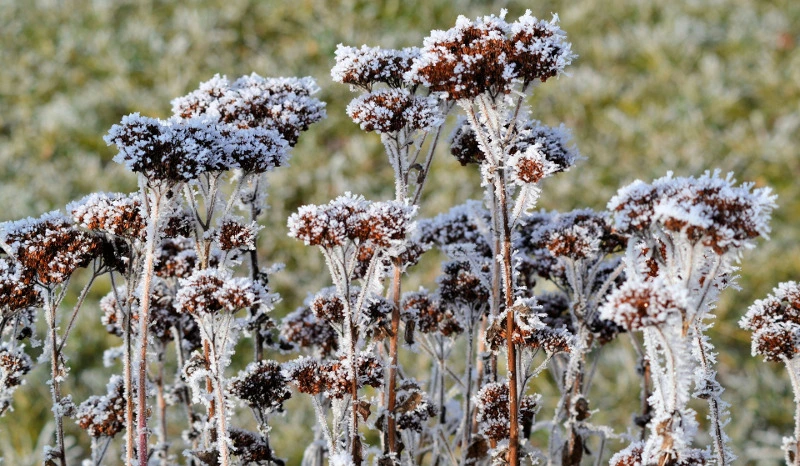
Where I Would Use Sedum in the Garden
Tall forms are particularly useful where I want strong structure and flowering late in the season.
- in a sunny perennial border;
- in a dry, well-drained bed;
- around ornamental shrubs;
- in naturalistic or prairie-style planting;
- in a more contemporary, restrained garden;
- in groups for late-summer and autumn colour.
Low-growing sedums I would use very differently: between stones, on low walls, in rock gardens or as a groundcover.
What I Would Plant with Sedum
The best companions are plants that also prefer sun and well-drained soil.
- Echinacea;
- Rudbeckia;
- Salvia;
- Nepeta;
- Yarrow;
- Verbena;
- Gaillardia;
- other drought-tolerant perennials.
I particularly like using sedum as a stable, substantial form among finer, more airy plants.
This prevents the broad flower heads from feeling too heavy and instead gives balance to the whole composition.
Sedum works best when we do not try to make it more demanding than it really is.
Advantages and Disadvantages
- excellent drought tolerance once established;
- minimal feeding requirements;
- strong structure through much of the year;
- late flowering;
- attracts pollinators;
- well suited to lower-maintenance gardens.
- does not tolerate prolonged waterlogging;
- may become stretched and unstable in shade;
- overly rich soil can cause flopping;
- different species vary greatly in size and use;
- some tall cultivars may open up in the centre as they age.
Why I Think Sedum Is Worth Growing
Because it is one of those plants that provides a great deal of structure for relatively little care.
In sunny, hot gardens, that is a serious advantage.
In many temperate climates, sedums and tall Hylotelephium can perform extremely well, provided the soil does not remain excessively wet.
In the right position, they tolerate summer heat, move successfully through winter dormancy and return each spring.
If I am looking for a perennial for a sunny, relatively dry border that remains interesting late into the season, sedum would definitely be high on my list.
The most important conditions are sun, good drainage and moderate care.
For me, that is its real advantage: it does not need constant attention to become a stronger and more useful part of the garden with every passing year.