
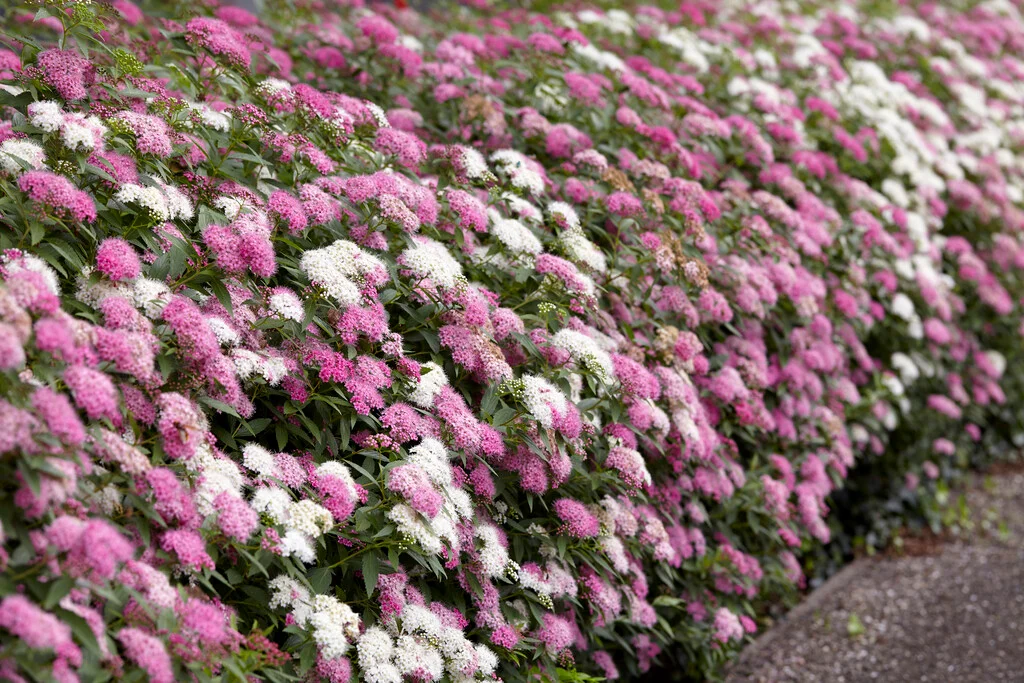
Spirea is one of the most rewarding ornamental shrubs for the garden. It flowers abundantly, grows relatively easily, tolerates pruning and can be used both in small gardens and in larger compositions.
In the “Designer Accents in the Garden” series, spirea has a quieter but very important role. It is not dramatic like ornamental plum, not thorny and contrasting like barberry, and not demanding like azalea. Spirea is the shrub that simply works — it flowers, fills, softens and brings order to the space.
This makes it especially valuable for people who want a beautiful garden, but do not want every plant to require a special regime, acidic soil, winter wrapping and conversations with the lunar calendar. Spirea is practical. And in the garden, that is not a small quality.
What Is Spirea?
Spireas are deciduous ornamental shrubs from the genus Spiraea. There are many species and cultivars, but in general we can divide them into two main groups: spring-flowering spireas with white flowers and summer-flowering spireas with pink, reddish or purple-pink flower clusters.
Spring-flowering spireas often have arching branches covered with many small white flowers. They look very delicate, almost like a floral waterfall. Summer-flowering spireas are usually more compact, with a denser shape and flowers at the tips of the young shoots.
Spirea does not try to be the main character in the garden. It is one of those plants that makes the stage better for everything else.
This is exactly why spirea is so useful. It can be a background, a border, a low hedge, a flowering group, a filler between more expressive plants or a soft transition between lawn and ornamental bed.
Why Spirea Is Valuable in Garden Design
Its greatest advantage is the combination of flowering and easy maintenance. Many beautiful shrubs are sensitive to soil, light or pruning. Spirea is much more tolerant. It performs well in sun, tolerates different soils, recovers after pruning and does not require complicated care.
Another advantage is its size. Some cultivars remain compact and are suitable for a small garden, foreground planting or a low border. There are also taller forms that can create a freer, more natural background.
Spirea is especially useful when a bed looks too fragmented. Planted in a group, it unifies the plants and makes the composition calmer. At the same time, it does not feel heavy, but light and natural.
Where to Plant Spirea
Spirea loves sun. In a sunny place, it flowers most abundantly and keeps a more compact form. It can tolerate light partial shade, but in too much shade the flowering usually weakens and the shrub may become looser.
It is suitable for the front parts of ornamental beds, low hedges, borders, groups along paths, sunny slopes, entrance areas and places where we want flowering without many demands. Lower cultivars can also be used around terraces or in smaller urban gardens.
It looks very good in groups. A single spirea can look a little accidental, but three, five or more shrubs repeated in rhythm already create structure. This is especially true for low cultivars with pink flowers or golden foliage.
Practical tip: if you want abundant flowering, do not place spirea in deep shade. It can live there, but it will not show its best side.
Popular Types and Cultivars of Spirea
Spiraea vanhouttei, known as Vanhoutte spirea, is one of the classic white spring-flowering spireas. It has arching branches and abundant white bloom. It is suitable for informal hedges, larger beds and natural compositions.
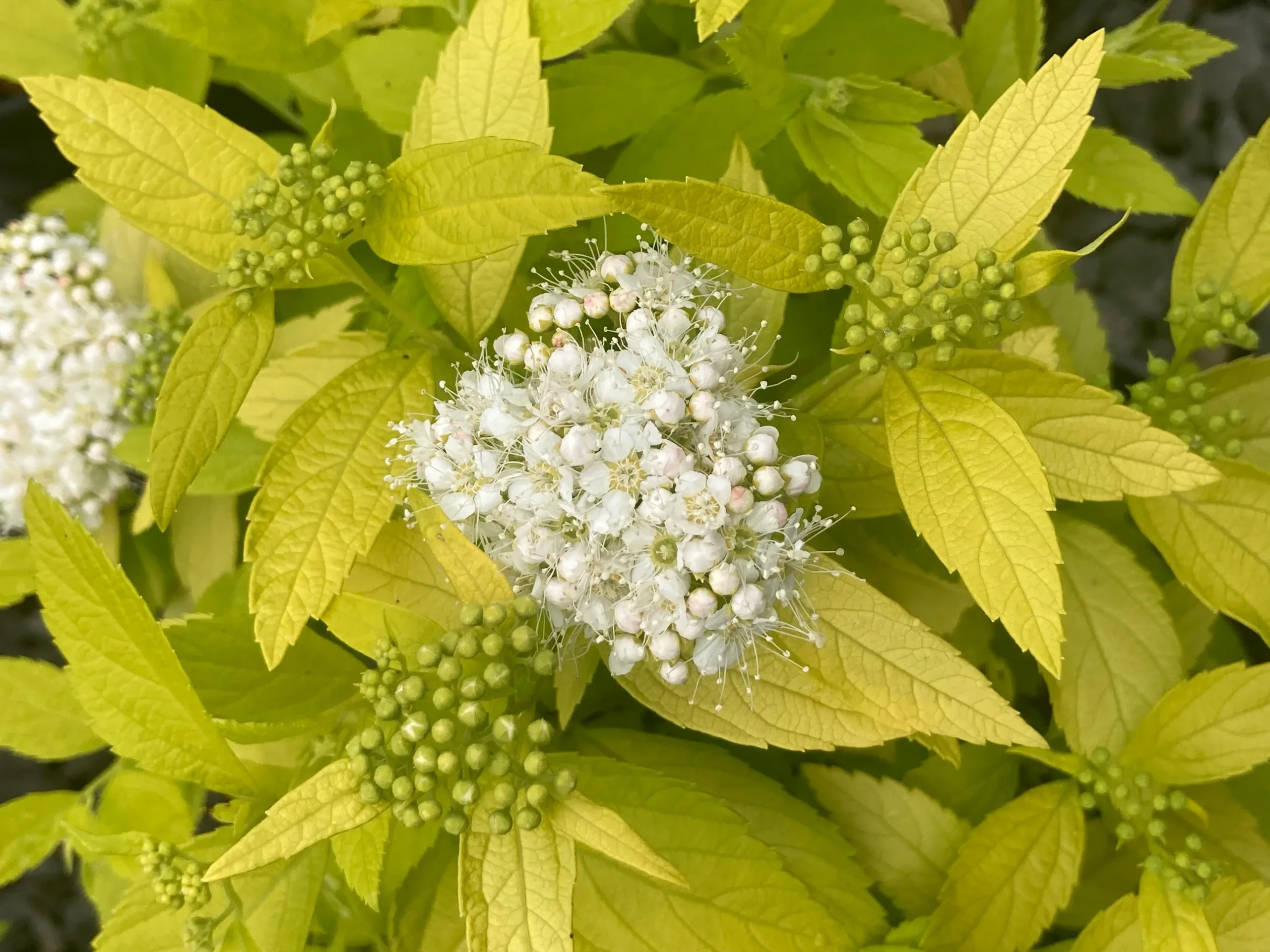
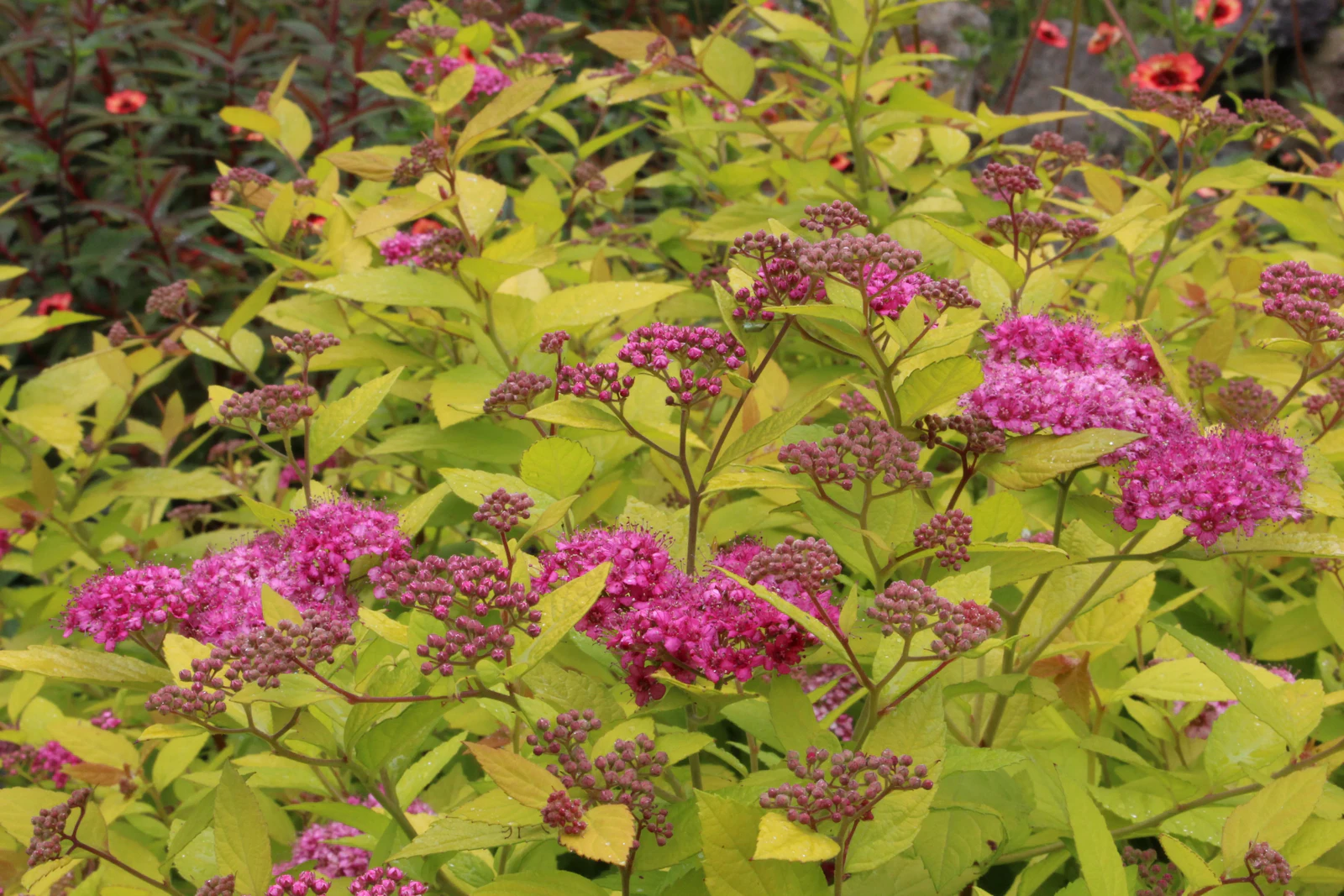
Spiraea japonica is a very popular group of summer-flowering spireas. They are usually lower and compact, with pink or reddish-pink flower clusters. Many cultivars also have decorative foliage — golden, yellow-green or coppery at the beginning of the season.
'Goldflame' is a cultivar with highly decorative foliage. The young leaves can be orange-copper, later turning yellow-green, while the flowers are pink. It is suitable for colorful borders and modern compositions.
'Little Princess' is a compact cultivar with pink flowers and an orderly form. It is a very good choice for small gardens, foreground planting and low groups.
'Anthony Waterer' is another classic cultivar with deeper pink-red flowers. It is often used for colorful groups and low hedges.
| Species / Cultivar | What It Looks Like | Where It Works Best |
|---|---|---|
| Spiraea vanhouttei | White spring flowers, arching branches, freer form | Informal hedge, larger beds, natural compositions |
| Spiraea japonica | Compact, summer pink flowering, many cultivars | Borders, low groups, small gardens |
| 'Goldflame' | Golden-copper foliage and pink flowers | Colorful beds, modern compositions, contrasting groups |
| 'Little Princess' | Low compact shrub with pink flowers | Foreground, small gardens, low borders |
| 'Anthony Waterer' | Pink-red flower clusters, compact growth | Groups, low hedges, colorful borders |
Soil, Watering and Feeding
Spirea is not demanding about soil. It grows best in moderately fertile, well-drained soil, but can adapt to different conditions. It is important that the place is not constantly waterlogged, because this weakens the roots.
After planting, young plants should be watered regularly until they root well. After that, spirea tolerates short dry periods relatively well, but during long summer droughts it is good to water, especially if we want it to stay fresh and flower well.
Feeding should not be aggressive. Compost in spring or light feeding with a balanced fertilizer is quite enough. With too much fertilizer, the plant may produce strong green growth, but not necessarily more flowers.
This post contains affiliate links. As an Amazon Associate, I earn from qualifying purchases at no extra cost to you.
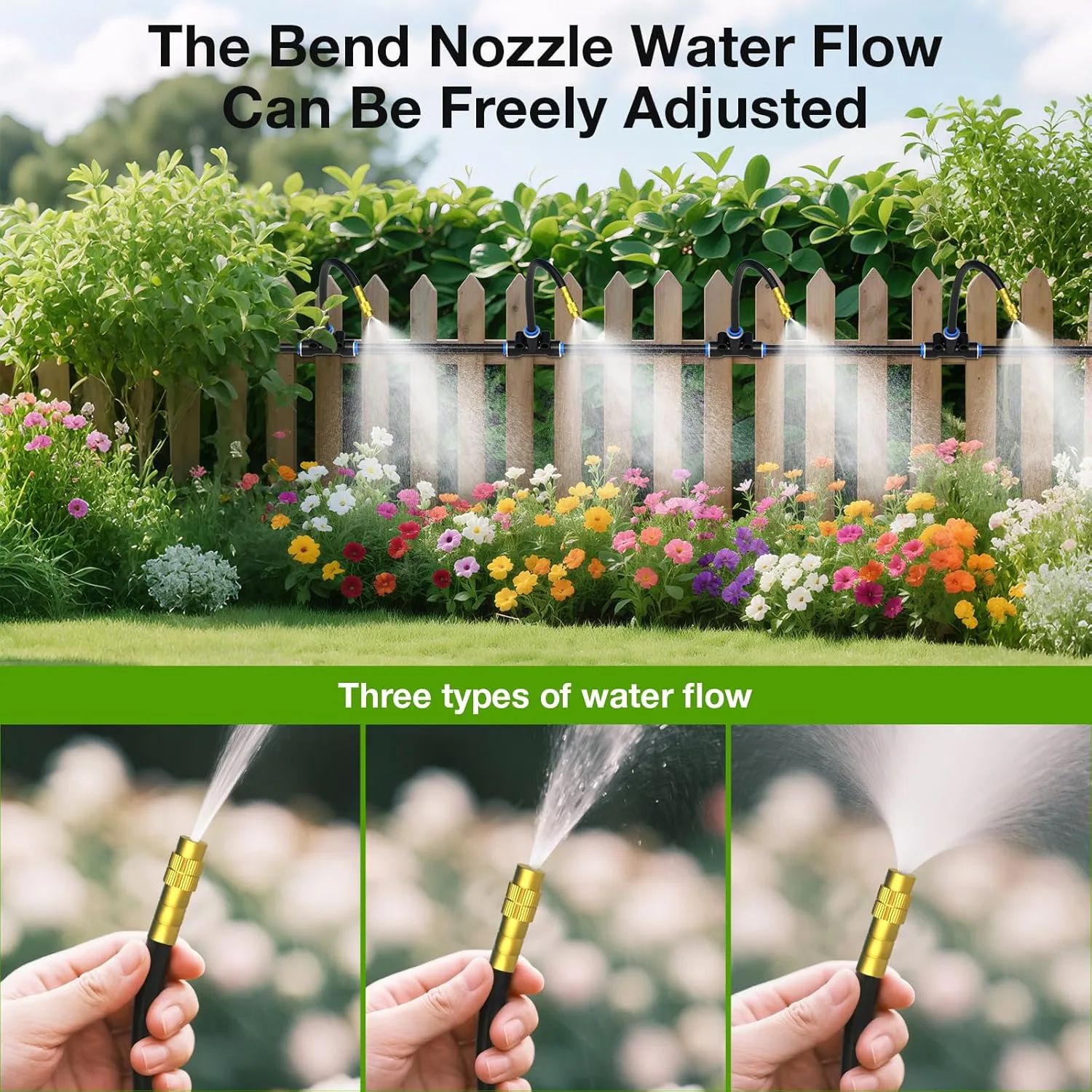
Spirea is often planted in groups, low hedges or repeated borders, which makes targeted irrigation particularly useful during hot, dry periods and while young shrubs are establishing.
This MIXC kit includes adjustable watering points that can be arranged through a flower bed rather than watering the entire surface. I would still adjust irrigation according to rainfall, soil type and how established the shrubs already are.
How to Prune Spirea
Pruning spirea depends on when it flowers. This is the most important rule. Spring-flowering spireas bloom on old wood, so they are pruned after flowering. If we cut them back in early spring, we may remove many of the future flowers.
Summer-flowering spireas, such as many Spiraea japonica cultivars, bloom on new growth. They can be pruned more firmly at the end of winter or in early spring to encourage fresh growth and a more compact shape.
With older shrubs, it is good to periodically remove some of the oldest branches low down. This rejuvenates the plant instead of allowing it to turn into a woody, messy ball with flowers only around the edges.
Can Spirea Be Grown in a Container?
Yes, especially the more compact cultivars. Spirea in a container can be a good choice for a terrace, entrance or small garden if the pot is large enough and has good drainage.
In a container, watering should be watched more carefully because the soil dries out faster. It is good to use a quality substrate and feed moderately in spring. Compact cultivars with golden foliage or pink flowers can look very fresh in containers, especially when combined with ornamental grasses or low perennials.
The Most Common Mistakes
The first mistake is incorrect pruning. If a spring-flowering spirea is cut back in early spring, flowering may be weak or almost absent. If a summer-flowering spirea is not pruned for years, it may become sparse and lose its compact look.
The second mistake is planting it in too much shade. Spirea will grow, but it will not flower as abundantly. The third is using single shrubs without repetition. Spirea is much stronger in a group or rhythm than as a lonely plant placed “because there was space”.
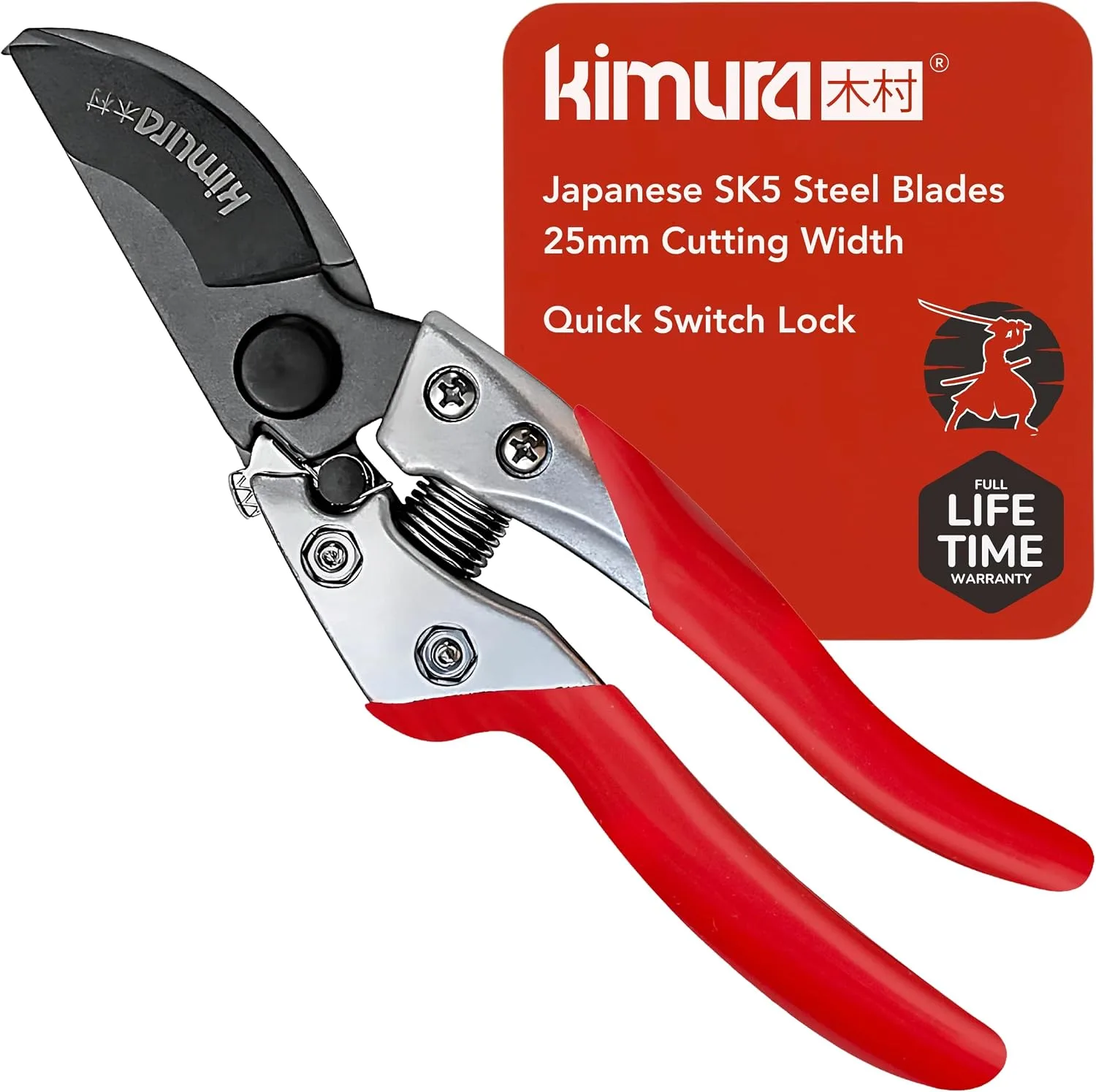
Spirea is a good example of why the timing of pruning matters as much as the tool. Spring-flowering and summer-flowering forms are cut at different times, but both benefit from clean cuts rather than crushed stems and repeated hacking at the same branch.
These Kimura bypass shears use Japanese SK5 steel blades and are suitable for routine shrub pruning and removing older or damaged stems. For thicker mature branches, I would switch to an appropriately sized lopper rather than forcing hand pruners through them.
What to Combine Spirea With
Spirea is an easy partner. It can be combined with ornamental grasses, barberry, nandina, lavender, salvia, hydrangeas, roses, low conifers, hostas, echinacea and rudbeckia. Golden cultivars look good next to dark-leaved plants such as ornamental plum or red barberry.
In modern gardens, low spireas can be used in repeated groups with grasses and stone. In more romantic gardens, white spring-flowering spireas look beautiful next to roses, lilac and spring bulbs. In a small garden, compact cultivars can play the role of a soft, flowering border.
If you want a natural effect, do not clip it too strictly. If you want a more orderly look, use compact cultivars and repeat them in a clear line or group.
Is Spirea Worth Growing?
Yes, especially if you are looking for a beautiful, easy and reliable shrub.
Spirea gives flowering, structure and the possibility for many different uses — border, group, low hedge, container or natural bed. It is not fussy, tolerates pruning and fits well into different garden styles.
This is a plant that does not require much fuss around it. It simply does the job — and does it beautifully.