
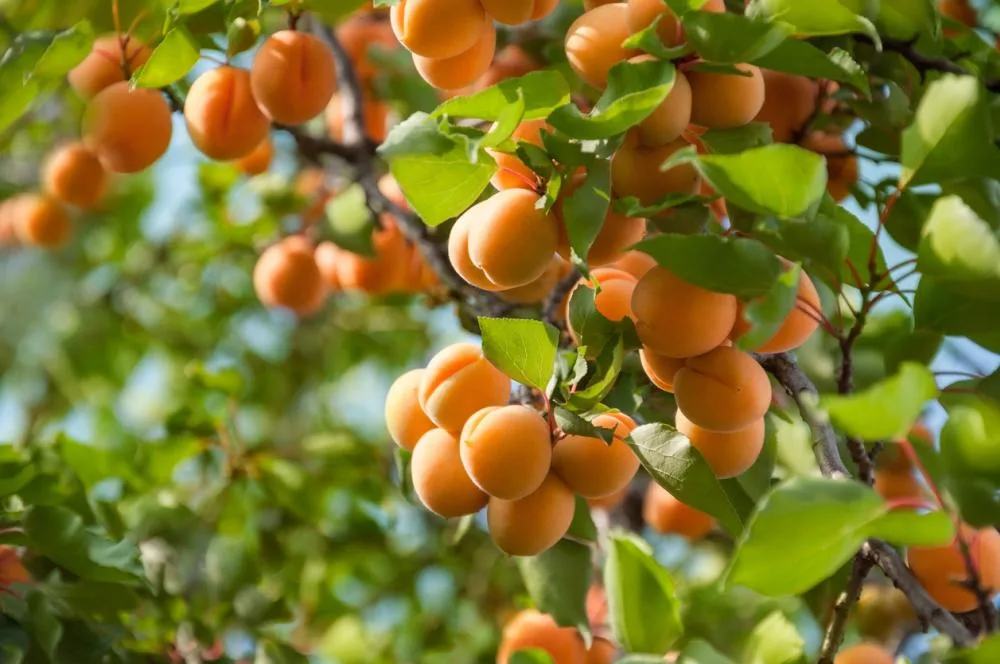
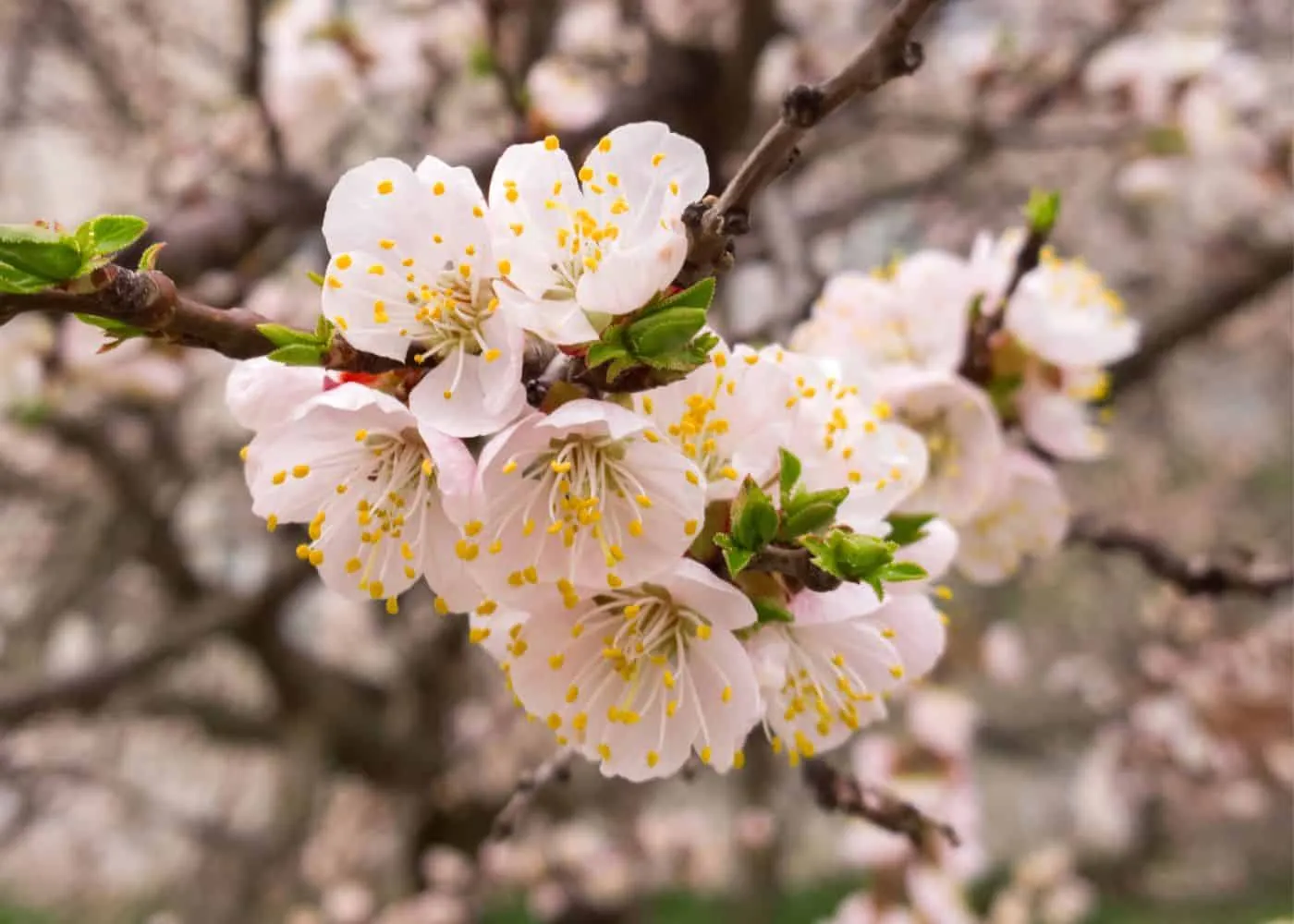
Apricot is one of those fruit trees that can give you a wonderful crop one year and almost nothing the next. Often, the reason is not poor care but its very early flowering. A single cold night in March or April can damage a large proportion of the blossoms.
That is why site, variety and growing conditions matter more with apricots than simply finding room for another fruit tree. In the right position, an apricot can be relatively straightforward to grow. In a low, wet or frost-prone part of the garden, problems often begin early.
Apricots generally perform best in warmer areas and in gardens with good air movement. This does not mean they cannot be grown in cooler climates, but the risk of blossom loss and winter damage becomes greater.
The fruit is one reason many gardeners forgive the tree its unpredictability. A ripe apricot picked directly from the tree has a flavor and aroma that is difficult to compare with fruit harvested early for transport.
Why Apricot Trees Can Be More Temperamental
Apricot trees come out of winter dormancy relatively early. Buds begin to swell, flowers open and then the weather can suddenly turn cold again for a night or two.
Different stages tolerate cold differently. A closed bud is generally more resistant than an open flower, while a newly formed fruit is even more vulnerable. The same temperature that causes little damage early in the season can destroy a crop several weeks later.
Another important characteristic is sensitivity to prolonged waterlogging around the roots. Apricots prefer soils that drain reasonably quickly. Heavy clay combined with a constantly wet root zone is rarely a good combination.
- early flowering creates a high risk from late frost;
- the roots dislike prolonged waterlogging;
- the tree prefers sunny sites with good air movement;
- it does not respond particularly well to very aggressive pruning;
- crop size can vary considerably from year to year.
An apricot that flowered heavily but produced almost no fruit may simply have experienced one cold night during bloom. With this species, the weather sometimes has more influence over the harvest than the gardener does.
Where to Plant an Apricot Tree
If you have several possible locations, start with the site rather than the variety.
Look for plenty of sun, good air circulation and soil that does not remain saturated. Small depressions and low areas where cold air collects overnight are among the least suitable places.
A gentle slope can be better than an enclosed flat area because cold air can drain downhill. At the same time, the tree should not be exposed to constant strong winds.
Allow for the future size of the canopy as well. A young tree looks as though it can fit almost anywhere, but within several years an apricot needs genuine space and good light from all sides.
Soil, Planting and Watering
Apricots grow well in light to medium-textured, well-drained soil. Organic matter can improve soil structure, but there is little benefit in turning the planting hole into a container filled with an unusually rich mixture that is completely different from the surrounding soil.
The roots need to grow gradually into the wider soil profile rather than remain concentrated in the amended planting hole.
When planting:
- make the hole wide enough for the roots to spread naturally;
- do not place fresh manure or concentrated fertilizer directly against the roots;
- keep the graft union above the final soil level;
- water thoroughly after planting;
- mulch around the young tree but keep mulch away from direct contact with the trunk.
Young apricot trees need reliable moisture during their first few years. That does not mean giving them a small amount of water every day. It is generally better for irrigation to reach deeper into the root zone and for the upper soil layer to dry slightly between waterings.
Once the tree is established, watering depends on soil type, temperature and rainfall. Moisture is especially important during active growth and fruit development, but constantly wet soil can be just as troublesome as prolonged drought.
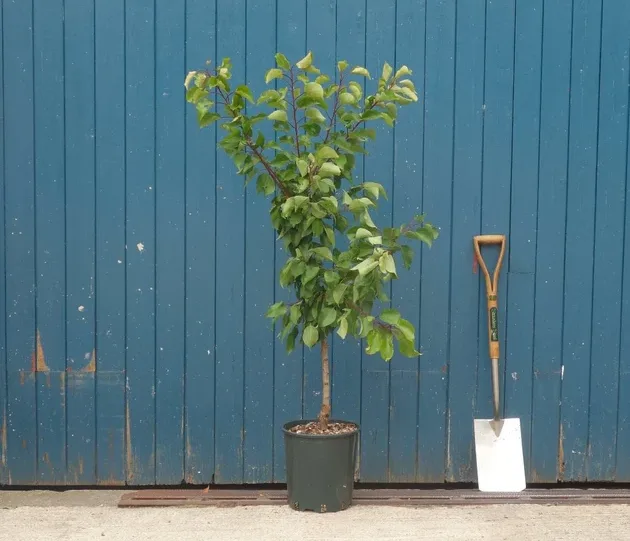
During the first summer, the most useful habit is to check the soil rather than water automatically by calendar. Hot weather, wind and sandy soil can dry the root zone quickly, while heavier soil may stay moist for much longer.
A slow, deep watering is usually more useful than repeatedly wetting only the surface. This encourages moisture to reach the part of the soil where the developing root system actually needs it.
This post contains affiliate links. As an Amazon Associate, I earn from qualifying purchases at no extra cost to you.

A watering bag can be useful during establishment when you want water to move slowly into the root zone instead of running across the surface.
I would still check the soil before refilling it. The purpose is to make deep watering easier, not to keep the ground permanently wet around an apricot tree.
Pruning and Maintaining the Canopy
I would not recommend an aggressive approach to apricot pruning. The aim is to keep enough light and air inside the canopy without removing a large proportion of the tree's growth every year.
Start with the obvious: dead, broken, diseased and badly crossing branches. Then look at branches that crowd the center or grow in an unsuitable direction.
Large pruning wounds carry more risk than small ones, so regular moderate pruning is generally preferable to drastic renovation after years of neglect.
- remove dead and damaged wood;
- avoid unnecessary congestion in the center of the canopy;
- avoid sudden, excessive pruning;
- use sharp tools and make clean cuts;
- watch how the tree responds during the following growing season.
If you are new to pruning, see our more detailed guide to fruit tree pruning for beginners.
For smaller branches and young shoots, a sharp bypass pruner gives much more control than trying to work with an oversized tool. Clean cuts are particularly useful when the aim is routine maintenance rather than major renovation.
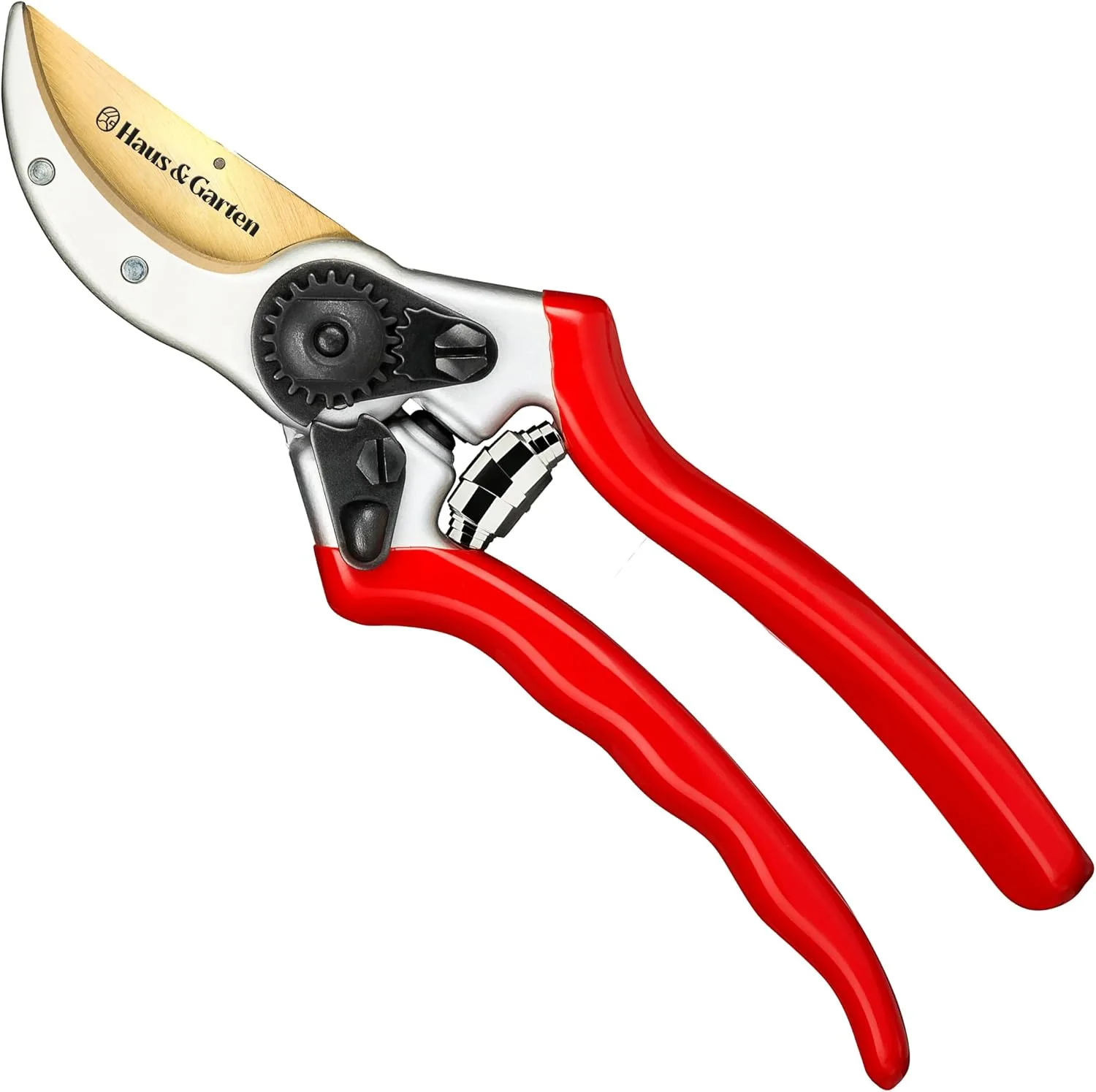
For young shoots and smaller fruit-tree branches, bypass pruners are usually the tool I reach for first. They make it easier to place the cut accurately without crushing the wood.
The Haus & Garten pruners fit that type of routine work well. For thicker branches, I would switch to loppers or a pruning saw rather than forcing hand pruners beyond their comfortable cutting range.
Common Apricot Diseases and Problems
Some of the most serious apricot problems appear around flowering or during prolonged periods of wet weather. Regular observation is far more useful than noticing a disease only after half a branch has already been affected.
| Problem | What it may look like | What to watch for |
|---|---|---|
| Brown rot / blossom blight | Flowers and young shoots suddenly wilt and turn brown; later, fruit may rot. | Wet conditions during bloom and infected fruit or twigs remaining on the tree. |
| Shot hole disease | Small leaf spots whose centers may later fall out, leaving characteristic holes. | Spots on leaves, shoots and sometimes fruit. |
| Bacterial and canker damage | Wounds, cracked bark, gumming and gradual dieback of individual branches. | Damaged bark, frost injury and branches that begin to dry back. |
| Gummosis | Clear to amber-colored gum appearing on the trunk or branches. | Gummosis is a symptom rather than one specific disease, so the underlying cause must be identified. |
Mummified fruit and clearly affected twigs should not remain on the tree. Good sanitation, an open canopy and regular inspection can reduce some problems, but when symptoms appear it is important to identify the cause before choosing a treatment.
If gum begins to appear on an apricot tree, it means the tree is responding to some form of stress or injury. Possible causes include mechanical damage, frost, disease or other stress. The gum itself does not automatically tell you which treatment is needed.
For a broader seasonal approach to plant protection, see our fruit tree spraying calendar.
Pollination, Fruiting and Uneven Harvests
Many apricot varieties are self-fertile, but that does not mean every tree will produce a good crop simply because it flowers.
Temperatures, rain, wind and pollinator activity during bloom all influence fruit set. Some varieties may benefit from another compatible apricot nearby, so always check the characteristics of the particular cultivar you are buying.
If the tree sets a very heavy crop, thinning may also be useful. Too much fruit can exhaust the tree, produce smaller apricots and place excessive weight on branches.
This is one reason two apricot seasons are rarely identical. One year you may have more fruit than you can use, while the next a single cold night may leave only a handful.
Mistakes Apricot Trees Do Not Forgive Easily
- Planting in a low, frost-prone location - increases the risk of damage during flowering.
- Heavy, permanently wet soil - the root system suffers when water remains around it for long periods.
- Overwatering - more water does not automatically mean a healthier tree.
- Severe one-time pruning - creates large wounds and can trigger vigorous new growth.
- Ignoring dead twigs and mummified fruit - these problems rarely resolve themselves.
- Expecting the same crop every year - with an early-flowering tree, weather will always remain a major factor.
Apricot is not the most predictable fruit tree in the orchard, but that does not necessarily make it difficult to grow. Many serious problems begin with an unsuitable location, poor drainage or overly aggressive intervention.