
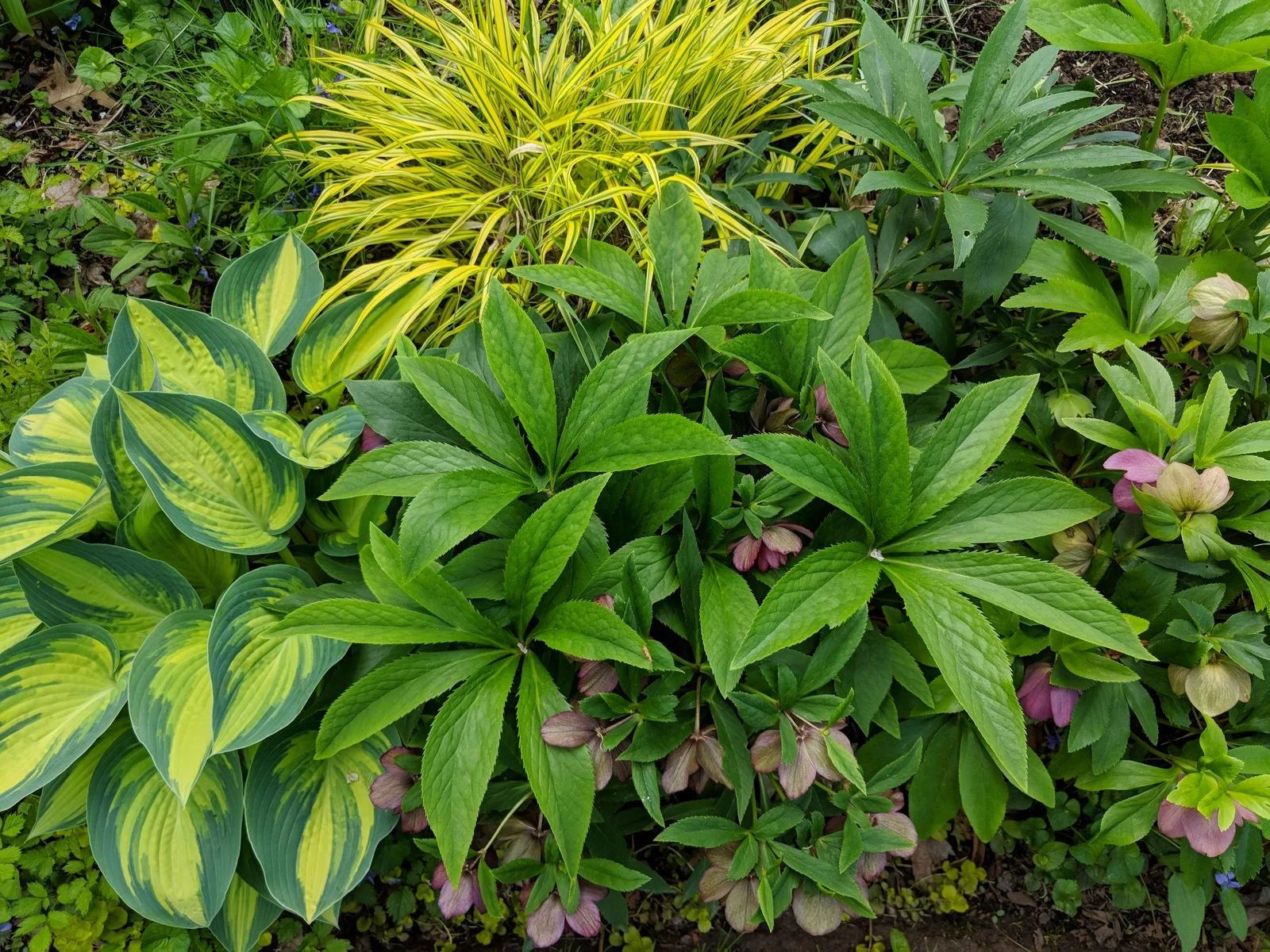
Hosta and hellebore are two of the most useful plants for shady places in the garden. One brings large, beautiful leaves and calmness through the warm season, while the other flowers when most plants are still silent — in late winter and early spring.
In the “Designer Accents in the Garden” series, they are a little different from Japanese maple, magnolia, ornamental plum or nandina. They are not large trees, they do not create tall structure, and they are not visible from far away as a dramatic accent. But they are invaluable where the garden needs softness, depth and life in the shade.
Shady places are often seen as a problem: under trees, beside a north-facing wall, around a terrace, in a more humid corner or beneath taller shrubs. In reality, exactly these places can become the calmest and most elegant part of the garden. Hosta and hellebore are a wonderful foundation for such a composition.
Why Look at Them Together?
Hosta and hellebore have different seasonal rhythms, and this is exactly what makes them a good pair. Hellebore starts very early — often in late winter or early spring, when the garden is almost bare. Its flowers are discreet, but extremely valuable because they appear at a time when every sign of life feels like a small miracle.
Hosta takes over later. It develops large, full leaves in green, bluish, yellow-green or variegated shades. In summer, its foliage gives volume and a finished look to the shaded corner.
If the sunny garden lives through flowers, the shady garden lives through leaves, texture and quiet seasonal surprises.
This combination is especially good for gardens where we do not want empty spaces under trees or around taller shrubs. Hellebore brings the early effect, while hosta fills and softens the space during the active season.
Hosta: The Queen of Foliage in Shade
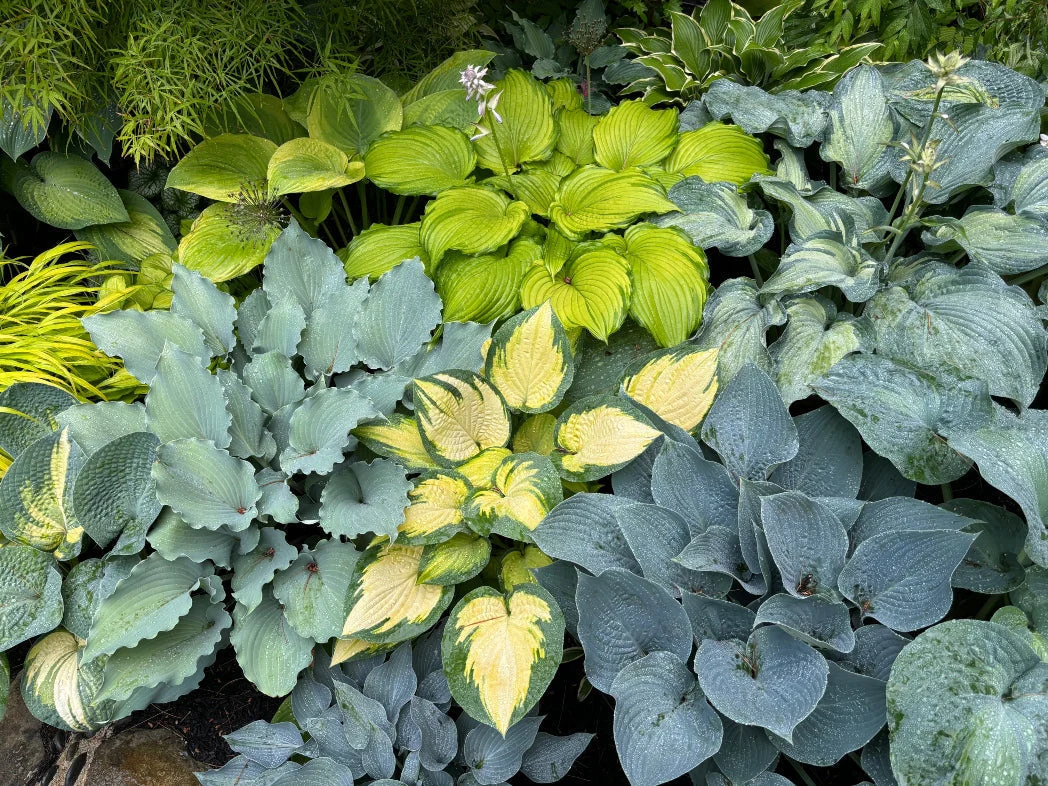
Hosta is a perennial plant valued mainly for its leaves. They can be small or huge, heart-shaped, elongated, smooth, puckered, bluish, green, yellow-green or variegated. This variety is exactly what makes hosta so useful in the design of shady planting beds.
With hosta, flowering is not the main event. It flowers in summer with white or purple blooms, but its real value is the foliage. With it, you can create a calm base around Japanese maple, rhododendron, azalea, ferns or hydrangeas.
Hosta looks very good in groups. One hosta is charming. Several hostas with different sizes and shades already create a composition. Combinations between bluish leaves, light green cultivars and plants with finer texture such as ferns or hakonechloa are especially beautiful.
Hellebore: A Winter Rose for Early Spring
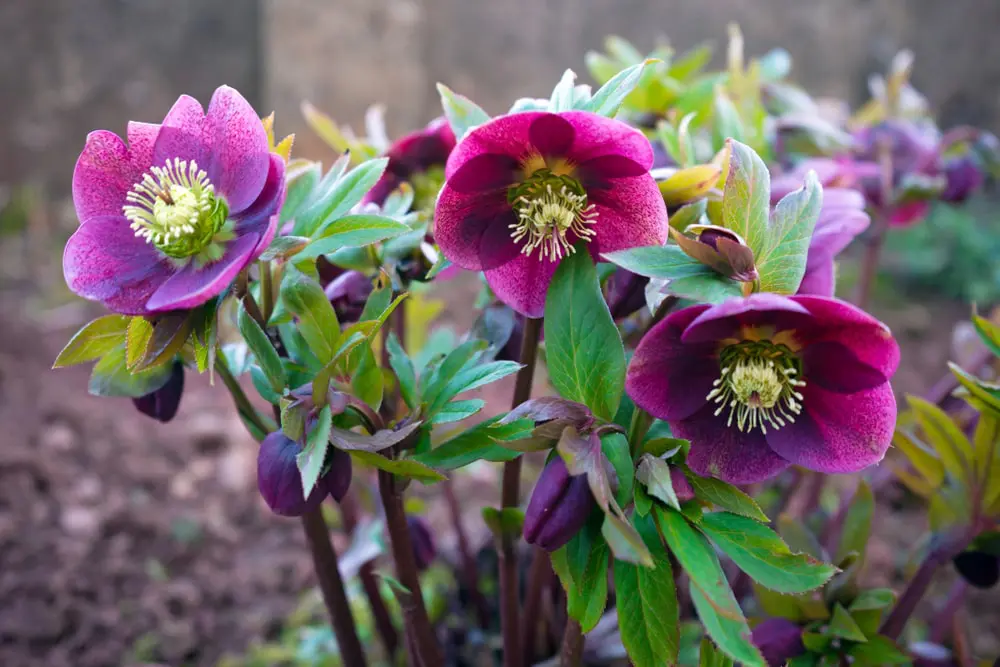
Hellebore, often called winter rose or Christmas rose, is a perennial plant that flowers very early. The flowers may be white, greenish, pink, wine-red, purple, almost black or finely spotted, depending on the cultivar.
Unlike many spring flowers, hellebore does not look fragile or temporary. Its leaves are leathery, deeply cut and decorative through much of the year. The flowers often last for a long time, and the plant gradually forms a stable clump.
Hellebore is especially valuable in gardens where we want winter or early spring interest. It looks wonderful under deciduous trees, around paths, in semi-shaded borders and close to places we pass often in winter. There is little point in hiding it in a distant corner where no one will see its best moment.
Where to Plant Them
Both hosta and hellebore prefer shade to partial shade. They feel best in places with soft light — under trees, along a north- or east-facing wall, around a shaded terrace or in a protected corner between shrubs.
Hosta likes more moisture and coolness. In strong sun, its leaves can scorch, especially in bluish and variegated cultivars. Some light green and yellowish cultivars tolerate more light, but in hot regions it is better to protect them from afternoon sun.
Hellebore is a little more tolerant of dry shade once established, but it also grows better in rich, loose and moderately moist soil. It looks especially good under deciduous trees — in winter and early spring it receives light, while in summer it is protected from strong sun.
Practical tip: place hellebore close to a path, entrance or window. It flowers in a season when we do not spend much time in the garden, so it should be somewhere easy to see.
| Plant | Main Effect | Best Place |
|---|---|---|
| Hosta | Large foliage mass, texture, volume in summer | Shade, partial shade, moist and cool corners |
| Hellebore | Winter and early spring flowers, leathery leaves | Partial shade, under deciduous trees, close to paths |
| Hosta + hellebore | Long seasonal effect — early flowers and summer foliage | Shady borders, Japanese-style corners, woodland compositions |
Soil, Watering and Mulching
Both plants prefer soil rich in organic matter. They grow best in loose, moderately moist and well-drained soil that resembles a woodland layer — with leaf mold, compost and a living structure.
Hosta needs more regular moisture, especially in summer. If the soil dries out too often, the leaves lose freshness and the edges may begin to brown. Hellebore is more patient, but in very dry soil it also suffers and flowers less well.
Mulching is very useful. Leaf mold, compost, wood chips or fine bark help preserve moisture and keep the soil cooler. In shady borders, mulch also creates a more natural look, especially if the composition is inspired by a woodland or Japanese garden.
This post contains affiliate links. As an Amazon Associate, I earn from qualifying purchases at no extra cost to you.
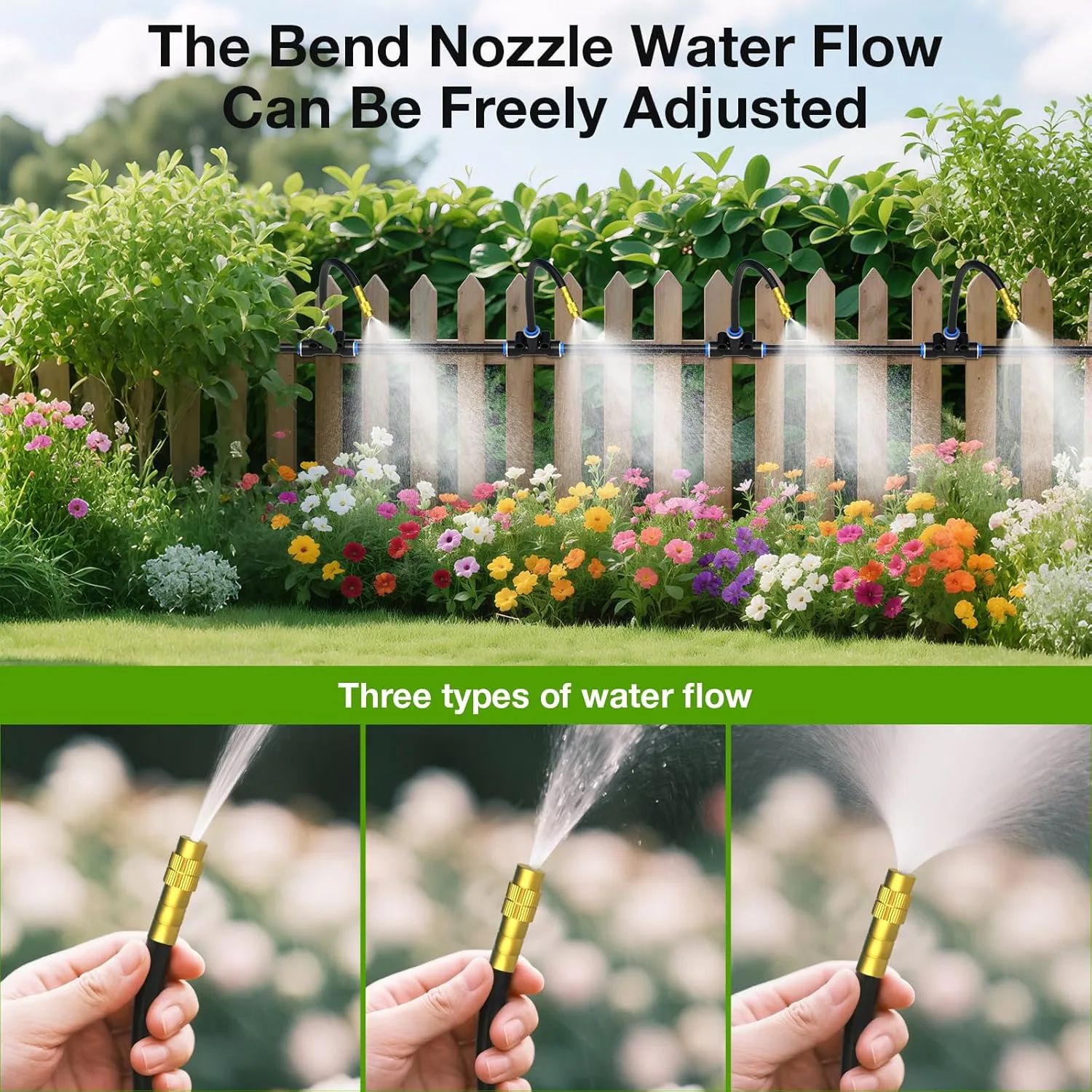
A shady bed can still become surprisingly dry, especially under mature trees where large roots compete with hostas and hellebores for moisture. Hosta in particular looks much better when the soil stays reasonably even instead of repeatedly drying out during summer.
This MIXC irrigation kit uses adjustable watering points that can be arranged through a planting bed. I would set the flow according to the soil and rainfall rather than keeping the entire shaded area permanently wet, because hellebores also need good drainage.
Hosta Care
Hosta is relatively easy if it has enough moisture and is not exposed to strong sun. In spring, it begins to emerge from the ground with fresh new leaves, and in summer it forms a dense clump. In autumn, the leaves turn yellow and gradually disappear because the plant is a deciduous perennial.
The main care is cleaning the old leaves at the end of the season and maintaining moisture during summer. If the clumps become too large, they can be divided in spring or autumn.
The most common problem with hostas is snails and slugs. They love the young leaves almost as much as the gardener waits for them. In moist and shady places, it is wise to check for damage and act in time.
Hellebore Care
Hellebore is a resilient plant that does not like being moved often. Once established, it can stay in one place for years and gradually become more beautiful.
In late winter or early spring, old, damaged leaves can be cut away so the new flowers are easier to see. This also reduces the risk of disease remaining on old foliage and makes the plant look cleaner.
After flowering, hellebore does not disappear. Its leaves remain decorative and can fill the shady border together with hostas, ferns and other plants.
Can They Be Grown in Containers?
Yes, both plants can be grown in containers, but with different logic. Hosta looks very good in a large pot on a shaded terrace or courtyard. It is important that the container does not overheat and that the soil does not dry out constantly.
Hellebore can also be grown in a container, especially if we want a winter accent close to an entrance or window. The container should be deep enough, with good drainage and a high-quality substrate. In summer, it is best kept in a cooler, shadier place.
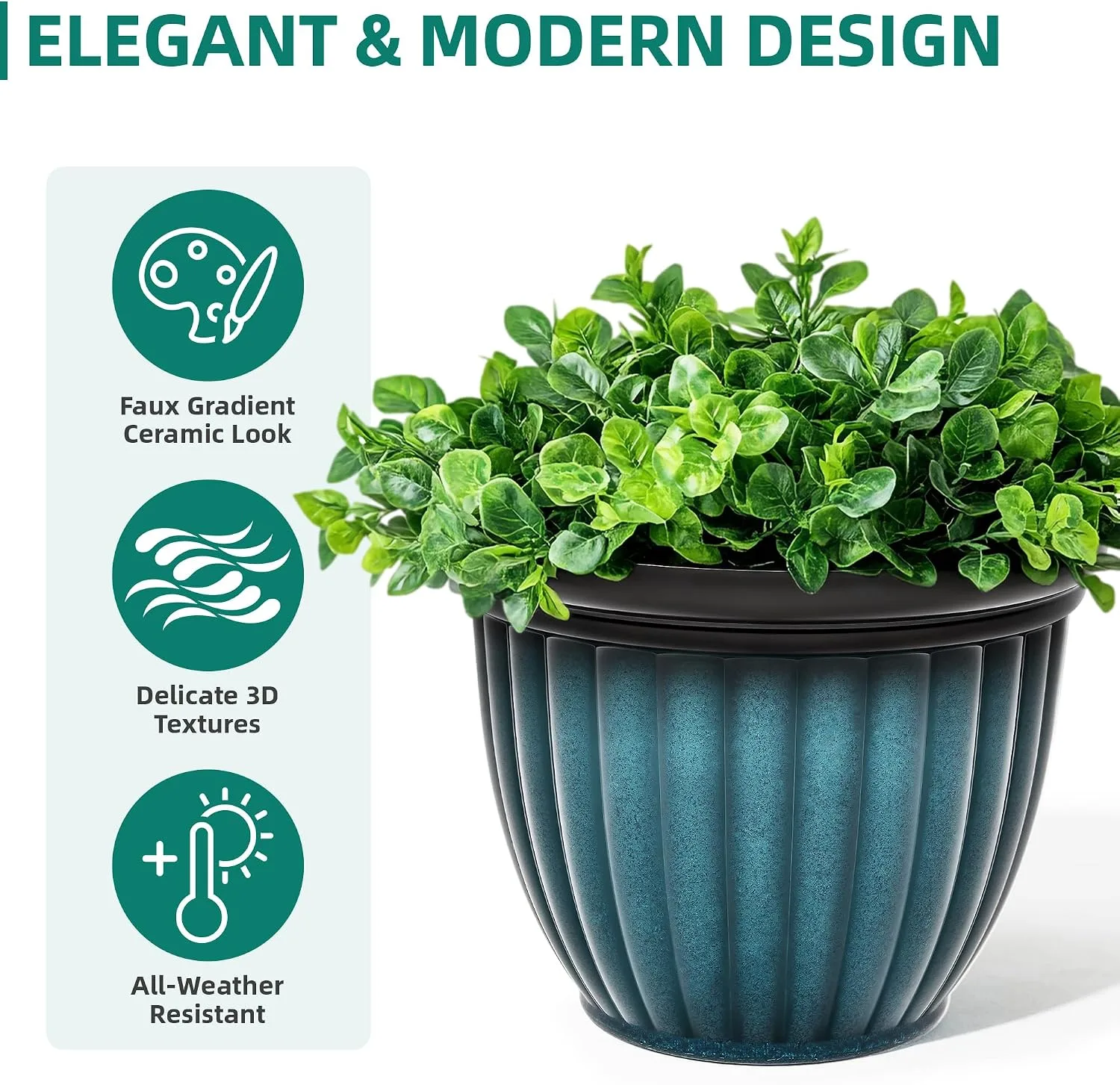
Large-leaved hostas usually look better in a substantial container that gives the foliage room to spread. The extra soil volume also helps moisture fluctuate less quickly than it does in a small pot.
These 15-inch planters can be used for individual hostas or seasonal shade arrangements. A compact hellebore can also work in a substantial container, particularly near an entrance where its early flowers can actually be seen in winter.
What to Combine Them With
Hosta and hellebore combine beautifully with plants that love shade and partial shade. Good partners include ferns, Japanese maple, rhododendrons, azaleas, hydrangeas, brunnera, hakonechloa, epimedium, astilbe and low evergreen shrubs.
In design terms, hosta gives large foliage mass, while hellebore brings an early seasonal surprise. Ferns add fine texture, Japanese maple brings structure above them, and rhododendrons and azaleas provide spring flowering and evergreen volume.
If you want a calmer composition, work with different shades of green, bluish tones and white. If you want more color, add variegated hostas, pink hellebores and hydrangeas. The important thing is not to force the shady corner to imitate a sunny flower bed. It has a different kind of beauty — quieter, deeper and more natural.
The Most Common Mistakes
The first mistake is planting hosta in strong sun. Some cultivars tolerate more light, but most suffer from afternoon heat. The second is allowing the soil to dry out too often, especially with young plants and containers.
With hellebore, a common mistake is moving it constantly. It does not like being disturbed and often needs time to show its full potential. Another mistake is planting it too far from view, even though its most beautiful moment is precisely in winter and early spring.
Are Hosta and Hellebore Worth Growing?
Yes, especially if you have shady places that look empty or difficult to plant.
Hosta brings foliage mass, softness and calmness during the warm season. Hellebore brings winter and early spring interest, when the garden needs life the most.
Together, they can turn shade from a problem into one of the most beautiful places in the garden.