
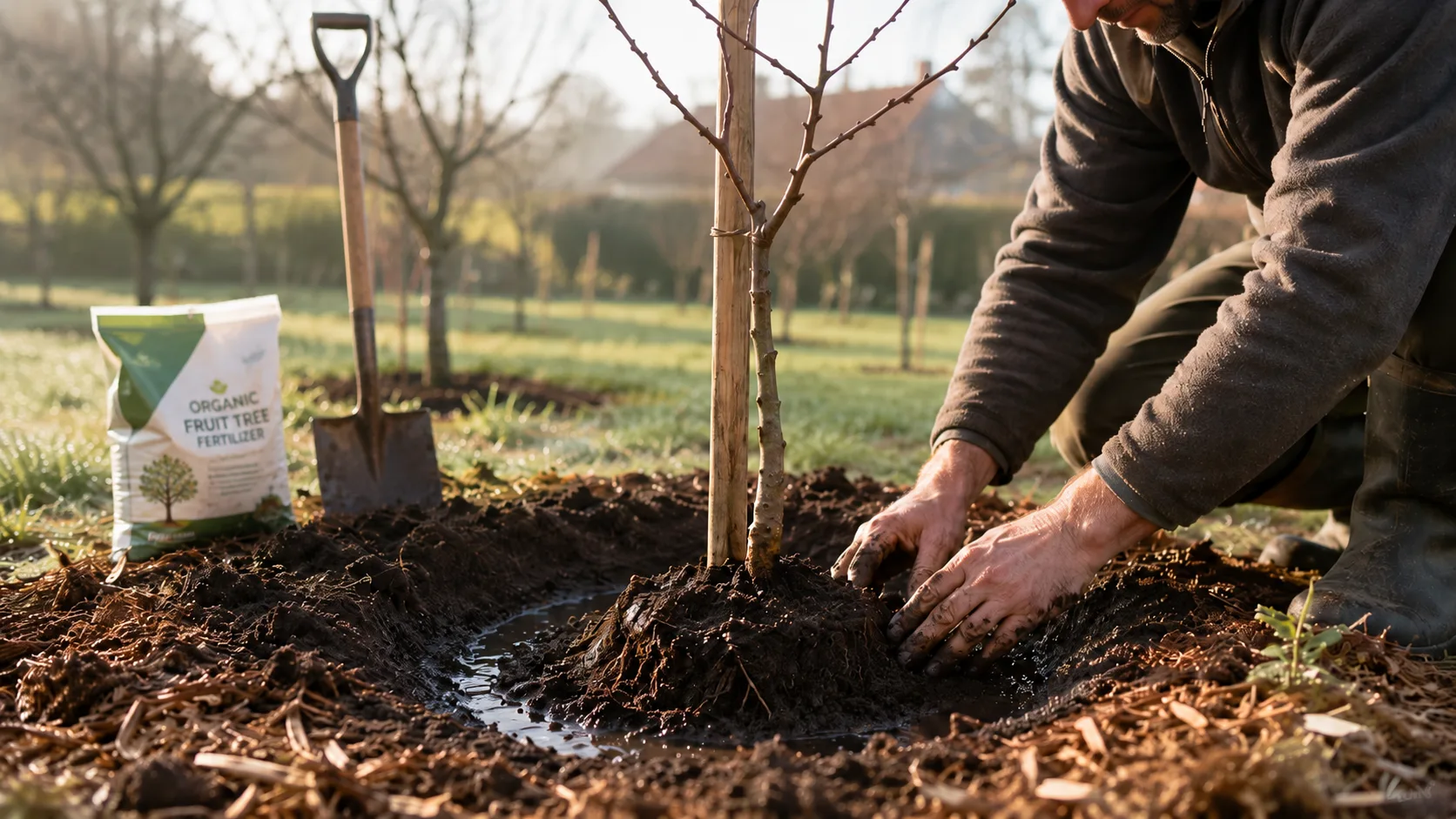
There is something very optimistic about planting a fruit tree. We are not simply putting a young tree into the ground. We are planting an expectation - shade in a few years, the first fruit, and a place we will return to every season to see whether the buds are swelling, whether the blossoms survived the cold, and whether fruit has begun to set.
A fruit tree is not like a tomato plant that we put in the ground in May and by the end of summer already know whether we succeeded. With a tree, we have to think further ahead: about the location, species, cultivar, rootstock, spacing, soil and water.
If we get these things right from the beginning, the tree has a much better chance of developing well for many years.
With fruit trees, the beginning is not a detail. It is half of the future orchard.
In fruit growing, good-quality planting material, the right location, and matching the tree to the soil and climate are the foundation for everything that follows.
When to Plant Fruit Trees - Fall or Spring
Fruit trees are best planted while they are dormant - after the leaves have fallen in fall, or in early spring before active growth begins.
In many situations, fall planting is the better choice, provided the soil is not excessively heavy, cold or waterlogged.
The reason is simple: the tree is dormant, but the soil can still support some root activity. The roots have time to settle, the soil settles around them, and the tree is better prepared when spring arrives.
Spring planting is also completely possible, but timing becomes more important. The soil should be workable, while the buds should still be dormant or only just beginning to swell.
- Best: fall, after leaf drop.
- Also possible: early spring before bud break.
- Avoid: frozen, waterlogged or extremely dry soil.
- Worst timing: late spring when the tree is already in active growth.
| Season | Advantages | What to Watch For |
|---|---|---|
| Fall | Good establishment, natural soil settling around the roots, and an easier start in spring. | Avoid planting immediately before severe freezes or in waterlogged soil. |
| Spring | Useful in colder climates, heavy soils, or when fall planting was not possible. | Plant early, before bud development, and pay close attention to watering. |
How to Choose a Healthy Tree, Cultivar and Rootstock
Not every young tree that looks “alive” is good planting material.
A healthy nursery tree is one of the first serious investments in a future orchard. When choosing a tree, do not look only at the cultivar. Look at the entire plant.
- The roots should be fresh rather than dried out.
- The trunk should be healthy and free from serious wounds or damage.
- The graft union should be strong and well healed.
- The tree should be clearly labeled with the cultivar and, ideally, the rootstock.
- Buy from a reliable nursery rather than an unknown source.
- Find out whether the cultivar needs a compatible pollinizer.
The rootstock is not a minor detail. It influences the eventual size and vigor of the tree, its adaptation to different soils, its performance, and even how we will manage the tree in future years.
With apples, pears, plums, peaches and many other fruit trees, the right combination of cultivar and rootstock can make an enormous difference.
When we buy a fruit tree, we are not buying only a cultivar. We are buying roots, a rootstock, a future canopy and years of future care.
Location and Soil - Think About the Tree 10 Years From Now
Most fruit trees need a sunny location to flower well, set fruit and produce good-quality crops.
Deep shade, a position too close to tall walls or large established trees, and places where water sits for a long time after rain are usually poor choices.
Before digging the hole, think about the tree in 5-10 years, not just the small nursery tree standing in front of you today.
A young tree may look harmlessly small, but eventually it will have a canopy, shade, roots and a considerable need for space.
- Choose a sunny, well-ventilated location.
- Avoid low areas where cold air tends to settle.
- Do not plant too close to buildings, fences or large paved areas.
- Leave enough room for the mature canopy.
- Think about access to water during the first few years.
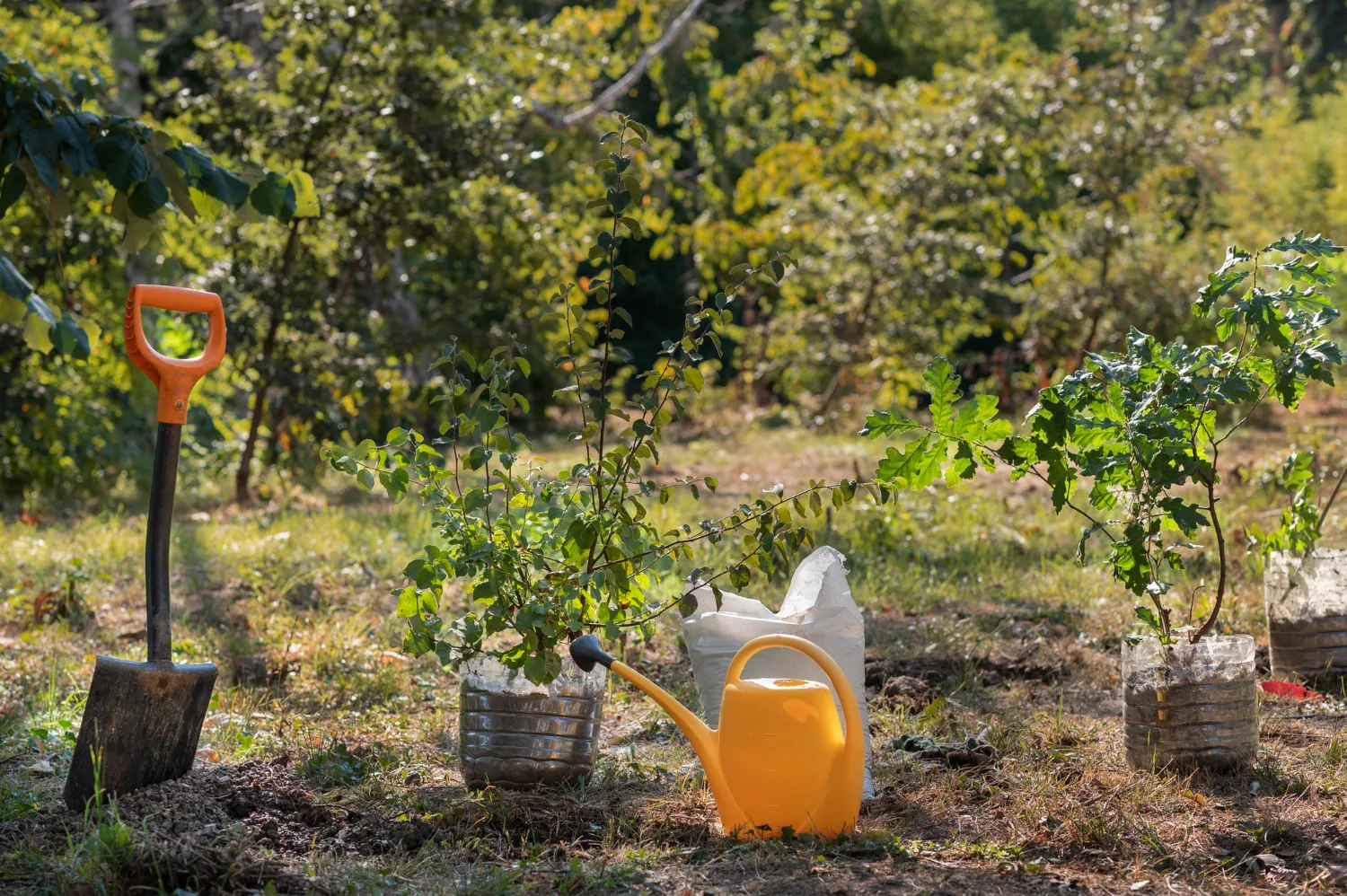
Soil matters too. Fruit trees generally do not thrive at either extreme.
Very heavy, compacted, cold and waterlogged soil restricts root development. Extremely light and sandy soil dries quickly and can leave the tree short of both moisture and nutrients.
Ideally, the soil should be well drained, moderately moisture-retentive, reasonably loose, and rich in organic matter.
In heavy soil, work on improving the structure with compost and organic matter. In sandy soil, compost and mulch can help increase water retention.
Soil pH also matters. Different fruit crops have different tolerances. Blueberries, for example, are a separate case because they prefer distinctly acidic soil. Most traditional fruit trees do not perform best at either extreme of the pH scale.
Preparing the Planting Hole and the Tree
The planting hole should be wide enough for the roots to spread naturally without bending, twisting or being forced into a small space.
Wider is generally more useful than unnecessarily deep.
For a typical home-garden tree, a planting hole around 20-24 inches wide and approximately 16-20 inches deep may be a useful starting point, but the actual size should depend on the root system and the soil.
In heavy soils, it is more important to loosen the surrounding soil than to create a deep bucket-shaped hole where water could collect.
Keep the best topsoil separate and use it again around the roots when backfilling. If you add compost, it should be well decomposed.
Before planting, inspect the roots. Broken or badly damaged roots can be trimmed back to healthy tissue. Very long roots can be lightly refreshed if necessary, but avoid excessive root pruning.
If you are planting a bare-root tree and the roots have been exposed for some time, soaking them in water for a few hours before planting can help rehydrate them.
With container-grown trees, avoid unnecessarily breaking apart the root ball. If the roots are tightly circling the inside of the pot, gently loosen them so they begin growing outward into the surrounding soil.
How to Plant a Fruit Tree Step by Step
Planting a fruit tree is not complicated, but there are several details worth getting right.
- Choose a suitable location and prepare the planting hole.
- Keep the best topsoil separate for backfilling around the roots.
- Inspect the root system and trim damaged roots if necessary.
- Install a support stake if the young tree needs one.
- Spread the roots naturally inside the planting hole.
- Backfill with loose soil, gradually filling the spaces around the roots.
- Firm the soil gently without compacting it excessively.
- Water thoroughly so the soil settles around the roots.
- Create a shallow watering basin around the young tree.
- Add mulch, but keep it away from direct contact with the trunk.
The graft union should remain above soil level. If it is buried, the cultivar may produce its own roots, which can interfere with the intended role of the rootstock.
Plant the young tree at approximately the same depth it was growing at the nursery. You can often see the previous soil line as a slight change in the color of the trunk.
Planting too deeply is one of the most common mistakes. It can cause excess moisture around the trunk, bark problems and weaker development.
Water thoroughly after planting. This is not the moment for a token splash of water. The goal is to settle the soil properly around the roots.
Fertilizing, Watering and Mulching After Planting
Fertilizer is one of those areas where good intentions can easily lead to doing too much.
Yes, the tree needs healthy soil. But strong fresh manure or concentrated fertilizer should not be placed directly against young roots.
A better approach is:
- well-finished compost;
- loose, fertile soil;
- organic matter mixed through the soil rather than concentrated against the roots;
- mulch after planting;
- moderate feeding later, once the tree has established and only when needed.
With a young fruit tree, more fertilizer does not necessarily mean more care. Sometimes it simply means more stress.
Water is equally important during the first year. The young tree has not yet developed an extensive root system in its new location and cannot rely on deeper soil moisture in the same way an established tree can.
- With fall planting, natural rainfall may help considerably, but soil moisture still needs checking.
- With spring planting, regular watering becomes much more important.
- During the first summer, young trees should not be allowed to dry out completely.
- At the same time, the soil should not remain permanently saturated or muddy.
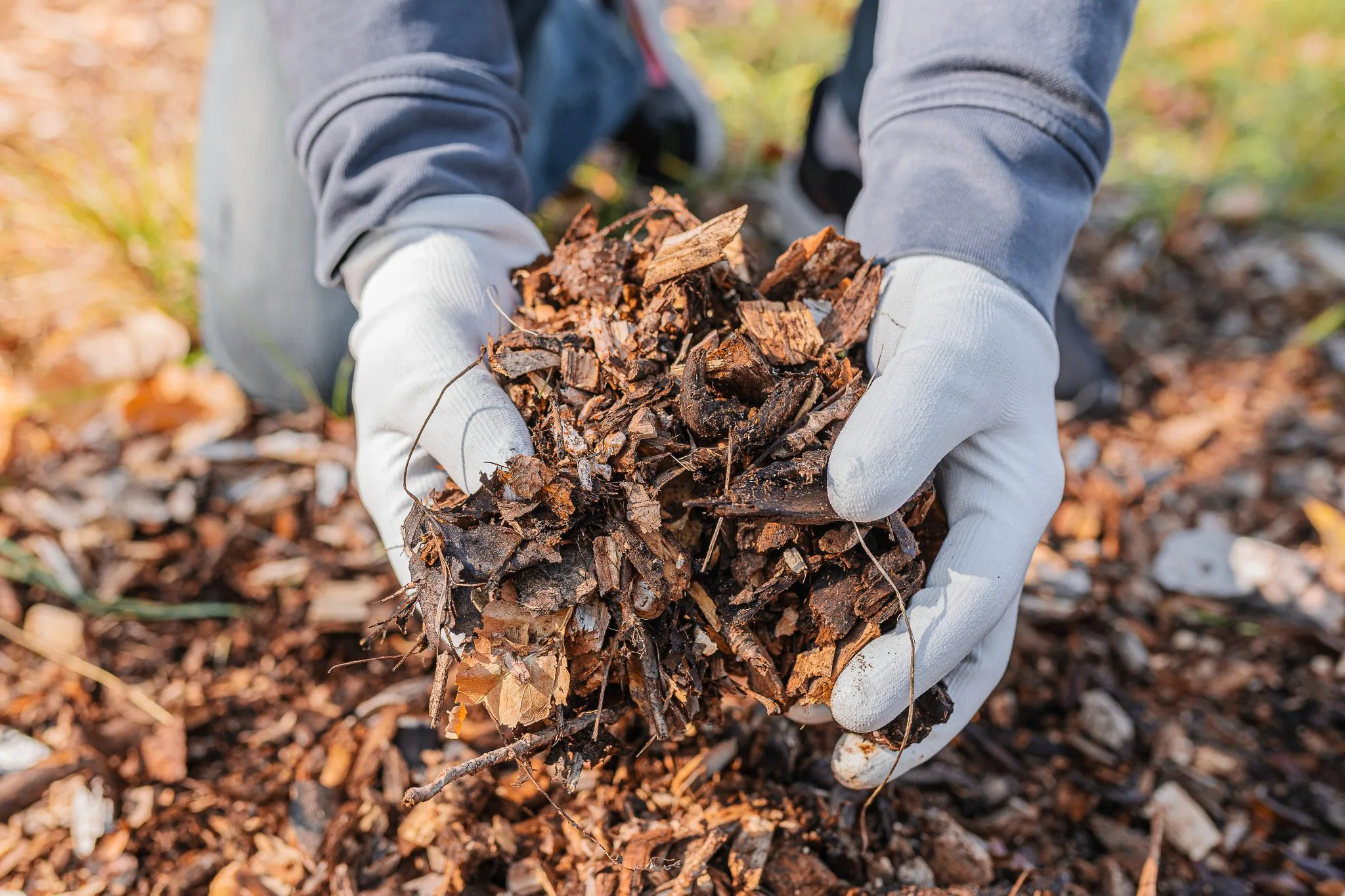
Mulching is one of the most useful practices for young fruit trees. It helps retain moisture, suppresses weeds, protects the soil from excessive heat, and gradually contributes to better soil structure.
Suitable materials can include straw, wood chips, dry leaves, compost or other well-decomposed organic matter.
Keep a small mulch-free ring immediately around the trunk so moisture is not held constantly against the bark.
Fruit Tree Spacing and the First Pruning
Spacing depends on the fruit species, cultivar, rootstock and training system.
That is why there is no single distance that works for every fruit tree.
In a home orchard, one of the most important things is simply not to plant too closely.
During the first few years, the empty space can look excessive. Then suddenly the canopies begin to meet, air circulation decreases, and pruning becomes much more difficult.
| Fruit Tree | Approximate Home-Orchard Spacing |
|---|---|
| Apple | About 10-16 ft, depending strongly on rootstock and training system. |
| Pear | Around 13-16 ft for more vigorous trees; less with dwarfing rootstocks. |
| Peach | About 13-16 ft |
| Apricot | About 16-20 ft |
| Sweet Cherry | About 16-20 ft, sometimes more for vigorous trees. |
| Plum | About 13-16 ft |
| Fig | About 13-16 ft, allowing for a broad mature canopy. |
These distances are only general guidelines. For any particular garden, consider the rootstock, soil, climate, training system and the amount of available space.
Some initial pruning is often carried out after planting to help balance the top growth with the reduced root system and to begin forming the future canopy.
This should not be done mechanically. Different fruit trees are trained and pruned differently, and the correct approach depends on both the species and the intended form.
For beginners, moderate and deliberate pruning is usually much safer than enthusiastically trying to “shape the tree” all at once.
Common Planting Mistakes and a Simple Seasonal Calendar
Many problems with young fruit trees do not begin with pests or diseases. They begin on planting day.
- planting in an unsuitable location;
- planting too deeply;
- burying the graft union;
- placing fresh manure directly against the roots;
- allowing bare roots to dry before planting;
- failing to water thoroughly after planting;
- planting trees too close together;
- choosing a cultivar without considering pollination requirements;
- buying trees from an unknown or unreliable source.
The most deceptive mistakes are the ones that are almost invisible at first.
The tree begins growing, everything looks fine, and then several years later you discover that it is too close to another tree, the canopy has nowhere to expand, there is no compatible pollinizer, or the location stays far too wet.
| Period | What to Do |
|---|---|
| September - October | Plan the orchard, choose fruit species and cultivars, check pollination needs and work out spacing. |
| November - December | Main fall planting period after leaf drop and before prolonged severe freezes, where local conditions allow. |
| January - February | Avoid planting in frozen soil. Use the time to plan, order trees and prepare planting areas whenever conditions permit. |
| March - Early April | Spring planting may still be possible before bud break, with particular attention to watering. |
| May - August | Care for established young trees: watering, mulching, weed management and regular observation. |
My View on Planting Fruit Trees
Fruit trees require a little more thought at the beginning than we sometimes expect.
Often, we fall in love with the cultivar first: a beautiful apricot, an old apple, a sweet pear, an early cherry or a fig that reminds us of summer.
And there is nothing wrong with that. But after the romance comes the practical part: where will it grow, what is the soil like, is there enough water, does it need a pollinizer, how large will it become, and will we be able to manage its pruning?
For me, the best kind of fruit-tree planting is calm, considered planting. No rushing. No “we’ll work that out later.” And no putting a tree somewhere simply because there happens to be an empty space today.
Because an empty space today may turn out to be exactly the wrong place five years from now.
When a fruit tree is planted well, it rewards you very quietly. First, by establishing. Then by growing. Then with blossom. And eventually with fruit that somehow tastes different because you know how long you waited for it.
A fruit tree is not planted only for this season. It is planted for the future garden.
If you remember only a few things, make them these: plant at the right time, choose a healthy tree, give it enough space, keep the graft union above the soil, do not overfertilize, and protect the young tree from severe drought.
The rest comes through observation and time.