
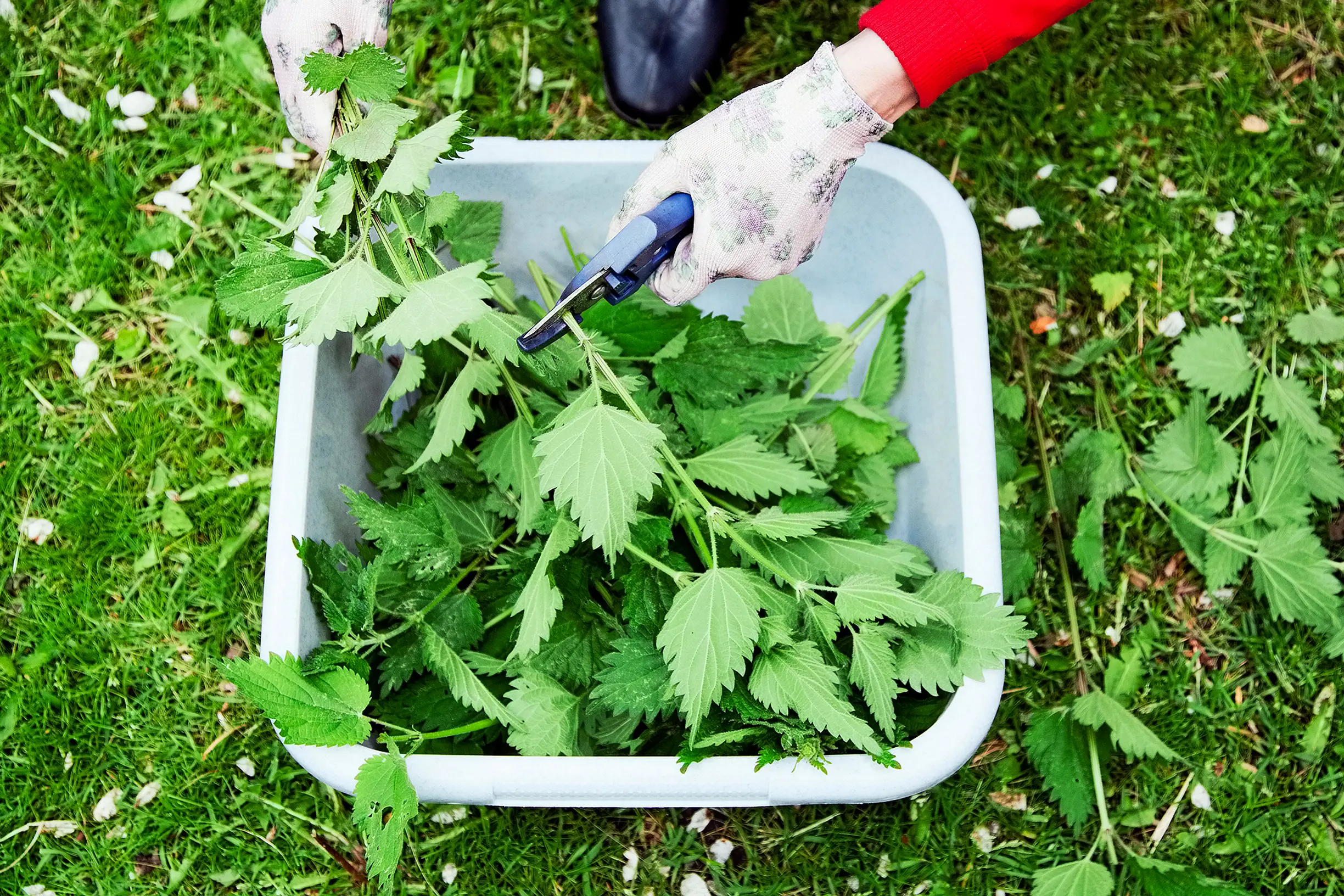
Liquid nettle extract is a popular homemade way to use fresh plant material as a supplement to regular soil and plant care.
As nettles soak and break down in water, some of their mineral nutrients move into the liquid, but the composition of the finished extract is not constant. It depends on the amount of nettle, the volume of water, temperature and how long the mixture is left to decompose.
For that reason, it is more useful to think of it as a homemade plant extract with some nutritional value, rather than a fertilizer with a precisely known formula.
Liquid nettle extract can be useful, but it does not replace good soil, compost and balanced plant nutrition.
What Is Liquid Nettle Extract?
In simple terms, it is a liquid produced by soaking fresh nettles in water for a period of time.
As the plant tissue begins to break down, some of the mineral elements contained in the nettles move into the water.
The resulting liquid is usually dark, strongly scented and variable in composition.
How to Make Liquid Nettle Extract
You do not need a complicated recipe, but it is best to use a container that will not later be used for food.
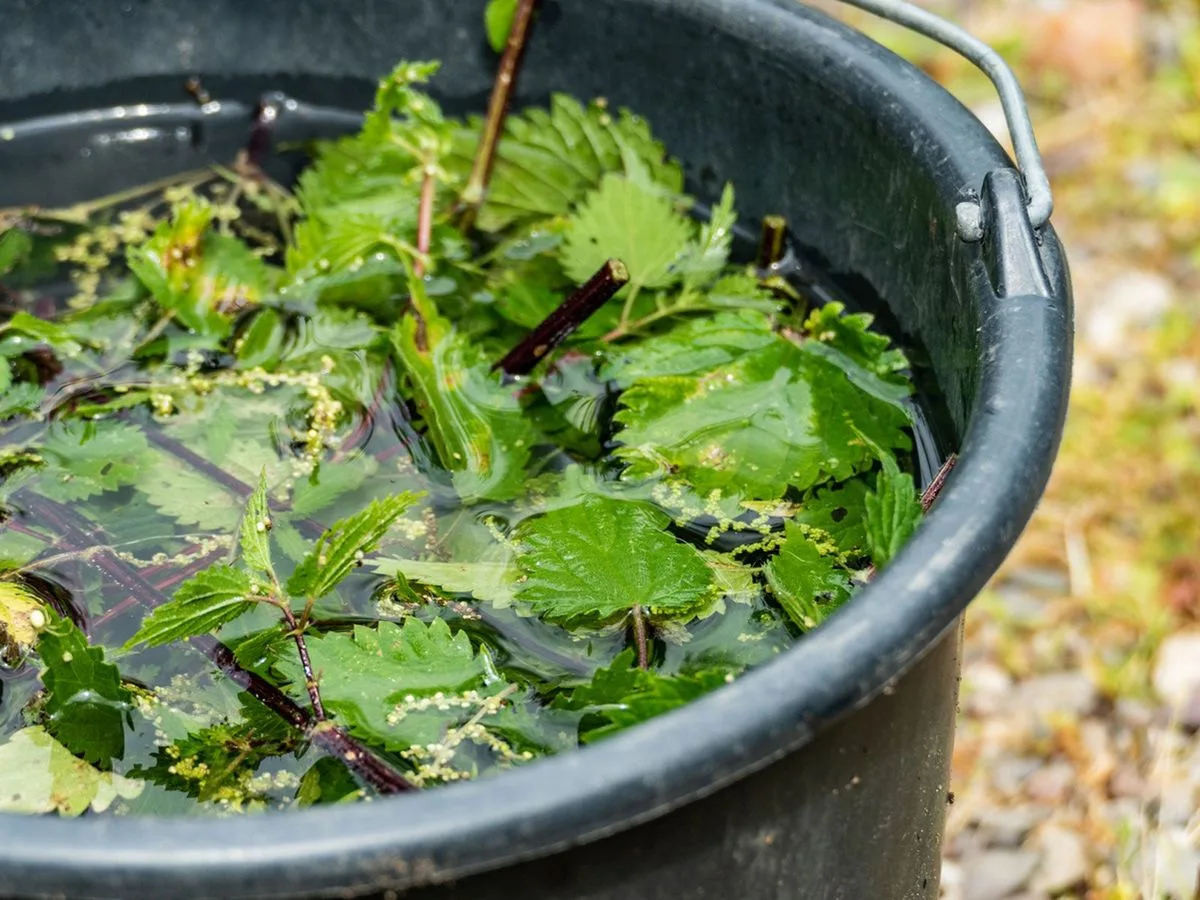
The nettles can be roughly chopped, placed in the container and covered with water. There is no need to pack the plant material tightly.
- use fresh nettles without obvious disease;
- avoid large amounts of plants with mature seeds;
- roughly chop thicker stems;
- cover the plant material with water;
- leave some empty space at the top of the container;
- stir occasionally;
- keep the container somewhere where the strong odor will not be a problem.
The rate of decomposition depends strongly on temperature. In warm conditions, the process moves faster, while cooler weather can slow it considerably.
What Happens While the Nettles Soak?
After several days, the plant material begins to soften and visibly break down.
Bubbles, foam and a strong odor may develop. These are signs of active decomposition of the organic material.
A stronger smell does not mean the extract is automatically stronger or more beneficial.
How to Use Liquid Nettle Extract
Because homemade nettle extract does not have a standardized concentration, it is safer to use it diluted.
A commonly used practical starting point is around one part extract to ten parts water for soil application, but this should not be treated as a universal formula.
| Use | Practical approach | What to watch |
|---|---|---|
| Soil application | Apply diluted extract around the root zone. | Plant condition, soil moisture and the overall feeding program. |
| Young plants | Use a weaker dilution and smaller amounts. | Young roots are more sensitive to concentrated solutions. |
| Container plants | Apply carefully and at a weaker concentration only when feeding is actually needed. | Salts can accumulate more easily in containers. |
With homemade liquid extracts, the actual nutrient concentration is unknown. Moderate application is therefore more sensible than using a very concentrated solution.
When Can It Be Useful?
Liquid nettle extract makes the most sense during periods of active vegetative growth, when plants are producing leaves and stems.
That does not mean every plant needs it. If the soil is already fertile and plants are growing well, additional feeding may be unnecessary.
When Should You Be More Careful?
Nitrogen-rich feeding is not equally useful throughout the season or for every crop.
If a plant is already producing very lush leafy growth, additional nitrogen may be unnecessary.
With fruiting crops, excessive nitrogen can encourage leaves and stems at the expense of flowering and fruit production.
- do not use it automatically whenever leaves turn yellow;
- do not apply it frequently simply because it is homemade;
- be cautious with plants that are already growing vigorously;
- reduce nitrogen-rich feeding later in the season for perennial plants;
- do not expect nettle extract to correct every nutrient deficiency.
If a plant is growing well, there is no reason to feed it simply because you have a batch of nettle extract ready.
What About Foliar Spraying?
Homemade nettle extract does not have a standardized composition, and the liquid may contain fine plant particles and microorganisms.
For that reason, it is not a good idea to automatically recommend spraying it over edible leaves, fruit or other plant parts that may soon be harvested.
In the home vegetable garden, applying a well-diluted extract to the soil is the simpler and more predictable approach.

Liquid Nettle Extract or Compost?
They have very different roles.
Compost adds stable organic matter and has long-term value for soil structure and soil health.
Liquid nettle extract has a more temporary effect and adds very little stable organic matter to the soil.
| Compost | Liquid nettle extract | |
|---|---|---|
| Main role | Long-term soil improvement. | Supplemental, short-term feeding. |
| Organic matter | Adds a meaningful amount. | Does very little to build soil structure. |
| Composition | Also variable, but mature compost is relatively stable. | Depends heavily on how it was made. |
| Use | Suitable for regular long-term soil care. | Better treated as an occasional supplement when plants actually need it. |
Common Mistakes When Using Nettle Extract
Liquid nettle extract is an easy way to make use of fresh plant material from the garden.
It can supplement plant nutrition during active growth, but it does not have a precise, standardized composition and should not be treated as a universal fertilizer.
Use it moderately and diluted, watch how plants respond, and remember that good soil, compost, consistent moisture and balanced nutrition remain the foundation of a healthy garden.