
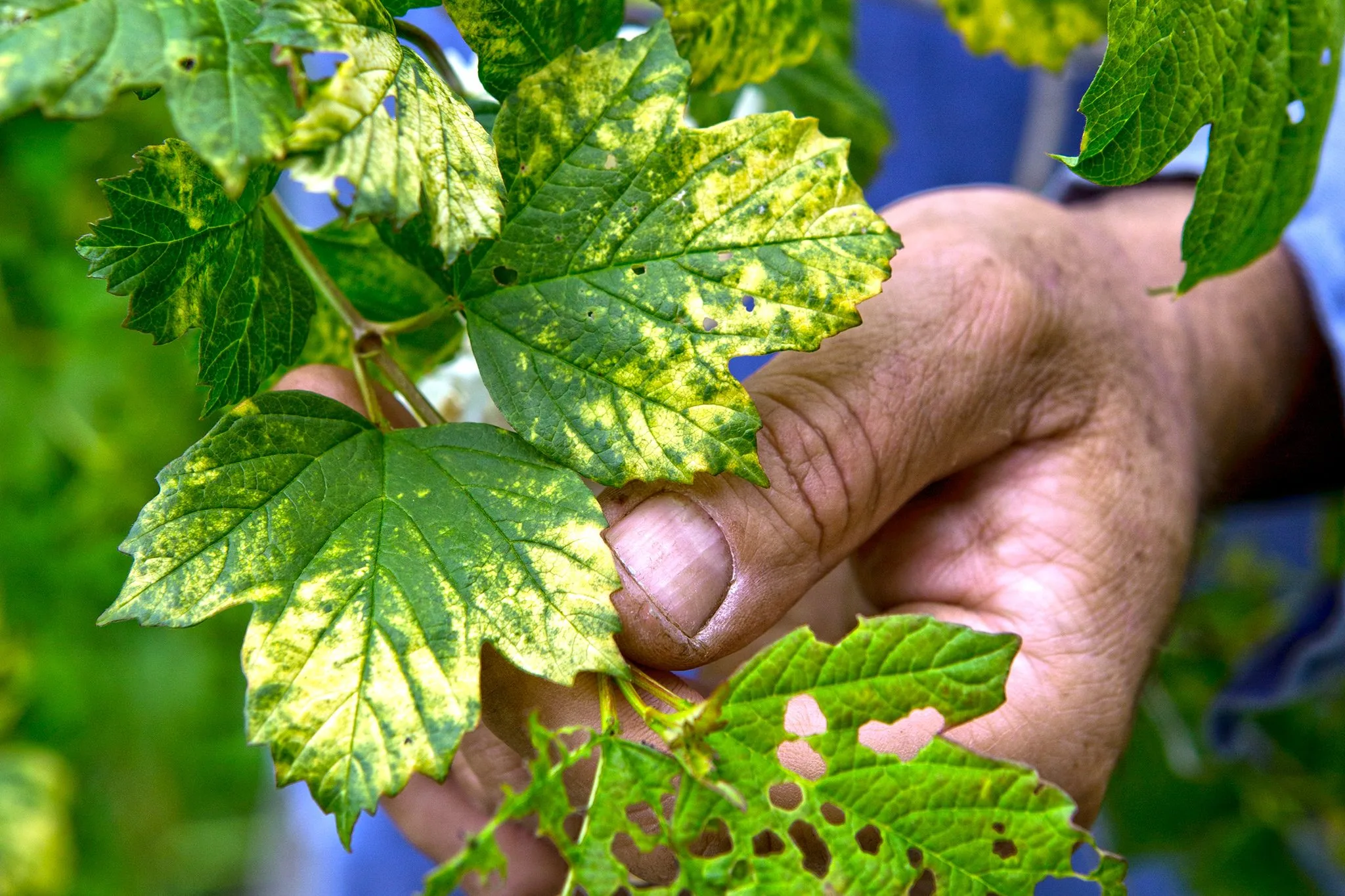
Yellow leaves are one of the most common signs that a plant is under some form of stress.
The cause, however, is not always a lack of fertilizer. Overwatering, drought, root problems, unsuitable soil pH, nutrient deficiencies or simply natural leaf aging can produce very similar symptoms.
For that reason, the best approach is not to fertilize immediately, but first to look at where the yellowing begins, what the soil is like and how the whole plant is developing.
A yellow leaf is a symptom, not a diagnosis. Before adding anything, first work out what has actually changed.
What Do Yellow Leaves Mean?
Yellowing leaves are often described as chlorosis. This means that the green color produced by chlorophyll has decreased.
But there can be many different reasons for that reduction. Sometimes a plant is short of a nutrient, while in other cases the roots simply cannot absorb nutrients properly.
That is why it is important to observe not only the color, but also the pattern and location of the symptoms.
When Nutrient Deficiency May Be the Cause
Deficiencies of certain nutrients can produce recognizable patterns of yellowing.
These patterns, however, should be used as clues rather than as a guaranteed diagnosis, because several different problems can cause similar symptoms.
| Possible deficiency | Typical pattern | What to keep in mind |
|---|---|---|
| Nitrogen | Older leaves often begin to become pale or yellow fairly evenly. | Root problems can create a similar appearance. |
| Iron | Younger leaves may turn yellow while the veins remain greener. | This is often related to unsuitable soil pH, not simply a lack of iron in the soil. |
| Magnesium | Interveinal chlorosis often appears on older leaves. | Symptoms can overlap with other problems. |
| Potassium | In some plants, yellowing may begin around the leaf margins and later develop into browning or scorching. | Drought and salt stress can look similar. |
With unsuitable pH, waterlogged soil, damaged roots or severe compaction, a plant may not absorb nutrients properly even when those nutrients are already present in the soil.

Overwatering Is a Very Common Cause
When soil remains constantly wet, the amount of air between soil particles decreases.
Roots need oxygen, and prolonged waterlogging can interfere with normal root function.
In that situation, a plant may look as if it needs fertilizer, even though the real problem is in the root zone.
When Is Underwatering the Problem?
Prolonged drought can also cause leaves to yellow, particularly when combined with high temperatures.
When water is limited, plants often lose turgor, leaf margins may dry out, and growth slows down.
- dry soil throughout the root zone;
- wilting even during the cooler part of the day;
- dry or scorched leaf margins;
- slower growth;
- older leaves dropping during prolonged stress.
The same yellow leaf can be caused by too much water or too little. The condition of the soil usually tells you more than the color alone.
Check the Soil and Roots Before Fertilizing
Before adding fertilizer, check the moisture several inches below the soil surface.
The top layer may look dry while the soil underneath remains very wet.
With container plants, also check that excess water can drain freely from the drainage holes.
Soil pH Can Make Nutrients Unavailable
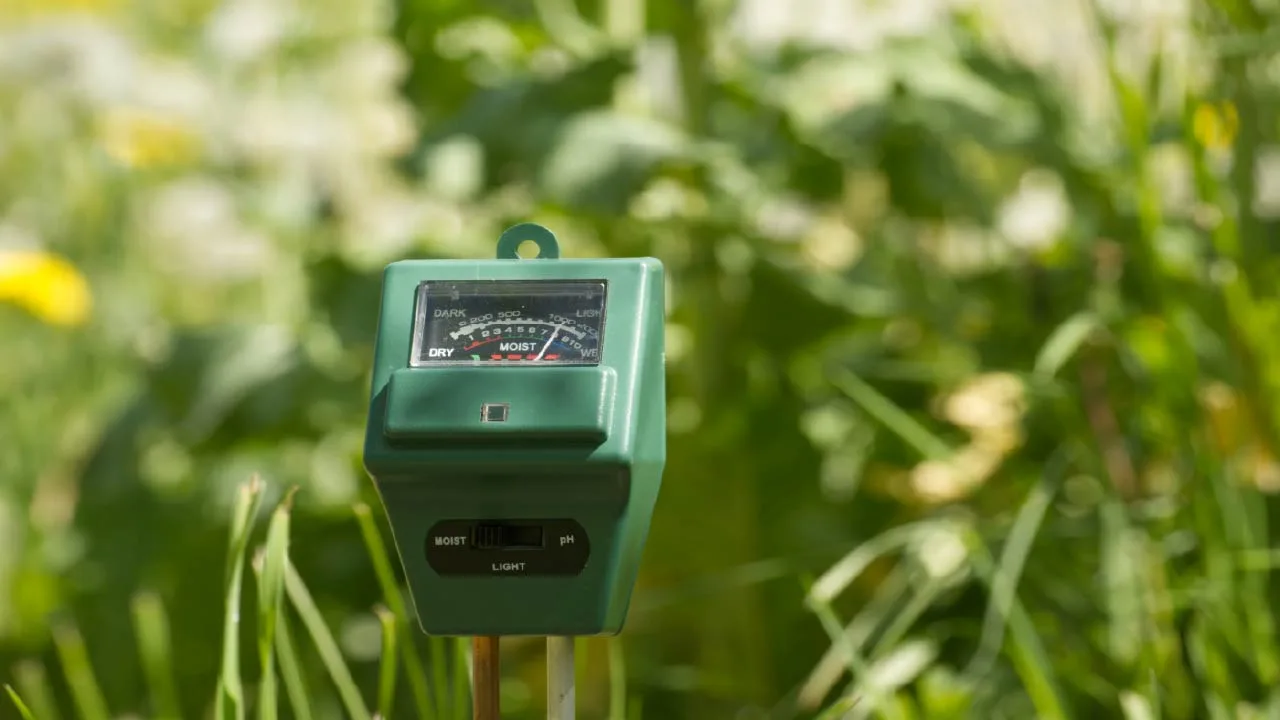
Soil pH affects how easily plants can absorb different nutrients.
Iron, for example, can become less available when soil pH is too high, sometimes causing chlorosis on young leaves.
In that situation, adding more fertilizer may not solve the problem if the real cause is soil chemistry.
Soil may contain enough nutrients, while the plant is unable to absorb them effectively. That is why pH, moisture and root condition should be checked before adding more fertilizer.
Not Every Yellow Leaf Is a Problem
Older leaves may naturally turn yellow and fall as a plant replaces them with new growth.
This is especially normal when only a few lower leaves are affected, while new growth looks healthy and the plant continues to develop normally.
A problem is more likely when yellowing spreads quickly, affects new growth or appears together with wilting, spots, distortion or decay.
How to Find the Cause Step by Step
| Check | What to look for |
|---|---|
| 1. Moisture | Is the soil too wet or too dry in the root zone? |
| 2. Which leaves are yellow? | Older leaves, younger leaves or the entire plant? |
| 3. Pattern of yellowing | Uniform, between the veins, around the margins or in spots? |
| 4. Soil and pH | Is there poor drainage, severe compaction or unsuitable soil pH? |
| 5. Other symptoms | Spots, pests, rot, distorted growth or severe wilting? |
Common Mistakes When Leaves Turn Yellow
Yellow leaves are not a disease by themselves, but a symptom with many possible causes.
Start by checking moisture, drainage and root conditions. Then look at which leaves are affected and exactly how their color is changing.
Only when there is good reason to suspect a nutrient deficiency does it make sense to add fertilizer. In many cases, correct watering and a healthy root environment solve more than another dose of plant food.