
Table of Contents
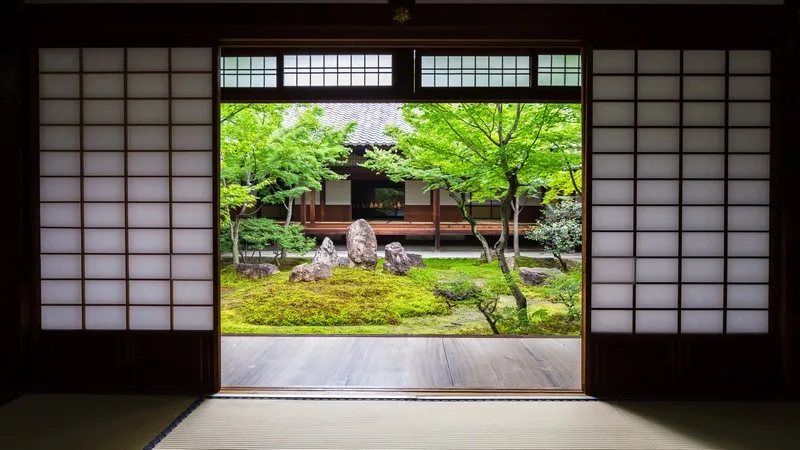
After visiting Japan, I came home still thinking about the gardens and parks of Kyoto. What stayed with me most was not one particular plant or decorative detail, but the way stone, water, greenery and empty space seemed to work together.
Nothing felt loud or overdesigned. There was no sense that every corner had to contain another plant, another ornament or another idea. The restraint was part of the beauty.
Creating a Japanese garden at home does not mean building a miniature Kyoto in the backyard. For me, it makes much more sense to understand the principles behind the design and then adapt them to the space, climate and garden we actually have.
Audio version
This article is also available as a calm audio version. Press play if you would rather listen.
What Makes a Garden Feel Japanese?
A Japanese garden is not defined by adding a Japanese maple, a stone lantern or a few bamboo canes. What matters more is the relationship between the individual elements.
A Little History Before We Begin
Japanese gardens have developed over many centuries and through several distinct styles. Early gardens were influenced by Chinese landscape traditions and Buddhist ideas about nature, with lakes, islands and symbolic landscape features playing an important role.
Later, recognisably Japanese approaches developed around asymmetrical composition, carefully framed views and the relationship between architecture and landscape. Zen traditions also influenced the development of minimalist rock gardens, while later landscape gardens became more elaborate, with ponds, shaped hills and carefully trained trees.
This history matters because there is no single correct formula for a Japanese garden. We can borrow the principles without pretending that every garden must look exactly like a temple garden in Kyoto.
I am not trying to copy a Japanese garden. I am more interested in understanding why being in one makes me slow down.
If you want to experience a little of this philosophy for yourself, Kyoto offers a hands-on Zen garden experience combined with a traditional matcha tasting . It feels particularly relevant here because it connects the ideas behind Japanese garden design with the culture that shaped them.
*This article contains affiliate links. I may earn a small commission from qualifying bookings at no extra cost to you.
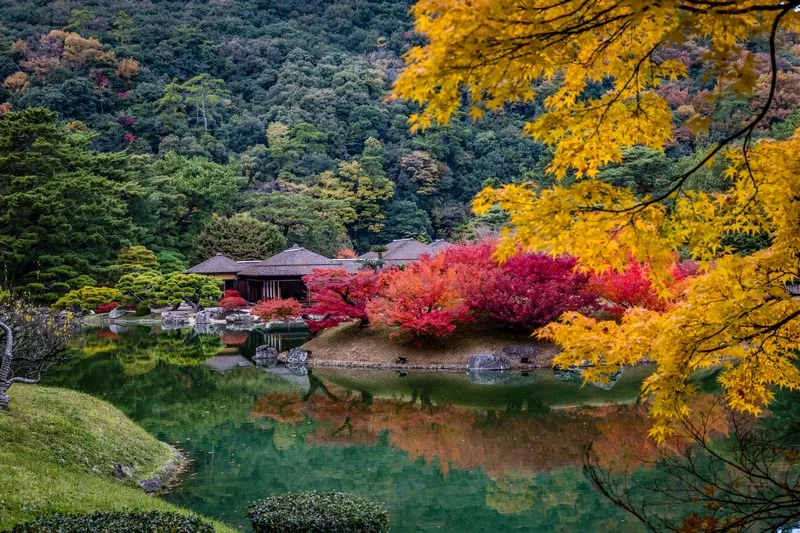
How to Create a Japanese Garden at Home
Look for an area that can feel slightly separate from the rest of the garden. It might sit beside a fence, near a terrace, in a side garden or in a surprisingly small corner of the yard.
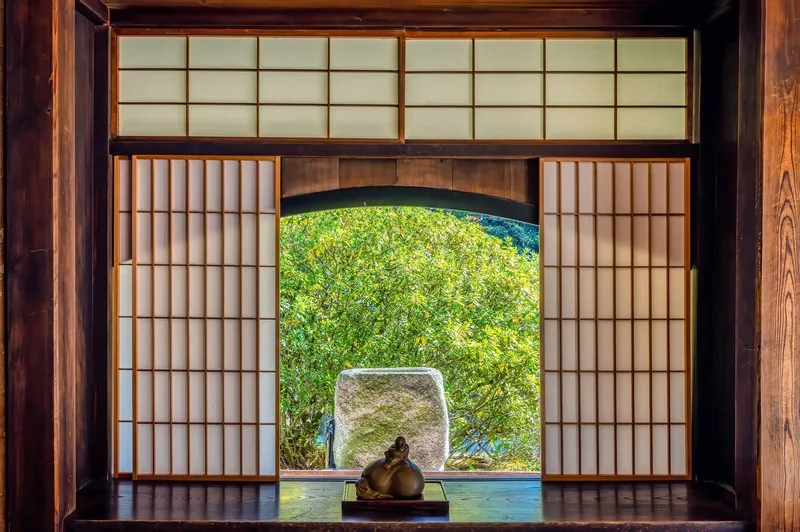
Before planting anything, think about where you will normally see the garden from. It may be a window, a doorway, a bench or a path.
Mark the main positions of paths, plants, stones and any water feature before you start buying individual decorative elements.
Resist the temptation to fill every available corner. Some of the strongest visual moments come from the spaces between plants, stones and individual compositions.
A lantern, bridge, water basin or ornamental stone should support the main composition, not become the reason for the entire design.
Which Plants Work in a Japanese Garden?
I would avoid treating this as a compulsory shopping list. A Japanese-style garden is not created simply by collecting five plants associated with Japan.
What I would look for instead is a calm green structure, changes through the seasons and a mixture of heights, textures and forms.
Japanese Maple
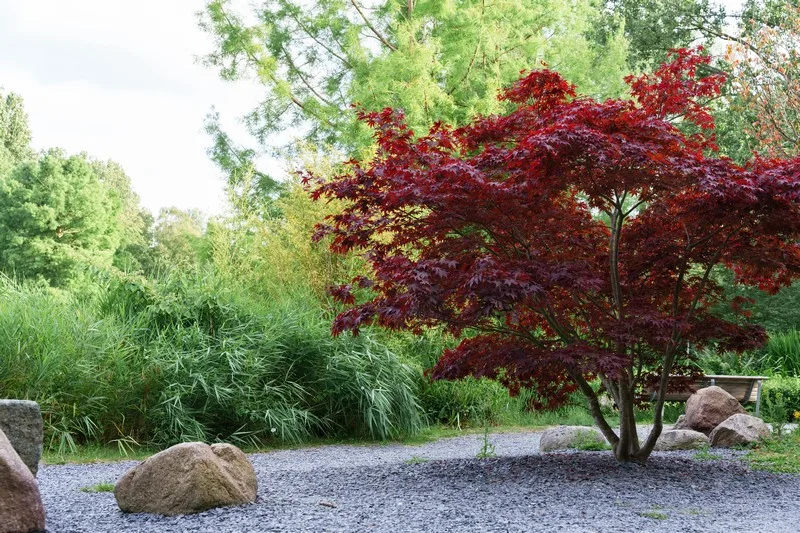
Acer palmatum is probably one of the most recognisable plants used in Japanese-inspired gardens. Its delicate foliage and autumn colour can become a strong seasonal focal point.
The exact variety and position should still be chosen for your own climate, sun exposure and protection from drying winds.
Azaleas and Rhododendrons
These plants can create beautifully shaped masses of green foliage, followed by a relatively short but spectacular flowering season.
Suitable acidic soil and the right growing conditions matter far more than planting them simply because they look suitably Japanese.
Japanese Iris
Iris ensata and other irises can work particularly well around wetter areas and water features.
Moss
Moss is strongly associated with many Japanese gardens, but it is not suitable everywhere. Trying to maintain a perfect carpet of moss in a hot, dry garden can become a distinctly un-Zen exercise in frustration.
Where the conditions are unsuitable, I would rather use low green plants that create a similar soft effect without constantly fighting the climate.
Bamboo
Bamboo can quickly introduce height, movement and privacy, but the species needs to be chosen carefully.
With strongly spreading types, a container or reliable root barrier is much more sensible than hoping the bamboo will politely respect the boundaries of your design.

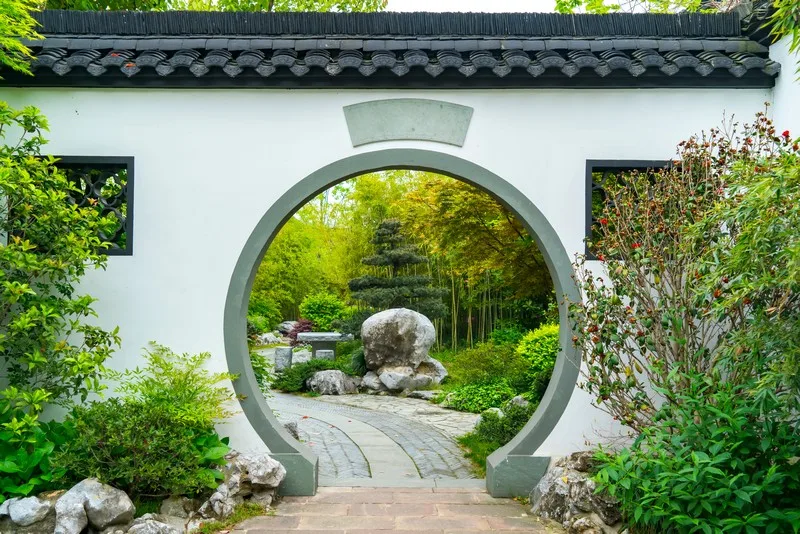
Stones Matter More Than They First Appear
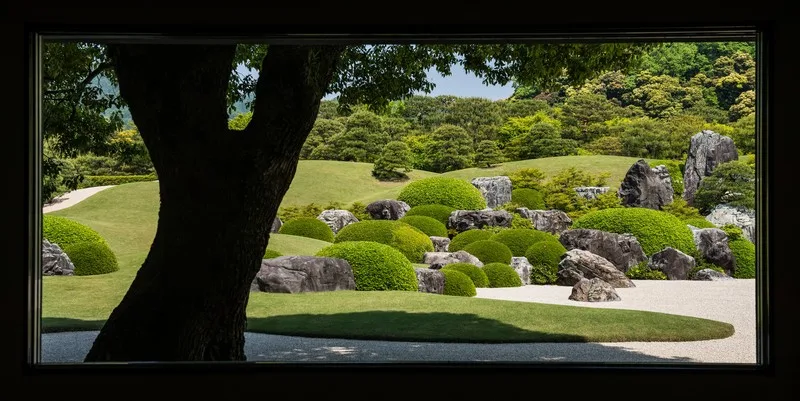
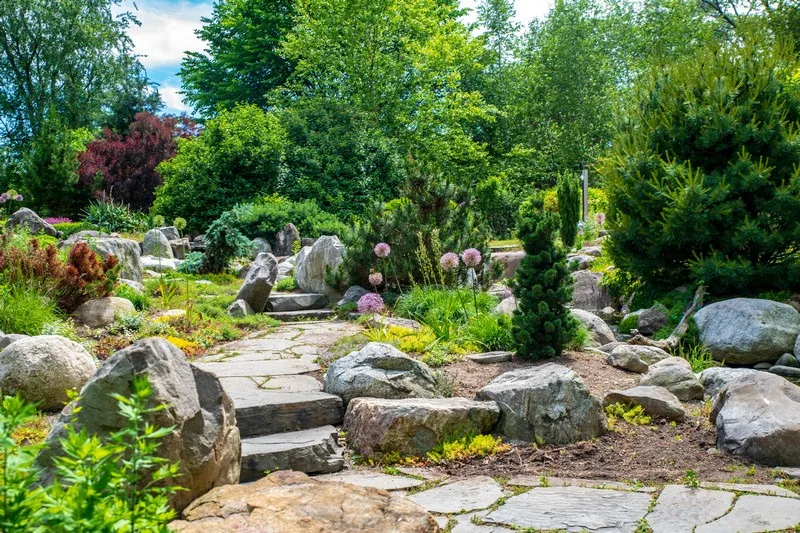
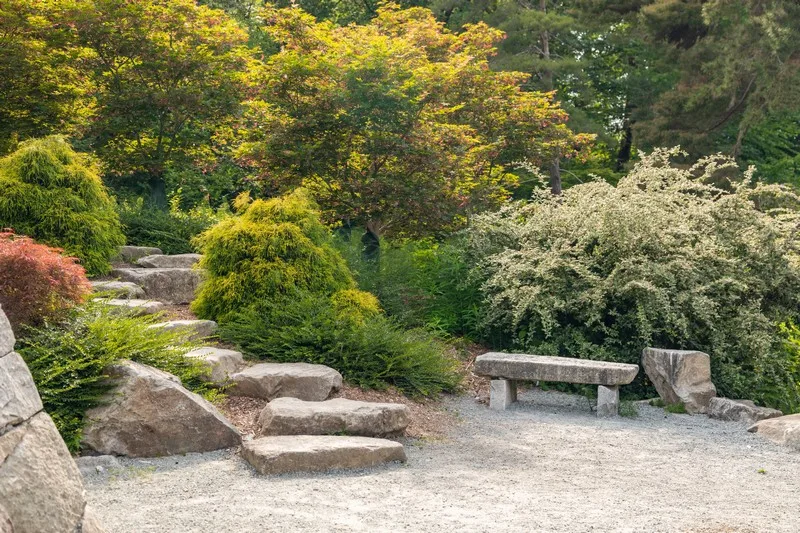
In a Japanese garden, stone is not simply something used to fill the spaces between plants. It can be one of the main structural elements of the entire composition.
One large, well-positioned stone can often have more visual impact than five small decorative ornaments.
I prefer stones with natural shapes and different heights, positioned so that they appear partly settled into the landscape rather than freshly unloaded from the back of a truck.
The Path Does Not Need to Reveal Everything at Once
A gently curving stone path changes the way we experience the garden. Instead of seeing the entire space immediately, we discover it gradually, which can make even a relatively small garden feel deeper.
Natural stepping stones, gravel or a combination of the two can all work well.
When laying a path, I would not try to make every step perfectly identical. A little irregularity usually feels much more natural.
Water - Real or Suggested
Not every Japanese garden needs a pond.
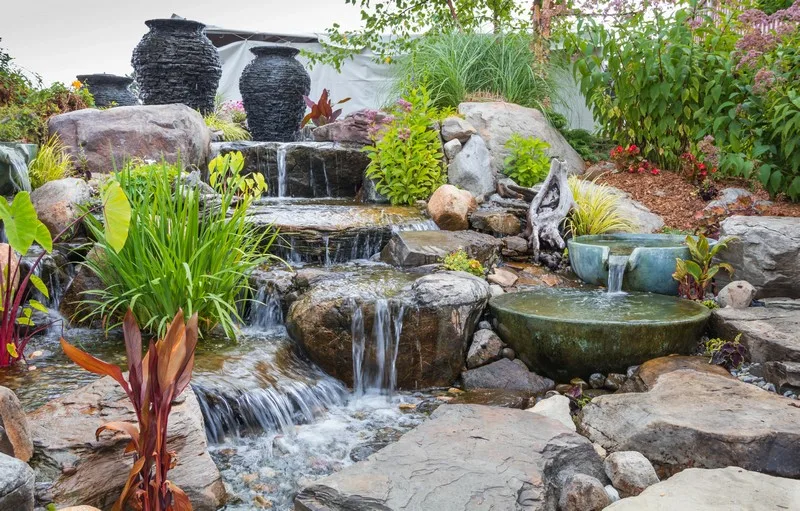
If space allows, a small water feature, stream or simple basin can introduce reflection, sound and movement.
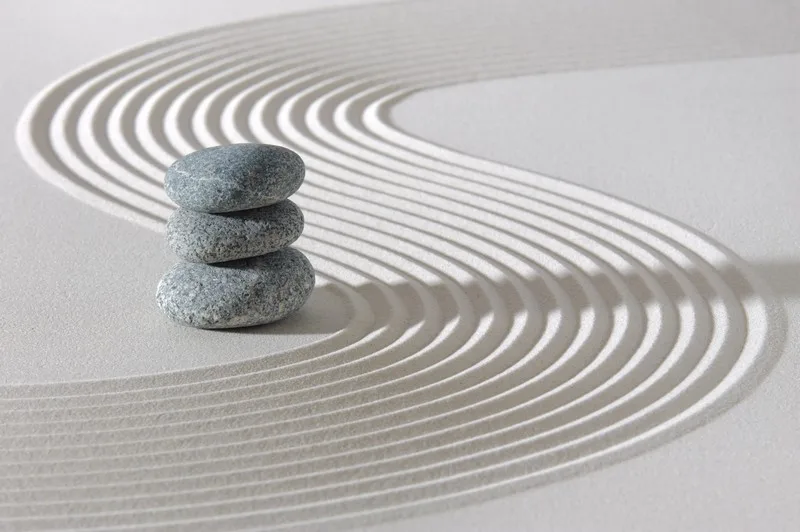
In a smaller garden, the idea of water can also be suggested with gravel, stones and carefully raked lines.
Lanterns, Bridges and Other Japanese Details
This is probably the point where it is easiest to overdo the theme.
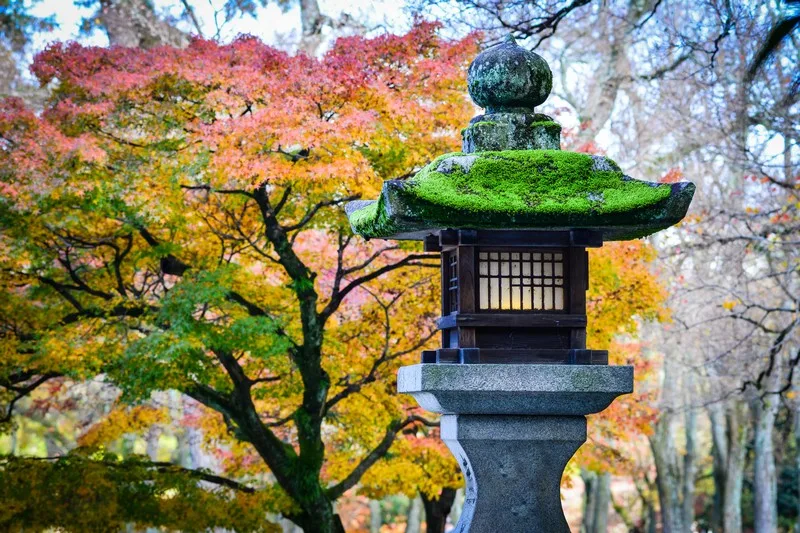
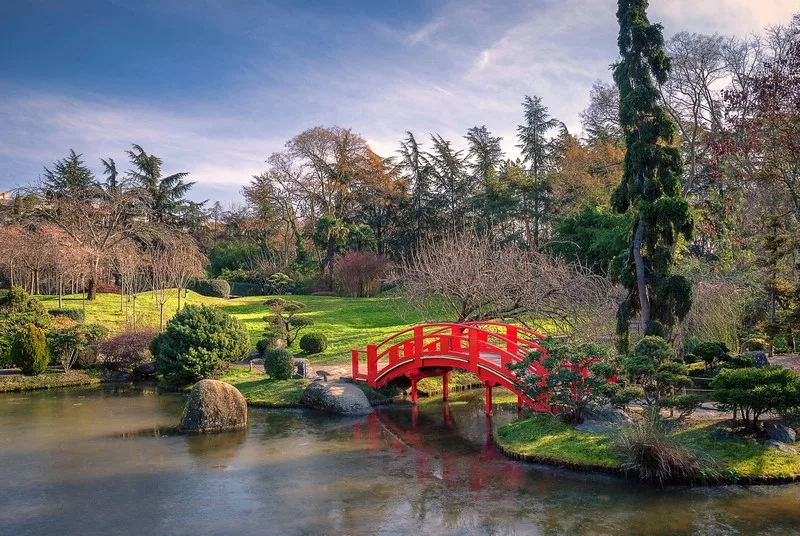
One carefully placed stone lantern can look beautiful. A stone lantern, red bridge, pagoda, statue, bamboo water feature and three bonsai trees packed into two square metres is another matter.
I would choose one or two strong decorative elements and allow the plants, stone and empty space to do the rest of the work.
Perhaps the hardest part of creating a Japanese garden is knowing when to stop adding things.


Create a Place From Which to Actually See the Garden
This is one of the details that is surprisingly easy to forget.
If the garden is intended for quiet observation, there should be somewhere from which to observe it.
A bench, low chair, small terrace or even a favourite place beside a window can become part of the composition.
Sometimes the frame created by a door or window is almost as important as the garden itself because it determines exactly what we see.
Japanese Gardens Worth Seeing in Europe
You do not necessarily have to travel all the way to Japan to see these design principles used in a real garden.
- Japanese Garden in Hasselt, Belgium - known for its pavilions, gates, bridges and water features.
- Japanese Garden in Toulouse, France - set within Compans Caffarelli, with winding paths, water and carefully composed planting.
- Japanese Garden in Monaco - a landscaped garden with streams, waterfalls, islands and Mediterranean surroundings.
- Japanese gardens in Poland - several gardens explore Japanese planting, architecture and landscape ideas.
- Japanese-inspired gardens in Ireland - another opportunity to see how these principles adapt to a different European climate.
But if you have the opportunity to visit Kyoto, the relationship between architecture, garden and the way a view is deliberately framed becomes much easier to understand.
If you are staying in Kyoto and want to explore beyond the city, you can also take a full-day trip through Arashiyama, Nara and Fushimi Inari . It combines several very different landscapes and gives you a broader sense of how nature, architecture and traditional spaces come together in Japan.
If Japan Is Already Calling
Once you start paying attention to Japanese gardens, it is surprisingly easy for the next thought to become a trip to Japan.
In Kyoto, I would look beyond simply ticking off famous landmarks and make room for gardens, tea, ceramics and places where the pace is slower.
The gardens were one of the things that stayed with me long after the trip was over. Seeing them in person makes it much easier to understand why the empty areas, the framed views and apparently simple combinations of stone and planting are so important.
And if your trip includes Tokyo, you can see another side of Japanese garden design on a guided walk through Shinjuku Gyoen, one of Tokyo's most beautiful gardens .