
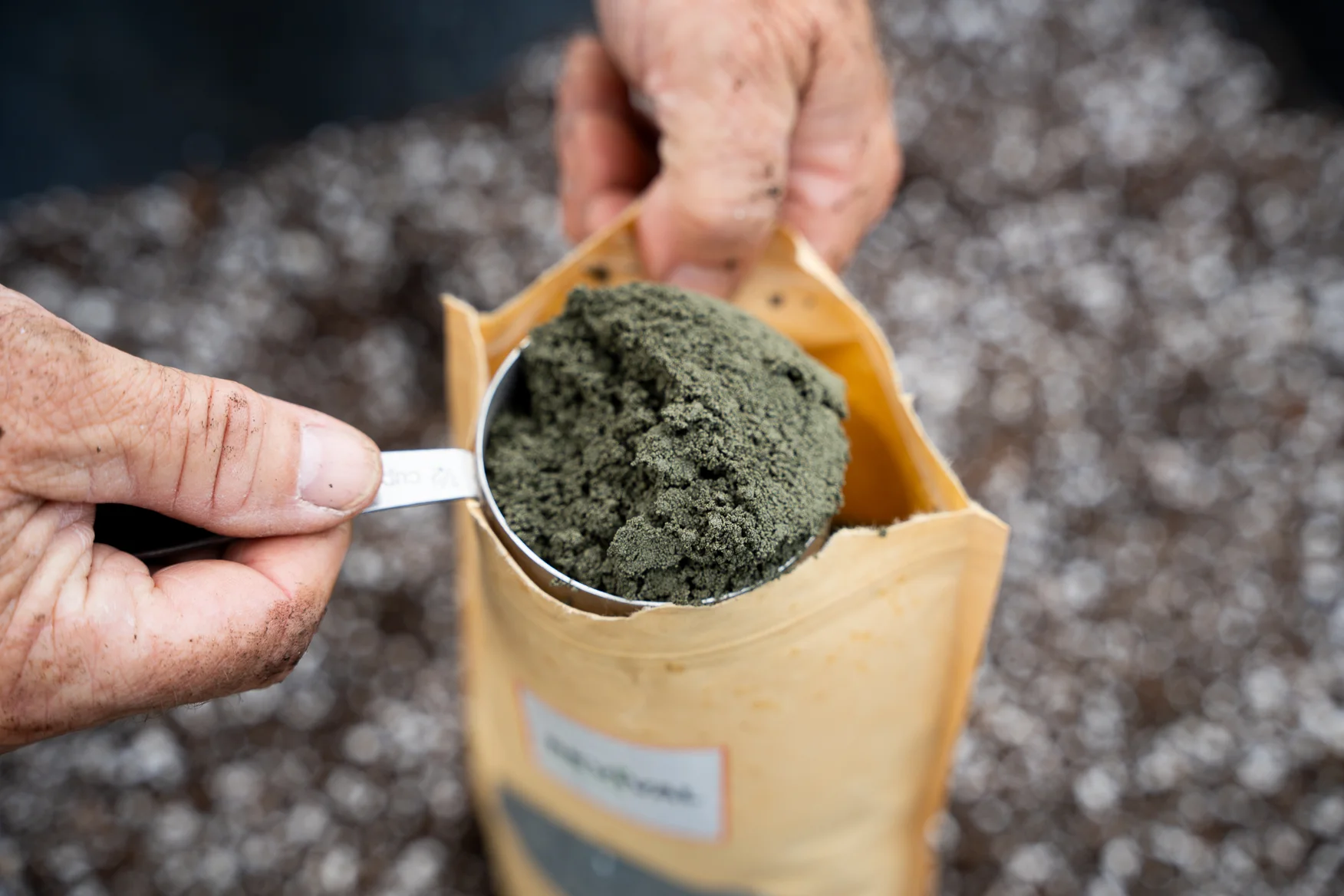
Leonardite and rock dust are often grouped together as “natural soil amendments.” In reality, they are two very different materials.
Leonardite is an oxidized organic-mineral material associated with lignite deposits and rich in humic substances. Rock dust, on the other hand, is finely ground rock, and its mineral composition depends entirely on its source.
Neither is a universal fertilizer, and neither should be added to soil simply because it sounds “natural.”
A soil amendment only makes sense when we know what we are trying to improve.
What Is Leonardite?
Leonardite is a naturally oxidized organic-mineral material commonly associated with lignite deposits.
It contains a high proportion of humic substances, including fractions described in different products as humic and fulvic acids.
The exact composition, however, can vary substantially between deposits and commercial products.
For that reason, it is more accurate to look at the analysis of the specific product rather than assume that all leonardite behaves the same way.
Its main role is not to supply large amounts of nitrogen, phosphorus and potassium. If the soil has a genuine nutrient deficiency, that deficiency still needs appropriate fertilization.
What Is Rock Dust?
Rock dust is a general term for finely ground mineral rock.
It may be produced from basalt, volcanic rock, granite or other geological materials.
This means there is no single universal chemical composition for “rock dust.”
One product may contain more magnesium, another more calcium, iron or silica-bearing minerals.
What matters is not simply the product name, but what kind of rock it comes from and what its analysis shows.
Rock dust is not one ingredient. It is a whole category of different mineral materials.
The Main Difference Between Leonardite and Rock Dust
| Characteristic | Leonardite | Rock dust |
|---|---|---|
| Origin | Oxidized organic-mineral material associated with lignite deposits. | Finely ground mineral rock. |
| Main feature | High content of humic substances. | Mineral composition determined by the parent rock. |
| Predictability | Depends on product quality and analysis. | Depends heavily on the specific geological material. |
| Speed of effect | Depends on the product, rate and soil. | Mineral release is usually slow. |
| Does not replace | Balanced fertilization and organic matter. | Fertilization for a confirmed nutrient deficiency. |
How Humic Substances May Affect Soil
Humic substances can participate in a range of chemical and physical processes in soil.
Depending on the product, soil and application method, they may influence nutrient retention and availability, the root-zone environment and certain soil properties.
The effect, however, is not identical in every soil and should not be expected to produce an automatic or rapid result.
In a well-maintained soil with adequate organic matter, the additional benefit may be smaller than in a severely depleted or disturbed soil.
Rock Dust Is Not a Universal Source of Micronutrients
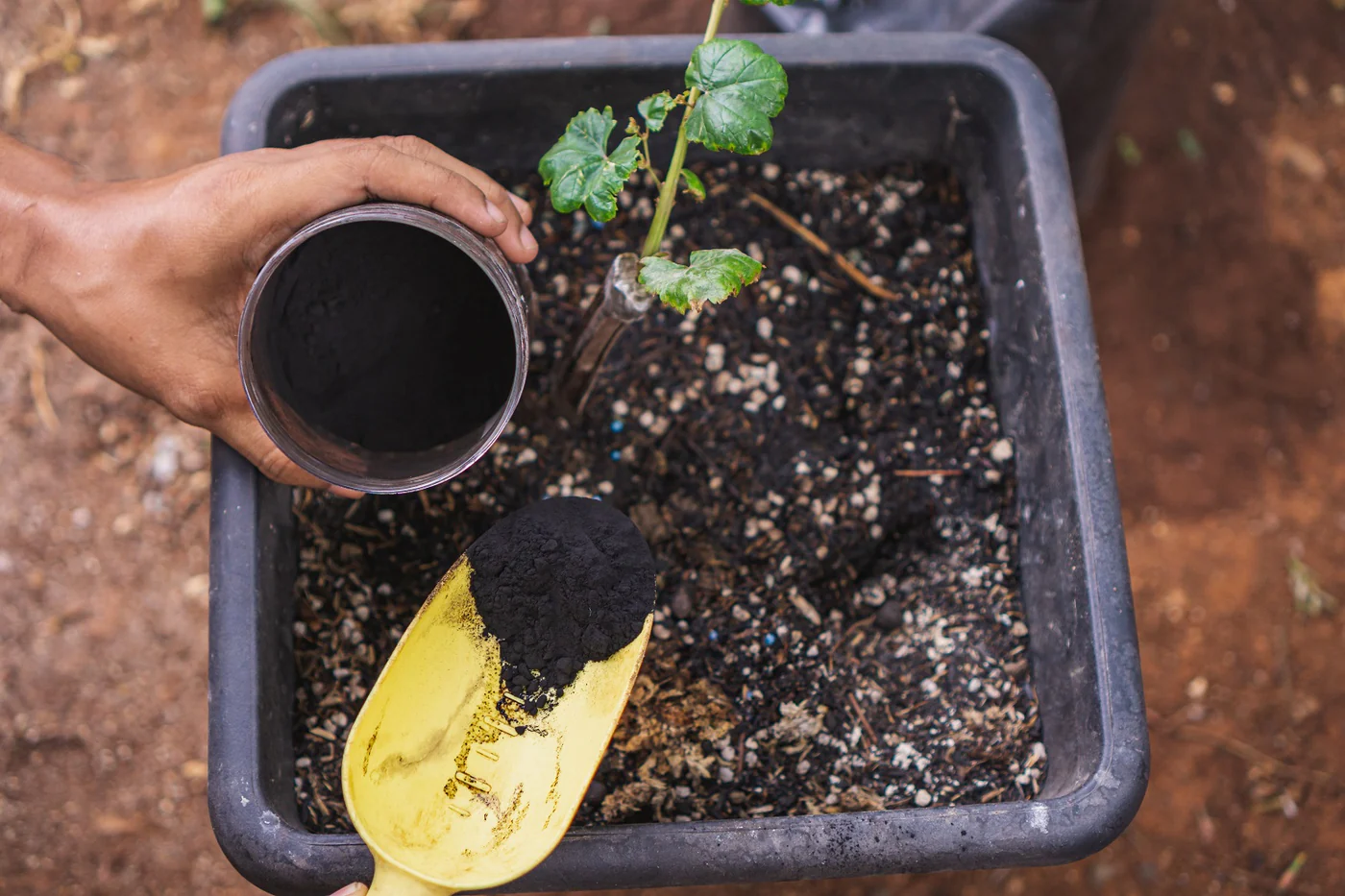
The idea behind rock powders is that minerals gradually interact with the soil environment and some elements may become available over time.
But this process can be very slow.
Its rate depends on the mineralogy of the rock, particle size, pH, moisture, temperature and soil processes.
The presence of an element in a laboratory analysis also does not mean that the element is immediately available to plants.
Some minerals in rock material may remain poorly soluble for a very long time. For an acute deficiency, rock dust is usually not the fastest solution.
When Leonardite May Make Sense
Leonardite or products containing humic substances may be used as part of a broader soil management program.
It makes most sense when there is a specific objective, rather than simply adding another amendment.
When Rock Dust May Make Sense
Rock dust is most useful when you know what it contains and what you are trying to change in the soil.
Simply having “many minerals” is not enough reason to apply it.
If the soil already contains adequate amounts of those elements, adding more may provide little practical benefit.
- check the source of the rock material;
- look for a chemical analysis of the product;
- consider soil pH and soil type;
- do not use it as an automatic solution for yellow leaves or weak growth;
- if a deficiency is suspected, diagnose first.
Rock Dust in Compost
Rock powders are sometimes added to compost.
This can be a convenient way to mix mineral material evenly with organic matter.
But simply adding rock dust does not automatically improve compost or significantly reduce nutrient losses.
The main factors behind good compost remain a suitable mix of materials, adequate moisture, aeration and enough time for decomposition.
Can Leonardite and Rock Dust Be Used Together?
In principle, yes, because they are different materials with different compositions.
But that does not mean the combination is necessary in every garden.
If the soil does not need a particular material, combining more amendments does not automatically create better soil.
| Goal | What to check first | Possible approach |
|---|---|---|
| Improve the organic component | Organic matter content and soil structure. | Compost, mulch and, if useful, a humic-substance product. |
| Suspected mineral deficiency | Soil or plant analysis. | Correct the specific deficiency rather than adding random rock powder. |
| Create a new bed | pH, structure, drainage and fertility. | Organic matter plus only the amendments that are actually needed. |
| Acute nutrient problem | Accurate diagnosis. | Leonardite and rock dust are usually not first choices for rapid correction. |
Check Soil pH Before Adding Mineral Materials
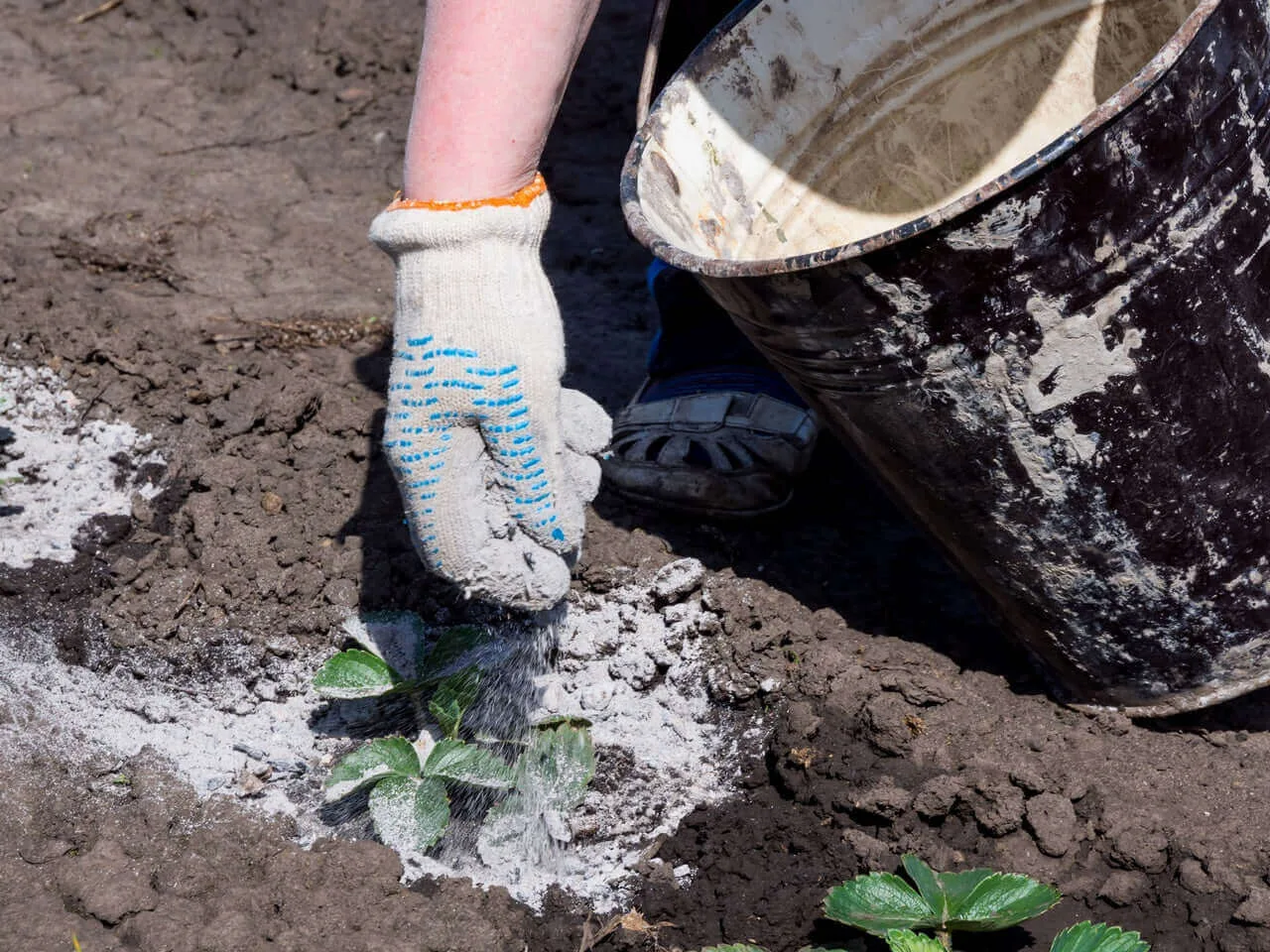
Soil pH strongly affects the availability of many nutrients.
Some mineral products may contain significant amounts of calcium, magnesium or other components capable of affecting soil chemistry.
For that reason, it is not sensible to apply large amounts of different rock powders without knowing their composition.
This is especially important in small beds, greenhouses and containers, where unnecessary minerals can accumulate more easily.
What These Products Cannot Fix
Common Mistakes With Leonardite and Rock Dust
A More Sensible Approach to Soil Amendments
Before choosing leonardite, rock dust or any other soil amendment, ask a few basic questions.
| Question | Why it matters |
|---|---|
| What is the soil pH? | It influences the availability of many nutrients. |
| What is the soil structure like? | Compaction, sandy soil and poor drainage require different solutions. |
| Is there enough organic matter? | In many gardens, compost and mulch are more important than another mineral product. |
| What does the product actually contain? | Do not buy based only on words such as “humic” or “volcanic.” |
| Is there a real deficiency? | When in doubt, testing is more reliable than fertilizing blindly. |
Leonardite and rock dust are different soil materials and should not be used interchangeably.
Leonardite is valued mainly for its humic substances, while rock dust is a mineral material whose effect depends on the specific rock.
With both products, the most important factors are the analysis, application rate and actual needs of the soil.
Good soil is not built with a single amendment. The foundation remains organic matter, suitable pH, good structure, proper irrigation and balanced nutrition.