
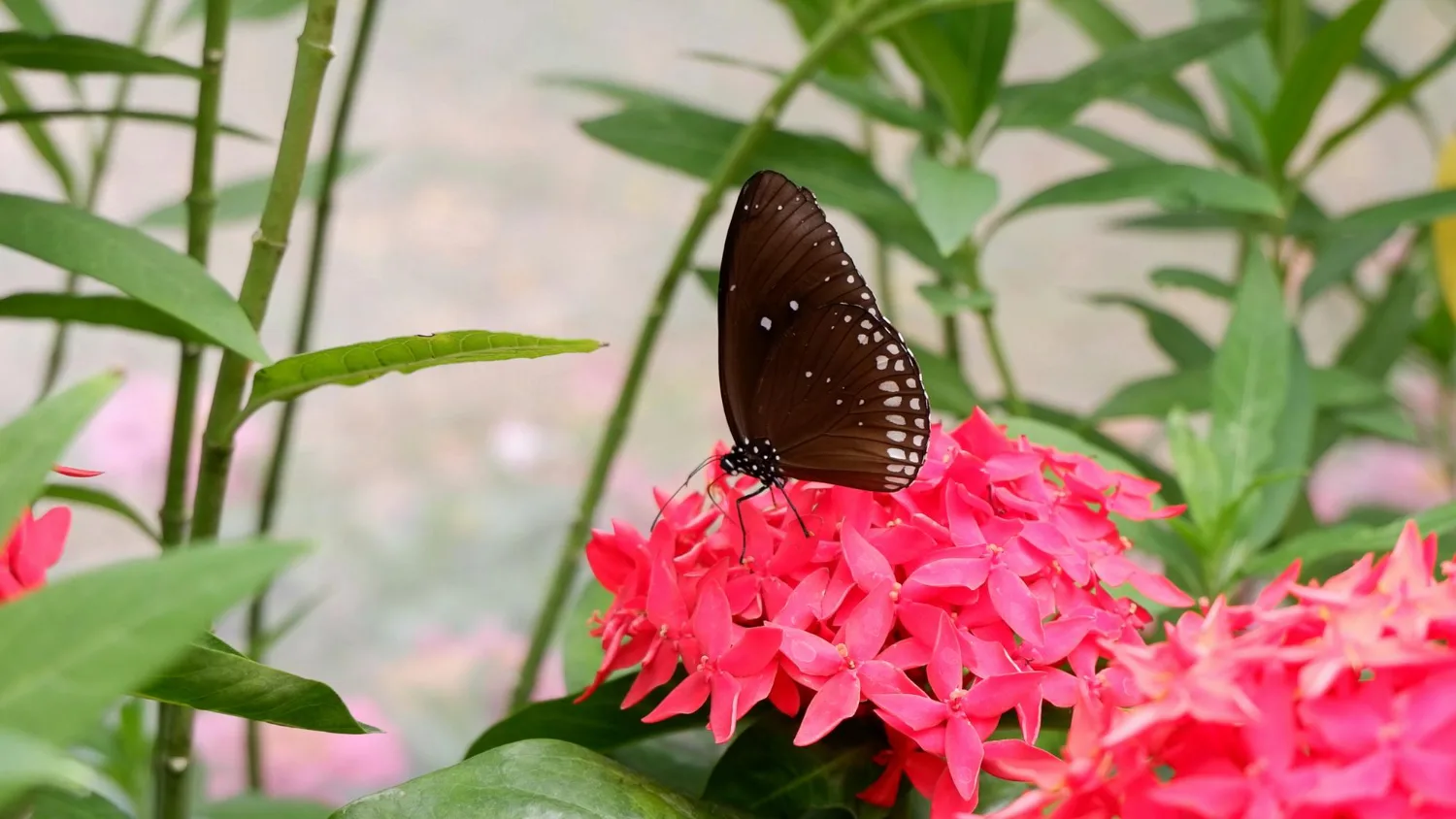
Not every insect in the garden is a pest. Some of the species living around vegetables, roses, fruit trees and ornamental plants actually help keep pest populations under control.
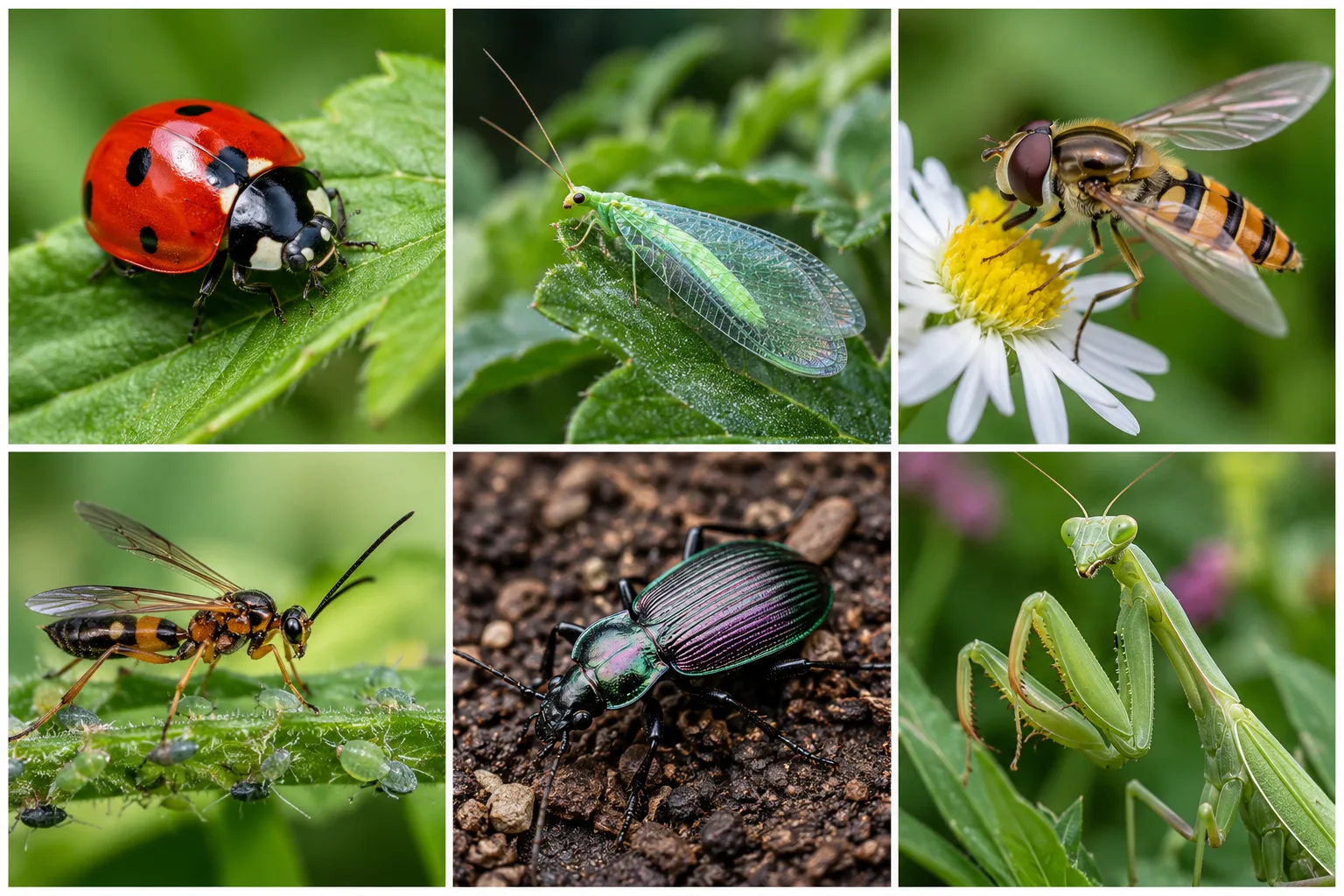
Lady beetles, lacewings, hoverflies and different parasitoid wasps all contribute to the natural control of aphids, eggs, larvae and other small pests.
They cannot prevent every infestation, but in a garden with greater diversity and fewer unnecessary treatments, they can significantly reduce the need for intervention.
Beneficial insects are not simply part of garden biodiversity. They can also be part of the plant protection system itself.
How Beneficial Organisms Help Control Pests
In nature, pest populations are kept under pressure by predators, parasitoids, pathogens and other factors.
Aphids, for example, can reproduce very quickly, but they are also food for a wide range of natural enemies.
If these organisms are already present on the plant, a small colony may sometimes be reduced without immediate spraying.
This does not mean every infestation should simply be ignored. Population size, plant condition and whether the pests are continuing to increase all matter.
If pest numbers are rising quickly or new growth is already becoming distorted, more active intervention may be necessary. Beneficial organisms are part of the system, not a guarantee that problems will never occur.
Which Beneficial Organisms Matter Most?
Some beneficial species are predators that directly consume pests.
Others are parasitoids: they develop on or inside a host and eventually kill it.
Predatory mites are also important, although biologically they are not insects.
| Beneficial organism | How it helps | What to look for |
|---|---|---|
| Lady beetles | Many species feed on aphids and other small pests. | Adults and larvae near aphid colonies. |
| Lacewings | Larvae of some species are active predators of aphids, eggs and other small organisms. | Larvae on foliage and adults around vegetation. |
| Hoverflies | Larvae of many species feed on aphids. | Adults around flowers and larvae near colonies. |
| Parasitoid wasps | Different species attack different hosts, including aphids, whiteflies and caterpillars. | Sometimes the visible sign is a parasitized insect. |
| Predatory mites | Some species feed on spider mites and other tiny arthropods. | They are difficult to see without magnification, but can play an important role in biological control. |
Lady Beetles: Both Adults and Larvae Can Be Useful
Lady beetles are among the most familiar beneficial insects in the garden.
Many species feed on aphids, and in some predatory species both larvae and adults are active hunters.
The larva, however, looks very different from the adult. It is often elongated, dark and marked with colored patches.
For that reason, it is sometimes killed by mistake.
Before removing an unfamiliar larva from a plant covered with aphids, check whether it is actually eating them.
Lacewings and Hoverflies
Adult lacewings are delicate insects with transparent wings, but larvae of some species are active predators.
They may feed on aphids, eggs, thrips and other small organisms.
Hoverflies are often mistaken for small bees or wasps because of their yellow-and-black markings, but they are flies.
Adults of many species visit flowers for nectar and pollen, while their larvae can be important aphid predators.
Parasitoid Wasps: Small but Important
Parasitoid wasps are a huge and diverse group.
Many are tiny and look nothing like the larger wasps people usually imagine.
The female lays an egg on or inside a suitable host, and the developing larva uses that host as it grows.
With some aphid parasitoids, the visible result is an aphid “mummy” - swollen, motionless and often brownish.
It may mean that a natural enemy is already working inside the colony. If pest numbers are still low, it can make sense to watch for a few days before deciding whether treatment is necessary.
How to Create Better Conditions for Beneficial Insects
Beneficial insects cannot be kept in the garden simply by planting one “magic” species.
They need a combination of food, vegetation, shelter and a reasonably safe environment.
Which Plants Can Provide Food for Beneficial Species?
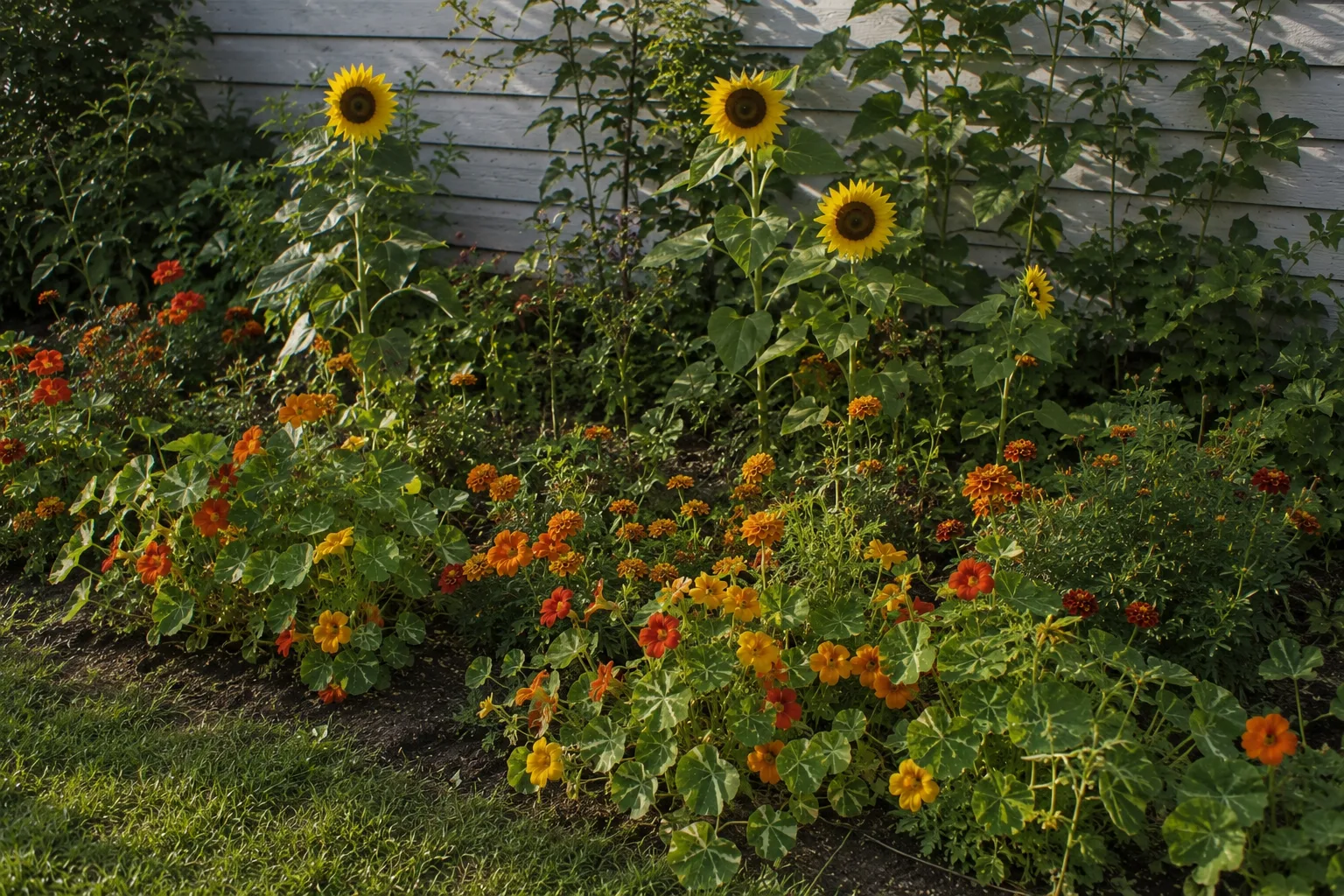
Flowers with easily accessible nectar and pollen can be especially useful for small parasitoids and adult hoverflies.
Plants from the carrot, daisy and mint families are often valuable in this respect.
| Plant | What it provides | Where it can be used |
|---|---|---|
| Dill | Small, open flowers accessible to many insects. | Vegetable beds or mixed plantings. |
| Cilantro | When allowed to flower, it provides accessible nectar. | Herb gardens and vegetable beds. |
| Yarrow | Many small flowers and a relatively long flowering period. | Garden edges or ornamental plantings. |
| Thyme and oregano | Flowers visited by many small insects. | Sunny, drier areas. |
| Calendula | Adds diversity and provides a flowering resource. | Vegetable and ornamental beds. |
What Most Often Harms Beneficial Insects?
One of the biggest risks is unnecessary or broad-spectrum treatment.
Even a product allowed in organic production or derived from plants is not automatically harmless to every beneficial species.
Contact products, for example, may affect a beneficial organism if it is sprayed directly.
- do not treat without a specific problem;
- check label restrictions for pollinators and beneficial organisms;
- avoid broad-spectrum products when a more selective effective option is available;
- do not spray the entire garden when the problem is localized;
- check for natural enemies before treatment.
Should You Leave Pests in the Garden to Support Beneficial Insects?
There is no need to deliberately maintain large pest populations.
But there is also no need to eliminate every single aphid the moment you see one.
A small localized colony that already has lady beetles, hoverfly larvae or parasitized aphids may simply be monitored for a short time, provided the plant is not showing significant damage.
If the pest population begins increasing rapidly, the response should change.
The goal is not a garden with zero pests. The goal is to keep pest populations below the level where they cause significant damage.
When Intervention Is Still Necessary
Beneficial insects are valuable, but they cannot always respond quickly enough.
Intervention may be necessary when:
For small localized colonies, mechanical removal or washing may be a reasonable first step when the plant can tolerate it.
If a product is needed, choose one labeled for the specific pest and crop, and follow all restrictions relating to beneficial organisms.
Common Mistakes With Beneficial Insects
A Practical Strategy for the Home Garden
| What you see | What to check | How to respond |
|---|---|---|
| A few aphids | Are there lady beetles, hoverfly larvae or parasitized aphids? | Monitor or use mechanical control. |
| The colony is growing | Are there already distortions and new colonies? | Use a more targeted intervention if needed. |
| Many beneficial organisms are present | Is the pest population beginning to decline? | Avoid unnecessary broad-spectrum treatment. |
| There is little flowering or diversity | Is there enough food and habitat for adult beneficial insects? | Add suitable flowering plants and more diverse garden areas. |
Beneficial insects and other natural enemies can be an important part of plant protection in the home garden.
They do not remove the need for monitoring, but they can suppress populations of different pests and reduce the need for treatment.
The best way to support them is through plant diversity, continuous flowering, fewer unnecessary insecticide treatments and regular inspection of plants.
A good garden is not sterile. It is a living system where pests and their natural enemies can coexist without one side becoming completely out of control.