
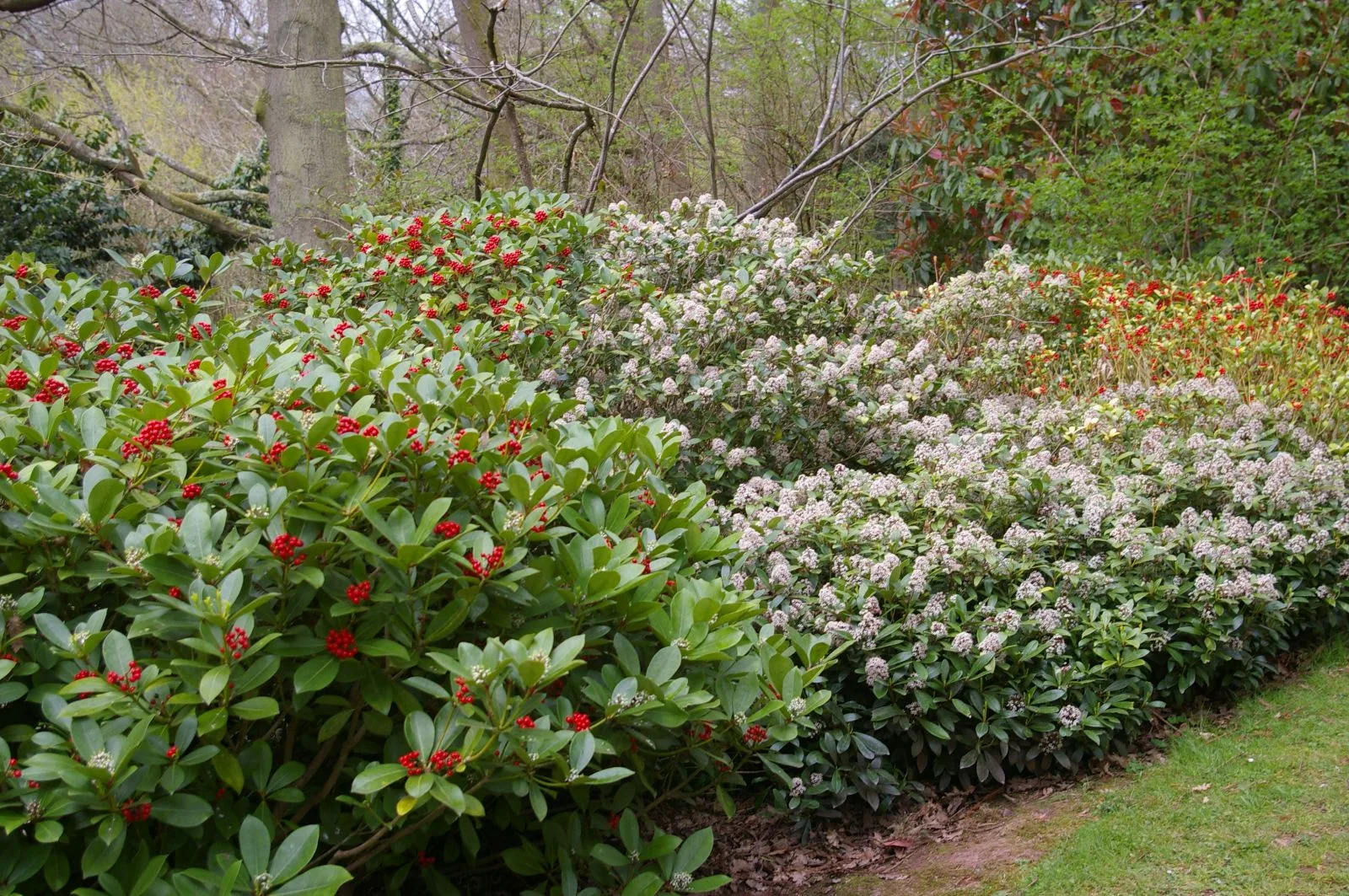
Skimmia is a small evergreen shrub that looks especially good in partial shade, in containers and in calmer garden compositions. It is not a loud plant, but it gives something very valuable — color and structure in the seasons when the garden often looks poor.
Among plants for acidic soil and partial shade, skimmia stands alongside rhododendron, azalea, pieris and hydrangea. But it has a more compact presence. It is not a large background shrub, but rather a detail — neat, evergreen, with glossy leaves, fragrant flowers and, in some forms, bright red berries.
Skimmia is very suitable for entrance areas, shaded terraces, small gardens, Japanese-style corners, semi-shaded borders and large containers. It is one of those plants that does not create a big scene, but if we remove it, the composition begins to look poorer.
What Is Skimmia?
Skimmia (Skimmia japonica) is an evergreen ornamental shrub with dense, leathery and glossy leaves. It usually grows slowly and keeps a compact shape, which makes it very convenient for small spaces.
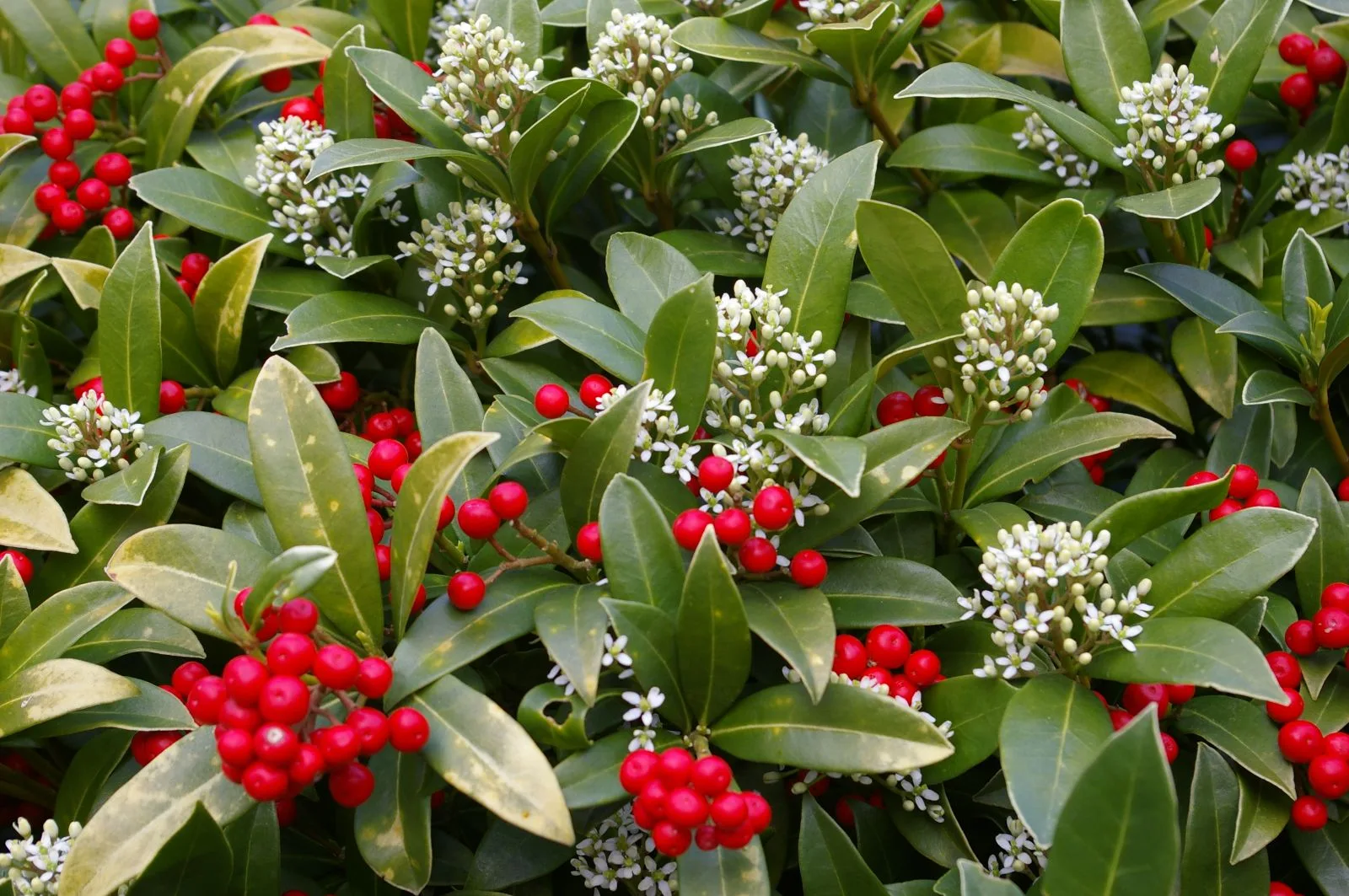
In spring, skimmia flowers with small white, cream or pinkish-white blooms gathered in clusters. The flowers often have a pleasant fragrance. On female plants, if there is a male plant nearby for pollination, decorative red berries may form and remain for a long time, giving winter interest.
Skimmia is not a plant for instant excitement. It is a plant for consistency — a small evergreen detail that keeps the shaded corner alive all year round.
The most important thing with skimmia is to understand that it has similar requirements to rhododendrons and azaleas. It likes acidic, loose soil rich in organic matter, and it does not like chalky ground, strong sun or dry wind.
Male and Female Skimmia — Why It Matters
One of the special features of skimmia is that many cultivars are male or female. This matters if we want red berries. The female plant produces berries only if there is a suitable male pollinator nearby.
For example, some cultivars are sold for their beautiful buds and flowers, but not all of them produce berries. That is why, when buying, it is worth checking whether the cultivar is male, female or self-fertile. If the goal is red berries in winter, do not rely only on the pretty photo on the label.
Practical tip: if you are buying skimmia for its red berries, ask whether the plant is female and whether it needs a male cultivar nearby. Otherwise, you may get a beautiful shrub, but without the winter berries you expected.
Where to Plant Skimmia
Skimmia prefers partial shade to shade. It feels best in a place with soft light, without strong midday and afternoon sun. An eastern or north-eastern exposure is a good choice. Shaded corners around a terrace, entrance, wall or under taller shrubs are also suitable.
In hot regions, strong sun can lead to leaf scorch and general stress. Skimmia is not a plant for an open, dry, south-facing slope. It will look much better in a protected corner where the soil stays cooler and moister.
It looks beautiful in the foreground in front of rhododendrons and hydrangeas, next to pieris, under Japanese maple, with hellebore, ferns and hostas. In a container, it can be a wonderful accent by the front door or on a shaded terrace.
What Soil Does Skimmia Like?
Skimmia is an acid-loving plant. It grows best in acidic to slightly acidic soil that is rich in organic matter, loose and well drained. If the soil is chalky, the leaves may begin to yellow and growth may weaken.
Like pieris, rhododendron and azalea, skimmia does not like lime, wood ash or alkaline soil improvers. They can make nutrient uptake more difficult and lead to chlorosis.
When planting, it is a good idea to use a substrate for rhododendrons, azaleas or acid-loving plants. Acidic peat, leaf mold, composted conifer needles and organic matter can be added. The important thing is for the soil to hold moderate moisture without becoming heavy and waterlogged.
Popular Skimmia Cultivars
The most common skimmias in gardens are cultivars of Skimmia japonica. The differences between them are in the sex of the plant, bud color, flowering, compactness and ability to produce berries.
Skimmia japonica 'Rubella' is one of the most popular male cultivars. It has dark pink to reddish buds in winter and spring flowers. It does not produce berries, but it is very beautiful because of the buds and compact form.
'Nymans' is a female cultivar known for its red berries. To fruit well, it needs a male pollinator nearby.
'Kew Green' is a male cultivar with lighter buds and a good pollinator for female plants.
There are also compact forms suitable for containers and small spaces. When choosing, it is worth looking not only at the photo, but also at the information about size, sex and fruiting.
| Cultivar | Feature | Where It Works Best |
|---|---|---|
| 'Rubella' | Male cultivar, reddish buds, does not produce berries | Containers, entrances, partial shade, winter interest with buds |
| 'Nymans' | Female cultivar, red berries after pollination | Shaded borders, winter accent, groups with a male cultivar nearby |
| 'Kew Green' | Male cultivar, light buds, good pollinator | Next to female cultivars, mixed acid-loving compositions |
| Compact cultivars | Lower growth, neat shape | Containers, small gardens, foreground planting |
Watering and Mulching
Skimmia likes even moisture. It should not be allowed to dry out for long periods, especially in the first years after planting or if it is grown in a container. At the same time, it does not tolerate constantly wet, heavy soil.
It is best to water more deeply, but without creating waterlogging. In hot periods, plants in containers should be monitored more carefully because the substrate dries out faster.
Mulching is very useful. Pine bark, conifer needles, leaf mold or wood chips help preserve moisture, keep the soil cooler and create a more natural look in the shaded border.
This post contains affiliate links. As an Amazon Associate, I earn from qualifying purchases at no extra cost to you.
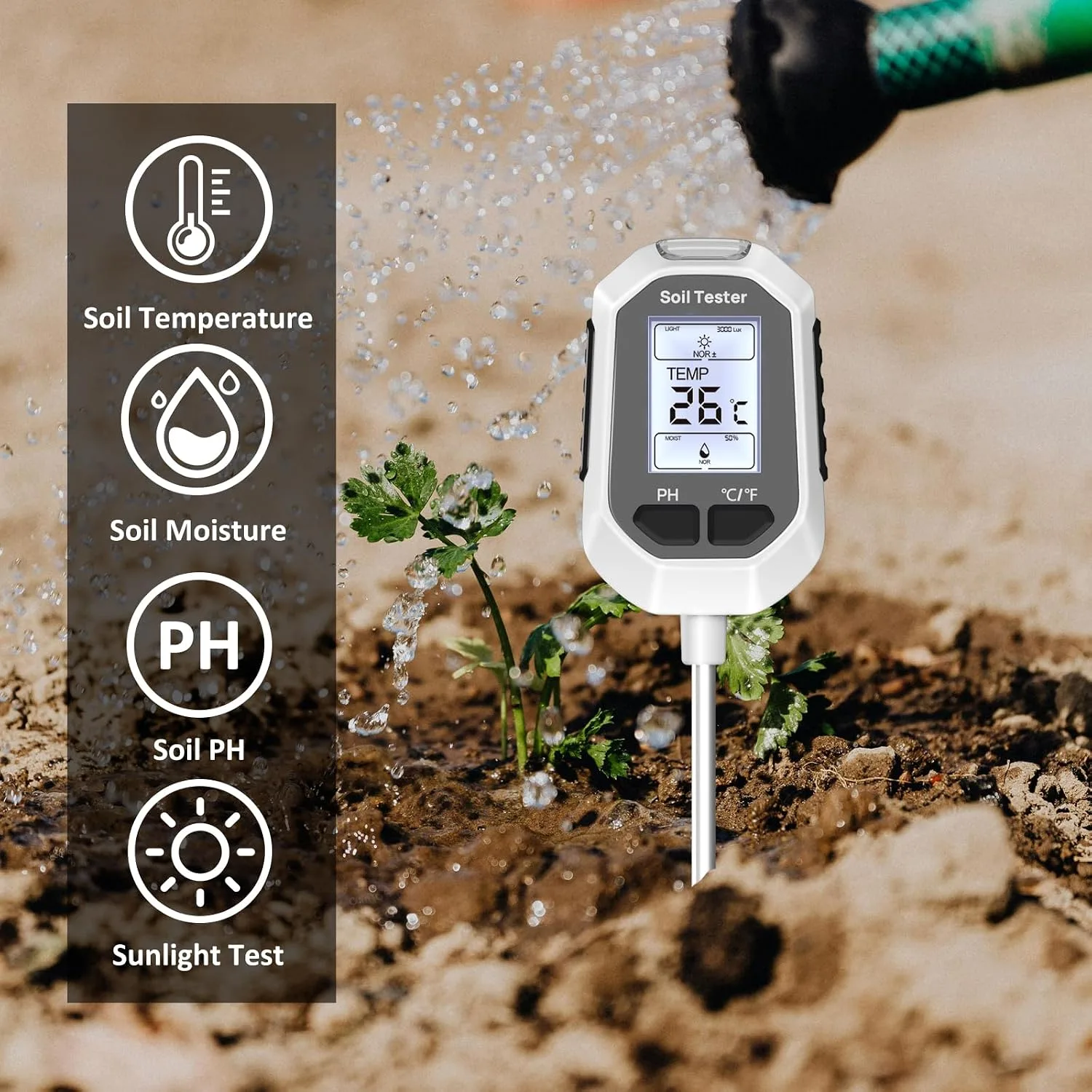
Skimmia needs a fairly narrow balance: the soil should remain evenly moist, but it should not stay waterlogged. It is also sensitive to unsuitable soil pH, which can show up as yellowing foliage even when nutrients are present.
The YAMRON tester measures soil moisture, temperature, pH and light. I would use it as a practical reference alongside the condition of the leaves and the feel of the soil, especially when growing skimmia in a container or in unfamiliar garden soil.
Feeding
Skimmia does not need aggressive feeding. Moderate feeding with fertilizer for acid-loving plants in spring is best. Compost, leaf mold and the right mulch also help maintain a good soil environment.
If the leaves begin to yellow, the cause is often unsuitable pH, not simply a lack of fertilizer. In chalky soil, the plant cannot absorb some elements well, even if they are present in the soil.
Pruning Skimmia
Skimmia grows slowly and usually does not need heavy pruning. This is one of its advantages. It keeps a compact form and does not require constant shaping.
Dry, damaged or poorly positioned branches are removed. If light shaping is needed, it is best done after flowering. With berry-producing cultivars, care should be taken not to cut away branches that will carry the decorative winter effect.
Skimmia is not a shrub for clipping into a ball or low hedge. It is better to leave it in its natural compact form.
Can Skimmia Be Grown in a Container?
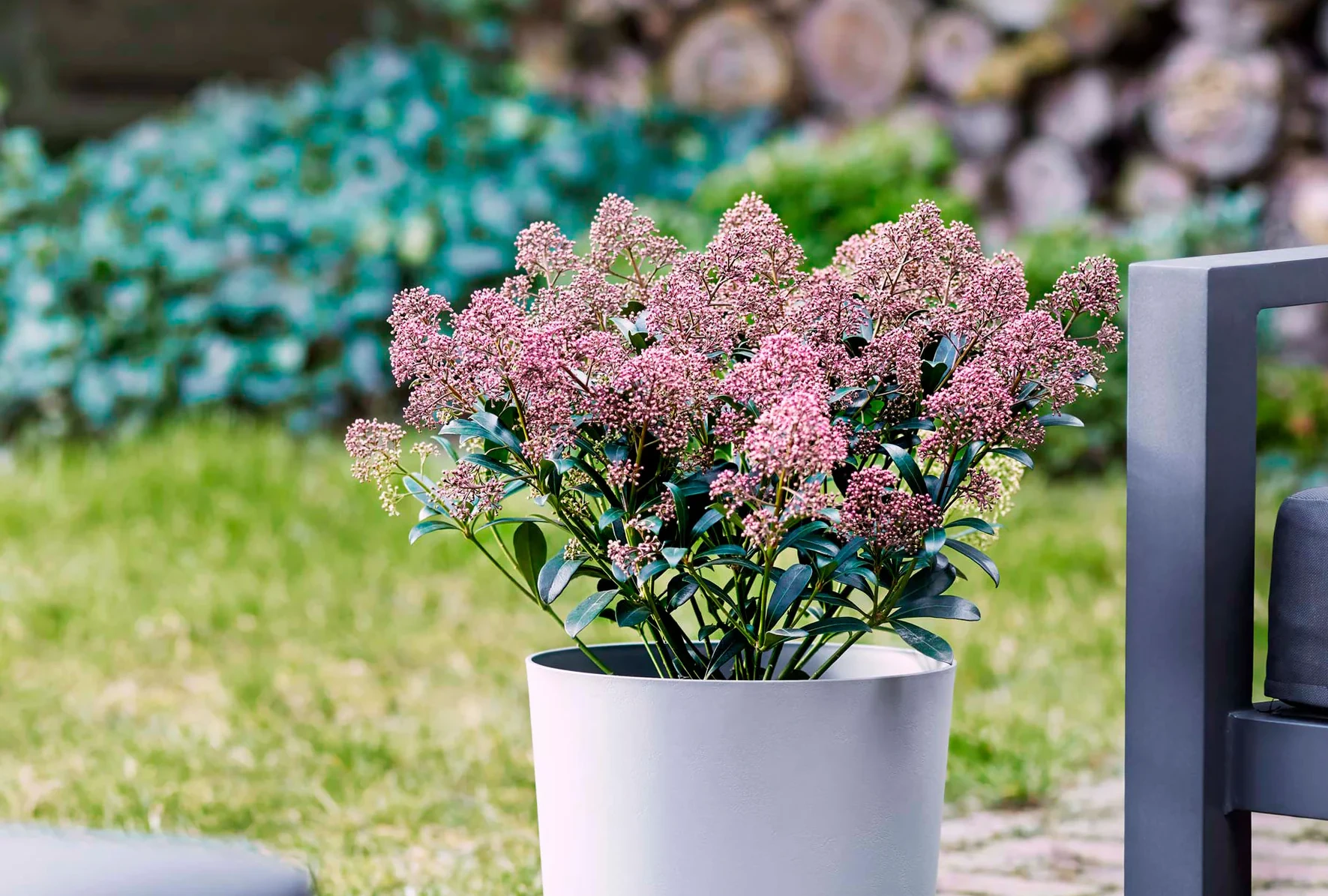
Yes, and this is one of the best ways to use it, especially if the garden soil is not suitable. In a container, we can provide acidic substrate, good drainage and a more controlled environment.
The container should be large enough, stable and have drainage holes. Use a substrate for acid-loving plants. In summer, watering should be regular, and in winter it is best to keep the container in a protected place, away from strong cold wind.
Skimmia in a container looks especially beautiful by an entrance, on a shaded terrace or in combination with hellebore, heathers, small ferns and other plants for cool seasons.
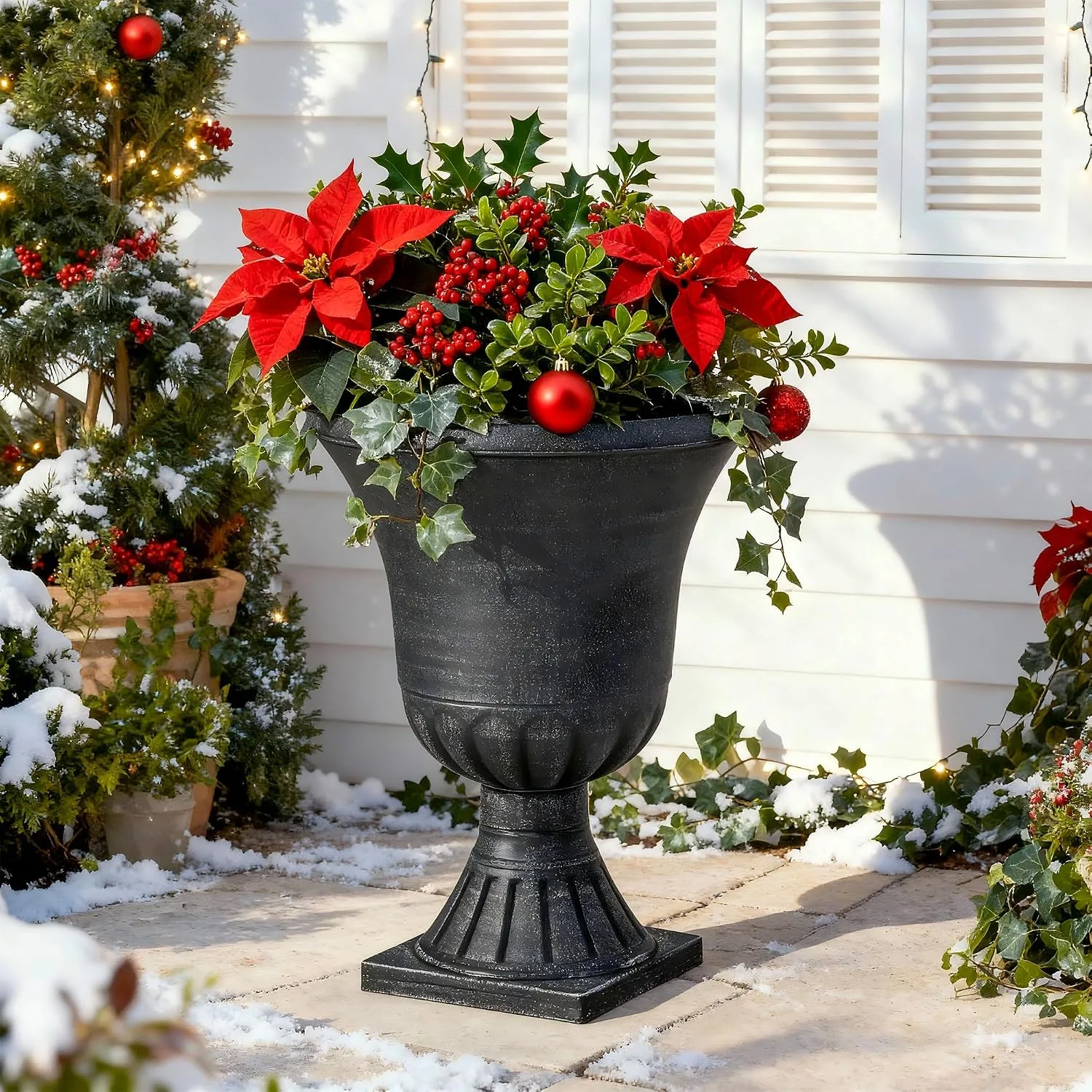
Skimmia is particularly effective near an entrance because the glossy evergreen foliage, winter buds and possible red berries keep the display interesting long after summer containers have finished.
These 22-inch black urn-style planters provide a substantial, traditional-looking base for an evergreen shrub. For skimmia, use an acid-loving potting mix, keep the drainage holes open and choose the final container according to the size of the cultivar and root ball.
The Most Common Mistakes
The first mistake is planting it in chalky or heavy soil without preparation. The second is placing it in strong sun, where the leaves scorch and the plant loses its fresh look.
The third mistake is expecting berries from a cultivar that cannot produce them. If the plant is male, it may have beautiful buds and flowers, but it will not produce red berries. The fourth mistake is pruning too often, which spoils its natural compact shape.
What to Combine Skimmia With
Skimmia combines excellently with rhododendrons, azaleas, pieris, hydrangeas, Japanese maple, hellebore, hostas, ferns, heathers and low evergreen shrubs. It is very suitable for semi-shaded, acid-loving compositions.
In design terms, skimmia works well as a low evergreen accent. It can stand in front of taller shrubs, beside a path, in a container or as part of a winter composition. The red berries or buds look beautiful next to dark green leaves, stone, wood and more natural paving materials.
If you already have pieris, rhododendron or azalea, skimmia can add a lower, neat and evergreen layer. This makes the composition look more finished and more interesting in winter.
Is Skimmia Worth Growing?
Yes, if you have partial shade, acidic soil or the possibility to grow it in a container.
Skimmia is not a large, dramatic shrub, but it is very valuable for small gardens, entrances, shaded terraces and winter compositions. It brings evergreen structure, beautiful buds, fragrant flowers and, in the right conditions, red berries.
This is a plant for people who value not only big flowering moments, but also the quiet details that make the garden beautiful all year round.