
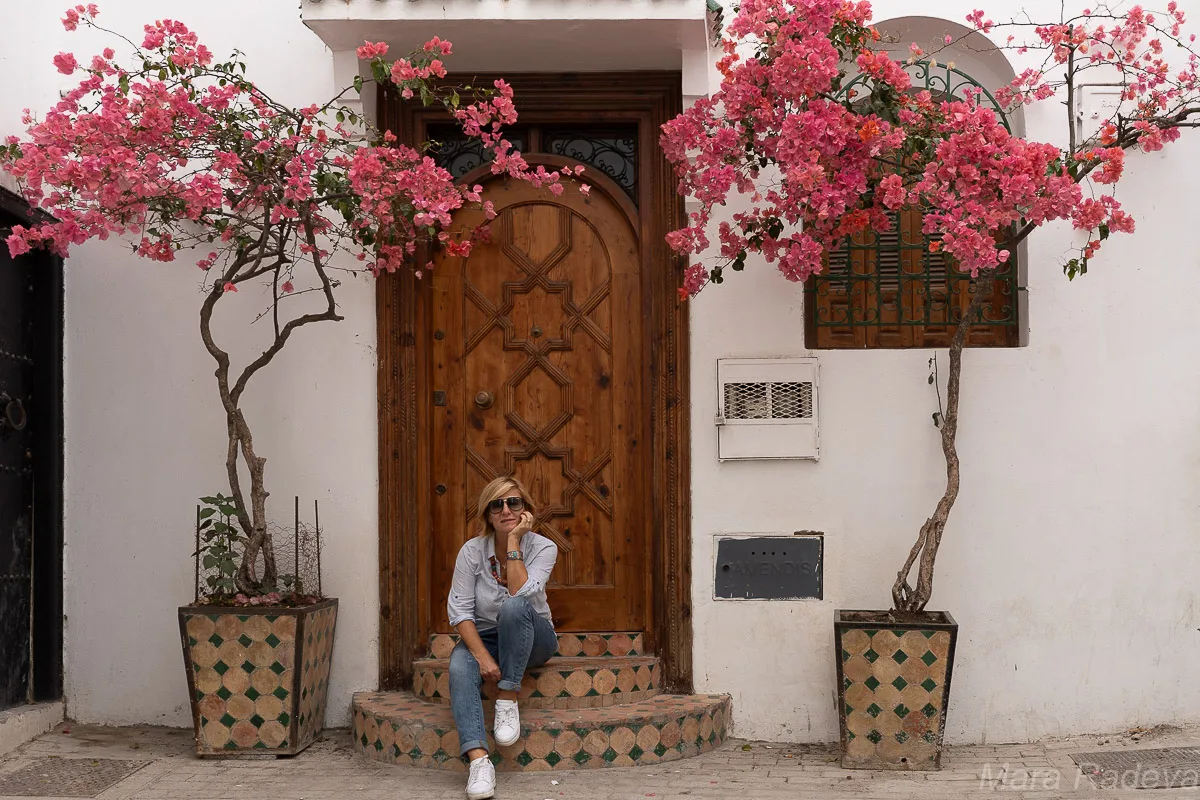
Tangier was not exactly what I expected. I thought I would see an old town, a few markets, a little exoticism, a little sea, and then say, “Yes, that was nice.” But Tangier turned out to be more complicated — a city on the edge between Europe and Africa, between old bohemian legends and a modern marina, between the beauty of getting lost and the very practical need for a hotel with a real bathroom door.
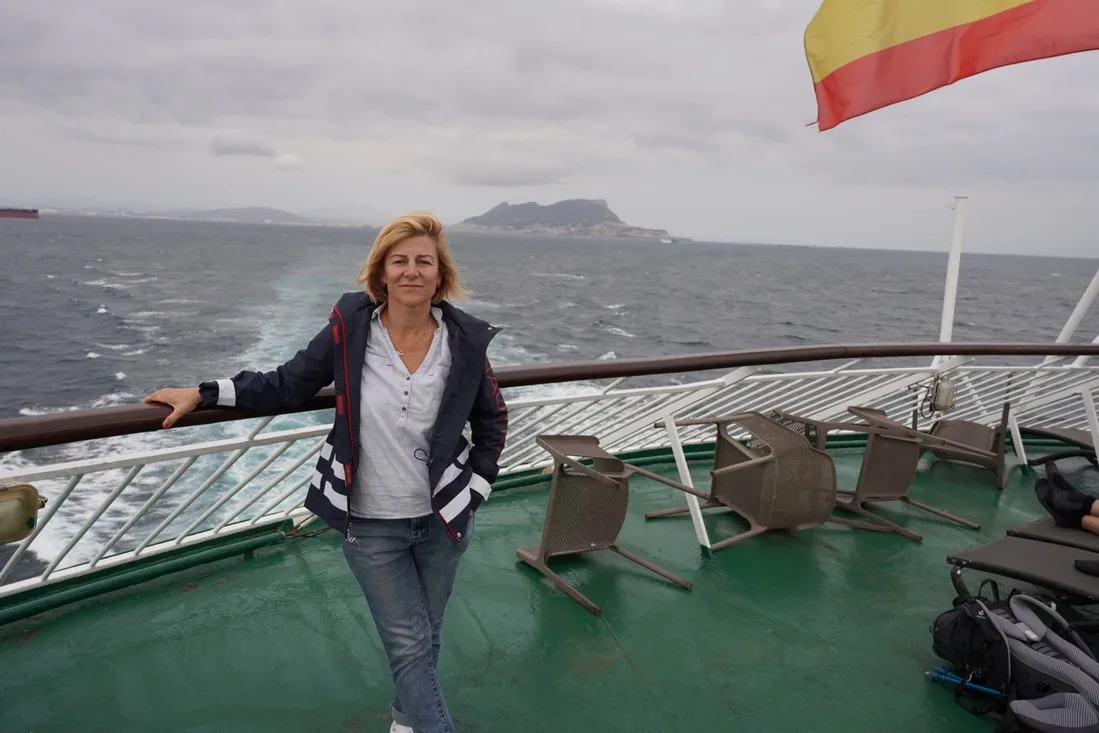
Some trips begin with planning.
Others begin with a sentence like: “Spain is getting a little too familiar. Shall we hop over to the other shore?”
Of course, this is not the kind of sentence a reasonable person should accept as a serious travel plan. But in our case, normal plans are often just a short pause between two improvisations. Especially when Dimitar decides that life should surprise us. He loves that. I do not love it quite as much. Or at least I didn’t before. Over the years, I have learned to let situations unfold. Not always voluntarily, but with a certain amount of dignity and enough self-irony.
That is how we ended up on the ferry from Algeciras to Morocco.
The ferry, naturally, was delayed. Because when you travel without a reservation, fate usually decides to test exactly how spiritually evolved you are.
While we waited, I had time to do something we rarely do in time: read about Tangier. The pros, the cons, what to see, what to avoid, where not to be too brave, and where absolutely to go.
And somewhere between the practical advice and the travel warnings, I came across a very specific story. In Tangier, especially around the Medina, it is quite common for a young man to appear out of nowhere — well dressed, almost European-looking, smiling, polite, helpful. He starts a casual conversation. Asks where you are from. Says he wants to help. Says the Medina is confusing. Says he can show you the way. Says he knows an authentic place.
In some cases, you simply end up being asked for money for the “service.” In others, you are taken to a shop, where a polite but persistent pressure to buy begins. Sometimes the prices suddenly become absurd. Sometimes more people appear. Sometimes tourists find themselves in a secluded alley, confused, tired, carrying bags, phones, money, and that slightly foolish expression of someone who has realized too late that “help” comes with a bill.
I read it. I remembered it. I told myself: “Good. So this is not going to happen to us.”
Which, as we all know, is the safest way to make life laugh quietly in the corner.
Tanger Med: when you think you have arrived in Tangier, but actually haven’t
The ferry dropped us at Tanger Med.
The name sounds as if you step off the boat and straight into Tangier. You do not. It is a large port outside the city, at a rather serious distance. This is not the romantic version of “I step off the ship and immediately enter the Medina.” It is more like: “I step off the ship, look around, try to understand where we are, and wonder why the city is missing.”
We took a taxi.
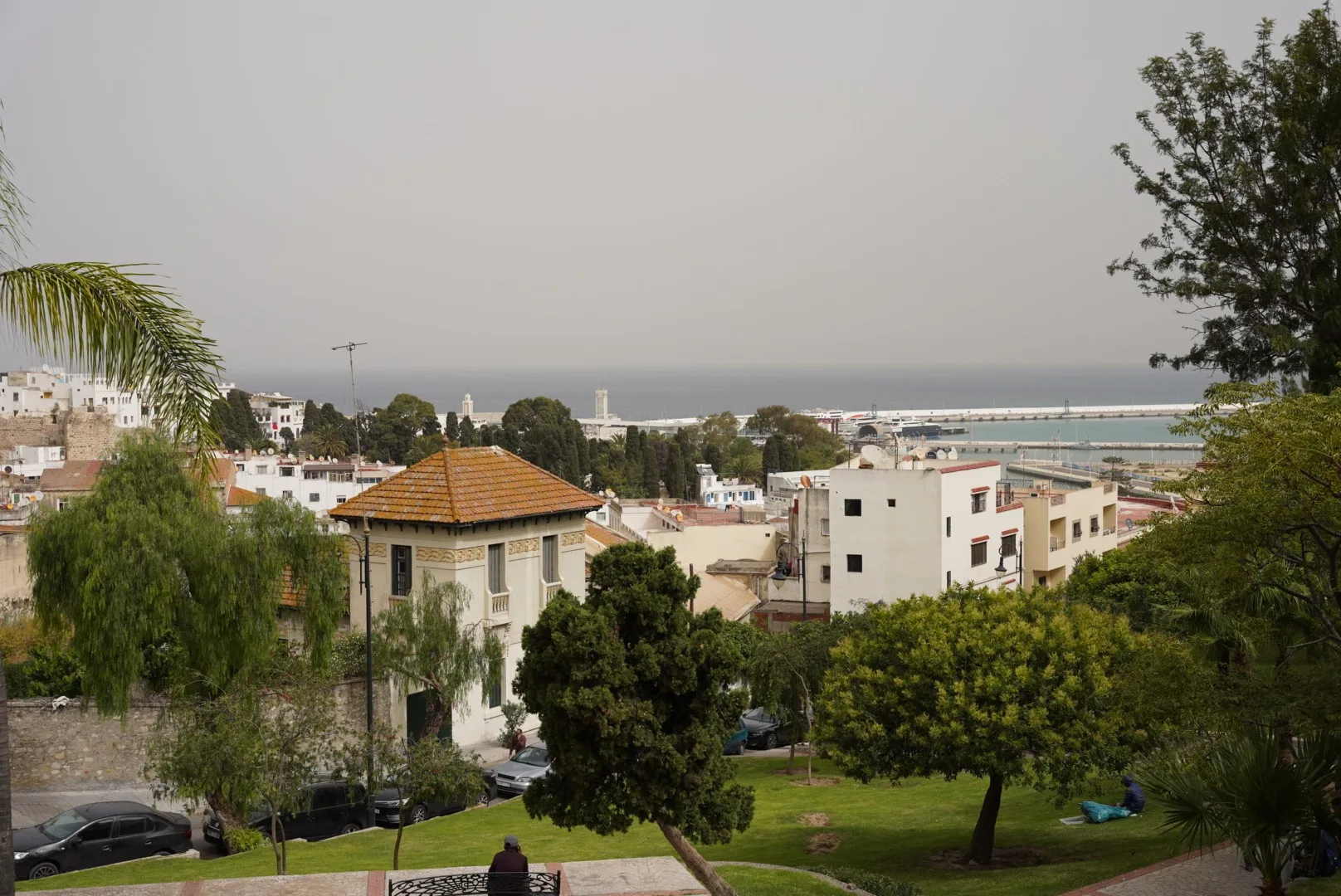
The road to Tangier passes with that particular feeling that you are not quite in Africa yet, but Europe is already beginning to step back.
We arrived toward evening. Naturally, we had no reservation.
This, apparently, has become our family trademark — or a particular form of training in accepting reality. Dimitar would say this makes the journey feel alive. I would say it keeps the blood pressure alive as well.
But I had read that the Medina was the place where one should feel Tangier. Historical Tangier. Decadent Tangier. The old city where Europe and Africa have looked at each other for so long that it is no longer clear who changed whom more.
So, with one backpack each, curiosity, and not entirely sound judgment, we headed toward the Medina.
The Medina: a beautiful place to get lost, provided you know how to return
The Medina in Tangier is not a place you simply “visit.” It swallows you.
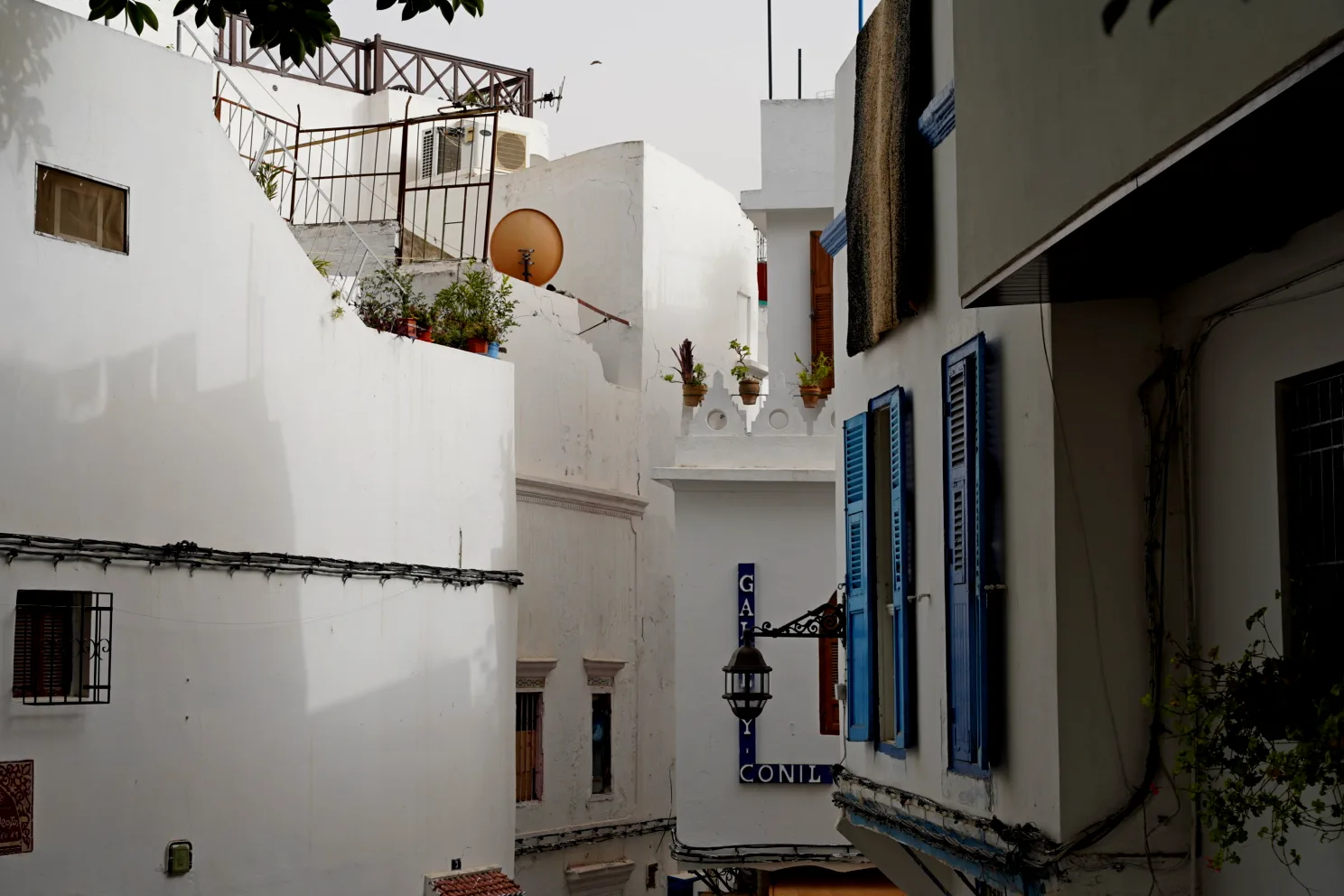
Narrow streets. Steps. Arches. Doors that look older than some countries. Stalls with spices. Olives. Ceramics. Carpets. Cats. Many cats. People walking in different directions with the complete confidence that only you have no idea where you are going.
And that is true.
In the Medina, you lose your sense of direction very quickly. You turn right, then left, then go down, then up, then find yourself in a place that looks exactly like the previous one, but is not. Google Maps starts behaving like someone who is also visiting for the first time. The blue dot spins, the alleys laugh, and you tell yourself: “Well, how bad can it be? We are prepared.”
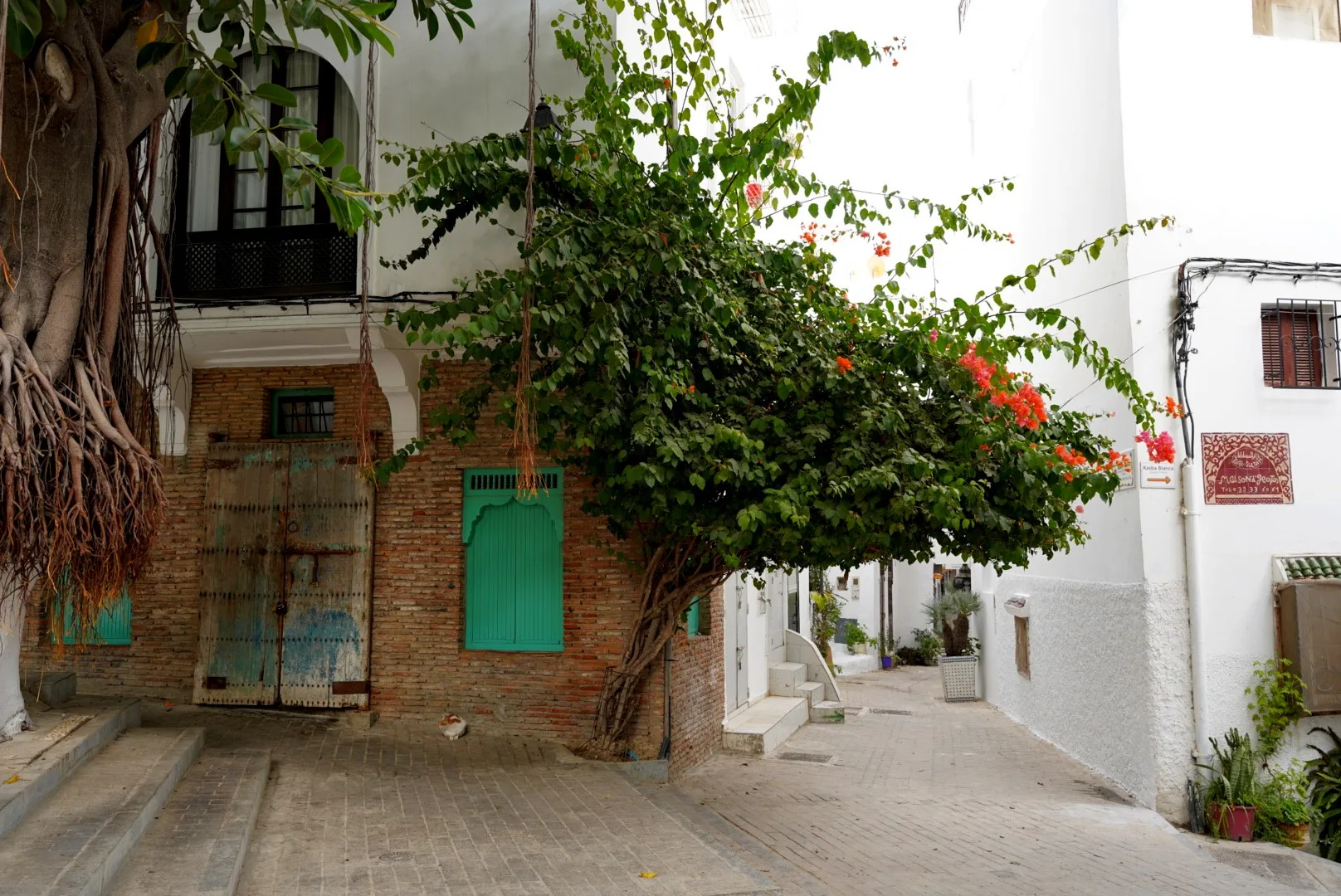
And exactly then, he appeared out of nowhere.
A young man. Well dressed. Almost European-looking. Smiling. Polite. With the kind of confidence that does not ask whether you need help, but starts offering it immediately.
He asked where we were from. Said the Medina was difficult. Said he could show us the way. Said he knew an authentic place to stay. Not touristy. Real. Moroccan. With character.
We looked at each other. This was exactly the man I had read about on the ferry.
He appeared exactly as described. Looked exactly as described. Spoke exactly as described. Everything was so textbook that instead of running away, we smiled with the smugness of people who think that recognizing the trap means they are already outside it.
And we decided to let him lead us.
Because, of course, we were prepared.
The authentic place that was a little too authentic
He led us through alleys that became narrower, more twisted, and less explainable. We passed doors, walls, and cats that looked at us like a committee approving foreign visitors.
Then we reached a very old house.
The kind of house with an inner courtyard that instantly makes you imagine a beautiful riad from a magazine.
There was an inner courtyard. A spiral staircase. Rugs. Many rugs. So many rugs that one begins to wonder whether there is a staircase underneath them, or whether the staircase is simply an excuse for the rugs. Cats slept in the corners. Not one, not two. Around ten. Maybe more. In Tangier, cats are not animals. They are an institution.
The host appeared. He had the expression of a man who was not only unhappy to see us, but not entirely convinced that humanity itself was a good idea. He was not rude. He simply looked as if we had disturbed a silence that had been going on since 1847.
Our young “guide” spoke to him. Then they showed us a room.
Room is a generous word.
It was a space of about two by three meters. There was a bed. There was air in limited quantity. And there was a toilet separated by a partition. Not a wall. A partition. Yes, a partition…
At that moment, I was completely ready to return to civilization — to a hotel room with white sheets, matching lamps, and a bathroom where the wall is a wall, not a decorative suggestion.
“We don’t like this room,” we said.
There was a second offer. It was almost a pigeon loft under the sky.
I do not mean this metaphorically. It was some kind of high, semi-open, strange space full of cats, air, rugs, and the feeling that if you slept there, you might wake up not only in another country, but in another century.
You cannot simply say: “Excuse me, but this place looks like the set of a film in which tourists disappear in the third scene.”
So we said the most elegant thing possible: “It is too expensive for us.”
We smiled. We thanked them. We left.
And then the Medina was different.
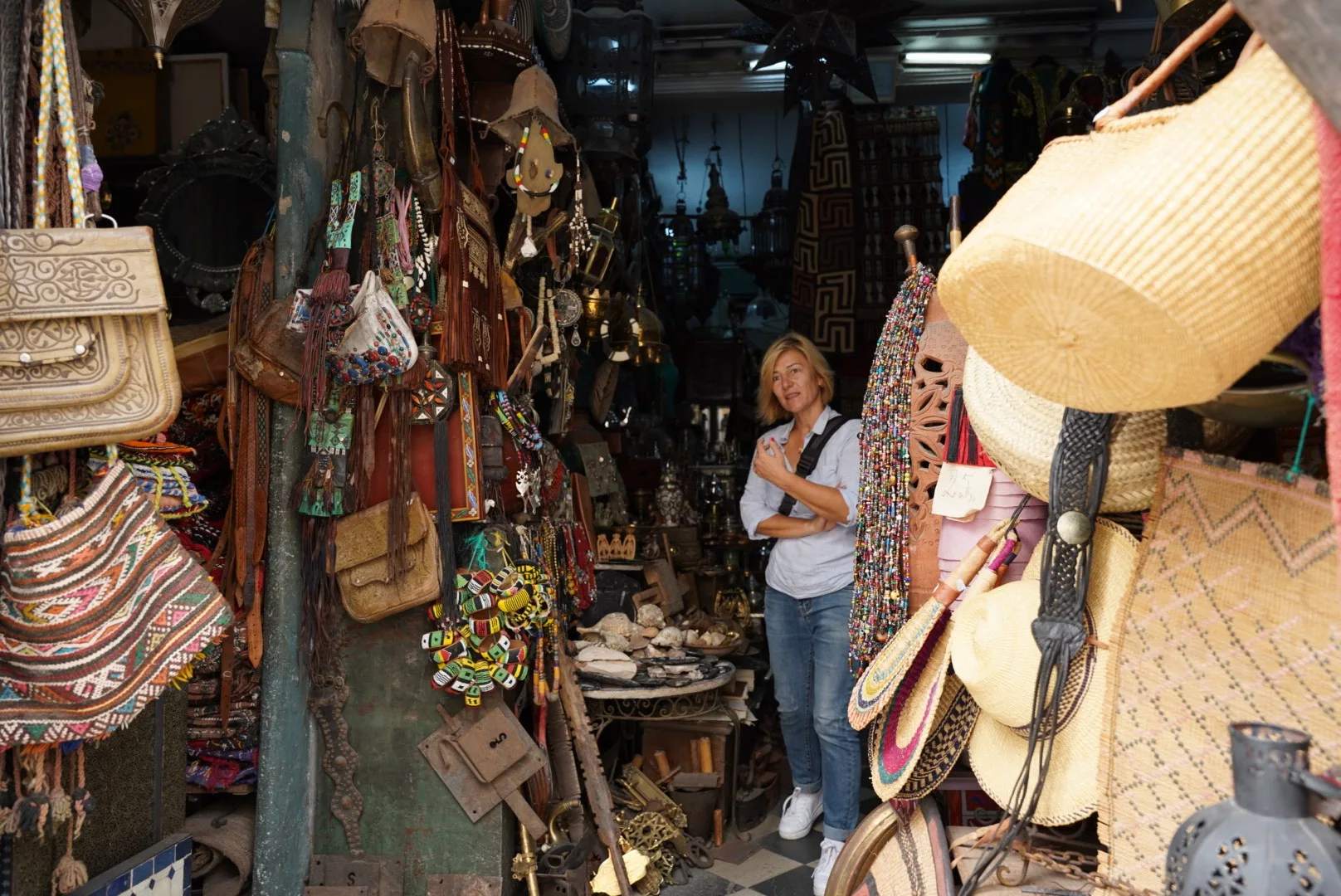
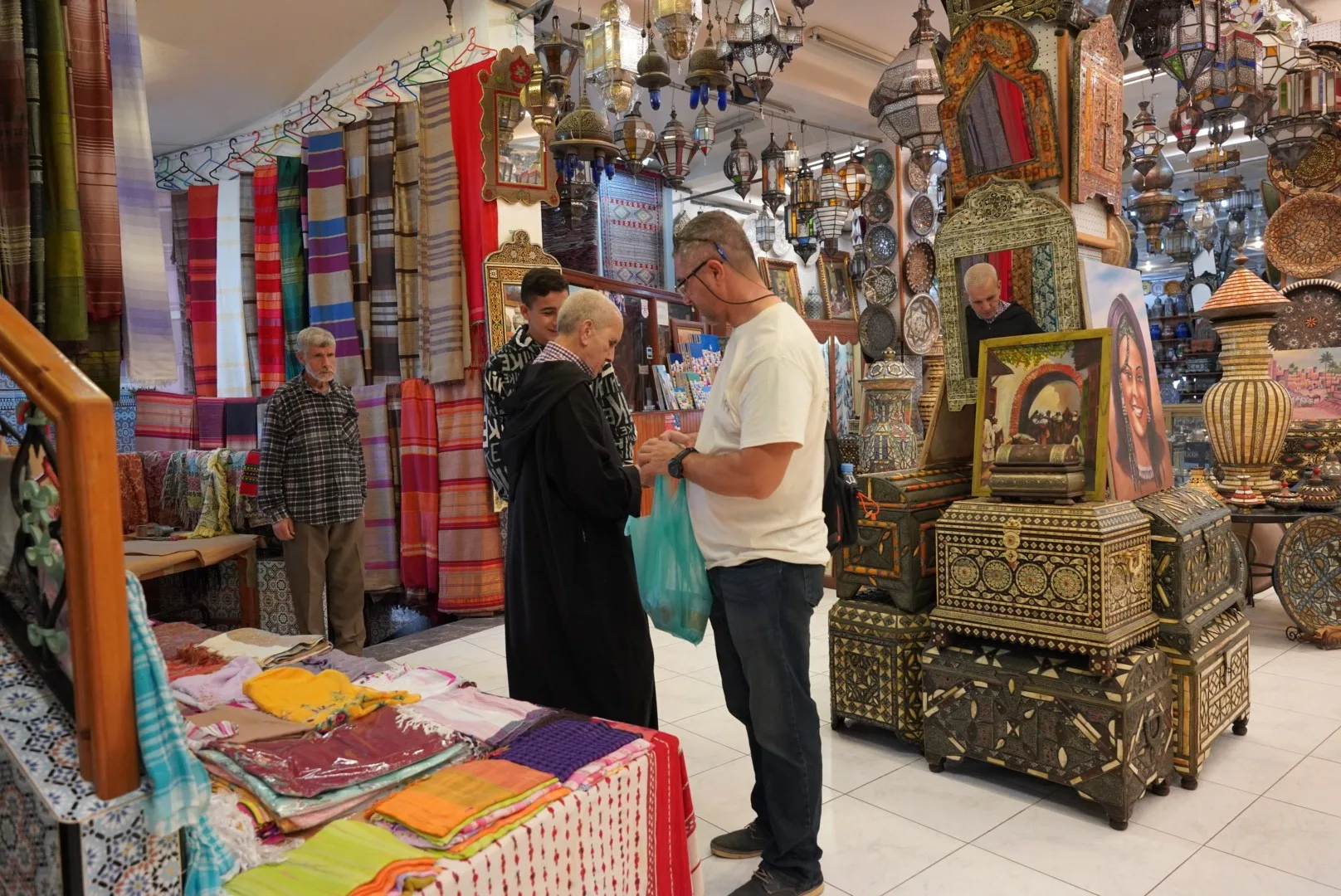
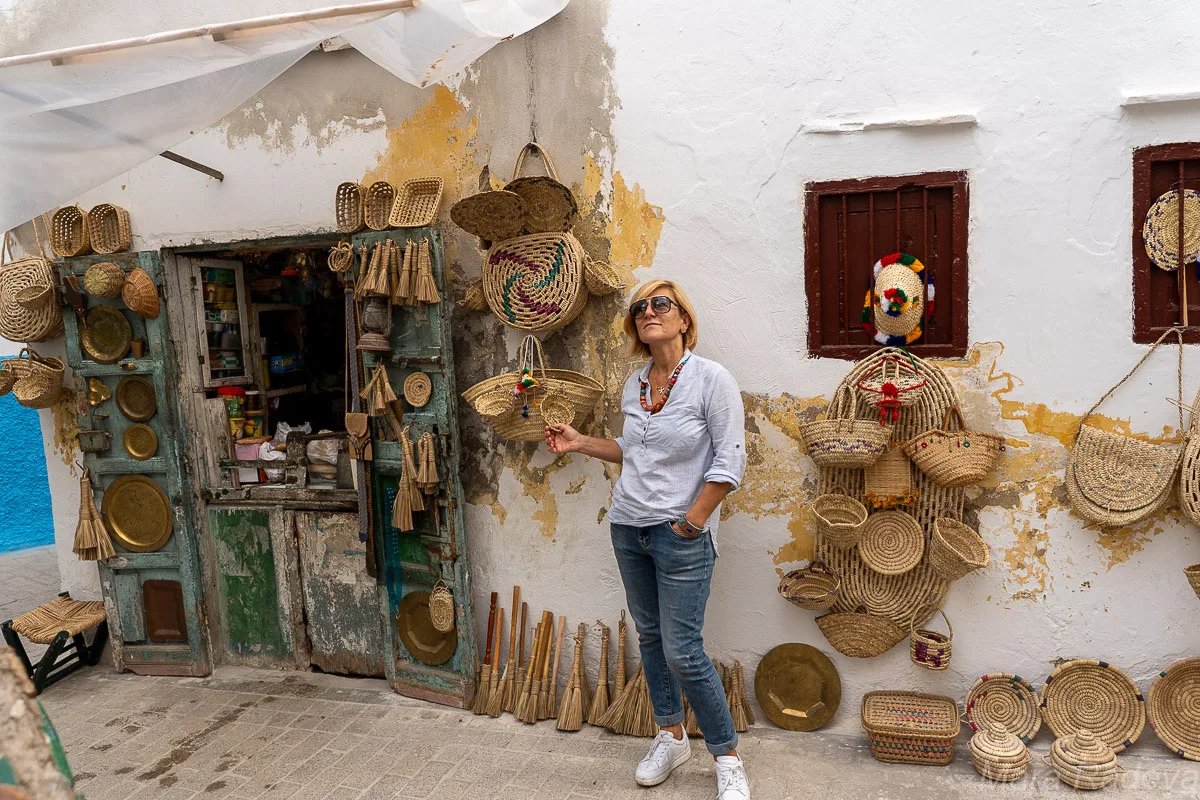
The light had become soft and suspiciously cinematic. The stalls were closing. Some noises faded, others became clearer. And we no longer needed adventure. We needed a hotel: a bed, a bathroom, a door that closed, and a toilet that did not actively participate in the interior design.
Toward the Marina: from the labyrinth to the lights
We headed toward the Marina. And there Tangier changed its face.
From the old city, where everything is layered — smells, centuries, noise, people, cats, stories — we gradually emerged into another Tangier. Wider, brighter, maritime, almost European.
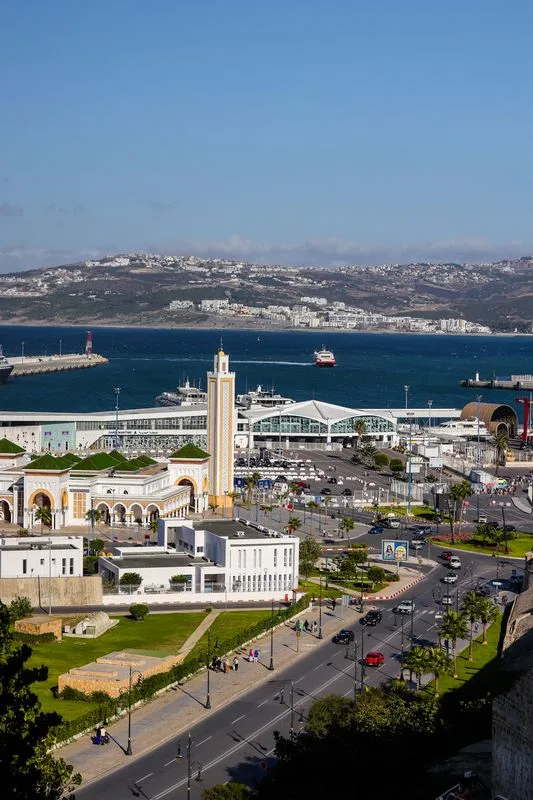
The Marina in the evening was beautiful in a completely different way. Lights reflected in the water. Palm trees. Restaurants. People strolling. Young families. Couples. Sea air. That particular evening glow of a city that has been dusty and noisy during the day, but decides to put on its good shirt at night.
As soon as we entered Marina Bay City Center, our hotel in the Marina, I felt calm.
Not the exotic, beautiful, slightly risky calm of the old town. The normal, bourgeois, slightly boring calm of a person who sees a reception desk, an elevator, and a bathroom with a real door. At that moment, we admitted that civilization has its advantages.
We left the bags. Washed the ferry, the dust, the bargaining, and the almost-pigeon-loft off ourselves. Then we went out again. And Tangier was ours.
Evening Tangier: Europe in Africa, but with a Moroccan soul
In the evening by the sea, Tangier is surprisingly beautiful.
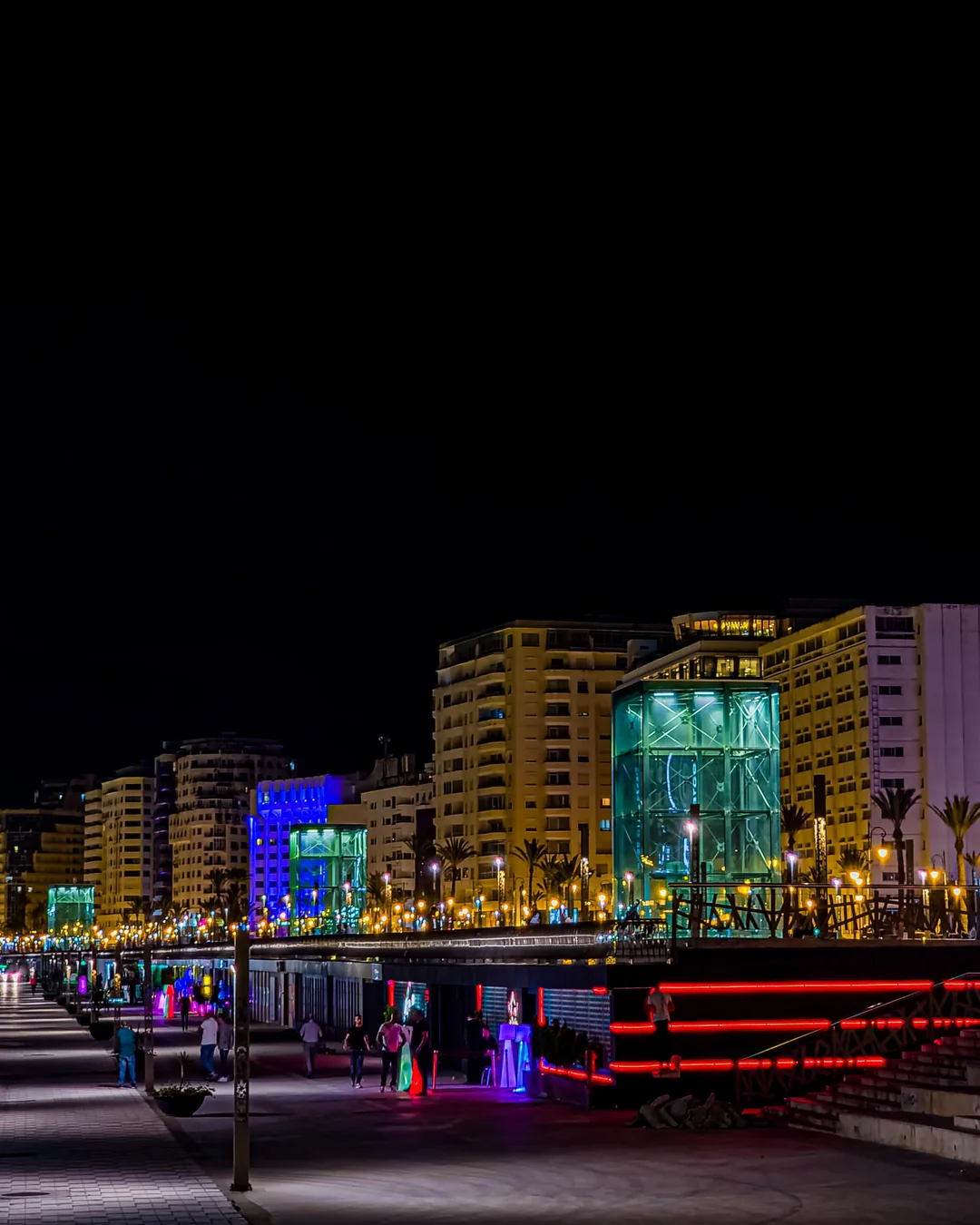
Tangier is Europe in Africa, yes.
Not as an imitation. More like a city that has taken from Europe its façades, cafés, old diplomatic shadows, and idea of bohemian life, and from Africa its rhythm, light, chaos, smells, and ability not to explain everything.
That is exactly what makes it interesting.
It is both comfortable and uncomfortable. Beautiful and insistent. Maritime and dusty. Old and new. Slightly tired from history, but alive enough to surprise you around the next corner.
Some links in this article are affiliate links. This means that if you book or buy through them, I may earn a small commission at no extra cost to you.
If you prefer Tangier with a little more structure, you can browse current walks, tours, and local experiences with a guide.
This can be especially useful if you only have a day or two, you are not traveling by car, or you simply do not want the whole adventure to depend on a random person appearing just as Google Maps decides to meditate.
What to see in Tangier in two days
If you have two days in Tangier, do not try to turn it into a competition. This is not a city you win by moving fast and ticking boxes in Google Maps. Tangier needs a little getting lost, a little patience, and at least one evening by the sea.
On the first day, I would start with the Medina and the Kasbah. Not because they are the easiest places, but because without them Tangier remains just a beautiful coastal city. The Medina is its heart — confusing, noisy, slightly annoying, but real.
Walk around Grand Socco, the large square that serves as a natural entrance to the old city. From there, you can enter the labyrinth, but make sure your phone is charged and your patience is even more charged.
The Kasbah is essential for the views. From above, Tangier makes more sense — the sea, the white buildings, the port, the old city, the light. This is where the city stops being only chaos and becomes a picture.
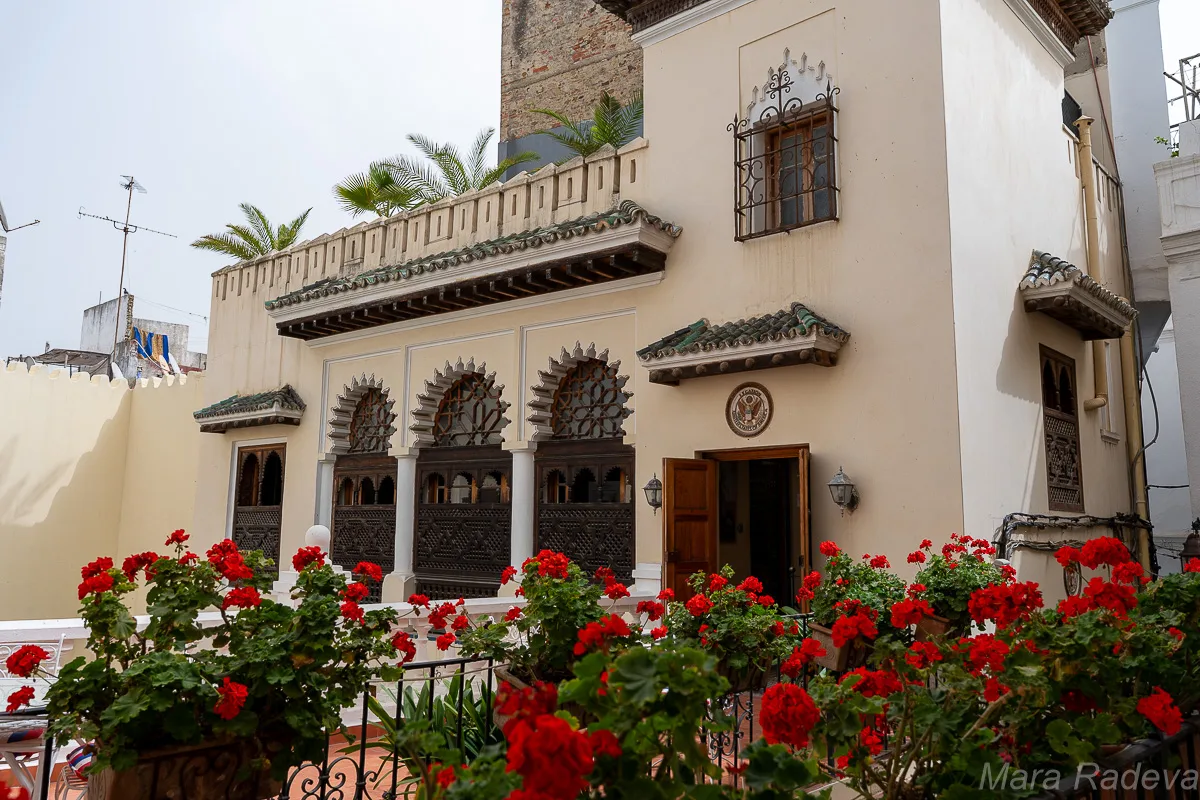
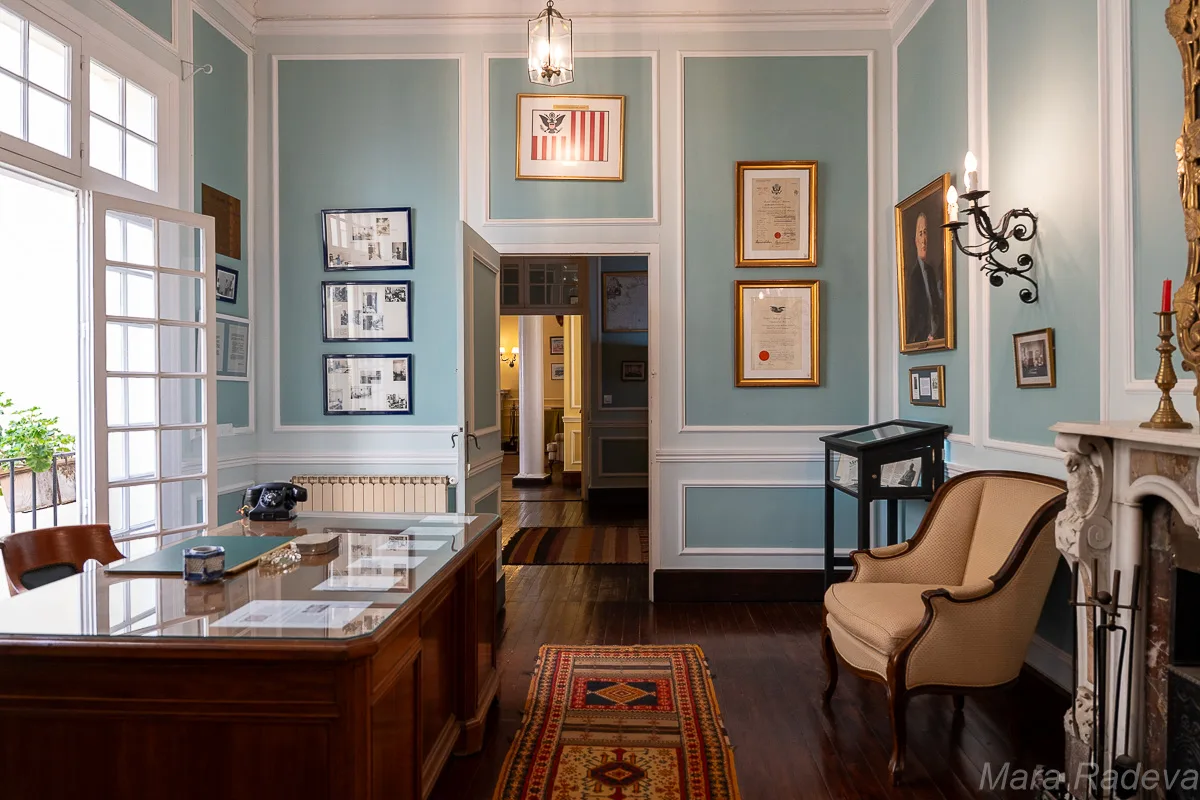
Inside the Medina, it is worth looking for the American Legation — the old American legation. It is not the current U.S. embassy, but a museum and one of the most fascinating places in the city. The building was gifted to the United States by the Sultan of Morocco in 1821 and is considered the first American public property outside the territory of the United States. Even more interesting: Morocco was the first country to recognize American independence in 1777. In other words, hidden inside Tangier’s labyrinth is a small, unexpected chapter of American history.
If you like cafés with history, Café Hafa is one of those places that is not just a café, but a legend. Tea, view, wind, and the feeling that many people before you have sat there thinking their life should take another direction.
The Marina is for the evening. Do not miss it. After the Medina, it comes like an exhale. A walk by the water, dinner, lights, sea. This is the Tangier that does not challenge you, but shelters you.
On the second day, you can move beyond the oldest part of the city. Add Cap Spartel and the Caves of Hercules — there Tangier stops being only a city and becomes geography. The sea is not a background, but a character.
If you have more time or a car, you can consider Chefchaouen, the famous Blue City in the Rif Mountains. It is one of the most photogenic places in northern Morocco, but I would not force it into two days if you want to feel Tangier. Better to leave it as the next stop, not as a nervous rush for a photo in front of a blue wall.
The small bohemian myth of Tangier: in the twentieth century, the city was an international zone and attracted writers, artists, diplomats, heirs to large fortunes, spies, and people who clearly preferred life to be more complicated than normal.
Writers such as Paul Bowles lived here, and around him an entire literary and artistic circle took shape. Tangier also attracted names like William Burroughs, Tennessee Williams, Truman Capote, artists, musicians, heirs to large fortunes, and all kinds of people with money, talent, or a well-maintained tendency toward chaos.
It is important, however, not to see this only romantically. The comfortable life of foreigners here was also made possible by the colonial and unequal reality of the time. Tangier gave freedom to some, but not necessarily to everyone. And this is exactly what makes it so interesting — it is not a postcard, but a city with layers.
What to skip
I would skip excessive trust in random “helpers.”
Not because everyone is bad. They are not. But in the Medina, help often has a price, even when it sounds like pure human kindness at the beginning. If someone insists too much on guiding you, showing you around, taking you to a “friend,” a “cousin,” an “authentic place,” or “the best shop,” it is better to thank them and keep walking.
I would also skip accommodation that is “too authentic,” unless you are in the mood for an ethnographic experiment with sanitary consequences.
Authenticity is wonderful when the bathroom has a door.
I would skip restaurants that look like tourist traps — huge menus with photos, empty tables, and a person outside insisting too much. Better to look for a place with people, movement, and the smell of real food, not laminated enthusiasm.
I would also skip the desire to see everything in one day. Tangier does not work like that. If you run, you will see façades. If you slow down, you will feel the city.
A practical option: if you want to see Tangier without too much wandering, you can browse organized tours and day experiences here.
You do not have to travel with a guide, of course, but for the Medina, Cap Spartel, or the Caves of Hercules, it can save time, bargaining, and that faint feeling that you are taking part in an orientation exercise without a map.
What to watch out for
Watch out for fake guides. This is the most important thing.
They do not always look suspicious. On the contrary — they often look pleasant, modern, confident. They start speaking casually, like someone who simply wants to help. They may tell you the street is closed, that the place you are looking for is not open, that they know a better way, that they will take you there “just for two minutes.”
One practical thing I would arrange before the trip: mobile internet. In the Medina, Google Maps can already behave a little philosophically, but without a connection it becomes a very personal experience. For travel outside the EU, you can use an Airalo eSIM to stay connected without looking for a local SIM card the moment you arrive with your bags.
Most often, it ends with a request for money. Sometimes it is a shop with a commission. Sometimes it is pressure to buy. Sometimes you simply feel foolish and uncomfortable because you allowed someone to lead you and then do not know how to refuse.
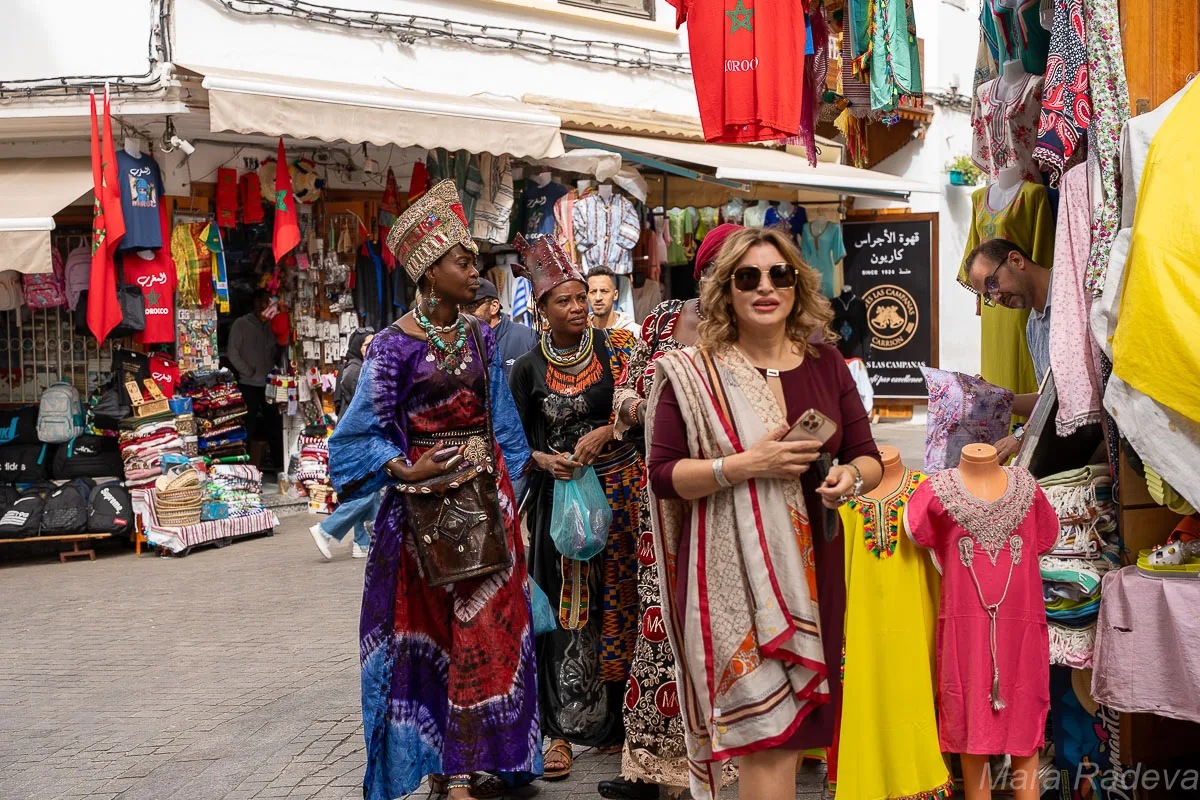
Watch out for pickpocketing in crowded places — markets, entrances to the Medina, busy streets, transport. Keep your bag in front, your phone out of your back pocket, and documents separate from money. Not because you need to be afraid, but because there is no need to make life easier for people with bad ideas.
Ask for the price in advance. For taxis, services, guides, anything unclear. Do not be afraid to say “no.” In Tangier, a short “no, thank you” is better than a long explanation. A long explanation is often understood as the beginning of negotiations.
If you get lost, it is better to enter a café, shop, or hotel and ask there. Or use an official guide. The young man who appears exactly when you are confused may be a wonderful person. But he may also be the beginning of a story you will later tell with more self-irony than you had planned.
What to try
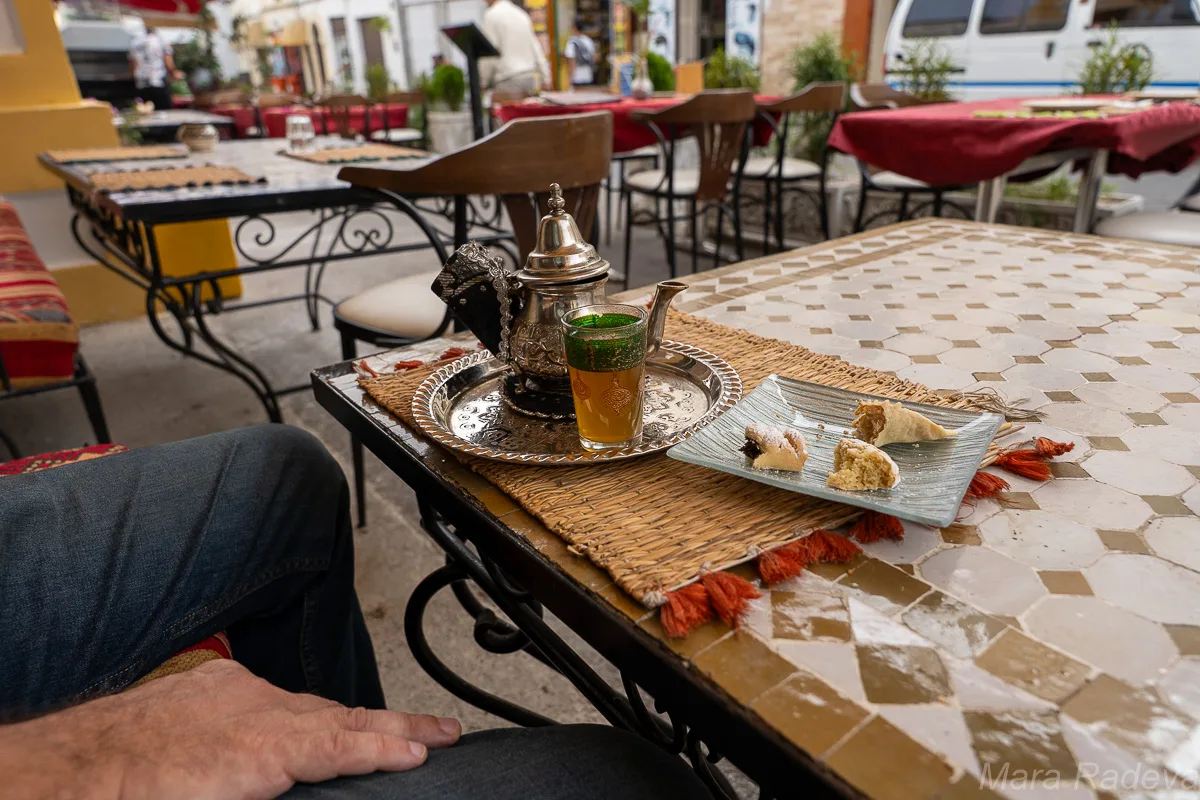
Moroccan mint tea is essential. Not as a drink, but as a ritual. It is sweet, aromatic, and comes with the feeling that time can wait a little.
Try tagine — especially with chicken, lemon, and olives. This is food that does not rush, and that is exactly why it is good. Try couscous if you find a place where it is made properly. Try harira — a thick soup with chickpeas, lentils, tomatoes, and spices. Try fish and seafood, because Tangier is by the sea and it would be a shame to forget that.
If you like sweets, Moroccan pastries are dangerous. They are small, beautiful, and look innocent, but they are made with honey, nuts, sesame, and a complete absence of shame.
Most importantly, eat at least once somewhere where not everything looks made for tourists. Real food rarely comes with the shiniest sign.
Final thoughts: Tangier was not what I expected
Tangier was not exactly what I expected. I thought I would see an old town, a few markets, a little exoticism, a little sea, and then say, “Yes, that was nice.” But it turned out to be more complicated.
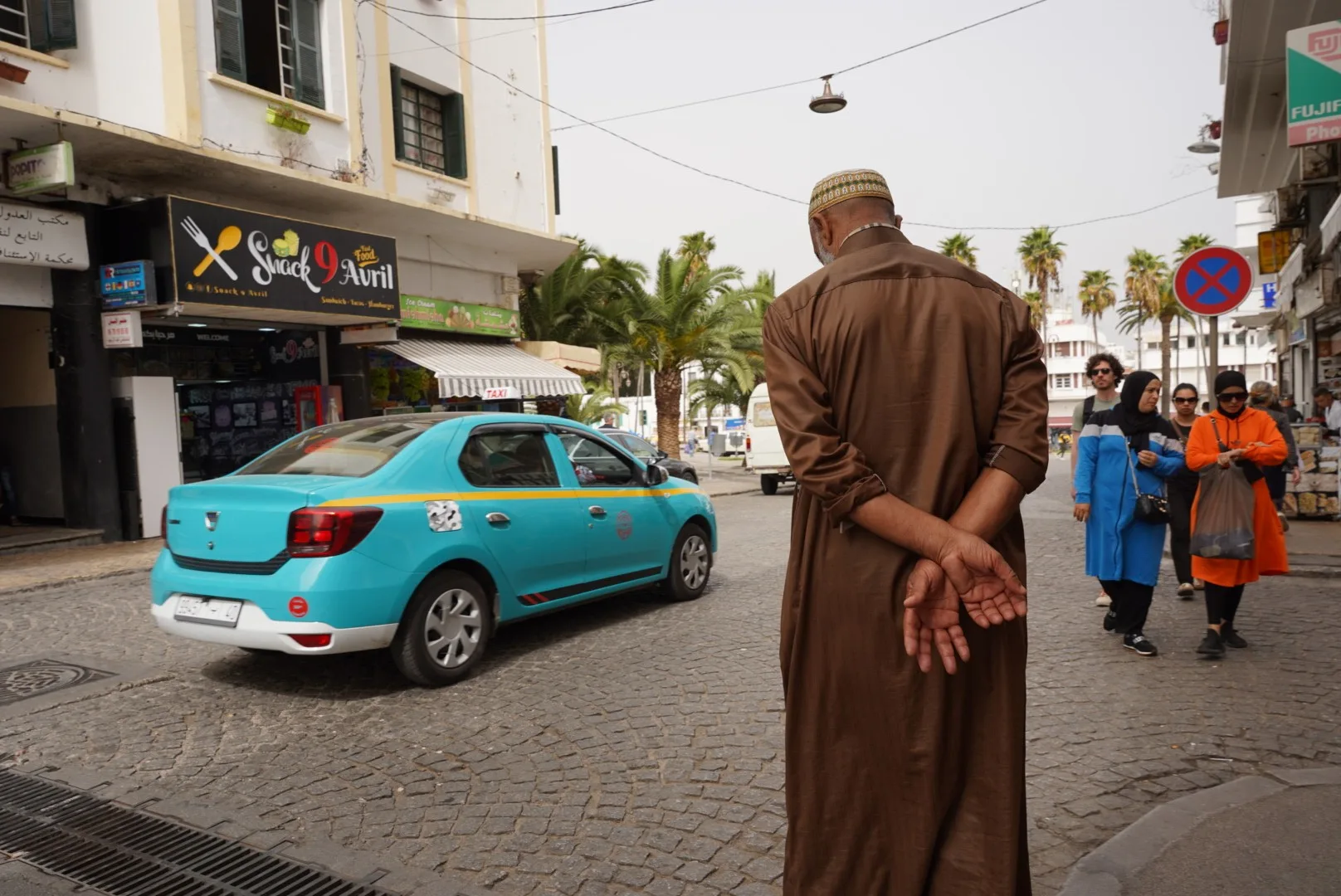
First it delayed us. Then it surprised us with a port far from the city. Then it pulled us into the Medina without a reservation. Then it sent us exactly the young man I had read about on the ferry. Then it showed us a house so authentic that the civilized part of me woke up and asked for a hotel chain.
And then, just when I was ready to look at it suspiciously, Tangier lit up by the sea and said: “Relax. I am not only this.”
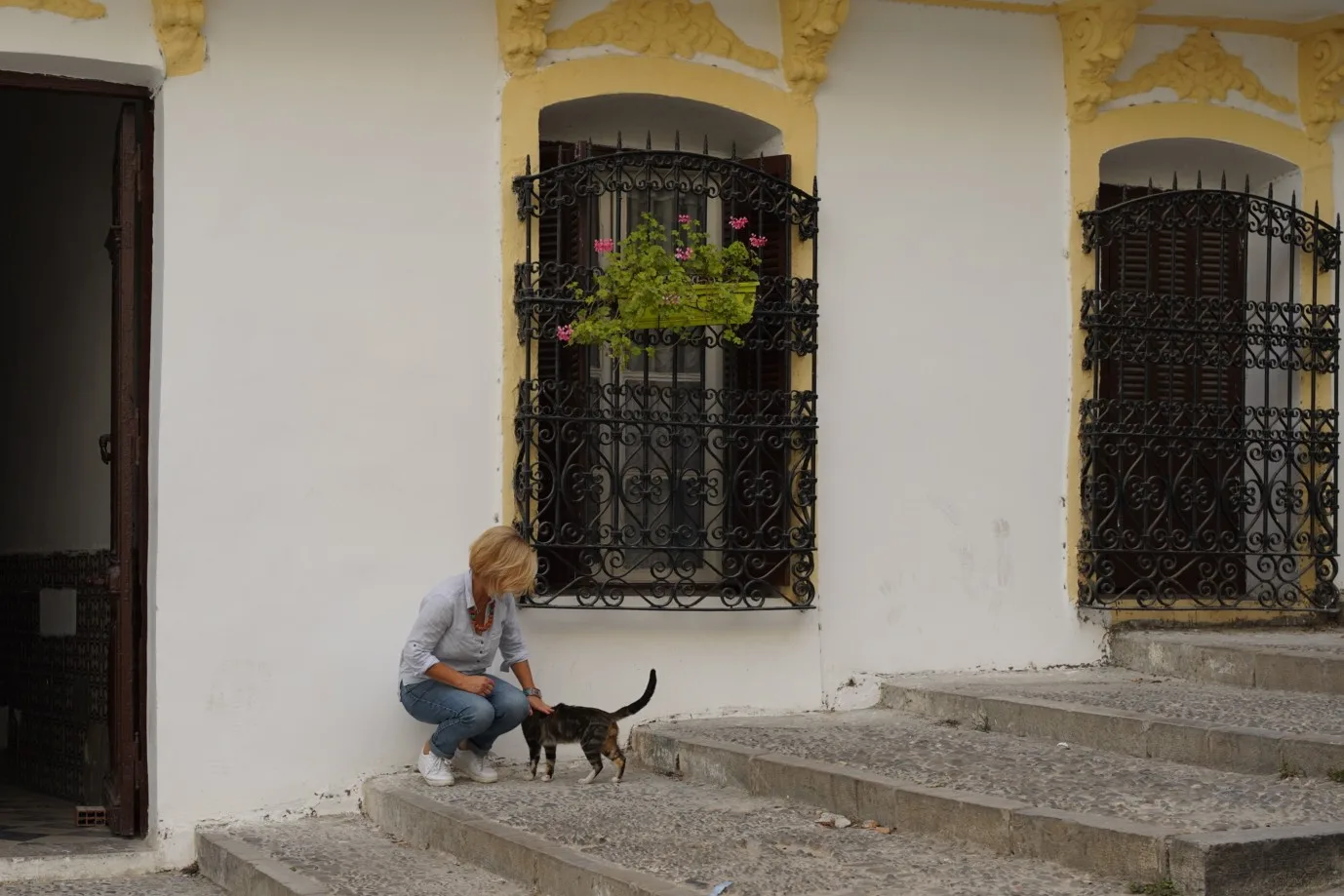
That is the city. Medina and Marina. Cats and yachts. Rugs and elevators. Mint tea and a hotel bathroom. Bohemian legend and modern coastal glow. Africa looking toward Europe. Europe leaving traces in Africa long ago.
Tangier is a place where you can get lost. But with a little luck, a little sense, and enough humor, you can also find yourself. At least until the next improvisation.