Table of Contents
American cities often tire me with their scale. Washington, however, surprised me.
To me, Washington feels a little like Rome, but more human.
I expected monuments, museums, broad avenues, serious facades and that unmistakably official American atmosphere. A city planned as a national capital inevitably carries the weight of its symbols.
But what surprised me was something else: the streets, and the way greenery is woven into everyday urban life.
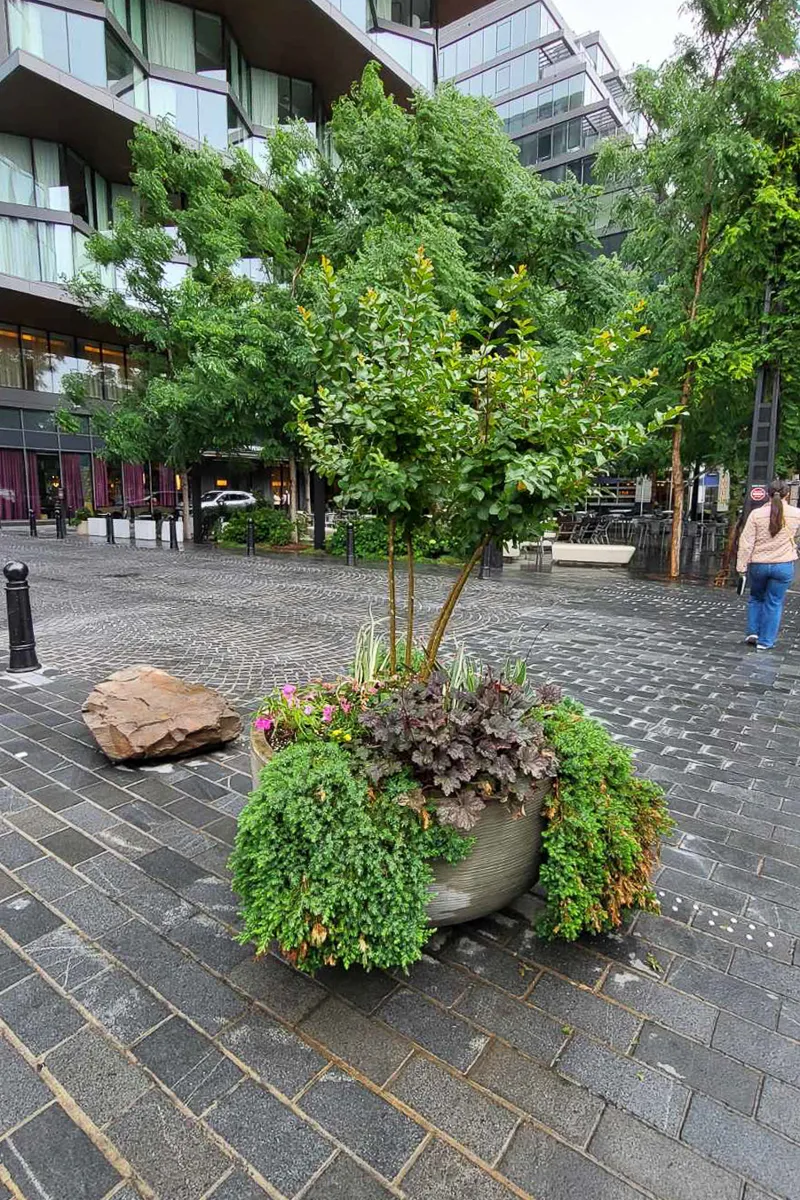
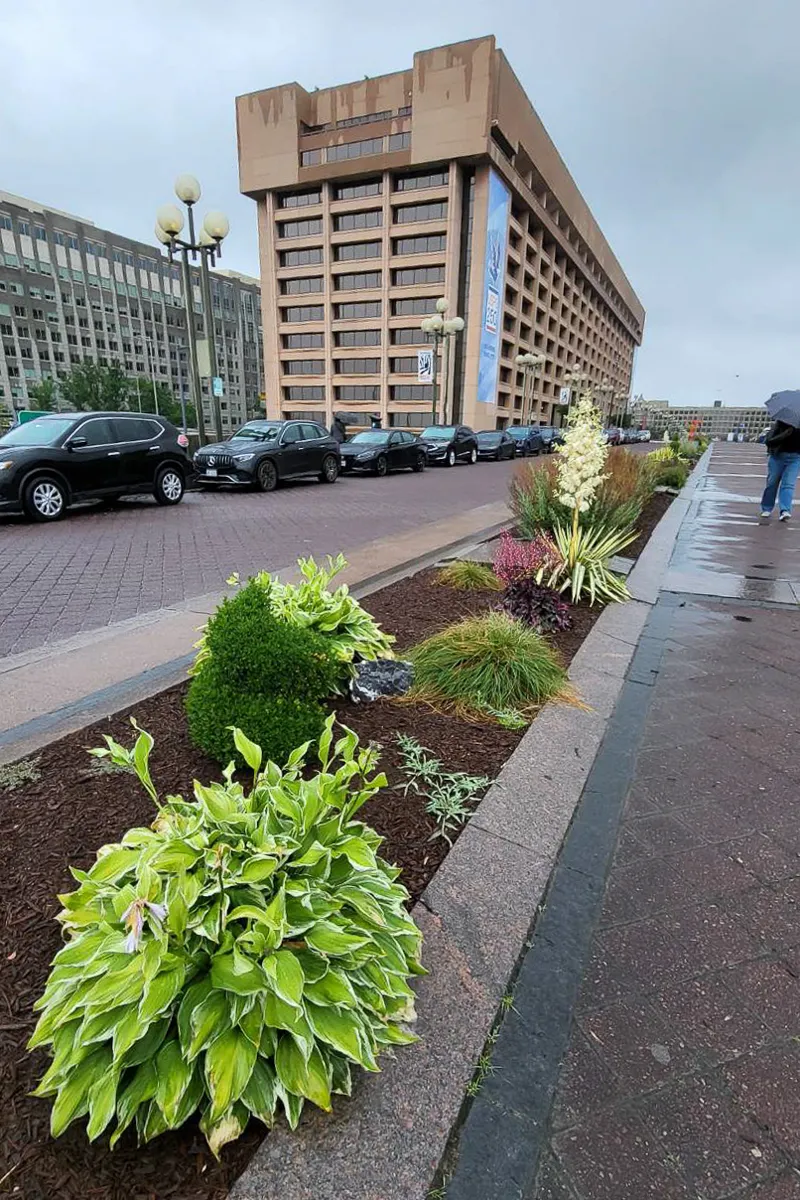
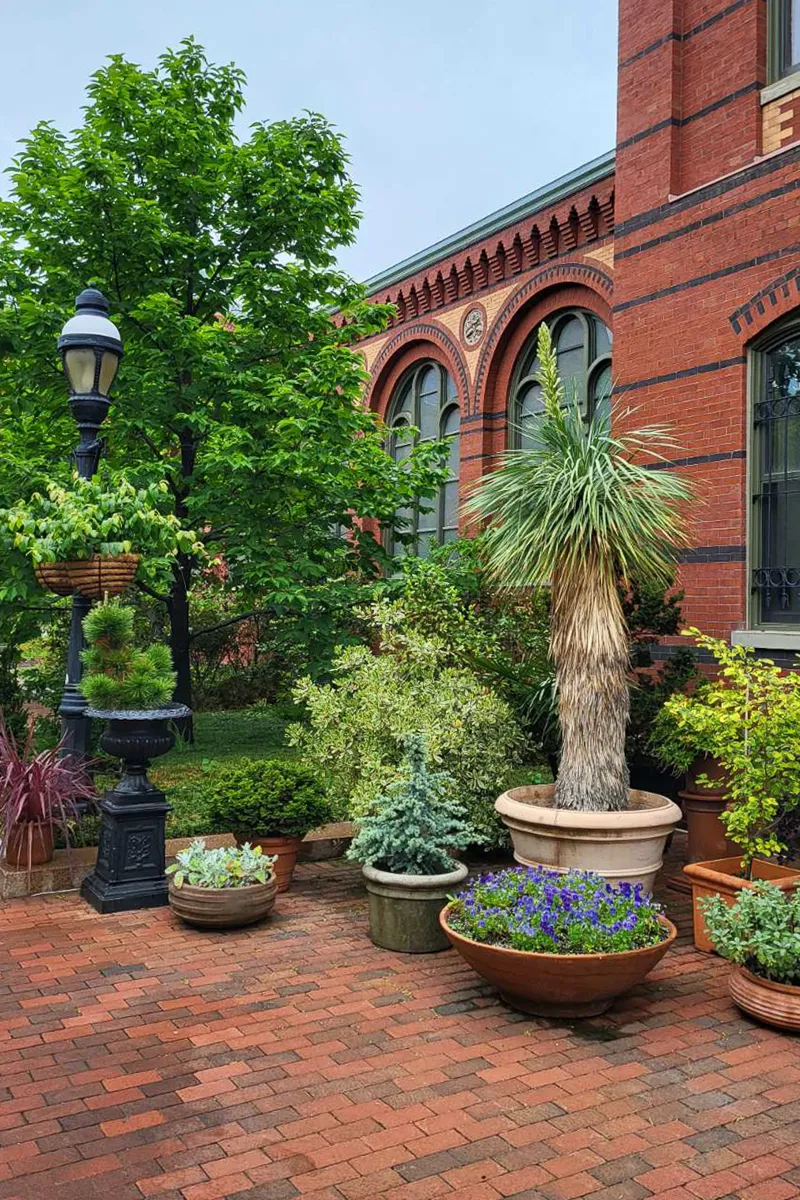
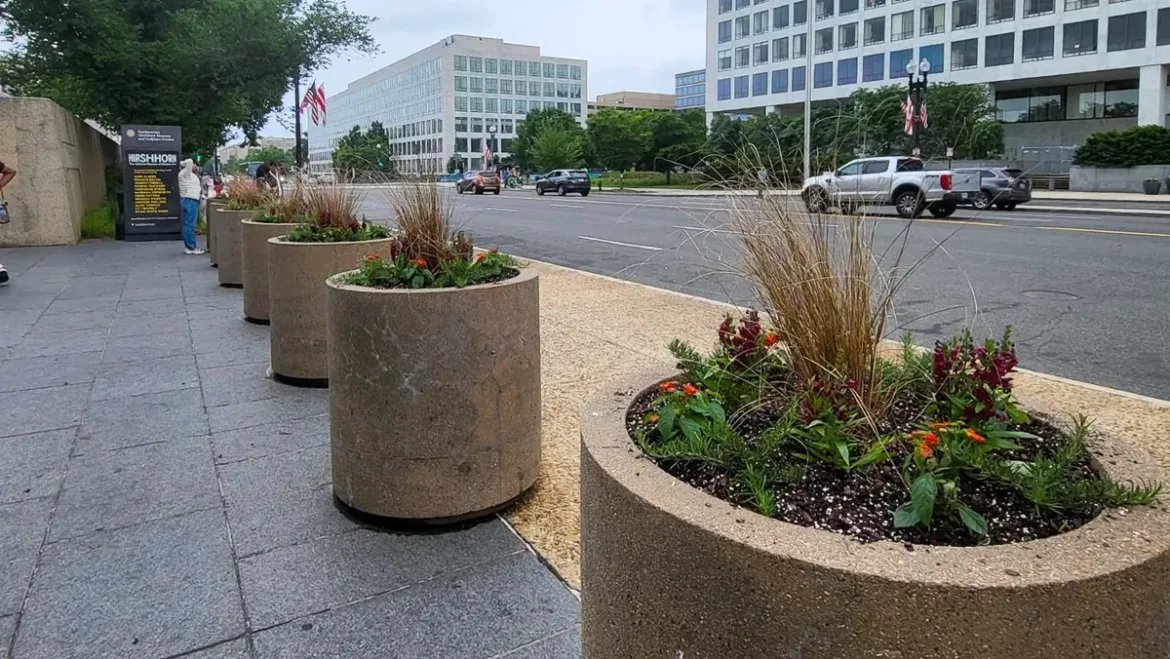
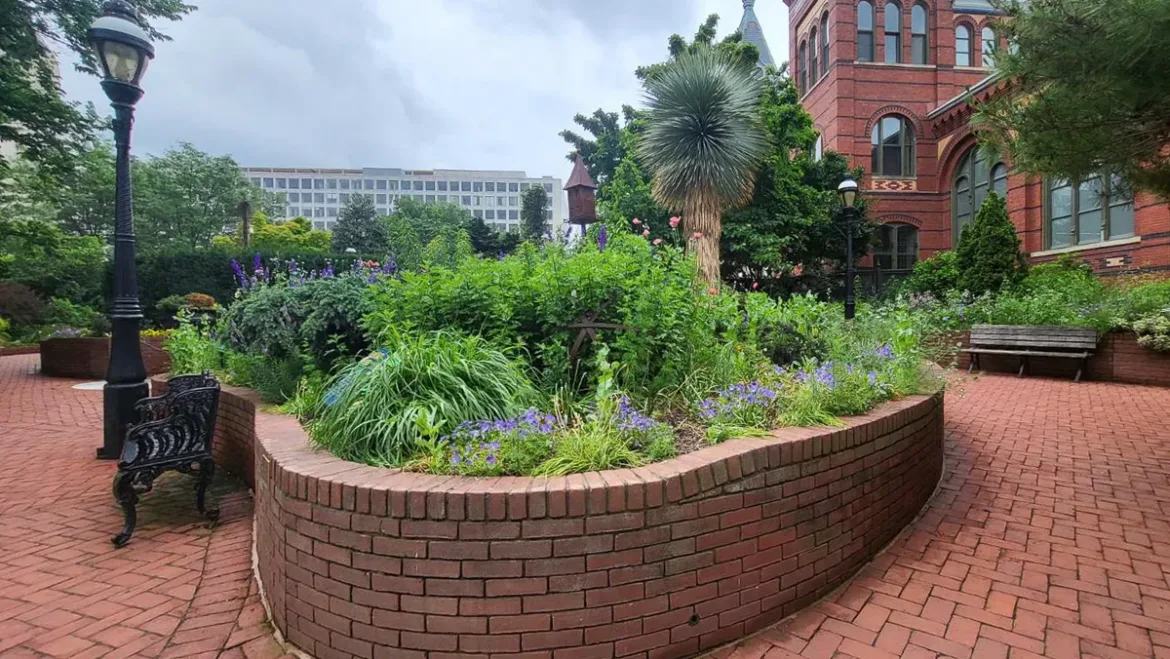
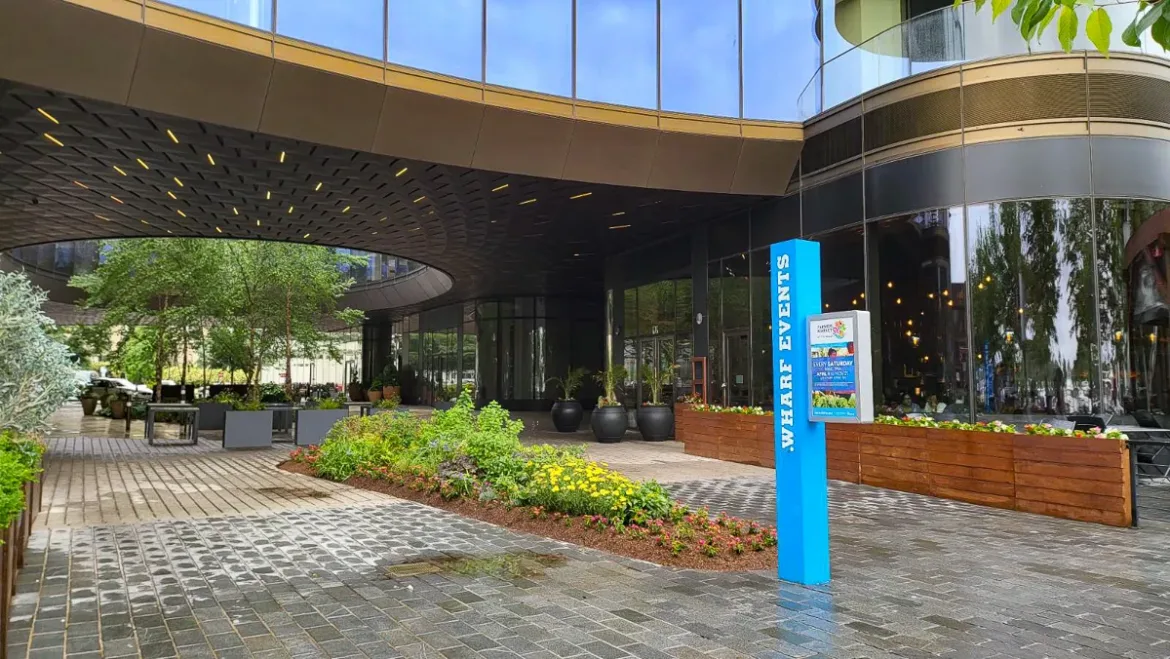
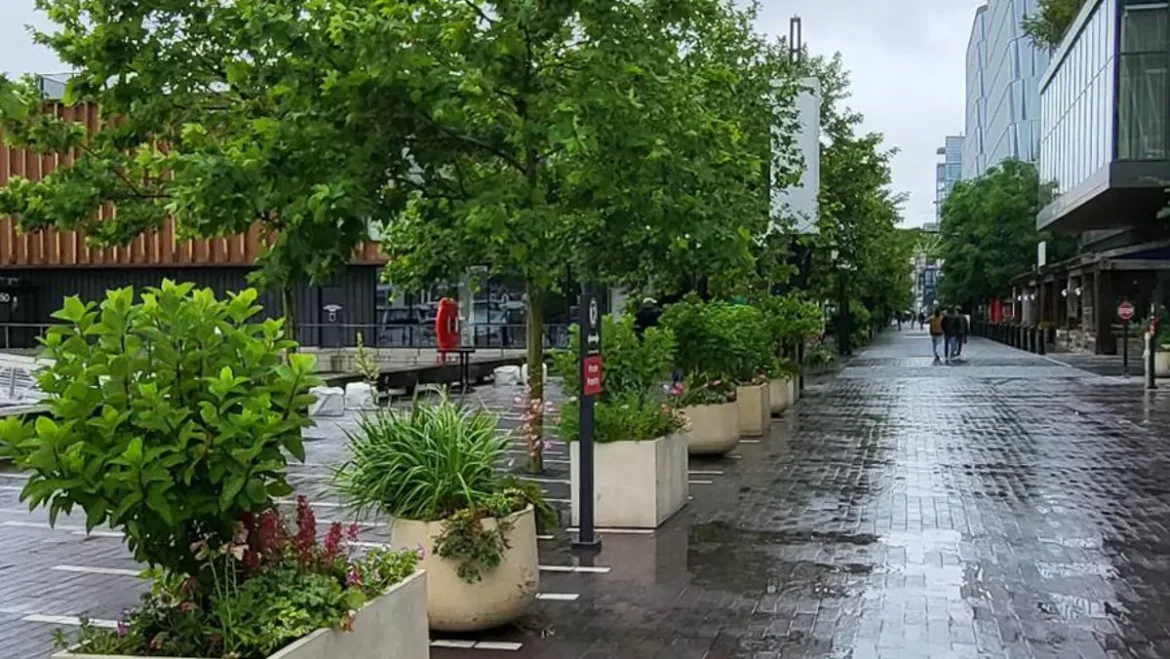
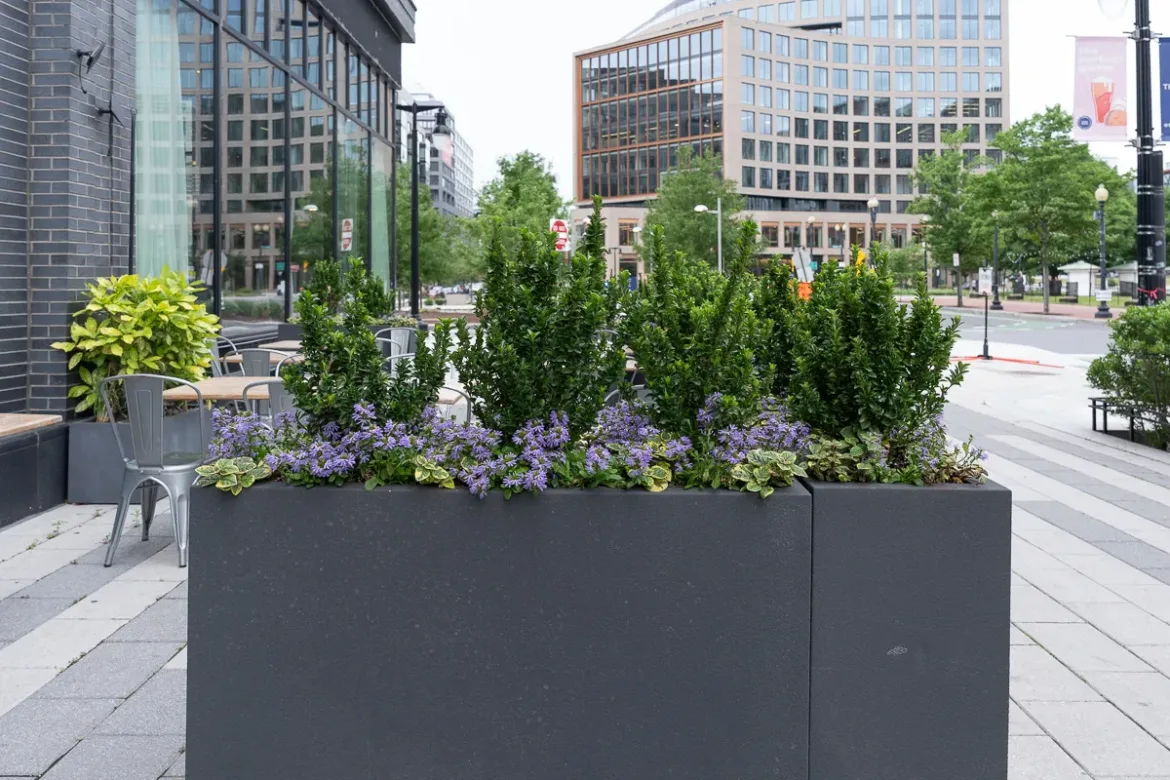
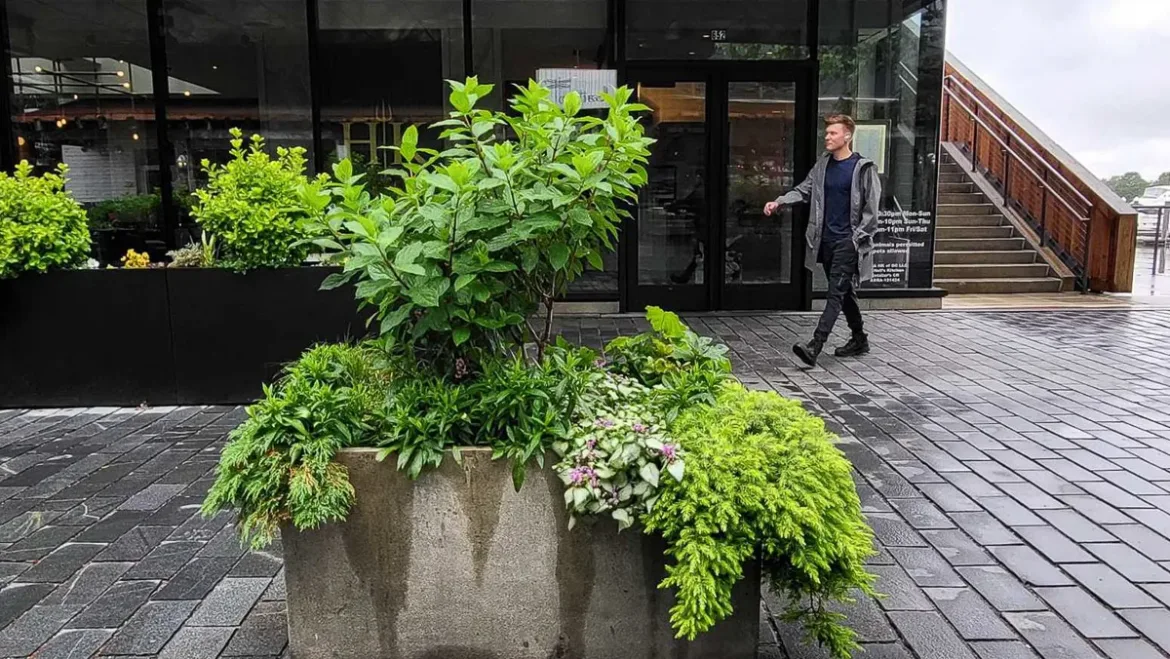
Raised planting beds, large planters, trees, ornamental grasses, clean paving and small green islands change the way a city feels.
Concrete seems softer. Glass feels less cold. And modern architecture somehow becomes more human.
It is a culture of public space.
The Street Is Not Just the Space Between Buildings
We often think of a street as something between other things: between buildings, entrances, a parking lot and a restaurant, or simply between where we are and where we are going.
In Washington, the feeling is different. At least in the areas I photographed and observed, the street itself is part of the experience.
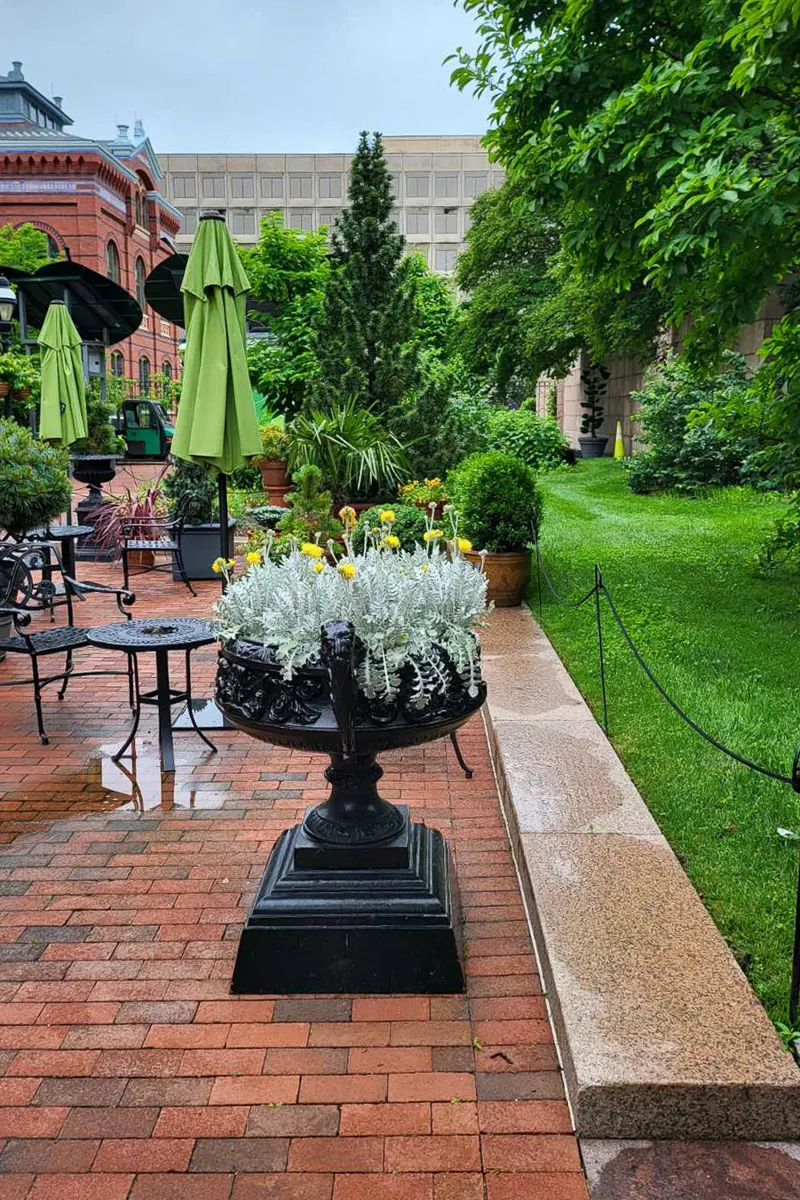
A raised planting bed in front of a glass facade. A tree in a large concrete planter. Flowers arranged as part of a clear composition rather than added as an afterthought.
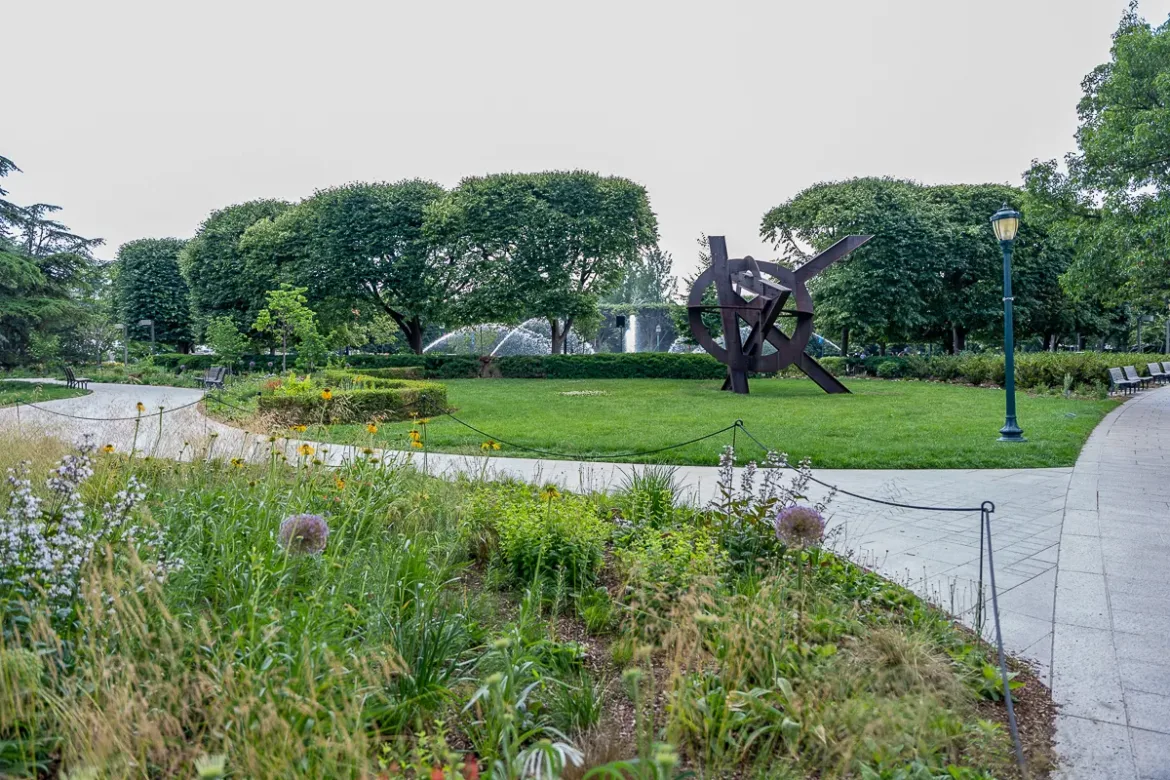
Ornamental grasses move in the wind and soften strict geometry. Clean paving, places to sit, broad pedestrian areas and lines of greenery guide the eye through the street.
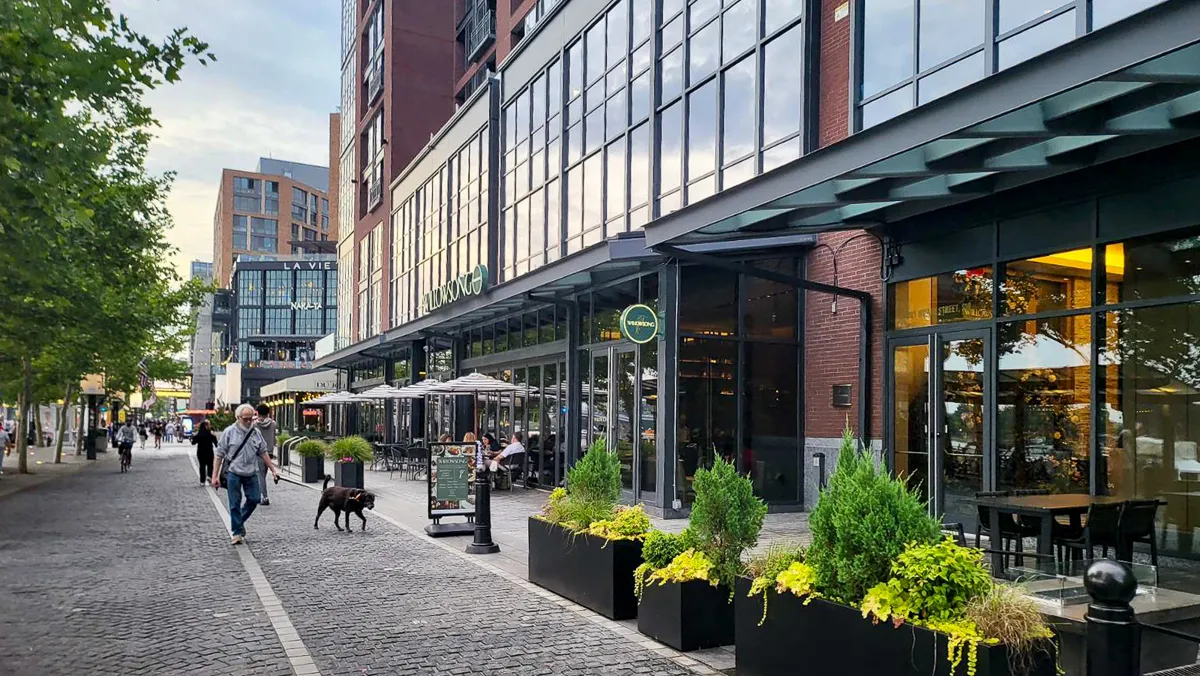
Nothing feels entirely accidental. And that is precisely the difference between adding some plants and creating an environment.
Urban planners often use the term public realm for this idea. It includes the spaces where people walk, wait, sit, look around, meet, rest and simply spend part of their day.
The question is not “where can we put some planters?” but “how do we want people to feel here?”
Raised Planting Beds - Beauty That Works
At first glance, a raised planting bed seems simple: a container, soil and plants. But in a modern city, it can perform several roles at the same time.
It can be decoration, an architectural element and sometimes part of the infrastructure.
Increasingly, planting beds, landscaped strips and large planters are used as part of what is known as green infrastructure.
Plants, soil, drainage and paving can create beauty while also helping address genuine urban problems: stormwater, overheating, dust, lack of shade and an excess of hard surfaces.
This is where things become particularly interesting. A beautiful urban planting bed can also function as a small hydrological system.
A tree in a planter can provide valuable shade. A strip of ornamental grasses can help slow water, filter dust and separate pedestrians from traffic.
Washington and the Old Idea of the Beautiful City
Perhaps this approach to public space is not accidental.
Washington is a city that was conceived from the beginning through axes, perspectives, green spaces and symbolism.
In 1791, Pierre L'Enfant created a plan with broad diagonal avenues, public spaces and strongly defined visual axes.
Later, at the beginning of the twentieth century, the McMillan Plan developed that vision further. The National Mall gradually became one of the most recognizable urban green axes in the world.
The plan was connected to the City Beautiful movement, which promoted the idea that beauty, order and well-designed public spaces mattered not only visually, but also to the way society used a city.
I find this particularly important, because we often treat beauty in public space as an extra - something that comes after the “important things.”
It influences whether people want to walk, stay outdoors, sit down, meet others and actually use public space.
A City That Is Not Shaped Only by Individual Developers
There is another detail that helps explain why Washington feels different from many other American cities.
Its development is not determined entirely by individual private projects.
Of course, there are interests, disputes and compromises there too. But there is also a strong system of rules and institutions involved in shaping the overall image of the capital.
Building heights, for example, are restricted by the federal Height of Buildings Act of 1910.
This is one reason Washington does not have the typical American skyline of skyscrapers. The city preserves a lower, more horizontal profile, allowing monuments and important public buildings to remain visible.
Institutions such as the National Capital Planning Commission and the U.S. Commission of Fine Arts are involved in the review of important federal projects, monuments and public spaces.
In historic areas such as Georgetown, controls over exterior appearance may extend to materials, colors, textures and other elements visible from public space.
This does not mean the city is frozen in time or that everything is perfect.
But it reflects an important idea: a building does not exist entirely on its own.
The facade, height, material, tree near the entrance and planting bed beside the sidewalk all contribute to the larger picture.
A beautiful city does not happen by accident.
The Wharf - When the Waterfront Becomes Part of the City Again
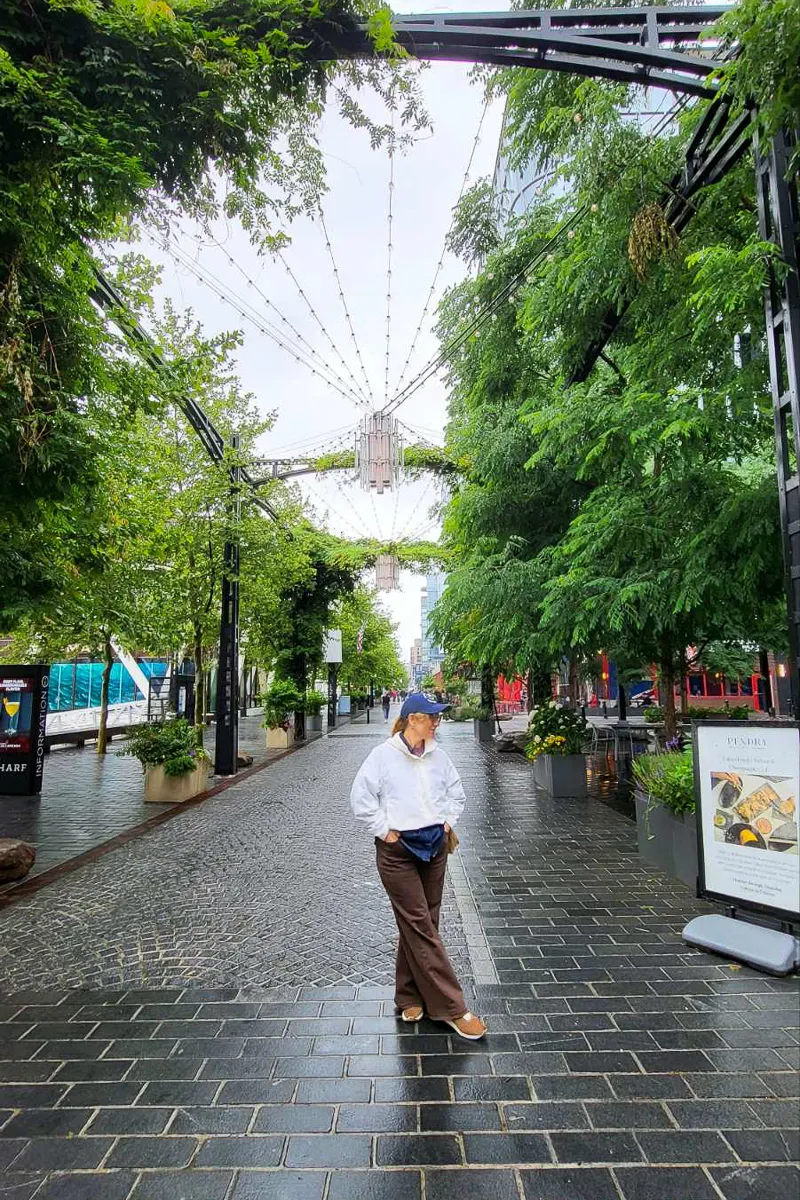
This newer waterfront culture is particularly noticeable in areas such as The Wharf.
It is an example of rethinking the relationship between the city and the water.
It is not simply about constructing new buildings beside the river.
It is about creating streets, plazas, parks, promenades and open spaces where people can actually be.
People can walk, sit, meet, look at the water and take part in urban life.
Perhaps the word that best describes good urban design is experience.
Not simply a view. Not simply a promenade.
But the feeling that a place invites you to stay.
Greenery as a Connection Between Old and New
Washington offers another interesting lesson. Old and new do not necessarily have to compete.
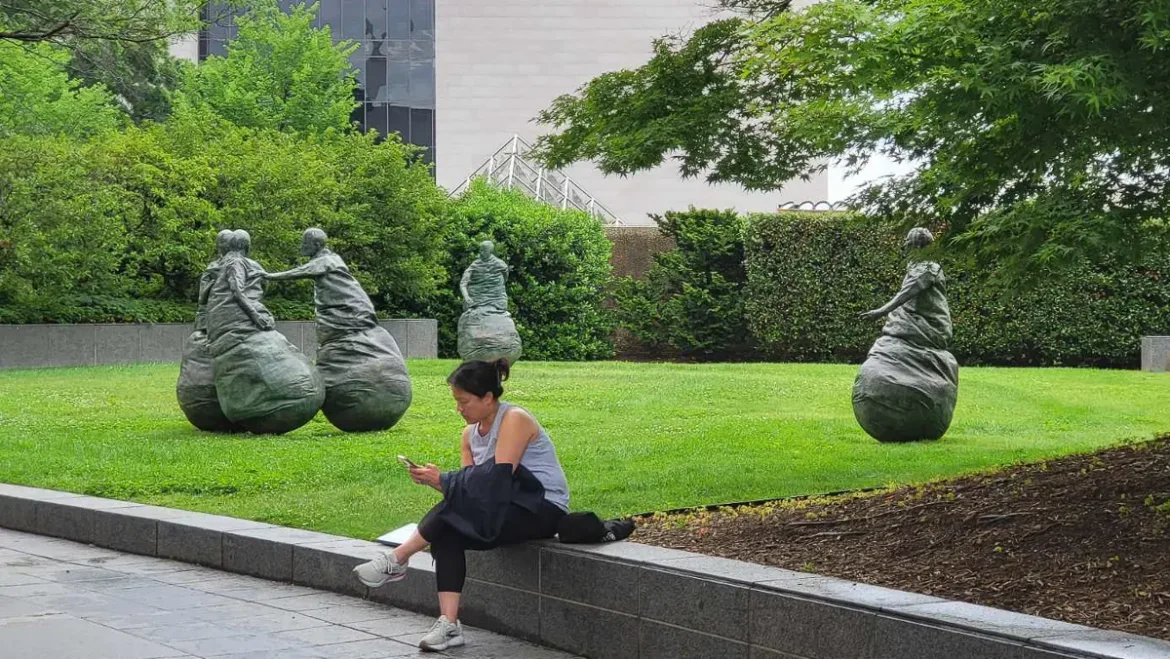
The city preserves its historic axes, monuments, museums and classical facades, while gradually building a newer culture of public space around them.
Greenery often becomes the link between these two worlds.
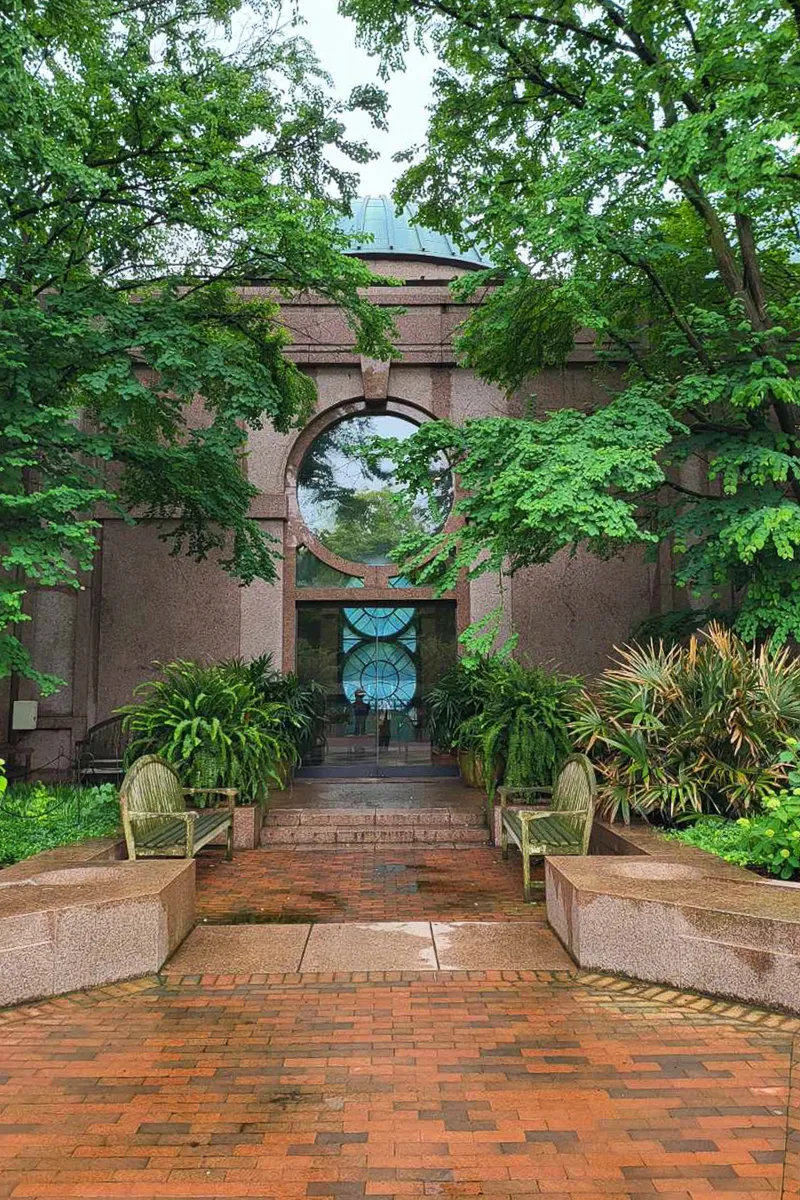
It can make historic architecture feel more accessible and modern architecture feel warmer.
It can create a gentler transition between monument and everyday life.
And it can turn a place that might otherwise be experienced only as a tourist attraction into a space where people genuinely stay.
This is a valuable lesson for our own cities too.
Too often we either allow old buildings to deteriorate, or we renovate them so aggressively that they lose their character.
Between those two extremes there is a third option: a carefully designed environment that preserves the old while allowing it to continue living.
A tree. A planting bed. A bench. Good materials. Maintenance. And a little more thought.
What We Can Learn From Washington's Urban Gardens
When I look at spaces like these, I do not look at them with that useless kind of admiration: “everything is beautiful there, and nothing works here.”
I look at them with hope.
Because many of these principles are not out of reach.
Every city does not need the scale of Washington. We do not need to copy The Wharf.
But we can learn several very practical things.
- Think of the street as a place, not leftover space between buildings.
- Plant trees with enough room for their roots to develop.
- Use raised planting beds where soil space is limited.
- Combine beauty and function - shade, water management, cooling and movement.
- Choose plants with the seasons in mind, not only their appearance during the first month.
- Treat maintenance as part of the design.
- Stop treating public space as though it belongs to no one.
Most importantly, we should stop thinking of beauty as unnecessary.
Beauty in a city is not a luxury.
It is a sign that someone has thought about people: how they will walk, where they will sit, what they will see, where they will find shade and how they will feel while they are there.
Washington showed me exactly that.
Urban greenery can be much more than decoration.
It can be one way for a city to show respect - for its history, its architecture, its climate, its water and its people.
Perhaps the most important thing we can take from cities like Washington is not the idea that we should copy them.
What matters more is believing that our own streets can become more than a route from one place to another.
They can become places where people want to stay a little longer.