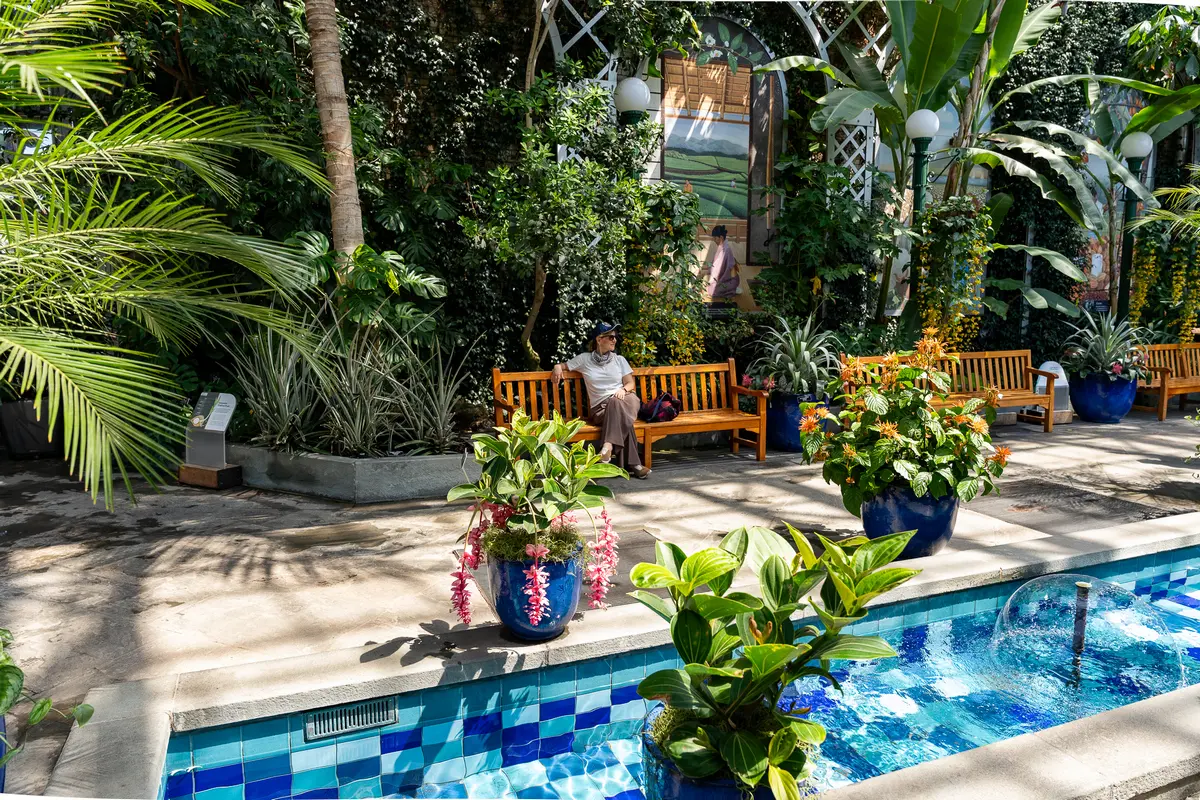
There are cities where greenery seems to have been left somewhere between buildings, sidewalks and parking lots. And there are others where plants feel like part of the very idea of the place.
Washington, D.C. definitely belongs to the second group for me. Especially around the National Mall, where museums, monuments, government buildings and broad avenues coexist with a remarkably well-organized green environment.
And right there, very close to the U.S. Capitol, is the United States Botanic Garden. A place where, within just a few minutes, you move from official Washington into a humid, green and much quieter world.
Washington speaks loudly. The Botanic Garden is one of those places where the city lowers its voice for a while.
Why the United States Botanic Garden Is Worth Visiting
If you love plants, greenhouses or simply want a different kind of stop between museums and monuments, this is one of the most pleasant places in central Washington.
The garden is not enormous, and I actually think that is part of its appeal. It does not require a full day, it is not exhausting, and it can easily fit between other places on your itinerary.
At the same time, there is enough variety inside to keep you there much longer if plants and photography are among your interests.
A Little History and Its Place in Washington
The United States Botanic Garden is one of the oldest botanical institutions in North America. Its beginnings date back to an Act of Congress in 1820.
I like this not only as a historical fact. Even in the early development of the American capital, plants, botany and public access to living collections were given a place remarkably close to the political centre.
The present historic Conservatory dates from the 1930s and stands almost immediately beside the Capitol grounds.
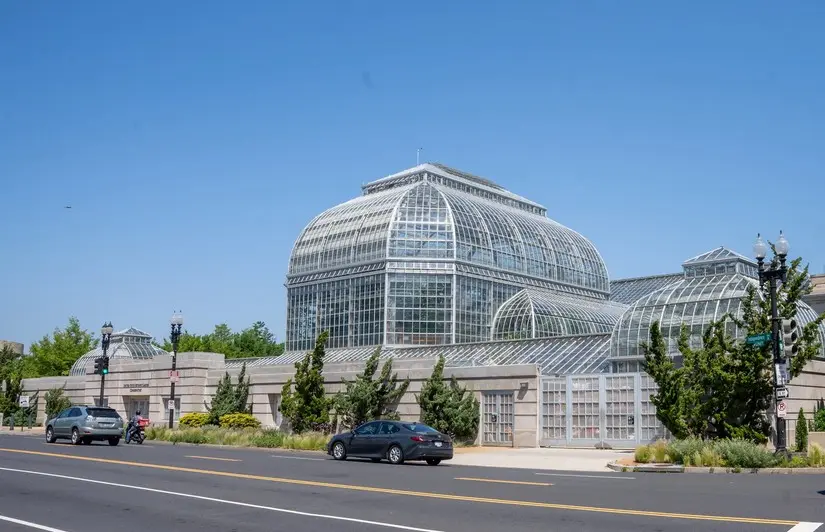
Outside, you are in the Washington everyone recognizes: broad streets, institutions, tour groups, summer heat and enormous distances.
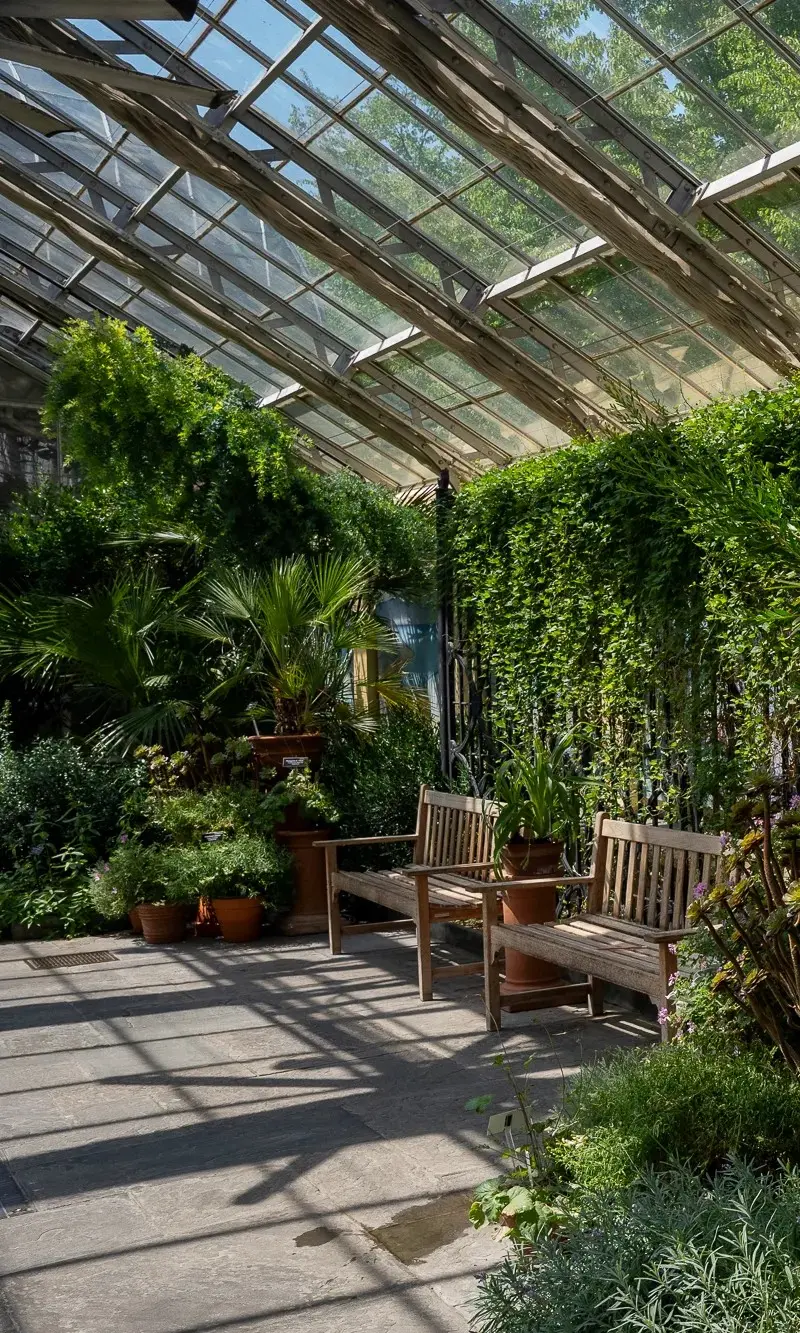
Step inside and everything changes: humidity, foliage, shadows, glass and the feeling that time has slowed down slightly.
What You Will See Inside the Conservatory
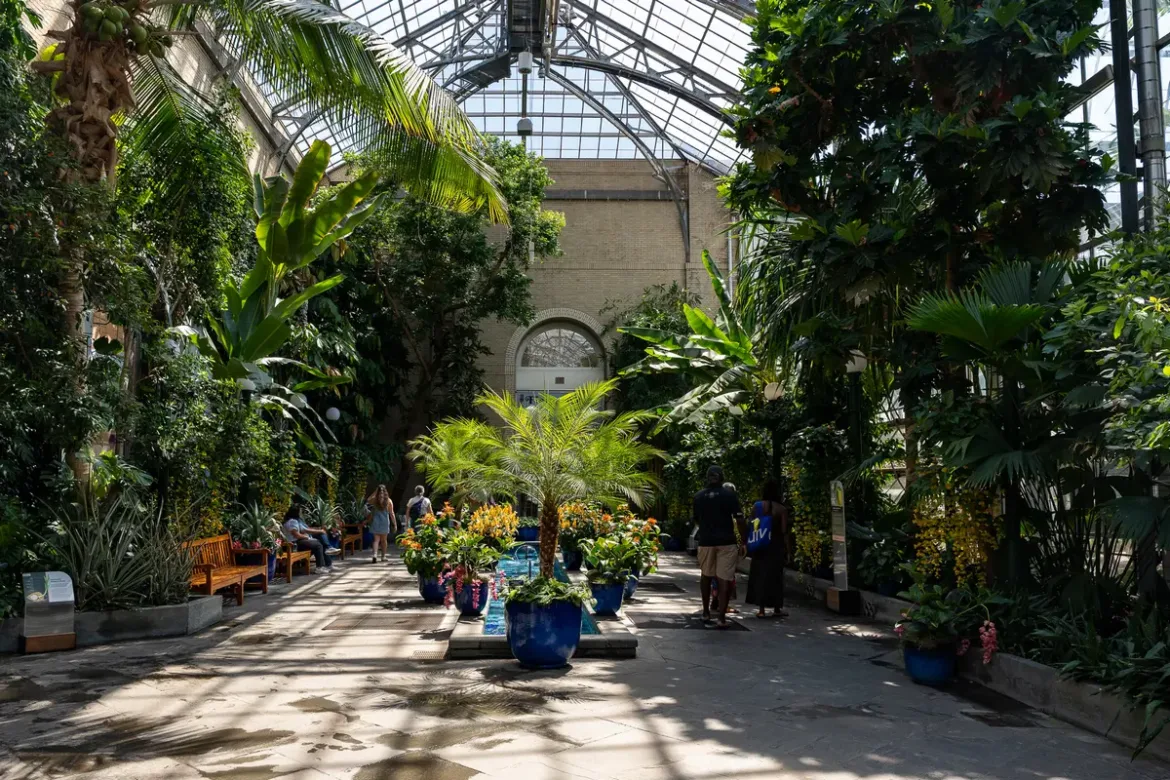
The heart of the garden is the Conservatory - the large historic greenhouse containing a range of plant environments beneath glass.
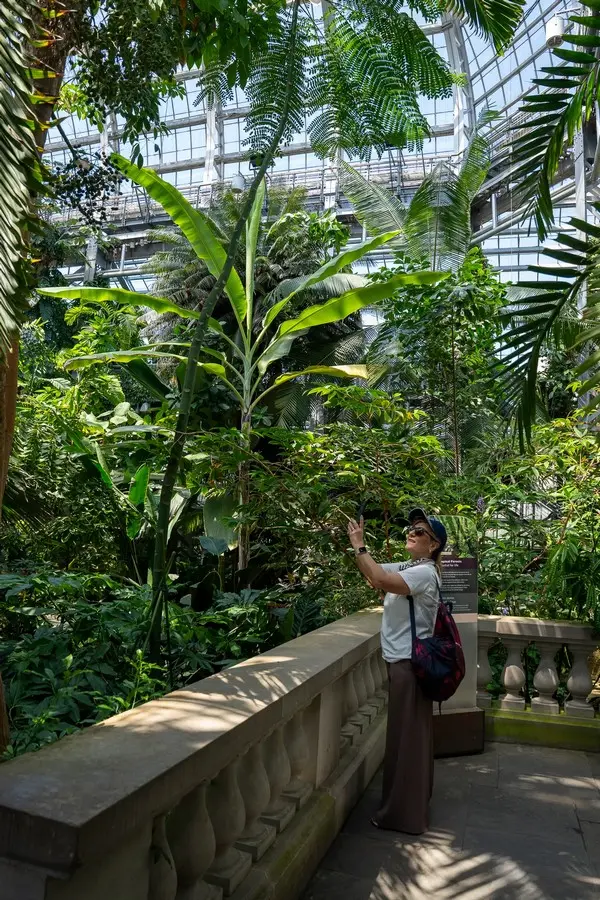
There are tropical plants, palms, ferns, orchids, desert species, succulents and many plants that we rarely encounter in an ordinary urban environment.
What impressed me most was not simply the number of plants, but the way they are presented.
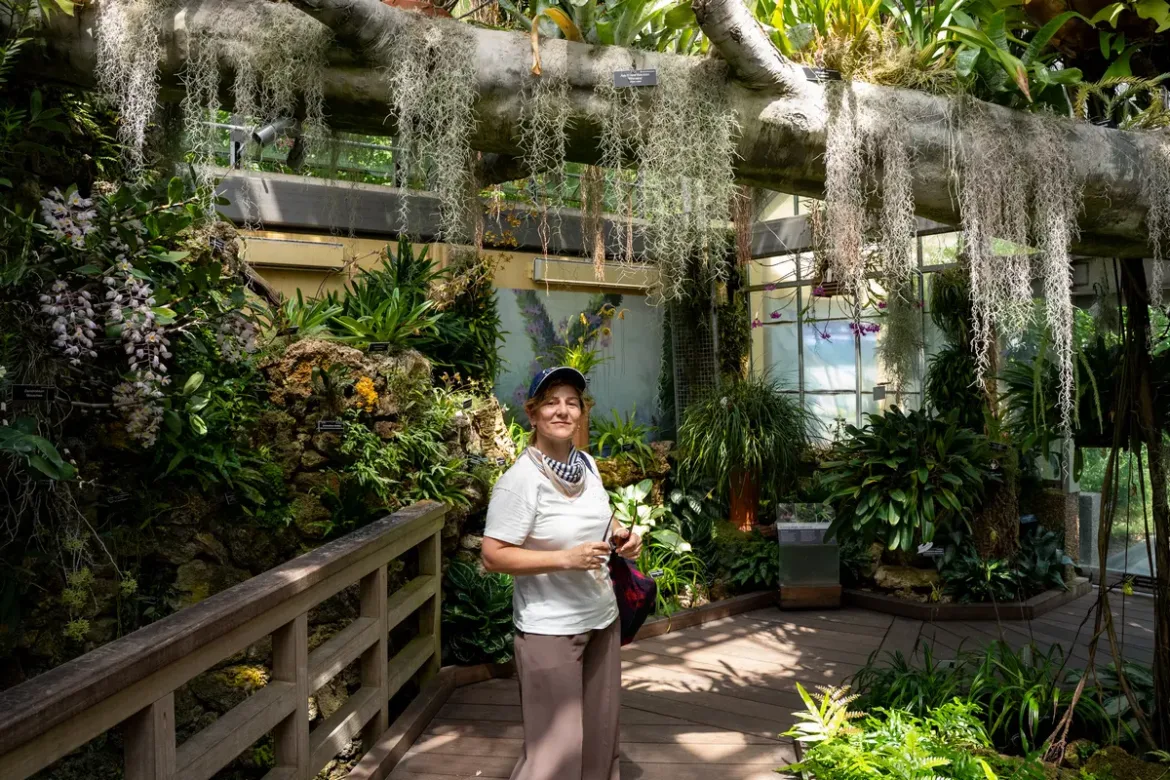
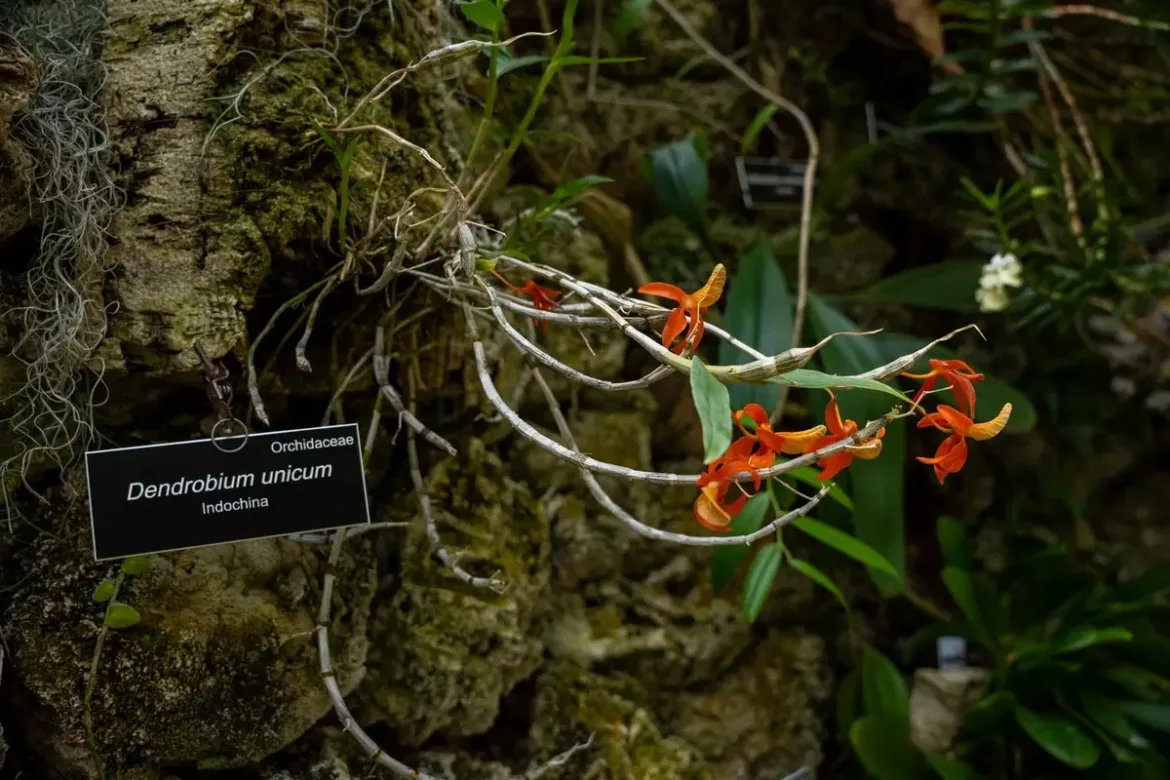
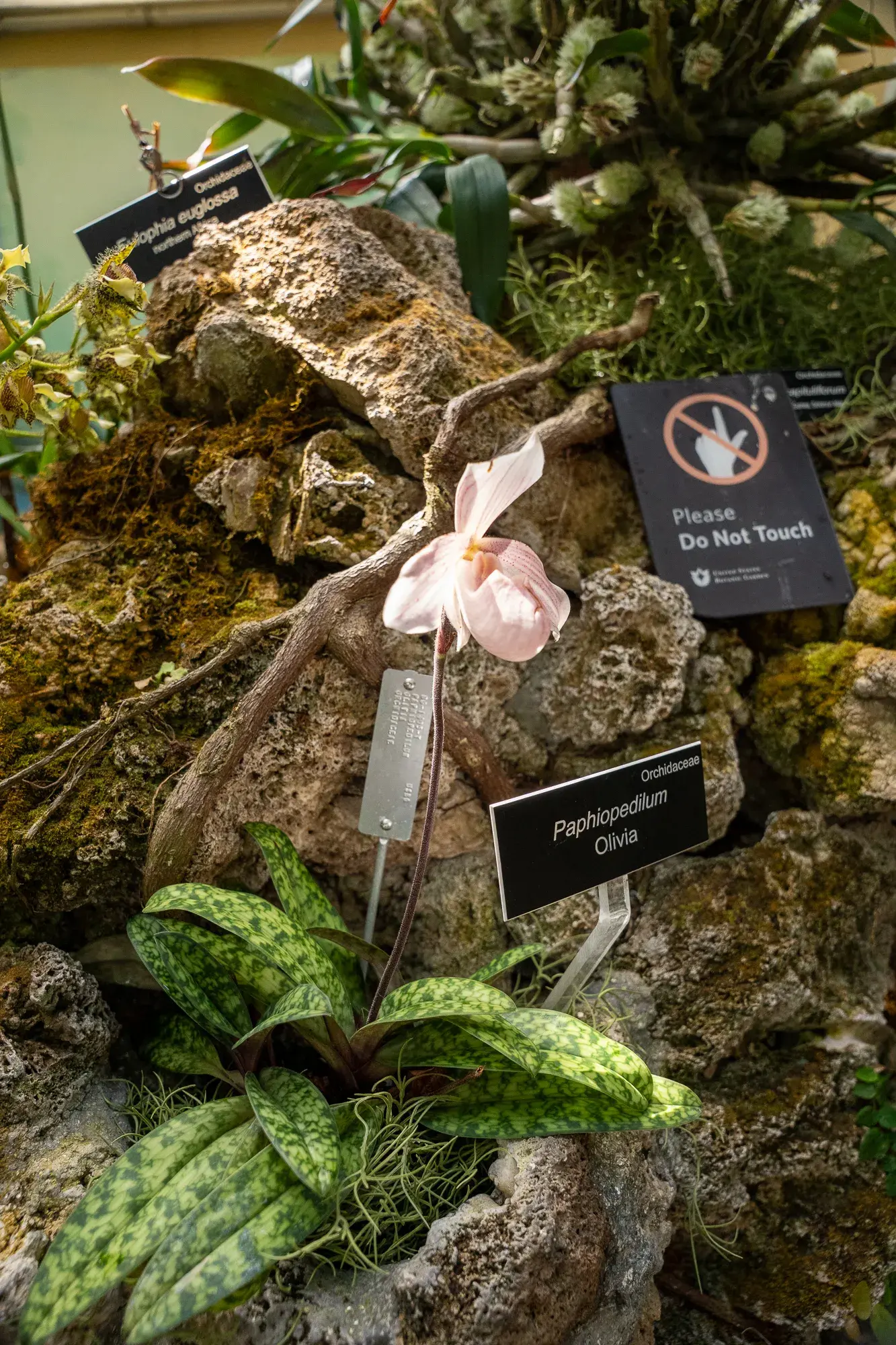
Rocks, moss, old branches, bark, air plants, small labels and carefully arranged miniature scenes.
In fact, I noticed the same thing in many other Washington museums: the curators have a remarkable talent for presenting objects, plants and natural specimens in a way that creates a small scene around them.
Everything has a focal point, context and a reason to make you stop.
Orchids, Succulents and Different Worlds Under Glass
Orchids always seem slightly theatrical and a little surprising to me. Almost every one looks like a carefully invented character.
What I particularly liked here was that they were not displayed simply as “beautiful flowers to admire.” You see them with bark, moss, rock, roots, shadows and small botanical labels.
That is exactly what I like about a well-designed botanic garden: it does not simply show you beauty. It gives that beauty context.
When you see a plant this way, you begin to think of it not simply as a flower, but as a living organism with an origin, particular needs, character and a place within a much larger story.
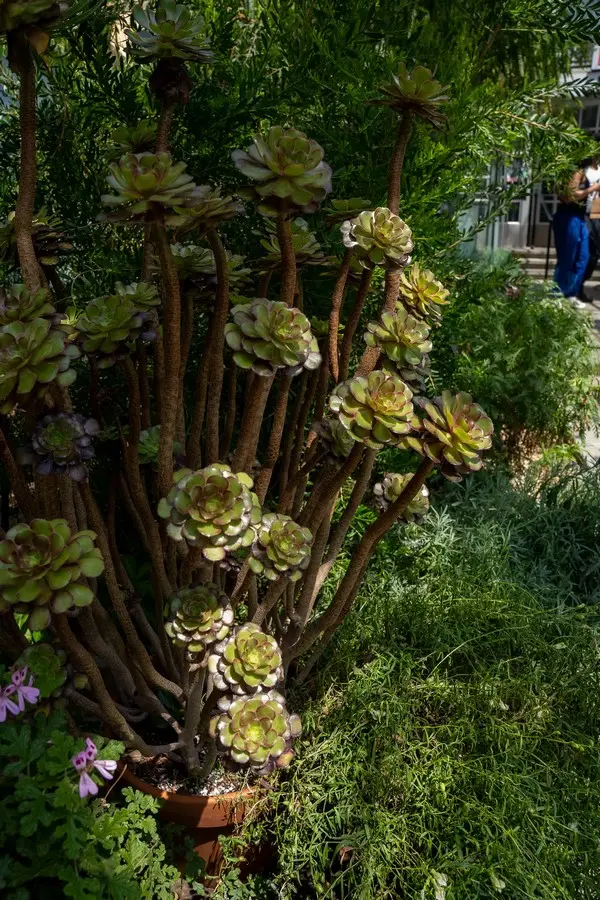
Then the space changes character again. From the delicate, almost theatrical forms of the orchids, you move towards succulents - plants that feel much more graphic, solid and architectural.
This constant change is one of the things that makes the Conservatory so interesting. You are not looking at one repeated aesthetic, but moving through different climatic and visual worlds.
A Place for Learning, Not Just Looking
One of the nicest things I watched there was the groups of schoolchildren.
They arrive together, with teachers, small backpacks, plenty of questions and that constantly shifting attention that makes children so wonderfully real.
It is obvious that visits like this are part of their education. Not simply an outing, but a lesson taking place among living plants.
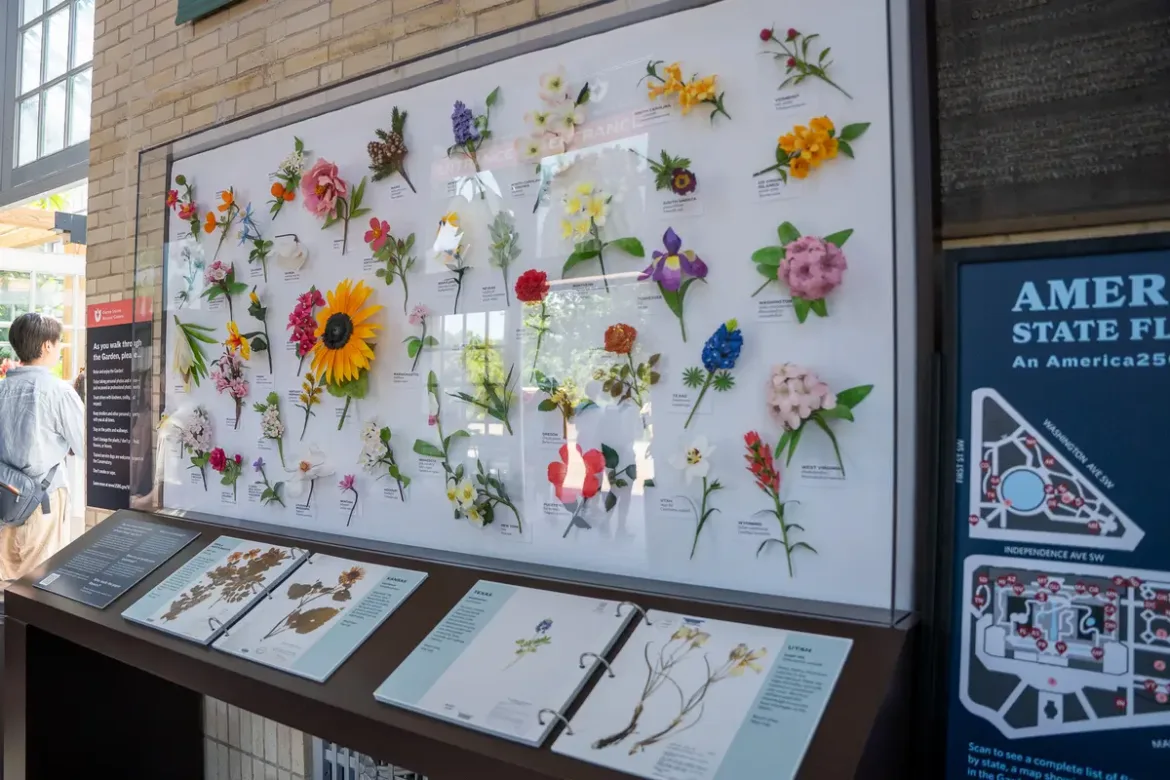
The children move between tropical leaves, orchids, succulents, maps and botanical labels. They stop, point, ask questions and then hurry to catch up with the group again.
Some lessons do not happen in a classroom. They happen among leaves, labels, light and curious young eyes.
Learning about nature by actually seeing it, smelling it and experiencing it seems to me one of the best ways to remember anything.
What Impressed Me Personally
First - the light.
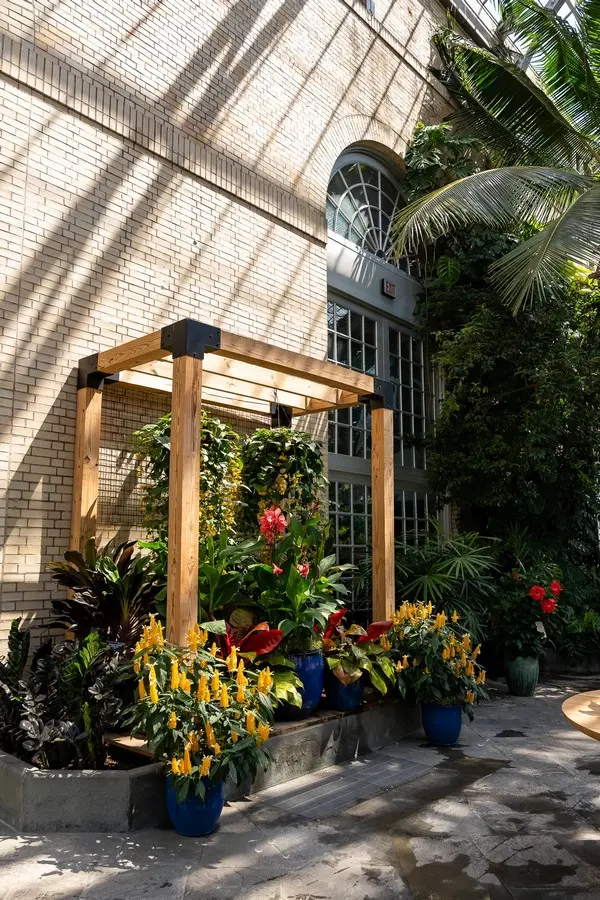
Inside the Conservatory it is never flat or boring. It falls through the glass roof, moves through foliage, draws shadows across brick walls and pathways, and keeps changing the same scene.
As a photographer, that is exactly what makes me stop constantly. Not only the flowers, but the light on them.
The second thing is the way the plants are displayed. The garden feels alive, rather than like an exhibition case.
The third is the detail: the small labels, stones, moss, roots, pathways, benches and hanging plants.
Nothing feels like random decoration. Everything reminds you that this is a living botanical collection.
And fourth - the feeling that in such an official city, there is a place where plants have been given centre stage.