
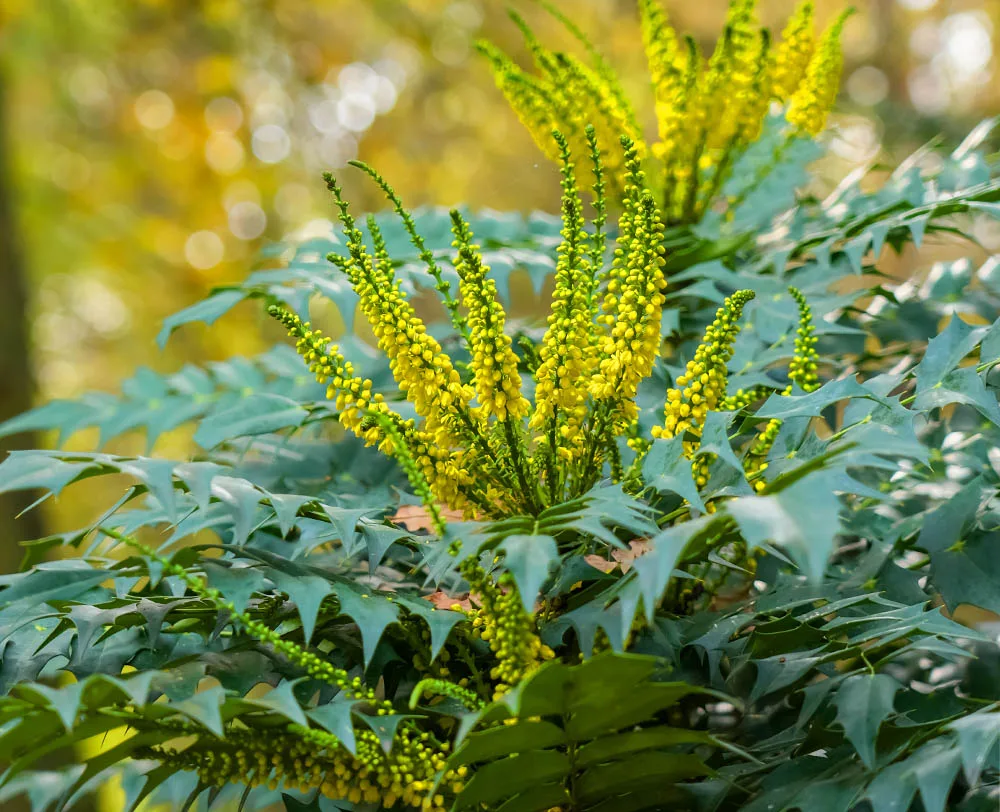
Mahonia is an evergreen ornamental shrub that is often underestimated because it does not look especially “modern” at first glance. But it has qualities that many plants do not — it tolerates shade, stays green in winter, flowers early with yellow blooms and does not require complicated care.
Among shade plants, mahonia stands alongside hosta, hellebore, ferns, rhododendron and azalea. The difference is that it is more structural. While hosta brings soft foliage in summer and hellebore brings early flowers, mahonia creates an evergreen skeleton in the shaded part of the garden.
This makes it especially useful for places that look empty in winter. The north side of the house, a shady corner, an area under trees, an entrance space or a more informal hedge — mahonia can work where many more demanding plants give up.
What Is Mahonia?
Mahonia is an evergreen shrub with leathery, glossy, often spiny leaves. The foliage looks a little like holly, but the plant has a different, looser silhouette. In winter and early spring, many species flower with fragrant yellow blooms gathered in raceme-like clusters.
After flowering, some species produce bluish-black berries. They add another decorative moment, although the main value of mahonia remains its evergreen structure and early flowering.
Mahonia is not the most delicate plant in the shade. It is more like a reliable backbone — holding shape, color and presence when the garden needs resilience.
There are different types of mahonia. Some are lower and suitable for woodland-style plantings, while others are taller and more architectural, with long upright flower clusters. When choosing, it is important to check the final size, because some mahonias can become quite large.
Why Mahonia Is Valuable in the Garden
Its greatest advantage is that it works in shade. Many ornamental shrubs need sun in order to flower well or keep attractive foliage color. Mahonia is more patient and can look good in places where other plants become sparse, stressed or uninteresting.
Its second strength is winter interest. The evergreen leaves maintain structure, while the yellow flowers appear at a time when the garden has not yet fully awakened. This is very valuable because early spring often needs color, but not plants that require special protection.
Mahonia also has a practical side. Its spiny leaves make it suitable for more protective plantings or for places where we do not want constant passage. It is not the best choice next to a narrow path, but it is useful as a background plant or barrier.
Where to Plant Mahonia
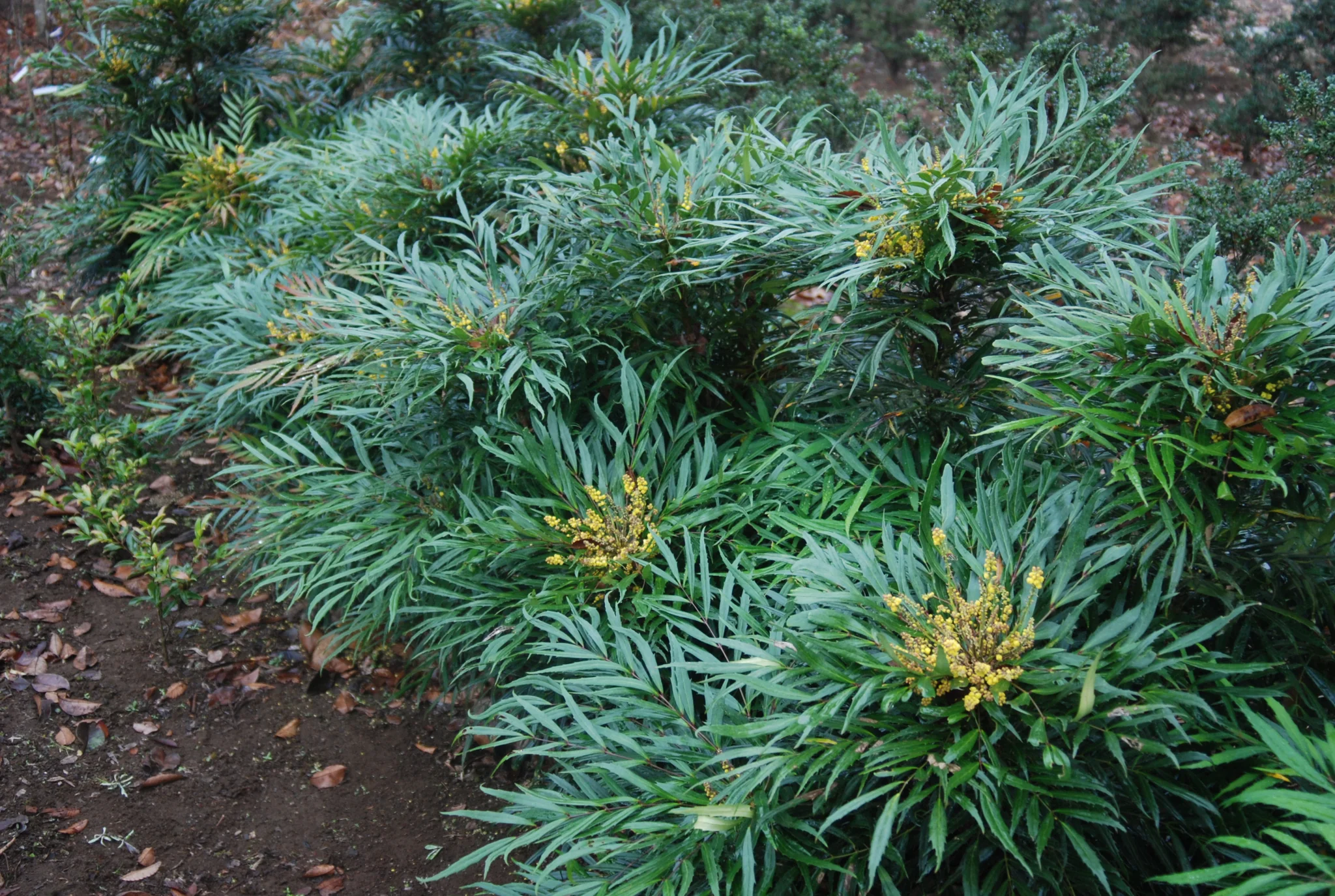
Mahonia feels good in partial shade and shade. It can tolerate more sun, especially if the soil does not dry out, but it looks most natural in more protected and cooler places.
Suitable places include the north or east side of the house, shady corners under trees, the back parts of planting beds, entrance areas, informal hedges or compositions with hostas, ferns and hellebores.
It is not a good idea to place it too close to narrow paths because the leaves can be prickly. If the area is used actively, choose a softer shrub for the foreground and place mahonia a little farther back.
Practical tip: mahonia is very good for shady places, but do not use it where you will constantly brush against it. The spiny leaves are part of its character.
Popular Types of Mahonia
Mahonia aquifolium, also known as Oregon grape, is a low to medium-sized evergreen shrub. It has glossy spiny leaves, yellow spring flowers and bluish berries. It is suitable for groups, shaded borders and more naturalistic compositions.
Mahonia × media and cultivars such as 'Charity' or 'Winter Sun' are taller and more architectural. They have long upright flower clusters that bloom in winter or very early spring. They are suitable for larger gardens and places where the plant can be seen as an accent.
Mahonia eurybracteata and some of its cultivars have finer foliage and a softer appearance. They are interesting for more contemporary shaded compositions, but should be chosen according to hardiness and site conditions.
| Type / Cultivar | What It Looks Like | Where It Works Best |
|---|---|---|
| Mahonia aquifolium | Medium evergreen shrub, yellow flowers, bluish berries | Shade, partial shade, groups, informal hedges |
| Mahonia × media 'Charity' | Taller, architectural, with long yellow flower clusters | Winter accent, larger gardens, protected places |
| 'Winter Sun' | Bright winter flowering, upright form | Entrance areas, winter garden interest, background in a shaded border |
| Mahonia eurybracteata | Finer foliage structure, softer silhouette | Contemporary shaded compositions, partial shade |
Soil, Watering and Mulching
Mahonia is relatively adaptable, but it grows best in loose, organic-rich and well-drained soil. It likes moderate moisture, especially while it is rooting, but it does not like constant waterlogging.
In shaded places under trees, there is often competition for water. In such spots, it is good to add compost and leaf mold when planting, and then mulch. Mulch helps retain moisture and makes the soil closer to a woodland environment.
Once established, mahonia is fairly resilient. Even so, during long dry periods, young plants should be watered, especially if they are planted in dry shade.
This post contains affiliate links. As an Amazon Associate, I earn from qualifying purchases at no extra cost to you.
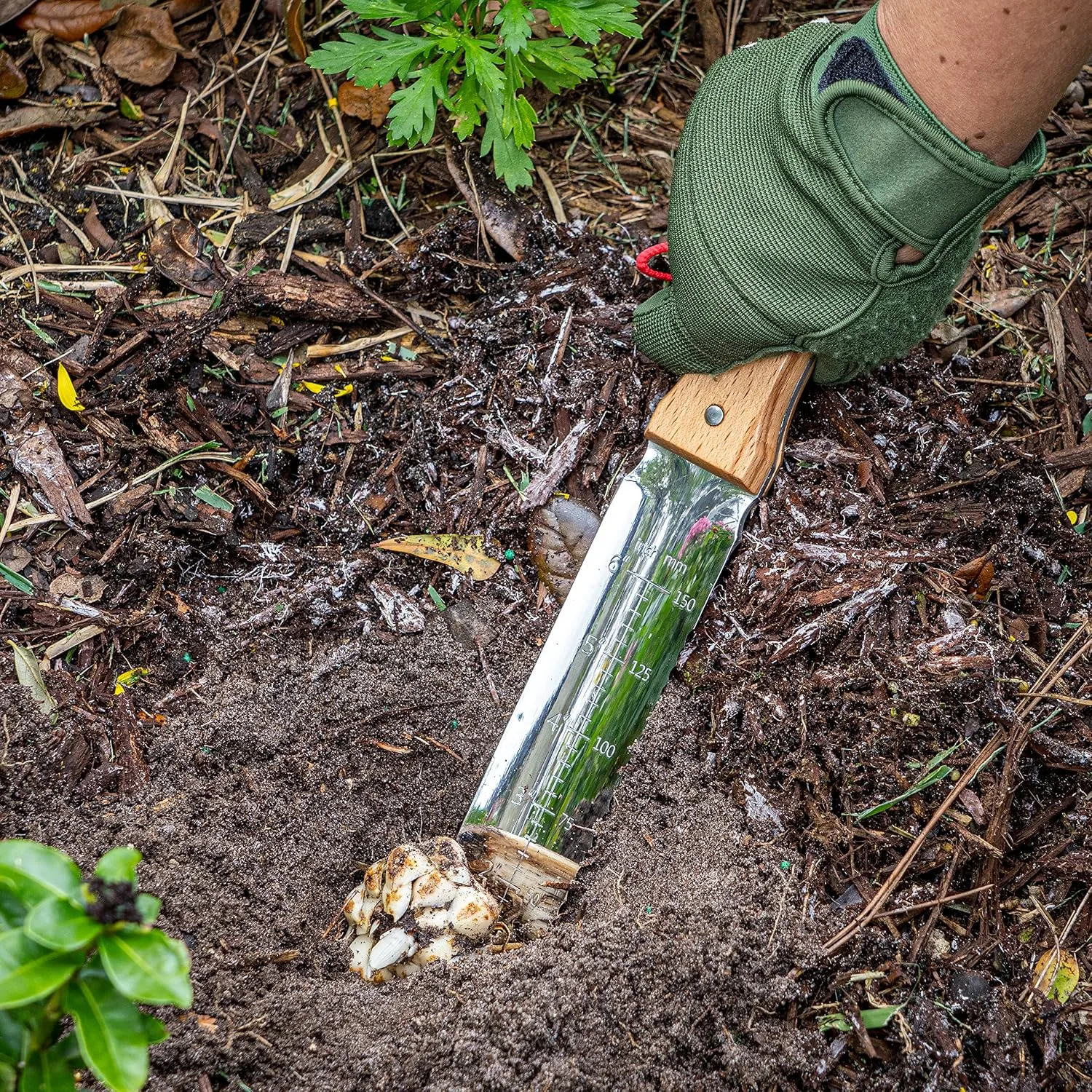
Mahonia is often planted under trees or in established shaded borders, where there may already be roots and other plants competing for space. A narrow hand tool can be easier to control than a large spade when opening a planting pocket or working compost into a confined area.
The Nisaku hori hori combines a digging blade with depth markings and is useful for detailed planting and weeding. Under mature trees, I would still work carefully and avoid unnecessary cutting or disturbance of larger existing roots.
Feeding
Mahonia does not require heavy feeding. Compost in spring or light feeding with a balanced fertilizer is quite enough. It is more important for the soil to be alive and well structured than to stimulate the plant with too much nitrogen.
If the leaves look pale or the plant grows poorly, first check the conditions — overly dry soil, strong competition from tree roots, poor drainage or soil that is too poor. Not every weakness is solved with fertilizer.
Pruning Mahonia
Mahonia usually does not need heavy pruning. Most often, dry, broken or damaged branches are removed. If the plant becomes too tall, bare or uneven, it can be rejuvenated gradually.
The best time for pruning is usually after flowering. This way you will not remove the most valuable decorative effect, and the plant will have time to recover its shape.
In older shrubs, some of the oldest stems can be removed low down to stimulate new growth. It is better to do this in stages rather than cutting the whole shrub all at once.

Can Mahonia Be Grown in a Container?
Yes, especially more compact types and young plants. In a container, mahonia can be an interesting evergreen accent on a shaded terrace, by an entrance or in a courtyard.
The container should be large enough, stable and have good drainage. The soil should be loose and should not dry out completely. In winter, it is best to protect the container from strong cold wind, because roots in pots are more vulnerable than roots in the ground.
For containers, it is better to choose more compact forms, because tall architectural mahonias can become inconvenient for a small pot over time.
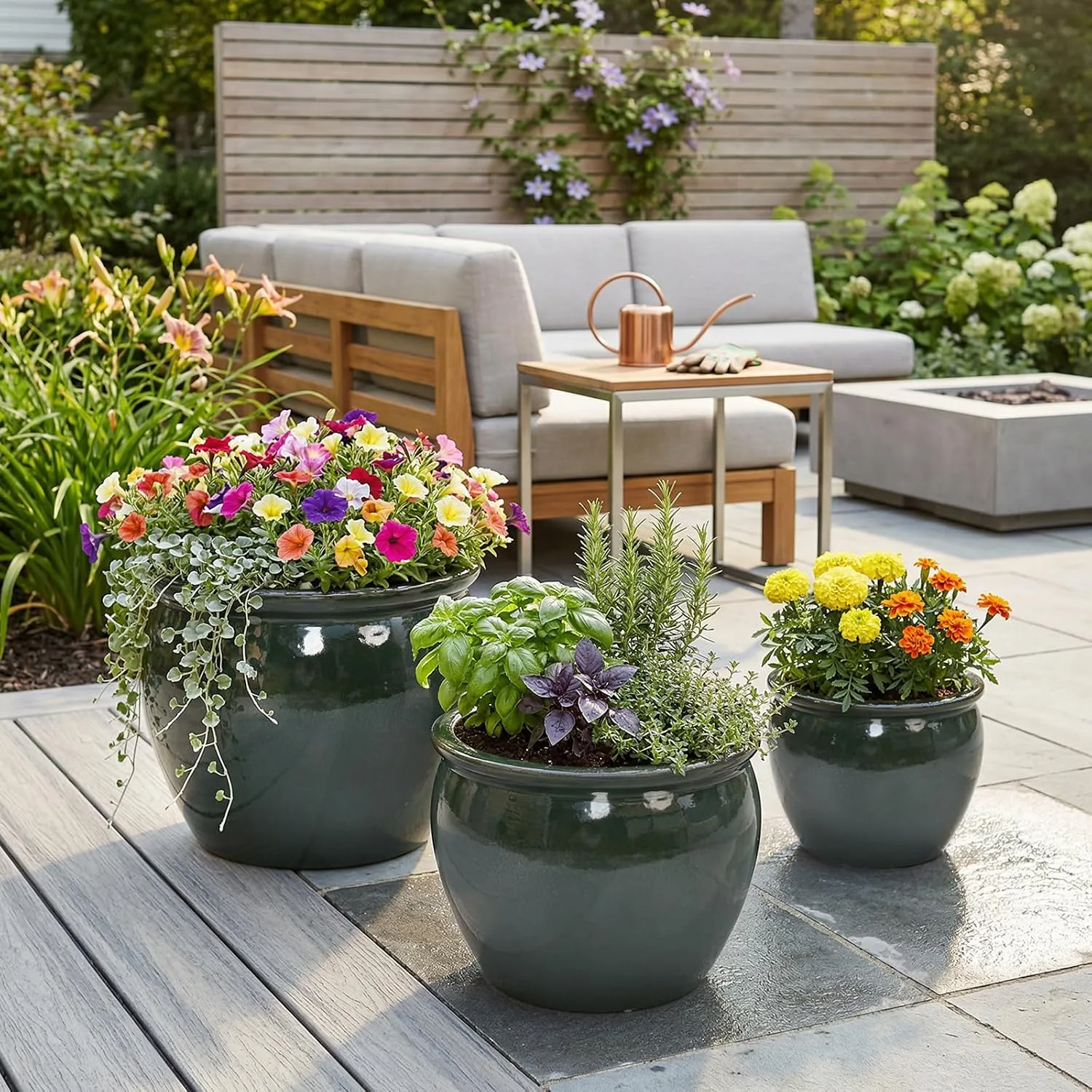
Compact mahonias can make attractive evergreen container plants, particularly near an entrance or on a shaded terrace where flowering plants alone may leave the space looking empty through winter.
The deep blue-green glaze of these three ceramic pots works especially well with glossy evergreen foliage and yellow flowers. For mahonia, choose the pot size according to the actual root ball and make sure drainage remains open throughout the year.
The Most Common Mistakes
The first mistake is planting mahonia too close to a walkway. The spiny leaves are not especially pleasant if you constantly brush against them. The second mistake is planting it in very dry shade without improving the soil.
The third mistake is choosing a type that becomes too large for a small garden. Some mahonias look compact when young, but with time they become tall and wide. The fourth is over-pruning, which spoils the natural silhouette and may reduce flowering.
What to Combine Mahonia With
Mahonia combines well with plants for shade and partial shade: ferns, hostas, hellebores, rhododendrons, azaleas, hydrangeas, pieris, skimmia, Japanese maple, epimedium and low evergreen shrubs.
In design terms, it works well as a background or structural element. Next to ferns and hostas, it looks softer because the fine and broad leaves soften its spiny form. Next to hellebore, it creates an interesting winter and early-spring combination.
If you use a taller mahonia, give it space to be seen. The yellow flower clusters in winter are a valuable accent, and it is best not to hide the plant behind other shrubs exactly when it is most interesting.
Is Mahonia Worth Growing?
Yes, especially if you have shady places that need evergreen structure.
Mahonia is resilient, relatively easy and decorative through more than one season. It brings greenery in winter, early yellow flowers, sometimes bluish berries and a good background for softer plants such as ferns and hostas.
This is a shrub for people who want the shady corner to look alive not only in May, but throughout the whole year.