
Table of Contents
Some plants catch your eye immediately, while others are something you first notice as part of the overall atmosphere of a garden. Elaeagnus belongs to the second group for me.
I first started noticing its silvery-green foliage in more contemporary and relaxed planting schemes. It looks very different from the typical dark green mass of many evergreen shrubs.
Then I began to appreciate not only the colour, but also how well this plant can cope with wind, sun and relatively dry conditions.
Some plants bring colour through flowers. Elaeagnus works more quietly - through light, texture and movement.
What Is Elaeagnus?
Different species and cultivars are grown under the name Elaeagnus. One of the most commonly used evergreen forms is Elaeagnus × ebbingei.
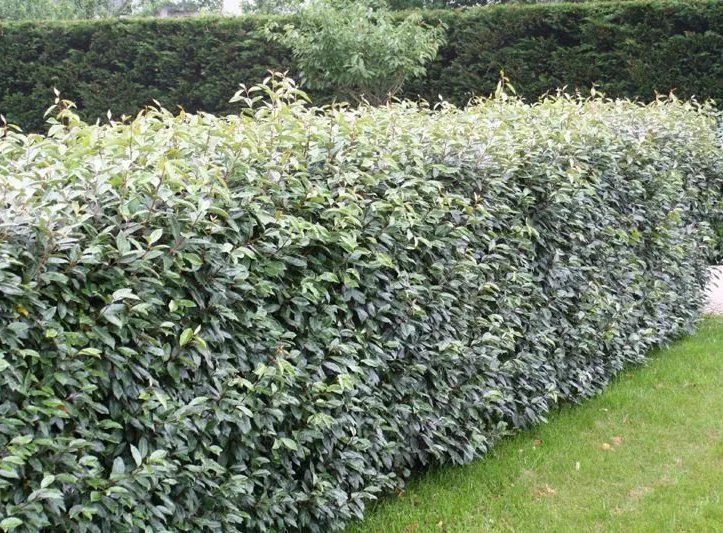
It is a vigorous evergreen shrub with distinctive green leaves that have a silvery underside.
This creates its characteristic effect when the wind moves through the plant: one moment you see the darker upper surface, the next the silvery underside.
Why It Looks So Different from Most Evergreen Shrubs
The main reason is the foliage.
With many evergreen hedges, we see a fairly uniform green mass. With Elaeagnus, the light constantly changes its appearance.
On a sunny day, the silvery tones become more visible, and in a light breeze the shrub can look almost two-toned.
It is exactly this lighter texture that makes it particularly useful where I do not want a heavy dark-green wall.
Elaeagnus does not depend on bright flowers. Its character comes from the foliage and the way it reacts to light and movement.
Elaeagnus Is an Interesting Choice for a Hot, Windy Garden
This is where I think the plant becomes especially useful.
Once well established, Elaeagnus can tolerate relatively dry conditions, strong sun and wind better than many more delicate evergreen shrubs.
That does not mean a newly planted shrub can simply be left without water. The first few years matter for developing a good root system.
Elaeagnus is one of those plants you begin to appreciate even more when the site does not offer perfect growing conditions.
The Soil Does Not Have to Be Perfect, but Drainage Matters
Elaeagnus is relatively adaptable to different soils.
That does not mean I would plant it in ground that remains permanently waterlogged.
Ideally, I would choose reasonably well-drained soil where the roots can develop without sitting in water for long periods.
The plant may survive in relatively poor soil, but better conditions generally produce denser, healthier growth.
Its Fragrance Is One of the Most Unexpected Features
The flowers of Elaeagnus are not the reason you would usually notice it in a nursery.
They are small and visually rather discreet.
But their fragrance can be surprisingly strong and sweet.
I like that contrast: a plant that works mainly through foliage and texture, and then at a certain point suddenly adds fragrance as well.
With Elaeagnus, the foliage is the main attraction. The fragrant flowers are an additional and rather unexpected layer.
Elaeagnus or Cherry Laurel - Which Would I Choose?
Both plants can perform a similar role as an evergreen background, but they create very different effects.
- a lighter, silvery texture;
- a looser, more natural character;
- good wind tolerance;
- suitable for drier conditions once established;
- fragrant but discreet flowers.
- a darker, denser green mass;
- large broad leaves;
- very effective as a visual screen;
- a calmer, heavier background;
- consistent moisture is more important in hot climates.
If I wanted a dark, dense broadleaf background, I would consider cherry laurel.
If I wanted a lighter plant, movement, silvery tones and a more relaxed character, Elaeagnus would interest me more.
Pruning Determines Whether It Looks Balanced or Untidy
Elaeagnus can grow vigorously and produce long new shoots.
If left completely unpruned, this can look beautiful in a more naturalistic planting, but as a hedge it will probably need shaping.
I would choose a moderately maintained form rather than an absolutely straight, rigid green wall.
First I decide whether I want a hedge, a free-growing shrub or a larger planting mass.
I would not plant it in an overly narrow space and then spend years fighting its natural size.
This helps the plant branch and maintain a more balanced shape.
For me, part of its appeal comes from a little movement and a more natural outline.
Where I Would Use Elaeagnus
I like it most in places that need evergreen structure without a heavy dark-green background.
- along a garden boundary;
- in a windier position;
- as a loose evergreen hedge;
- as a background behind darker plants;
- beside stone, gravel and timber;
- in drier, naturalistic or Mediterranean-style planting.
What I Would Plant with Elaeagnus
The silvery-green foliage combines well with many different textures.
- olive trees;
- rosemary and salvias;
- pink and white flowering shrubs;
- dark-green evergreen plants;
- stone and gravel;
- small ornamental trees.
Used this way, Elaeagnus does not look like a separate exotic element. It becomes part of the overall composition.
What I like most about Elaeagnus is that it adds light without adding a bright colour.
What Are the Disadvantages?
I would not describe it as a plant with no weaknesses at all.
Why I Think Elaeagnus Deserves More Attention
Because it is one of those evergreen options that offers something different from a standard green wall.
It brings light, movement, a resilient character and enough presence to work as a structural plant.
I would not choose it simply because it is “different.” I would choose it when the site and the overall design genuinely benefit from its qualities.
If I were looking for an evergreen shrub for a brighter, windier or relatively dry garden, Elaeagnus would definitely be one of the options I would consider.
Its greatest advantage for me is the combination of silvery foliage, resilience and the ability to work both as a background and as a structural plant.
This is not a plant that needs to look spectacular in a nursery pot. Its real value becomes clear once it starts working as part of the whole garden.