
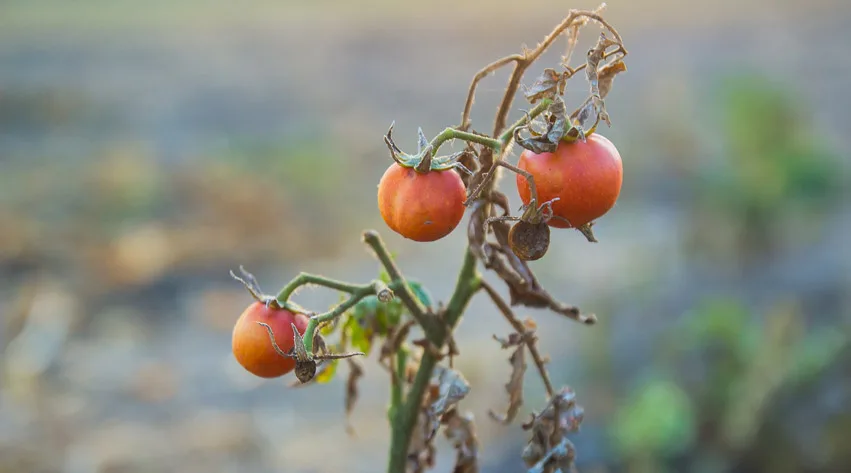
Tomato late blight is one of those diseases that can change the condition of an entire bed within just a few days. Under favorable weather conditions, the first spots on the leaves can quickly spread to stems and fruit.
That is why the most important thing with late blight is not to wait until the plants look seriously ill, but to watch the conditions and react at the first signs.
Good air circulation, proper watering, enough space between plants and regular observation can significantly reduce the risk.
With late blight, timing matters. The earlier the problem is noticed, the better the chance of limiting its spread.
What Is Tomato Late Blight?
Tomato late blight is a destructive disease that can affect leaves, stems and fruit. When conditions are favorable, it can develop very quickly.
The risk increases during prolonged wet weather, frequent rainfall, extended leaf wetness and poor air circulation between plants.
When Is the Risk of Late Blight Highest?
Late blight does not appear simply because it is summer. The greatest risk comes when suitable temperatures are combined with prolonged moisture.
Pay particular attention after several consecutive rainy days or during periods when heavy morning dew remains on the plants for a long time.
Greenhouse tomatoes can also be affected when humidity remains high and ventilation is poor.
Look especially closely at lower and inner leaves, where moisture can remain longer and early changes are easier to miss.
How to Recognize the First Symptoms
Early identification is one of the most important parts of managing tomato late blight.
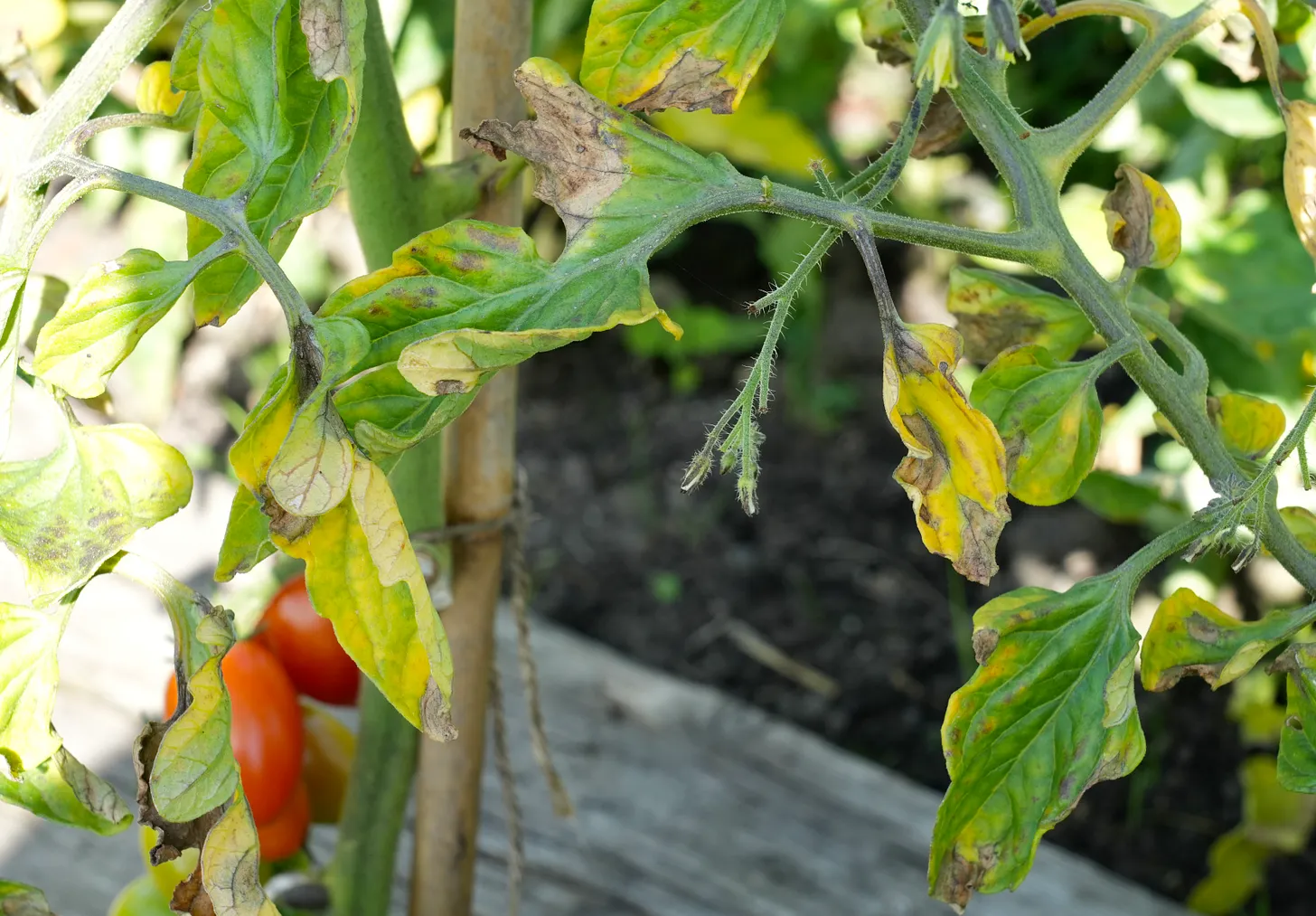
Not every brown spot means late blight, so look not only at the color, but also at how quickly the affected areas expand and whether similar symptoms appear on several plants.
| Sign | What it may look like | What to watch for |
|---|---|---|
| Dark leaf spots | Irregular brown to dark-brown lesions. | Watch whether the spots expand quickly after humid or rainy weather. |
| Dead leaf tissue | Affected areas gradually turn brown and die. | Check whether damage is spreading to new leaves. |
| Dark stem lesions | Elongated dark-brown or almost black lesions may appear. | Stem symptoms can indicate more advanced disease. |
| Brown lesions on fruit | Firm, brown to dark areas may develop on tomatoes. | Affected fruit can deteriorate quickly and should not be treated as healthy produce. |
Leaf spots may also result from other diseases, nutrient problems or environmental stress. If the symptoms are unclear, avoid treating blindly before identifying the likely cause.
Prevention Is the Best Protection
With tomato late blight, prevention is generally much more effective than trying to save plants that are already heavily infected.
The goal is to help foliage dry as quickly as possible, maintain adequate air circulation and avoid creating a constantly damp environment around the plants.
- Leave enough space between tomato plants.
- Avoid excessive crowding of foliage.
- Keep plants properly supported and off the ground.
- Remove lower leaves that touch the soil when appropriate.
- Inspect plants more often after rainy and humid periods.
- Start with healthy transplants and avoid planting obviously diseased plants.
The best late blight management starts before the first spot appears: with sunlight, airflow, sensible watering and regular observation.
Watering Makes a Difference
Tomatoes need relatively consistent soil moisture, but they do not benefit from foliage that remains wet for long periods.
Whenever possible, direct water toward the root zone. This reduces the amount of time the foliage remains wet.
Spacing, Pruning and Air Circulation
Trying to fit more tomato plants into a small space can easily work against us.
When foliage becomes heavily intertwined, the center of the plants remains damp for longer and dries much more slowly after rain.
With indeterminate tomatoes, appropriate sucker pruning and proper support can help maintain a more open plant structure.
Leaves are essential for photosynthesis and help protect fruit. The goal is not to strip the plant bare, but to maintain a reasonable balance between healthy foliage and good airflow.
What to Do at the First Signs of Late Blight
If you notice suspicious lesions, do not simply wait several days to see whether they disappear.
Inspect all tomato plants and determine whether symptoms are isolated or appearing in several places.
- Remove heavily affected leaves and take them away from the garden bed.
- Do not leave diseased plant material on the soil.
- Improve airflow if plants are overcrowded.
- Avoid working with wet plants.
- During high-risk weather, inspect the remaining tomatoes every day.
- If treatment is necessary, use only a product labeled and approved for tomatoes and the disease being treated, and follow the label directions, rate and pre-harvest interval.
The purpose of treatment is to protect healthy tissue and help limit further disease development. Leaves that are already badly damaged will not become healthy again.
What Not to Do
When disease appears, panic can lead to more activity, but not necessarily to better results.
Common Mistakes When Dealing With Late Blight
Problems often become worse not only because of the disease itself, but because of delayed action or conditions that allow it to continue spreading.
- Planting tomatoes too closely.
- Wetting foliage at an unsuitable time of day.
- Poor air circulation.
- Ignoring the first symptoms.
- Leaving infected leaves on the soil.
- Applying a treatment without checking whether it is labeled for tomatoes and the target disease.
Tomato late blight is a serious disease, but the risk can be reduced considerably with good garden organization and regular observation.
Leave enough air between plants, water at soil level, pay attention to weather conditions and inspect the foliage especially carefully after wet periods.
At the first suspicious symptoms, react promptly, remove heavily affected material and, when treatment is necessary, use an appropriate product according to its label.