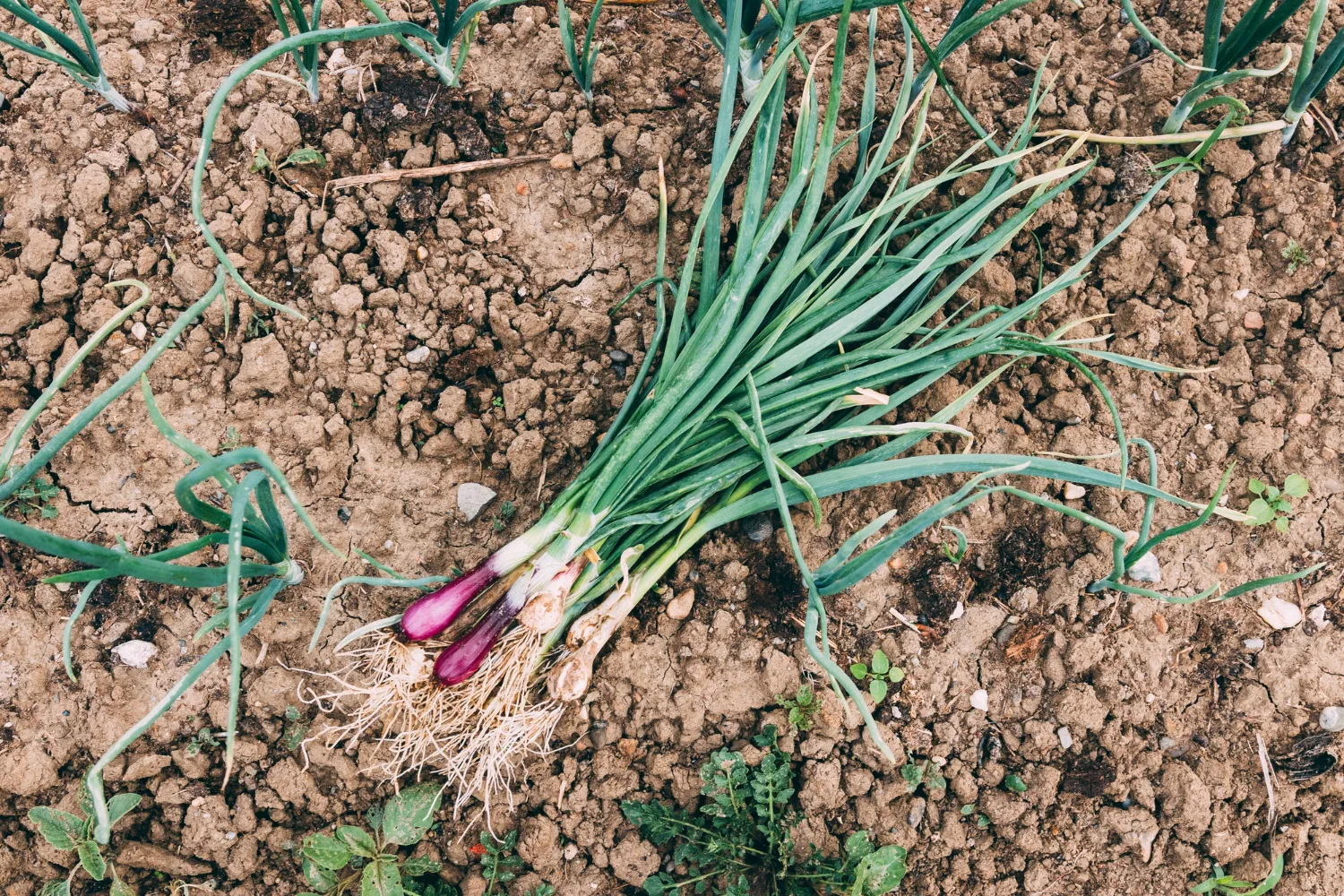
Garlic is one of the most practical crops for a home vegetable garden. It takes up little space, stores well and, when given a good start, requires relatively little maintenance.
A good harvest, however, depends heavily on a few decisions: when to plant, what planting stock to use, what the soil is like and how well excess water drains away.
With garlic, some of the most important work is already done before the first shoots ever appear above the soil.
A good garlic harvest begins months before harvest time - with the choice of cloves and the timing of planting.
Fall or Spring Planting?
Garlic can be planted in either fall or spring, but the two approaches do not produce exactly the same results.
Fall planting is widely used because it gives the cloves time to develop roots before winter and allows plants to start growing early in spring.
Spring planting is also possible, particularly with suitable varieties, but the growing period is shorter.
| Planting time | General timing | What to expect |
|---|---|---|
| Fall | Usually several weeks before the ground freezes, depending on climate. | A longer growing period and often larger bulbs. |
| Spring | As early as possible once the soil can be worked. | A shorter growing season and often later bulb development. |
The best planting time depends on your climate, temperatures and the type of garlic. With fall planting, the aim is to give the cloves enough time to develop roots without producing too much top growth before winter.
Choose a Sunny Site With Good Drainage
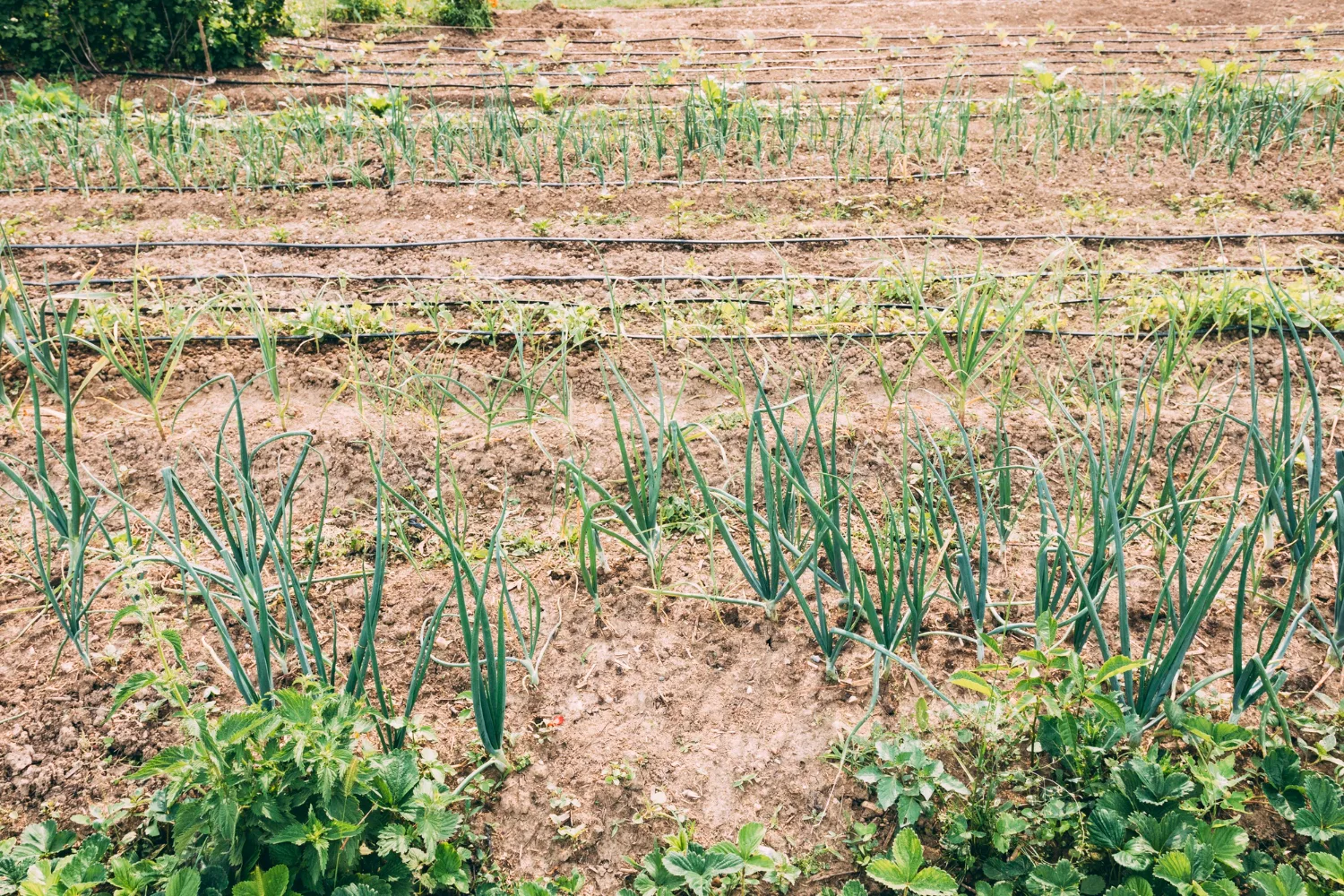
Garlic prefers an open, sunny location and soil where excess water does not remain for long periods.
Waterlogged soil is particularly troublesome during cold weather, when evaporation is lower and roots remain wet longer.
How to Prepare the Soil
Garlic performs best in loose, fertile and well-structured soil.
Well-finished compost can be incorporated before planting, especially when the soil is low in organic matter.
Avoid adding fresh manure immediately before planting. Garlic does not benefit from overly rich, uneven nutrition at this stage.
Very heavy or compacted soil can restrict bulb development. There is no need to completely change the natural soil type. Instead, improve structure gradually with organic matter and avoid unnecessary compaction.
What Garlic Should You Use for Planting?
The quality of the planting stock is one of the most important factors in producing a good crop.
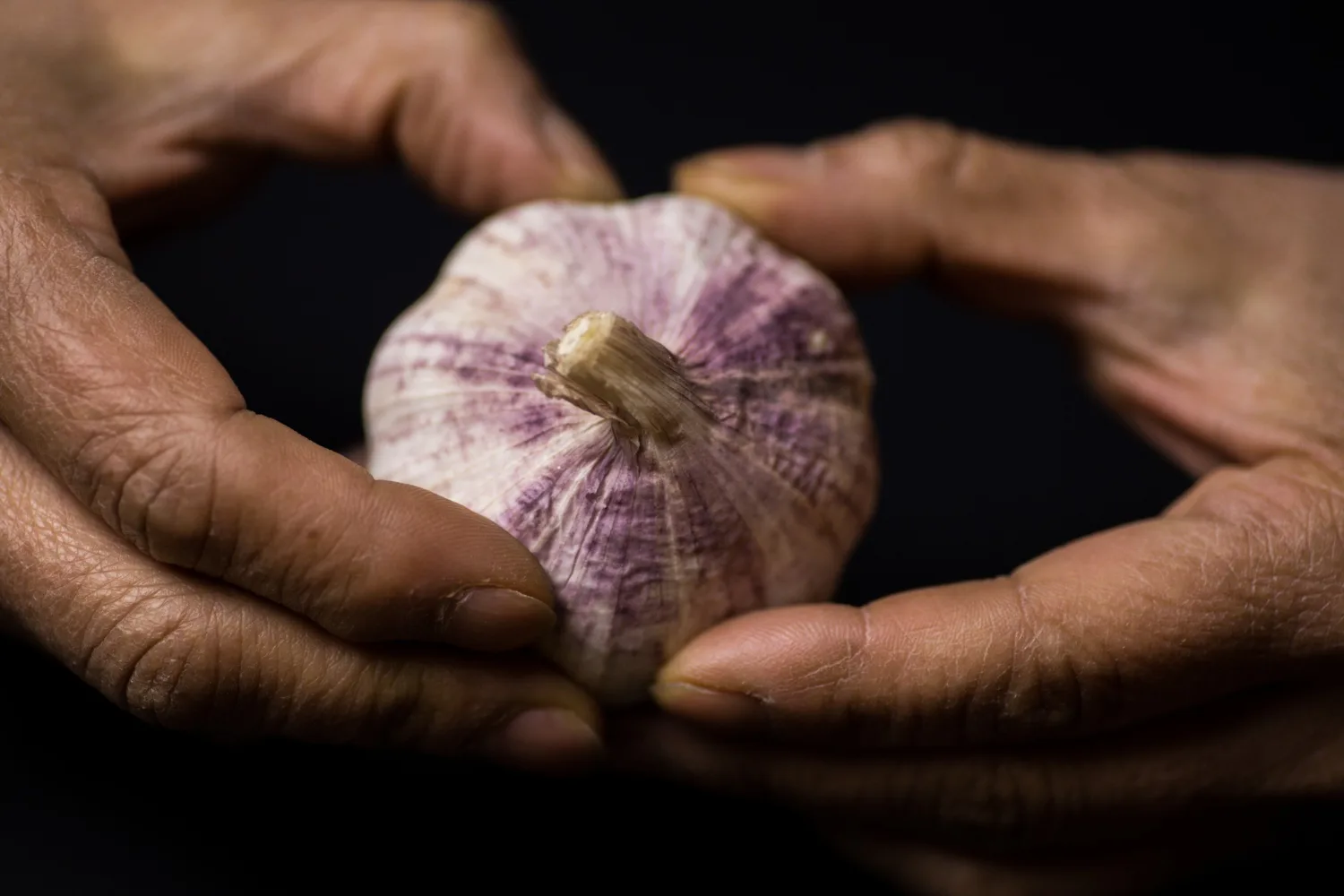
Choose healthy, well-formed bulbs with no signs of rot, mold or physical damage.
Larger healthy cloves generally give plants a stronger start.
- Choose healthy, well-developed cloves.
- Do not plant moldy or rotting material.
- Separate bulbs into cloves shortly before planting.
- Keep the dry papery skin around each clove as intact as possible.
How to Plant Garlic Cloves
Each clove is planted individually, with the broad basal end facing downward and the pointed tip upward.
The clove should be planted deeply enough to remain stable in the soil, but not excessively deep.
| Planting detail | Practical guideline |
|---|---|
| Spacing between plants | About 4-6 inches, depending on the variety and the desired bulb size. |
| Spacing between rows | Leave enough space for comfortable weeding and maintenance. |
| Planting depth | As a general guide, cover the top of the clove with about 1-2 inches of soil. In colder climates and for fall planting, cloves may be planted somewhat deeper. |
| Orientation | Basal end down, pointed tip up. |
With garlic, getting the basics right at planting time prevents many problems later.
Mulching After Fall Planting
Depending on climate and soil conditions, garlic beds can be mulched after fall planting.
A layer of dry leaves, straw or another suitable organic mulch can moderate temperature fluctuations, suppress weeds and help retain moisture.
In heavy, poorly drained soil, however, an excessively thick and constantly wet mulch layer may create unwanted moisture problems.
Spring Care
After winter, garlic begins active growth. The main tasks then are weed control, sensible watering and regular observation.
Weeds are especially undesirable because garlic does not develop an enormous canopy and can be easily outcompeted for water and nutrients.
- Keep the bed reasonably free of weeds.
- Water during prolonged dry periods.
- Avoid waterlogging.
- Cultivate the soil carefully without damaging shallow roots.
- Fertilize only when soil fertility and plant growth indicate a need.
Watering and Feeding
Garlic needs the most consistent moisture during active spring growth and the early stages of bulb development.
Constantly saturated soil, however, increases the risk of root and bulb rots.
As harvest approaches, watering should gradually be reduced.
How to Know When Garlic Is Ready to Harvest
It is usually not a good idea to wait until all the foliage has dried completely.
Garlic is generally approaching harvest when the lower leaves begin to yellow and part of the foliage gradually starts drying down.
If garlic is harvested too early, the bulbs may not be fully developed. If harvest is delayed too long, the outer wrappers begin to break down and the cloves may start separating, reducing storage quality.
If you are unsure, carefully lift one or two plants. Well-defined cloves and intact outer wrappers tell you much more about maturity than the calendar alone.
Curing and Storing Garlic
After harvest, garlic bulbs should be thoroughly cured before long-term storage.
Place them in a dry, shaded and well-ventilated area protected from rain.
Once the bulbs are cured, loose soil can be brushed away carefully, and damaged bulbs can be separated for earlier use.
- Do not wash bulbs before storage.
- Provide good airflow during curing.
- Separate damaged or diseased bulbs.
- Store in a dry, well-ventilated place.
Common Garlic-Growing Mistakes
Garlic is a relatively easy crop when it gets the right start.
Choose healthy planting stock, a sunny site and well-drained soil. Plant at the appropriate time and maintain moderate, consistent moisture during active growth.
Watch the plants toward the end of the season and do not wait until every leaf has dried completely. Timely harvesting and proper curing are just as important as planting itself.