
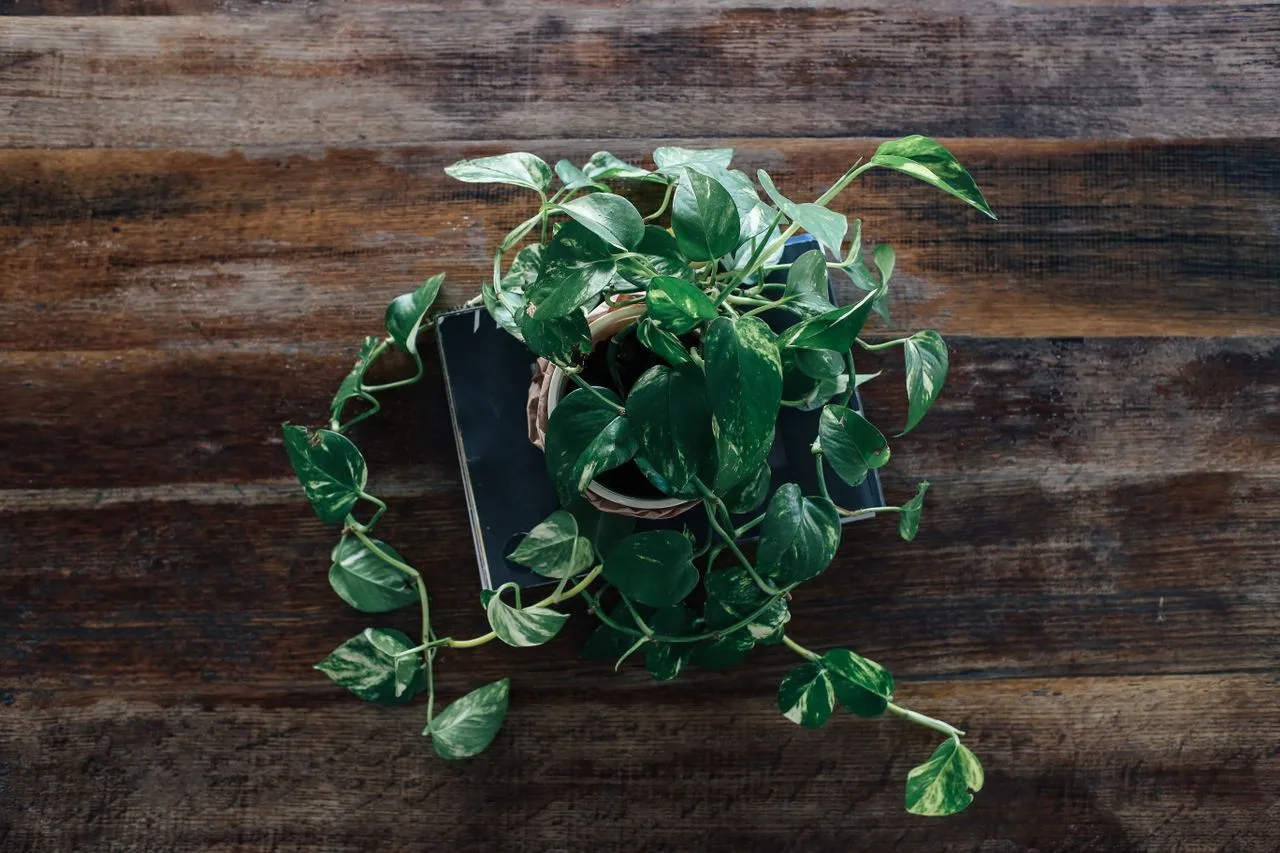
Pothos is one of the most forgiving houseplants you can grow. It grows quickly, is easy to shape, and tolerates quite a few mistakes, which makes it a good choice for anyone just beginning with indoor plants.
It can survive in lower light, but a brighter position makes a noticeable difference if you want fuller growth, stronger variegation, and healthier leaves. The most common pothos problem is not neglect. It is too much water.
This article is part of our guide to houseplants by light level.
Pothos is easy, but it is not immortal. Good light, proper drainage, and a little patience between waterings are usually enough.
Pothos at a glance
| Botanical name | Epipremnum aureum |
|---|---|
| Light | Medium to bright indirect light |
| Watering | After the upper part of the potting mix has dried |
| Humidity | Average to slightly higher household humidity |
| Difficulty | Easy |
| Best location | Shelf, hanging planter, bright kitchen, or living room |
| Toxicity | Toxic if ingested by people or pets |
Where to place pothos
Pothos grows well in medium to bright indirect light. It can also manage farther inside a room, but growth often becomes thinner and variegated varieties may lose some of their contrast.
An east- or north-facing window is usually a good option. Near a south- or west-facing window, keep the plant a little farther from the glass if the sunlight is intense.
Pothos is especially useful on shelves, tall cabinets, and in hanging planters because the vines can trail freely. It can also be trained upward on a support if you prefer larger leaves and a more upright shape.
When suitable window space is limited, a plant stand with grow light can create a brighter area for pothos and several other houseplants. The light should supplement a poor location rather than sit so close that it heats or bleaches the leaves.
How to water pothos
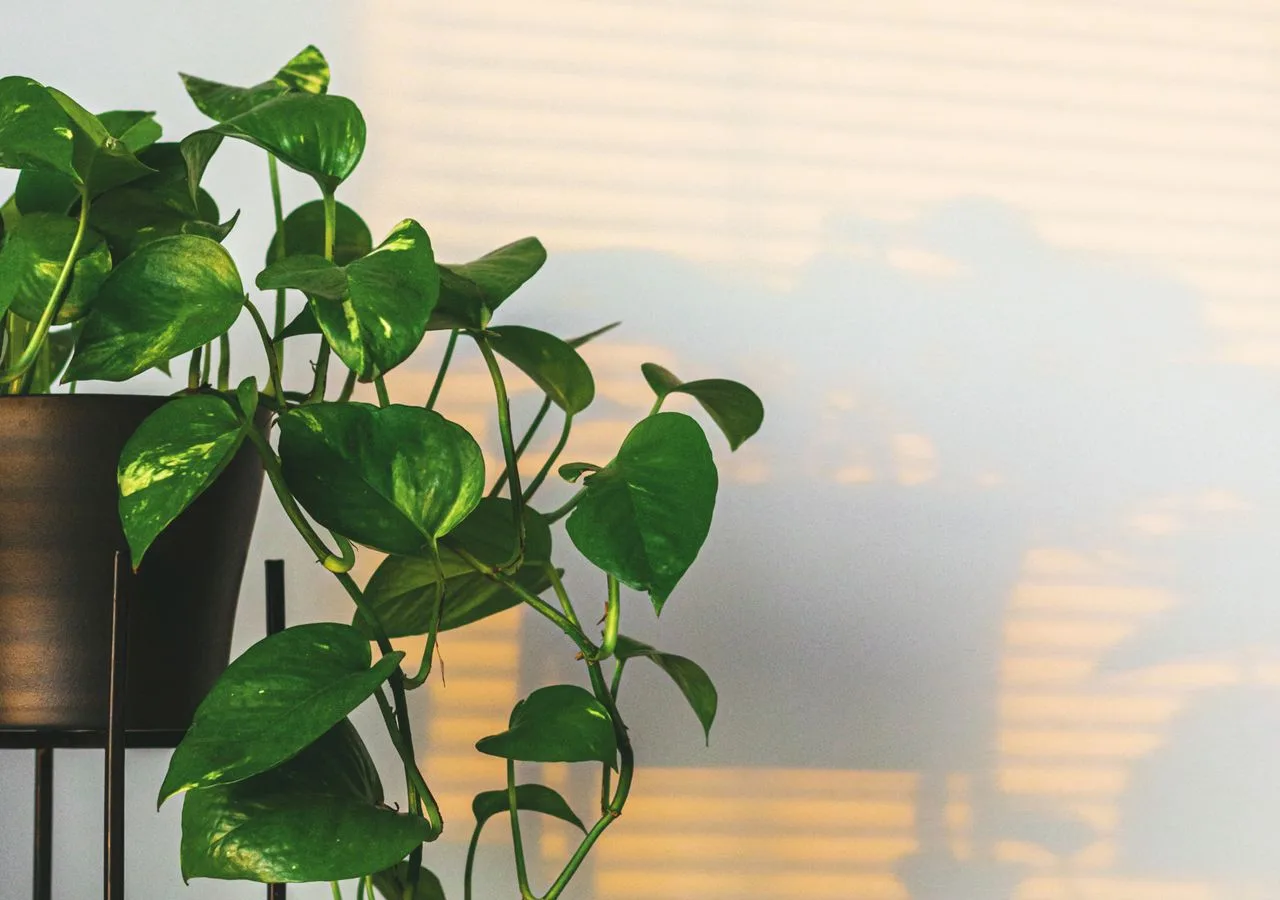
Allow the upper part of the potting mix to dry before watering again. Pothos tolerates a brief dry spell better than soil that remains constantly wet.
Watering frequency depends on light, temperature, pot size, and the size of the plant. In brighter conditions pothos uses water more quickly, while in lower light the potting mix stays damp longer.
If the leaves become slightly soft and the potting mix is dry, the plant probably needs water. If the leaves are turning yellow while the soil remains consistently wet, the problem is more likely the opposite.
Practical note: pothos gives fairly clear signals when something is wrong. The important part is checking the soil before automatically reaching for the watering can.
Soil and pot
A light indoor potting mix with good drainage works well. Adding perlite or another coarse material helps prevent the mix from becoming compacted around the roots.
The container should have drainage holes. If you use a decorative outer pot, always check that no water remains inside after watering.
There is no reason to move pothos into an enormous container. A pot only slightly larger than the previous one is enough once the roots begin filling the available space.
Humidity and temperature
Pothos handles normal household humidity well. It appreciates slightly more humid air, but it is not a plant that requires buying a humidifier.
It is more important to keep it away from a radiator and out of constant airflow from an air conditioner. Ordinary indoor temperatures are generally suitable.
This post may contain affiliate links. As an Amazon Associate, I earn from qualifying purchases.
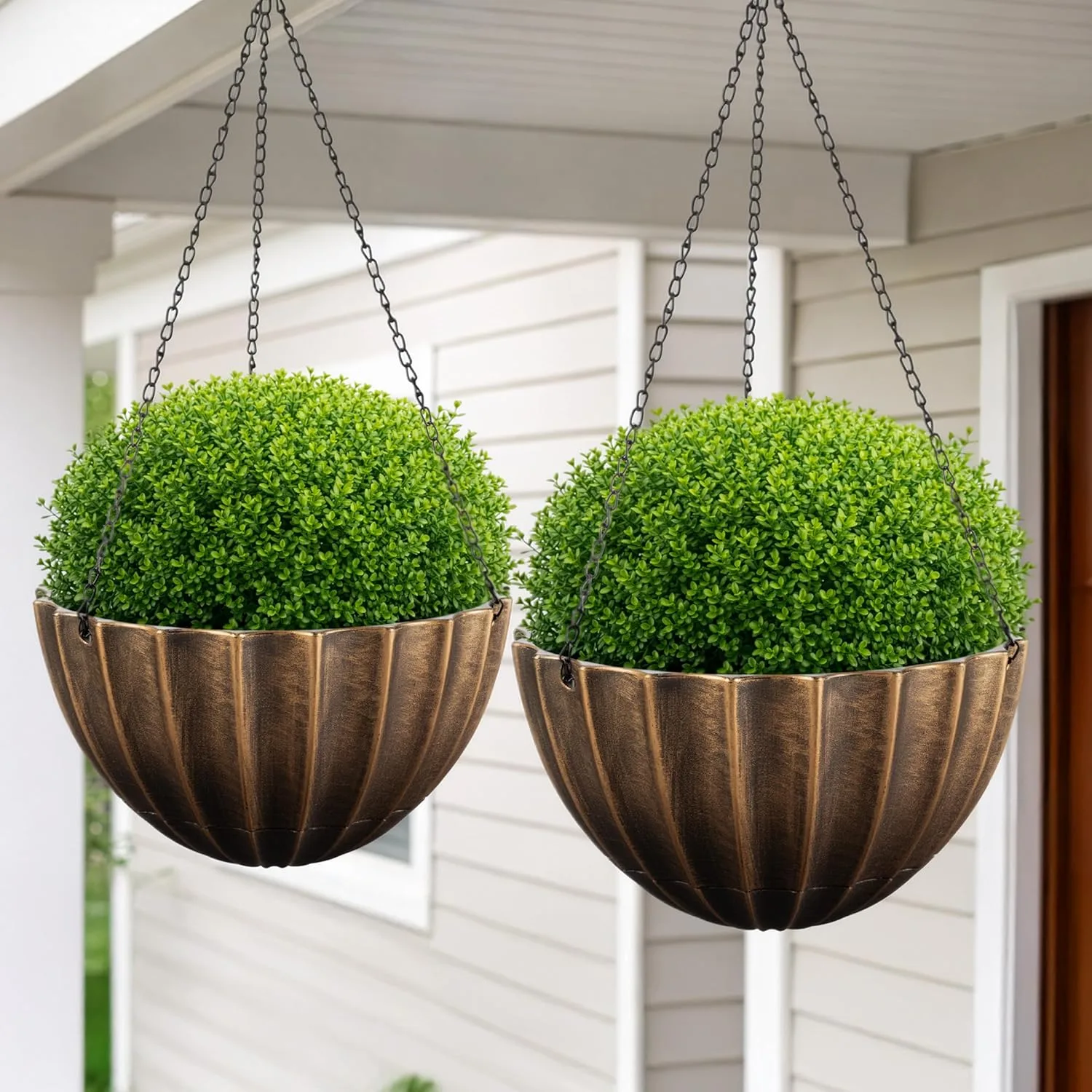
A raised planter gives the vines room to grow
Pothos looks most natural when its long stems can fall freely instead of being repeatedly folded around a shelf or crowded against other plants. A hanging planter raises the pot and gives the vines more space to develop.
I would place it near a bright window but outside strong direct afternoon sun. Before planting, check that the pot has effective drainage and that the size suits the existing root system rather than surrounding a small plant with too much wet potting mix.
Fertilizing and repotting
When pothos is actively producing new leaves, it can be fertilized moderately with a fertilizer intended for foliage houseplants. It does not need to be fed constantly.
If growth slows because the plant is receiving less light, fertilizing can be reduced as well. Fertilizer cannot compensate for a poor location or permanently wet potting mix.
Repot when the roots have filled the container or the potting mix has become compacted. The new pot should be only slightly larger than the old one.
Common problems
Yellow leaves
Check soil moisture first. Overwatering is one of the most common causes.
Variegation is fading
With variegated varieties, this is often a sign that the plant needs more light. Move it closer to a suitable window.
Long, sparse vines
Too little light is usually the cause. Pruning can improve the shape, but the problem will return unless the location improves too.
Brown edges
Possible causes include allowing the plant to dry too much, very dry air, or fertilizer salts accumulating in the potting mix.
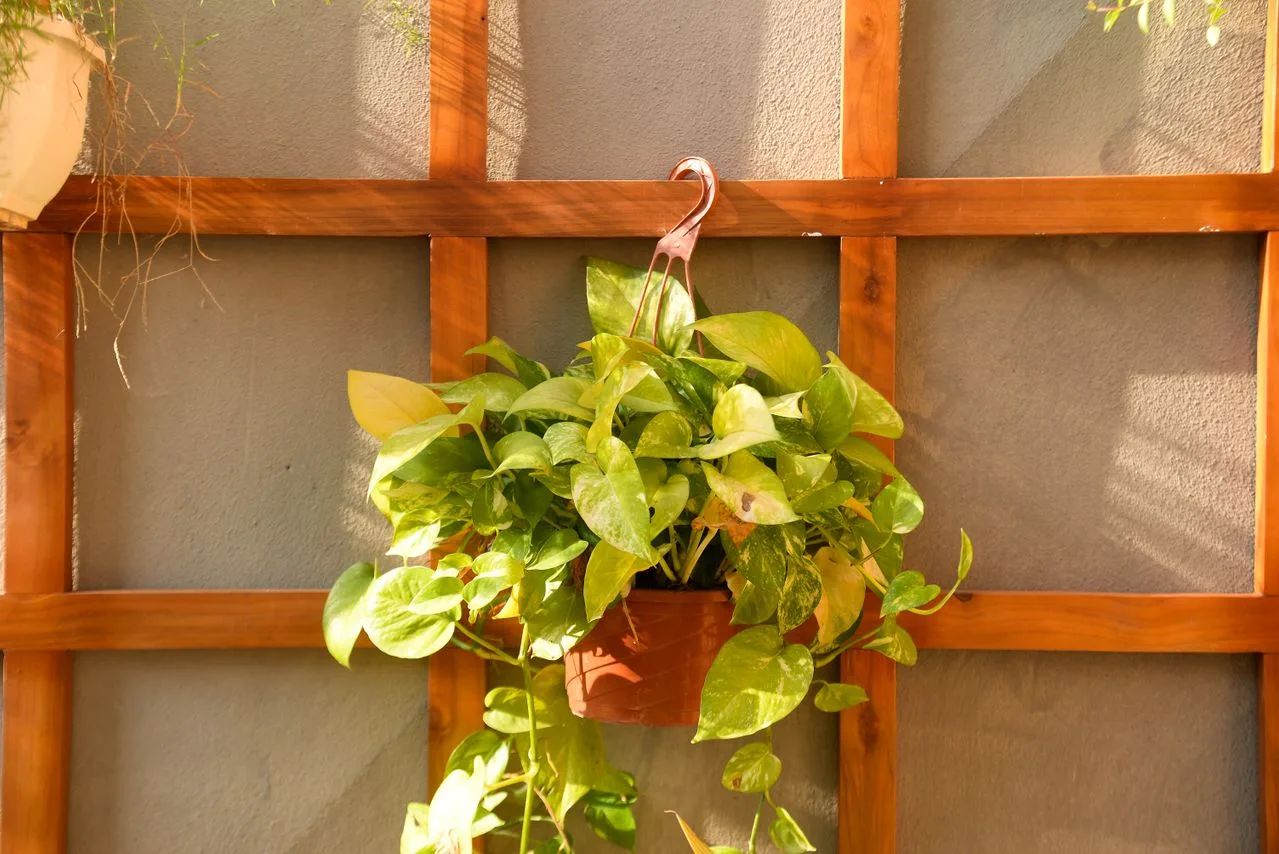
Pruning and shaping pothos
Pothos responds very well to pruning. If the vines have become excessively long or the plant is bare around the base, they can be shortened without much ceremony.
Pruning encourages branching and helps the plant look fuller. The cut sections can also be used for propagation.
If you want larger leaves, train the vines upward on a moss pole or another stable support instead of allowing every stem to trail downward.
How to propagate pothos
Pothos is one of the easiest houseplants to propagate. Take a stem cutting with at least one node and one healthy leaf.
The cutting can be rooted in water or placed directly into a light, slightly moist potting mix. Water propagation is especially convenient because you can see the roots develop.
Once several healthy roots have formed, the young plant can be transferred to a small pot. Planting several cuttings together produces a fuller result.
Who is pothos best for?
Pothos is an excellent choice for beginners, busy people, and anyone who wants greenery without a complicated care routine.
It works well on shelves, in kitchens and living rooms, near a workspace, or in a hanging planter. It does not need daily attention and recovers fairly well from minor mistakes.
We should not confuse “easy” with “able to live anywhere,” though. With enough light and sensible watering, pothos looks completely different - fuller, stronger, and far more decorative.